Rattling Volume in Thick Cover
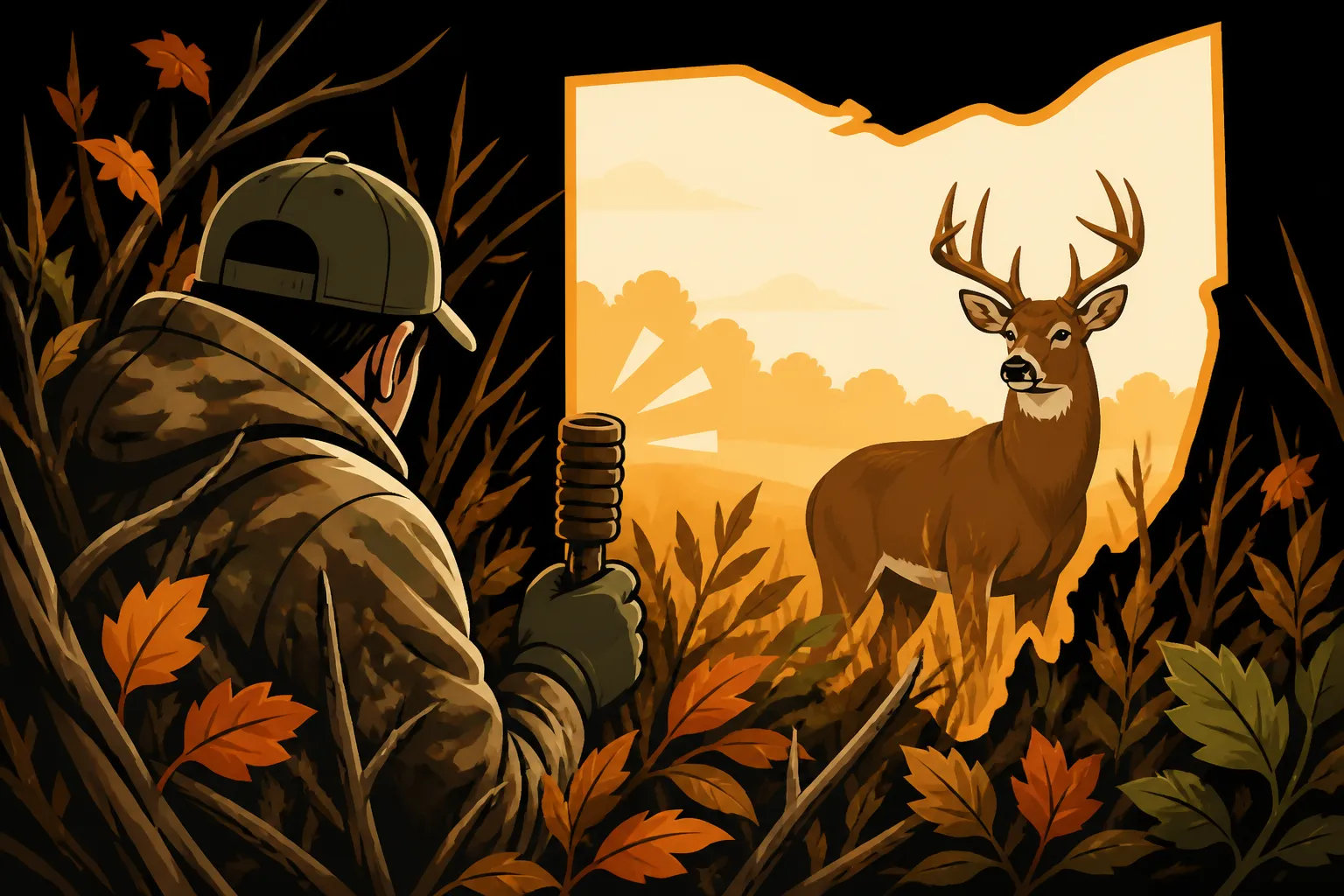
There’s nothing quite like the rush of hearing deer crash through the timber, responding to your calls. But let’s be honest, trying to get that reaction when you’re tucked into a thick Ohio woodlot, surrounded by dense cover and limited visibility, can feel like you’re shouting into a pillow. Many hunters struggle with the frustration of rattling in dense terrain, wondering if their efforts are even reaching a buck’s ears or if they’re just making a racket that spooks more deer than it attracts. This guide will dive deep into how to master rattling volume and strategy specifically for thick cover, helping you draw in those wary Ohio whitetails.
Understanding the Acoustic Challenges of Thick Cover
Hunting in dense cover presents a unique set of challenges, especially when you're trying to manipulate sound to your advantage. It’s not just about clashing antlers; it’s about understanding how those sounds interact with the environment around you.
Why Sound Doesn't Travel Far in Dense Woods
Think about it: when you're walking through a thick stand of brush, a clear-cut, or a dense fencerow, sounds are muffled almost immediately. The very elements that provide cover for deer—the thick underbrush, numerous tree trunks, and varied topography—also act as natural sound dampeners. Each leaf, every branch, and every slight rise and fall in the terrain absorbs or deflects sound waves, preventing them from traveling far. In a wide-open hardwood bottom, your rattling might carry for hundreds of yards, but in a thick Appalachian hillside or a brushy creek bottom choked with multiflora rose, that range shrinks dramatically.
Factors like humidity can also play a role, making the air denser and further absorbing sound. A light breeze might seem helpful, but if it’s blowing in the wrong direction or creating a constant rustle through the leaves, it can mask your efforts entirely. You might be putting on an Oscar-worthy performance of two bucks fighting, but if a deer is just 100 yards away in a dense thicket, they might only hear a faint, unidentifiable rustle, or worse, nothing at all. This is why a one-size-fits-all approach to rattling volume simply doesn't work in Ohio's varied landscapes.
The Risk of Overdoing It in Close Quarters
While the instinct might be to just hit the antlers harder when you're in thick stuff, thinking you need more volume to cut through the brush, you actually run a significant risk of spooking deer that are already close by. Imagine a mature buck slipping silently through a thick patch of woods, perhaps bedded just 75 yards away from your setup, maybe even closer. If you suddenly unleash a full-blown, aggressive rattling sequence at maximum volume, it's going to sound incredibly unnatural and alarming to that deer. It's like having a full-on bar fight erupt right outside your bedroom window when you thought you were alone.
Deer are incredibly attuned to their environment, and sudden, loud, and sustained noises that seem disproportionate to their immediate surroundings are a red flag. A buck might interpret this as two giants fighting right on top of him, triggering his flight instinct. You don't want to turn a curious, cautious approach into a mad dash in the opposite direction. The goal is to pique their interest and make them believe there's a real, accessible interaction happening, not an intimidating, close-quarters brawl. This is especially true when you're hunting smaller private tracts in Ohio where deer are often more accustomed to human activity and are therefore warier.
Tailoring Your Rattling Volume to the Terrain
The key to successful rattling in thick cover is adaptability. You need to adjust your volume and intensity not just to the time of year, but to the specific acoustic environment you're in.
Low and Controlled Rattling for Short Distances
When you're hunting dense terrain where visibility is limited to 50-75 yards—think those thick hedgerows, creek bottoms, or heavy clear-cuts—your rattling strategy needs to be subtle and inviting, not aggressive. This is where low and controlled rattling truly shines. Instead of violently clashing antlers, focus on short, gentle ticks and soft grinding sounds, mimicking two young bucks sparring or a less intense dominance display.
You can achieve this by using smaller sheds or even a rattling bag, which often provides a softer, more controlled sound profile. If you're using actual antlers, try just rubbing the tines together or making light contact with the bases, rather than crashing them forcefully. Keep your sequences brief, maybe 10-15 seconds at most, and space them out with long periods of silence. The idea is to create just enough noise to catch the ear of a deer that's already within range, without sounding overwhelming. This technique is particularly effective when you're set up in a ground blind on Ohio public land, nestled into thick cover, or when hunting tight spots near suburban areas.
Increasing Volume for Moderate Cover and Wind
There will be situations where the cover isn't impenetrable, or a light breeze is rustling through the leaves, requiring a slight bump in volume. If you're in slightly more open timber, perhaps a section of mature hardwoods with a fairly clean understory but still with good visual breaks, you can afford to increase your rattling intensity a bit. This isn't about going full-throttle, but rather adding a bit more force to your antler clashes and extending your sequences to perhaps 20-30 seconds.
Pay close attention to the wind, as it's a major factor in sound propagation. If there's a gentle, steady breeze, you might need a bit more volume to ensure your calls carry adequately, especially when trying to lure deer from downwind. The wind can either carry your sound further or dissipate it entirely, depending on its direction and strength. A good rule of thumb is to start subtle and, if no response after 15-20 minutes, gradually increase intensity. This allows you to test the acoustic environment without immediately overcommitting.
Using Grunt Tubes to Complement Rattling
Sometimes, even with careful control, rattling alone just doesn't cut through, or it doesn't provide the full spectrum of sounds that might trigger a response. This is where a grunt tube becomes an invaluable tool, especially when you're focused on Rattling and Grunting in Ohio. A few well-placed grunts can significantly extend the "audible" range of your setup without needing to increase the raw volume of your rattling.
A soft "buck grunt" immediately after a brief rattling sequence can sound incredibly realistic—like a buck coming to investigate or issuing a challenge. The deep resonance of a grunt often travels further and penetrates dense cover better than the sharp cracks of antlers. You can use a variety of calls, from tending grunts to deep growls, to paint a more complete picture of deer activity. High-quality grunt tubes from brands like Primos, Flextone, or Knight & Hale allow you to easily adjust tone and volume, making them versatile tools in your arsenal. The combination of subtle rattling followed by a few strategic grunts can often be the magic bullet, making a buck believe there's a real deer interaction happening, encouraging him to step out and investigate.
Strategic Rattling Sequences and Timing in Dense Areas
Beyond just volume, how you rattle and when you choose to do it can make all the difference, particularly when you’re dealing with limited visibility in thick cover.
Short, Sharp Sequences vs. Prolonged Brawls
In dense cover, less is often more. Forget the idea of a minute-long, all-out brawl that you might see on hunting shows for wide-open spaces. In thick Ohio woods, prolonged rattling sequences can be counterproductive. Deer are incredibly good at pinpointing the source of sound, and if you keep clashing antlers for too long in an area where they can't see the "fight," it starts to sound fake or even like a trap.
Instead, opt for short, sharp bursts of rattling, typically 10 to 20 seconds. Mimic the quick, intense clashes that often characterize real buck fights—they're rarely drawn-out affairs. Think of it as a series of quick flurries: a few hard clashes, some grinding, a little thrashing of nearby brush, and then silence. This creates a sense of urgency and realism without giving the deer too much time to overthink or pinpoint your exact, stationary location. This strategy allows you to sound like a natural, moving fight, rather than a single, static source of noise, which can be very effective when you're trying to draw a wary buck from his bed.
Listening and Waiting: The Critical Pauses
This is arguably the most important, and often overlooked, aspect of rattling in thick cover. The moments after you rattle are just as crucial, if not more so, than the rattling itself. Once you’ve completed a short sequence, fall completely silent and become a statue. Deer, especially mature bucks, are masters of stealth. They will often approach very cautiously, taking their time, circling downwind, and using every bit of available cover.
During these long pauses—which should ideally be 10-15 minutes, or even longer if you have the patience—you need to be hyper-vigilant. Scan the cover for the slightest movement: an ear flick, a subtle shift in a shadow, the glimpse of a dark eye, or the faint outline of an antler. Often, a buck won't come crashing in; he'll simply materialize from the shadows, perhaps already within bow range before you even realize he's there. This is where platforms like GoHunt can be incredibly useful during your scouting phase. By understanding the typical travel corridors and bedding areas, you can better anticipate approach angles, focusing your attention on those areas during your waiting periods. You might even find insights into where Shawnee State Forest bucks bed, helping you position yourself optimally.
Incorporating Visuals: Decoys and Mock Scrapes
While sound is your primary tool with rattling, adding a visual element can sometimes seal the deal, especially if a buck is hanging up just out of sight in the thick cover. A small, packable deer decoy, particularly a buck or even a doe, can add a layer of realism that convinces a hesitant deer to commit. The challenge in thick cover, of course, is visibility. You need to place your decoy where it can be seen from potential approach routes, but without it being overly exposed and looking out of place. This might mean placing it just on the edge of a slightly more open pocket, or even slightly elevated if you're using a treestand.
Another powerful visual cue is a fresh mock scrape. Bucks are highly scent-oriented, and a mock scrape, complete with an overhead licking branch, can draw in curious deer and give them a reason to stop and investigate closer to your setup. You can even combine a light rattling sequence with working a mock scrape, thrashing the surrounding brush to simulate a real buck tending to his territory. Using a map tool like GoHunt during your pre-season scouting allows you to identify existing scrape lines along a logging road or choose ideal locations for new mock scrapes, ensuring they're placed strategically within the travel paths of local deer. The combination of auditory and visual stimuli can be a powerful one, especially during the peak rut when bucks are actively seeking out rivals and receptive does.
Adapting Your Approach Based on Ohio's Rut Phases
The effectiveness of rattling, and the volume you should use, changes significantly as Ohio’s deer season progresses through its various rut phases. Understanding these shifts is crucial for success.
Early Season: Pre-Rut Tickles
When Ohio's archery season opens, bucks are typically still in their summer bachelor groups or just starting to disperse. The pre-rut phase is characterized by bucks establishing dominance with less intensity than a full-blown fight. They’re still very much in a hierarchy, but the aggression isn't at its peak. During this time, aggressive rattling can often be off-putting. Instead, focus on very subtle, almost exploratory rattling sequences. Think of it as two younger bucks lightly sparring or older bucks just testing each other.
A few soft clicks, rubs, and gentle grinding of antlers, mimicking curiosity or a light challenge, can be incredibly effective. The goal is to pique a buck's interest and draw him in, not to challenge him to a fight to the death. Bucks are more likely to respond out of curiosity about a new deer in their area or to check out mild sparring. These "pre-rut tickles" should be short and infrequent. This is a time for observation, not overt confrontation, which is why Ohio Archery Season Opening Day often sees different tactics than later in the year.
Peak Rut: Controlled Aggression
This is prime time for rattling in Ohio, typically centered around Hunting the Ohio Rut in Early November. Bucks are actively seeking does, and their testosterone levels are at their highest. They are more prone to responding aggressively to rattling, viewing it as a challenge to their dominance or an opportunity to steal a hot doe. However, even during the peak rut, the "thick cover" rule still applies: controlled aggression is key.
You can increase the intensity of your rattling sequences, incorporating harder clashes and more thrashing of brush, simulating a more serious fight. But remember to keep those sequences relatively short, perhaps 20-30 seconds, followed by those critical long pauses. Bucks are still wary, and if they can't visually confirm the fight, they will approach cautiously, often circling downwind. The balance here is to sound convincing and aggressive enough to draw them in, without sounding so overwhelming that they get spooked before you even see them. This period is also when integrating grunts and snort-wheezes with your rattling can be incredibly effective, as it truly paints the picture of a heated encounter.
Late Season: Desperation Rattling
By the time the late season rolls around, particularly after the hustle and bustle of the gun seasons, bucks are worn down and often desperate to find the last remaining estrous does. This includes the muzzleloader season that extends into January. This can be a surprisingly good time for rattling, especially if you’re focusing on Late-Season Food Sources for Ohio Whitetails. Bucks are prioritizing calories and breeding opportunities, and they might respond to rattling out of sheer desperation.
During this phase, you can often employ a slightly more aggressive rattling approach, even in thick cover. Bucks are less concerned about being discreet and more driven by instinct. They’re cold, hungry, and potentially lonely. A strong, realistic rattling sequence can suggest a prime breeding opportunity or a new buck in the area that needs to be run off. However, always consider the energy levels of the deer. A worn-down buck might not charge in but might slowly approach out of curiosity. As always, follow up your rattling with extended periods of silence and intense observation, scanning for subtle movements through the barren winter woods. This is also a good time to be reading Ohio snow for fresh deer movement, as it can give you clues as to where bucks might be concentrated.
Rattling Strategy Quick Reference for Ohio Cover
To help you remember these nuances, here's a quick guide to adjusting your rattling volume and technique based on the cover type you're facing in Ohio:
| Cover Type | Ideal Rattling Volume | Sequence Length | Key Tactics |
|---|---|---|---|
| Dense Thickets/Clear-cuts | Very Low / Subtle | Short (10-15 seconds) | Gentle tickles, light rubs, focus on curiosity. Long pauses are crucial. |
| Heavy Creek Bottoms | Low / Controlled | Short (15-20 seconds) | Rubs, soft clashes. Combine with subtle grunts. Be ready for close encounters. |
| Moderate Hardwoods | Medium / Realistic | Medium (20-30 seconds) | More aggressive clashes, thrash brush. Vary intensity. Use wind to your advantage. |
| Open Timber (Sparse) | Medium to High | Medium (30-45 seconds) | More aggressive, louder crashes. Grunts and snort-wheezes. Decoys can work well. |
Remember, observation is always key. Let the deer and the environment dictate your approach. If you’re getting no response after a few attempts, try varying your volume and timing before moving on to a different location.
Disclaimer
Hunting is an inherently dangerous activity. Always prioritize safety, understand and follow all Ohio hunting regulations, and be aware of your surroundings and others in the field. This guide provides general information and recommendations; individual results may vary. It is your responsibility to ensure you are legally compliant and safe while hunting.