Locator Calls for Ohio Gobblers
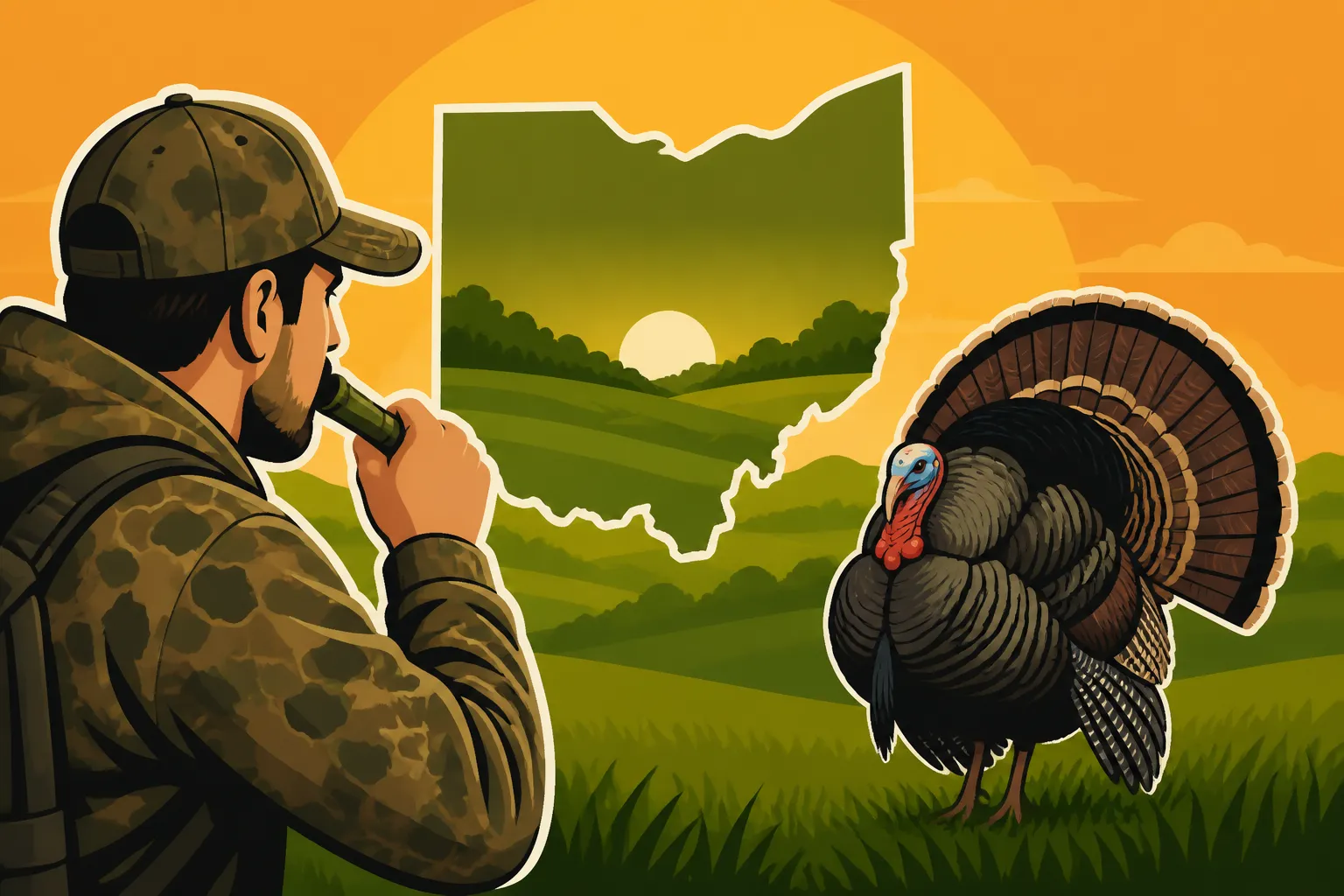
There’s nothing quite like the feeling of creeping into the pre-dawn woods, the air crisp and full of expectation, only to be met with a frustrating silence. Many Ohio turkey hunters know the struggle: you’re convinced there’s a gobbler close, but he just won't sound off, making it impossible to pinpoint his location. This guide is all about helping you overcome that challenge by mastering locator calls, turning those silent mornings into thrilling hunts by getting those elusive birds to give away their position.
Why Locator Calls are Essential for Ohio Turkey Hunting
Let's face it, turkeys are masters of deception. They can be right over the ridge, across the hollow, or nestled in a stand of pines, and you'd never know it without some help. Relying solely on a gobbler to announce himself isn't always a winning strategy, especially when hunting pressured birds or dealing with challenging terrain. That's where locator calls become an indispensable part of your turkey hunting arsenal, allowing you to effectively scout, locate, and plan your approach, rather than just wandering blindly.
The Silent Morning Roost Problem
We've all been there: you slip into your chosen spot well before first light, settle in, and wait for the forest to wake up. The owls hoot, the coyotes yip, maybe even a crow caws in the distance, but the gobbler you were hoping to hear just… doesn't. Perhaps it's the cold, or heavy fog, or maybe he’s just a quiet old bird. This silence can be incredibly disheartening, leaving you wondering if you've picked the wrong ridge or if there are even turkeys in the area at all. Without a locator call, you're left guessing, forced to either move blindly or wait until fly-down and hope you get lucky with a shock gobble from your actual turkey calls.
The challenge intensifies on public lands where other hunters might be putting pressure on birds. A gobbler that was vocal early in the season might become tight-lipped after being pursued a few times. He might still gobble, but only in response to very specific, non-threatening sounds. This is precisely when a well-executed locator call can make all the difference, coaxing a response when he might ignore standard turkey vocalizations. It's about triggering his instinct to gobble at a sharp, loud sound, without making him feel like he's being hunted.
Covering Ground Effectively
Ohio’s diverse landscape, from the steep, timbered hills of the southeast to the expansive farmlands and woodlots of the northwest, can make locating turkeys a serious chore. You might have miles of ground to cover, and simply walking and listening can be inefficient, especially if birds are scattered or holding tight. Imagine trying to cover hundreds of acres in Wayne National Forest just by listening for an occasional natural gobble – you'd need days!
Locator calls are like a sonar system for turkey hunting. Instead of waiting for the turkey to speak, you actively send out a "ping" to get a response. This allows you to quickly eliminate unproductive areas and focus your efforts where turkeys actually are. By strategically stopping and using a locator call, you can identify a bird’s general vicinity, then use that information to close the distance or set up an ambush point. This method drastically reduces the amount of aimless walking and increases your chances of encountering a bird before he flies down and starts roaming.
Understanding Ohio's Diverse Terrain
The effectiveness and choice of locator call can vary greatly depending on where you're hunting in Ohio. The rolling, heavily wooded terrain of southeast Ohio, for example, demands calls that can cut through dense timber and carry across deep hollows. Sounds like owl hoots or crow caws tend to project well in these environments, bouncing off ridges and covering significant distance. You might find yourself Reading a Ridge for Southeast Ohio Deer often, and the same principles of sound travel apply to turkeys.
In contrast, the more open, agricultural landscapes of northwest Ohio, characterized by smaller woodlots and wide-open fields, might require a different approach. Here, sounds carry differently, and a distant crow call might be heard for miles. In these areas, a coyote howl could be incredibly effective at drawing a response, especially from birds roosting on isolated woodlot islands. Understanding how sound travels in your specific hunting environment, whether you're working Hunting Northwest Ohio Farmland Deer or hiking through Shawnee State Forest Hunting, is key to choosing the right call and getting that crucial gobble back.
Types of Locator Calls and How They Work
Locator calls aren't meant to sound like a turkey. Their purpose is to mimic other common wildlife sounds that often trigger a "shock gobble" from a tom. Turkeys are naturally reactive to loud, sudden noises in their environment, often gobbling in response to assert dominance or simply react to a perceived intrusion in their space. This is the biological principle behind why these calls work.
Owl Hooters and Crow Calls
These are arguably the most classic and widely used locator calls, and for good reason—they work across almost all of Ohio's turkey habitats.
-
Owl Hooters: Mimicking the barred owl, these calls are particularly effective in the quiet, pre-dawn hours and at dusk when owls are naturally active. A barred owl's distinctive "Who cooks for you? Who cooks for you all?" call can often provoke a gobbler to sound off from his roost. The deep, resonant sound carries well through timber and across valleys, making it ideal for checking distant ridges or valley bottoms. I've had countless mornings on public land in southern Ohio where a well-placed owl hoot was the only thing that broke the silence, revealing a gobbler I never would have known was there otherwise. You can even try an exaggerated "Who cooks for you, who cooks for youuuuuuu?" to really make it stand out.
-
Crow Calls: These calls imitate the harsh caw of a crow, a sound turkeys often associate with alarm or general forest activity. Crow calls are incredibly versatile and can be used effectively at any time of day. They are especially useful later in the morning when owls have quieted down but turkeys are still vocal. The sharp, piercing sound of a crow call travels far, especially in open areas, and can elicit a gobble from birds that might be reluctant to respond to other sounds. I often rely on a crow call during my run-and-gun efforts, particularly when moving between woodlots or across fields, checking for birds that have moved off the roost. The key is to make it sound natural, not a continuous squawk, but bursts of realistic caws.
Coyote Howls and Pileated Woodpecker Calls
While less conventional than owl and crow calls, these alternatives can be incredibly effective, especially on pressured birds that have grown accustomed to the typical locator sounds.
-
Coyote Howls: A coyote howl is a fantastic locator call, particularly in areas where coyotes are prevalent, which is pretty much all of Ohio these days. The loud, mournful howl can often get a gobbler to respond, especially if he perceives it as another animal intruding on his territory. The beauty of a coyote howl is that it's an intimidating sound, and a gobbler's response to it is often a territorial assertion. This can be especially potent when hunting birds that have been "educated" by other hunters using traditional locator calls. Imagine slipping into a remote corner of Zaleski State Forest; a coyote howl can cut through the stillness and get a distant tom to declare his presence. Just be mindful of how loud you're being; you want a response, not to spook every animal in the county.
-
Pileated Woodpecker Calls: The loud, distinctive "kek-kek-kek-kek" of a pileated woodpecker can be an excellent, often overlooked, locator call. These large woodpeckers are common throughout Ohio's timbered areas, and their calls are part of the natural soundtrack of the woods. A gobbler might shock gobble at this familiar, sharp sound without feeling threatened. This call is typically a shorter-range locator compared to an owl hooter or coyote howl, making it great for when you suspect a bird is closer but still unwilling to give himself away. It’s also very natural-sounding, which can be less alarming to a wary bird. Many hunters, myself included, will carry a small, hand-held pileated call in their vest for those mid-morning lulls when a subtle, familiar sound is needed to pique a gobbler's interest.
Shock Gobbles and Their Limitations
A "shock gobble" call is designed to perfectly mimic a turkey's own gobble. While it might seem counterintuitive to use a gobble to locate a gobbler, it can be extremely effective in certain situations, but it comes with a significant risk.
-
When to Use Them: The primary scenario for a shock gobble call is when you know there are turkeys in the vicinity, but they are completely unresponsive to other locator calls. It acts as a direct challenge to a tom's dominance, often provoking an immediate and aggressive response. I've seen it work wonders on a particularly quiet morning when nothing else would get a bird to talk. It's also useful when trying to pinpoint the exact tree a bird is roosting in, as the "competition" might make him gobble directly from his limb.
-
When to Be Cautious: The major limitation and risk with a shock gobble is that it can alert the turkey to your presence as a rival tom. If you’re too close or use it too aggressively, the gobbler might simply shut up and slip away silently, or worse, come directly towards you, only to spot you and spook. This is especially true on heavily hunted public land or when dealing with exceptionally smart, older toms. It’s a high-reward, high-risk play. I recommend reserving shock gobblers for very specific, calculated situations, and always be ready to call aggressively with turkey vocalizations if you get a response, as the bird might be coming in hot to challenge. Never use a shock gobble when you're just randomly prospecting for birds; it's too risky.
Mastering Locator Call Techniques in Ohio
Using a locator call isn't just about blowing into it. There's an art and a science to it, especially when trying to get an Ohio gobbler to give up his position. Mastering these techniques can significantly increase your chances of success.
Timing is Everything
Knowing when to use your locator call is almost as important as knowing how to use it. Turkeys have different patterns of vocalization throughout the day, and your calling strategy should adapt accordingly.
-
Pre-dawn and Fly-Down: This is prime time for locator calls, particularly owl hoots. As you're walking into your chosen spot in the dark, pause every few hundred yards and let out a series of hoots. The stillness of the pre-dawn air allows sound to carry incredibly well, and a roosted gobbler is often most inclined to gobble before his feet hit the ground. A strong response here gives you crucial information, letting you know exactly where to set up for fly-down. You can then quickly move into position, focusing on Calling an Ohio Gobbler Off the Roost. Once he's on the ground, a crow or pileated call can sometimes get him to gobble again as he starts to move, helping you track his general direction.
-
Mid-Morning Lulls: After fly-down, gobblers might be with hens or simply moving silently through the woods, making them difficult to locate. This is where crow calls and coyote howls really shine. As the woods become more active with other sounds, a sharp, distinct locator call can still cut through the background noise. During these periods, I like to employ a "run-and-gun" strategy, moving cautiously through the timber, stopping every 150-200 yards, and letting out a series of calls. This helps you cover ground efficiently and pick up on birds that are otherwise quiet. If you get a response, you can then set up a quick ambush or move to cut off his path. Run-and-Gun Turkey Tactics on Public Land can be greatly enhanced with effective mid-morning locator calling.
-
Afternoon Roosting: As the day winds down, turkeys begin to think about finding a roost tree. Around mid-afternoon, you can start using your locator calls again, focusing on likely roosting areas like mature timber along ridge tops or near water sources. An owl hoot is excellent for this period, as it mimics the natural sounds turkeys expect to hear as evening approaches. Locating a bird on his roost in the afternoon can give you a significant advantage for the next morning's hunt, allowing you to plan your approach perfectly for a pre-dawn setup. Using a
GoHuntapp or other mapping tools to mark these potential roosting sites and then confirming with a locator call is an excellent strategy.
Reading the Terrain and Weather
Ohio's varying topography and sometimes unpredictable weather can significantly impact how your locator calls perform and how turkeys respond. Ignoring these factors can lead to frustrating silence or misinterpretations.
-
Wind: Wind is the nemesis of sound travel. A stiff breeze can carry your call away, or worse, carry your scent and sound directly to a turkey. Always try to call with the wind at your back or across your body if possible, pushing your sound further. On windy days, you'll need to call louder and more frequently, and be prepared to move closer to potential turkey locations. Conversely, a quiet, still morning is ideal, as your calls will carry far and you'll easily hear faint responses.
-
Hills and Hollows: In the rugged Appalachian region of Ohio, sound can play tricks on you. It tends to travel up hills better than down into hollows. If you're on a ridgetop calling into a valley, a gobbler might be much closer than he sounds. Conversely, a bird gobbling from a hollow can sound very distant. Always use your compass or a mapping app like
GoHuntto get a bearing on the sound, then factor in the terrain. A response from directly across a deep hollow can indicate a bird is much further than if he's on the same ridge system as you. This is where understanding Wind and Thermals on an Appalachian Ridge becomes crucial, not just for concealment but for sound propagation. -
Dense Cover: Thick pockets of pine, cedar, or young hardwoods can absorb sound, making it harder for your calls to penetrate and for responses to reach you. In these areas, you might need to move more frequently, pausing to call from small clearings or elevated positions that allow your sound to travel better. Don't be afraid to take a few steps into an open hardwood flat to call, then slip back into the thick stuff if you get a response.
The Art of the Listen
Getting a gobble back is only half the battle; the real skill lies in interpreting that response and pinpointing the turkey's exact location.
-
Interpreting Responses: Not all gobblers are created equal. A loud, booming gobble that echoes through the woods might mean an excited bird, or simply one on a high, open roost. A muffled, distant gobble could be a bird deep in a hollow or one that’s just starting to wake up. Pay attention to the clarity and direction of the gobble. Does it sound like it's coming from directly ahead, or is it off to your left or right? Does the sound seem to move as you adjust your head? Try to take multiple bearings if possible.
-
Pinpointing Direction: To accurately pinpoint a gobbler, especially in thick cover or hilly terrain, try to get to a point where you can hear the gobble from two different locations. Walk 50-100 yards in one direction, call again, and listen. If the gobble sounds louder or clearer, you’re moving towards him. If it sounds weaker, you’re moving away. This triangulation method, though time-consuming, is incredibly effective for getting a precise location. Mark your initial spot on your
GoHuntapp, then mark where you think the gobble came from. Then move, and mark a new location and bearing. The intersection of those lines will give you a much better idea of where that bird is Finding Ground Others Walk Past.
| Locator Call Type | Primary Use | Ohio Suitability | Pros | Cons |
|---|---|---|---|---|
| Owl Hooter (Barred) | Pre-dawn, Dusk, Roost Locator | Excellent in all timbered areas (Appalachian, woodlots) | Natural sound, carries far, effective on roosted birds | Less effective mid-day, can be overused |
| Crow Call | Mid-morning, All-day prospecting | Versatile, great for farmland woodlots and open timber | Loud, cuts through noise, works throughout the day | Can sound unnatural if not varied, very common |
| Coyote Howl | Mid-morning, Pressured birds | Good in all regions, especially effective in farm country | Unique sound for shock gobble, territorial response | Can be too loud if not careful, less traditional |
| Pileated Woodpecker | Close-range, Mid-morning lull | Best in mature timber with hardwood stands | Very natural, less alarming, good for wary birds | Shorter range, can be harder to master |
| Shock Gobble (Turkey) | Specific situations, challenge | Limited use, high-risk/high-reward | Direct challenge, can elicit immediate response | High risk of spooking, can reveal your position, overused |
Common Mistakes and How to Avoid Them
Even with the best locator calls and techniques, there are pitfalls that can turn a promising hunt into a silent walk in the woods. Being aware of these common mistakes and actively working to avoid them will greatly improve your success rate.
Over-Calling and Spooking Birds
One of the most common mistakes, especially for excited or impatient hunters, is over-calling. When you're constantly blowing your locator call, you're not giving the turkey a chance to gobble naturally, and you're potentially alerting him to your presence. A turkey might get "call shy" if he hears the same sound repeatedly in his area without any apparent source or action.
-
The Delicate Balance: Think of locator calling as a conversation, not a monologue. Make a series of calls, then listen. Give the turkey ample time to respond, often 30-60 seconds, or even longer in dense cover where sound might be delayed. If you get a response, a single, softer follow-up call can confirm his location. Once you know where he is, stop locator calling and switch to appropriate turkey vocalizations or simply move in silently. Your goal is to locate, not to annoy or educate the bird further. I’ve found great success in the Ohio Spring Turkey Zones and Dates by being patient with my calling.
-
Movement is Key: After getting a response, focus on moving quietly and strategically to get into a good setup position. Don't keep hammering away on the locator call. The bird knows where he is, and now you know where he is. The next move is yours, and it should be a quiet one aimed at getting within shooting range.
Misinterpreting Responses
Not every loud sound that comes from the woods is a gobbler responding to your call. Sometimes, your hopes can get the better of you, leading you to pursue a phantom bird.
-
Not Every Sound is a Gobbler: I've been fooled by everything from noisy squirrels rustling leaves to distant chainsaws echoing off ridges. Even crow caws can sometimes mimic a muffled gobble if your imagination is running wild. Before you commit to moving on a "gobble," be absolutely certain it's the real deal. If there’s any doubt, try another series of locator calls or a different type of call to confirm. This is particularly important when Hunting the Ohio Youth Gun Weekend, as young hunters might be prone to excitedly misidentifying sounds.
-
Locating Versus Calling: Remember, locator calls are for locating, not for calling in a bird. If you get a gobble, great! Now you need to transition to actual turkey vocalizations (yelps, clucks, purrs) or a silent stalk to get the bird to come into range or allow you to get into a strategic position. Don't confuse the two. Using locator calls too close to your setup, especially right before fly-down, can also be a mistake. A too-close crow caw might make a gobbler nervous before he's even on the ground.
Neglecting Scouted Areas
Locator calls are powerful, but they should be used in conjunction with good old-fashioned scouting, not as a replacement for it. Relying solely on calls can lead you to chase individual birds that might not be in a huntable area, or miss out on birds that are just naturally quiet.
-
Combining Calls with Prior Knowledge: Before the season, spend time Scouting Ohio Public Land Before Season. Look for turkey sign: tracks, droppings, strut marks, and most importantly, potential roost trees. Use aerial maps, like those found in the
GoHuntapp, to identify pinch points, food sources, and likely travel corridors. When you go in to hunt, start your locator calling in these high-probability areas. If you know a particular ridge usually holds birds, that's where you should focus your calling efforts first. -
Flexibility is Key: While scouting gives you a plan, locator calls help you adapt that plan in real-time. If your scouted area is silent, don't be afraid to move and use your calls to find a new bird. The combination of pre-season intelligence and in-the-moment locator calling is the most potent strategy for consistent success on Ohio gobblers. Sometimes, you'll locate a bird in an entirely unexpected area, reinforcing the importance of being flexible and ready to move. Even if you've done all your homework reading Where Ohio Gobblers Roost, a locator call can confirm or deny your intel.
Mastering locator calls takes practice and patience, but the rewards are well worth the effort. By understanding the different types of calls, when and where to use them, and how to interpret responses, you'll be well on your way to punching more tags in Ohio's turkey woods.
Disclaimer
This article is for general informational purposes only and does not constitute professional advice. Laws, prices and regulations vary by location and change over time. Consult a qualified professional for guidance on your specific situation.