Safety Harnesses and Lifelines
Every year, too many deer hunters in Ohio — and frankly, everywhere — suffer serious, even life-altering, injuries from falls out of treestands. It's a sobering reality that no one wants to think about when they're eagerly heading out to the woods, but ignoring it only increases the risk. This comprehensive guide is here to walk you through the absolute essentials: safety harnesses and lifelines, ensuring you understand not just how they work, but why they're the most crucial pieces of gear you'll ever take into a treestand.
The Unspoken Truth: Treestand Falls Are Preventable
It’s easy to dismiss the idea of a fall. We’ve all climbed stands hundreds of times without incident, right? The familiar creak of the ladder, the confident step onto the platform, the sway of the tree in the wind – it all feels routine. But complacency is a hunter’s worst enemy when it comes to treestand safety. A sudden gust of wind, a misplaced foot, a branch breaking, or even just fatigue can turn a routine climb into a nightmare in mere seconds. The ground is always farther away than you think when you're caught off guard.
The sheer height might not seem extreme when you're twenty feet up, but the impact of hitting the hard earth from that distance is devastating. We're not talking about a twisted ankle; we're talking about broken bones, paralysis, and worse. The woods are beautiful and peaceful, but they are also unforgiving. Ignoring safety is like playing Russian roulette with your hunting career and, more importantly, your life and the well-being of your loved ones who expect you to come home safe.
The Silent Threat of Treestand Falls
Many hunters focus so much on the hunt itself – the deer movement, the wind direction, the shot opportunity – that the basic act of getting into and out of their stand becomes an afterthought. But statistically, treestand falls are a leading cause of serious injury and death for hunters. These aren't just statistics; these are real people, often experienced hunters, whose lives were irrevocably changed because of a single misstep or a moment of forgetting their harness. It's not always the novice hunter who falls; sometimes it's the most seasoned who have developed a false sense of security.
Imagine you're climbing into your stand on a chilly November morning, your hands are a bit numb, and there's a thin layer of frost on the metal steps. You're eager to get settled before first light, perhaps even a bit rushed. One foot slips, and suddenly you're falling. Without a harness, your story could end there. Or consider a late-season hunt in January, after a long day in the stand, you're tired, cold, and ready to get back to the truck. You might try to quickly descend, thinking "just this once," and that's when gravity decides to remind you who's boss. The forest floor doesn't care how experienced you are.
Common Misconceptions and Excuses
"It won't happen to me." This is perhaps the most dangerous thought any hunter can have. We all think we're invincible, especially when we're focused on the thrill of the hunt. But accidents are, by definition, unexpected. Another common excuse is that harnesses are uncomfortable, bulky, or restrict movement. While older models might have been a bit cumbersome, modern safety harnesses are designed for comfort and mobility. Brands like GoHunt and others have invested heavily in ergonomic designs that allow you to climb, sit, and even shoot with relative ease.
Some hunters also believe that simply holding onto the tree is enough, or that a cheap rope tied around their waist offers protection. These are perilous assumptions. A simple waist rope can cause serious internal injuries or asphyxiation if you fall. Your hands can slip, or you can lose consciousness. A full-body harness is designed to distribute impact forces across your entire body, minimizing injury and keeping you upright. There’s no substitute for proper, certified safety gear. Don't let a moment of inconvenience or a few dollars deter you from protecting yourself.
Understanding Your Safety Harness System
A modern full-body safety harness is a meticulously engineered piece of equipment, far more than just a few straps. It's designed to cradle your body and distribute the forces of a fall safely, preventing the kind of concentrated impact that can lead to severe injury. Understanding each component and its role is key to trusting your gear and using it correctly. This isn’t a one-size-fits-all piece of equipment, so knowing the ins and outs is vital for your comfort and, most importantly, your safety.
Anatomy of a Full-Body Harness
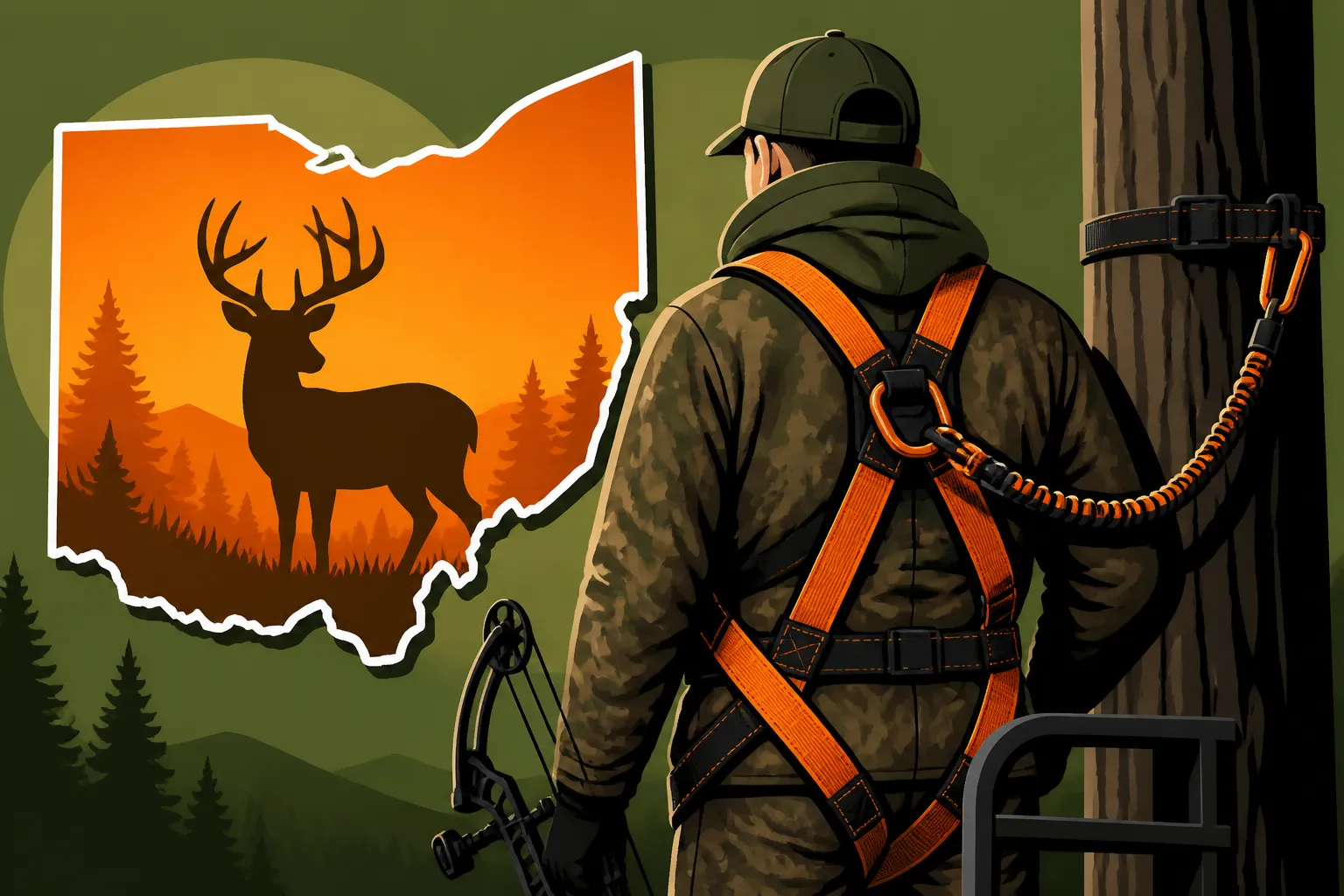
At its core, a full-body harness consists of straps that go over your shoulders, around your torso, and through your legs, connecting at various points with buckles and adjustment straps. The goal is a snug, secure fit that doesn't pinch or bind but also won't allow you to slip out. The critical component is the dorsal D-ring, located on your back between your shoulder blades. This is where your tether connects. In the event of a fall, the D-ring attachment point keeps you upright, preventing you from flipping upside down or suffering severe neck and head trauma.
Modern harnesses often come with quick-connect buckles, making them faster and easier to put on, even in the pre-dawn dark. Many also feature specialized padding and breathable fabrics to reduce discomfort during long sits in the stand, especially important during a full day on public land like Wayne National Forest. Always ensure all straps are threaded correctly through their buckles and cinched down before you ever leave the ground. A harness that isn’t properly adjusted is almost as dangerous as not wearing one at all.
The Tangle-Free Tether and Its Role
The tether is the short strap that connects your harness's dorsal D-ring to the tree or your lifeline. It's often made of durable webbing or rope, and critically, it should be short enough to prevent you from hitting the stand platform or the ground if you were to fall. A good rule of thumb is that when standing upright on your stand, the tether should be snug, allowing only minimal slack. This minimized slack means you can still move and pivot to take a shot, but a fall won't result in a long, uncontrolled drop.
Many tethers are designed with an elasticated or bungee section, which absorbs some of the shock if you fall, further reducing the jolt on your body. Remember, the tether is your primary link to safety once you're in the stand. It needs to be inspected regularly for wear and tear, especially after a particularly harsh season exposed to Ohio's elements. Don't compromise on the quality or condition of this vital piece of your safety system. You want to be sure it's reliable every time you climb up to a stand, whether it's for Bowhunting Ohio's Long Archery Season or Hunting the Ohio Rut in Early November.
The Importance of Lifelines and How to Use Them
While your harness is essential for when you’re in the stand, what about getting up to it or climbing down? This is where the vertical lifeline comes into play. It’s the often-overlooked hero of treestand safety, providing a continuous connection from the moment your feet leave the ground until they touch it again. Without a lifeline, you’re only truly safe once you're tethered in the stand, leaving you vulnerable during the most dynamic and often riskiest phases of your hunt.
Setting Up a Vertical Lifeline
A vertical lifeline is a rope that runs from the base of the tree, up to above your treestand platform, and then back down. It's secured at the base and often at the top with specific knots and straps. The crucial component that interacts with the rope is a Prusik knot or a mechanical rope grab, which you attach to your harness's tether. As you climb, you slide the Prusik knot or rope grab up the lifeline. If you slip, the knot or device immediately cinches down on the rope, arresting your fall.
Proper installation is paramount. The lifeline needs to be securely anchored at both ends, and the rope itself should be strong, weather-resistant, and free of frays or damage. Many hunters will install their lifelines during the off-season or while Scouting Ohio Public Land Before Season, ensuring they are well-placed and ready to go before the adrenaline of hunting season takes over. This thoughtful preparation ensures a safe system is always in place, rather than a hurried, unsafe setup in the dark.
The Continuous Connection Principle
The beauty of a vertical lifeline is that it allows for a "continuous connection." This means from the moment your feet leave the ground until you are safely tethered into your stand, and again when you descend, you are always attached to the tree. No more dangerous moments of being unclipped while transitioning from climbing sticks to your stand platform. This continuous connection is a game-changer for treestand safety and is mandated by safety organizations precisely because it eliminates the most common points of failure during the ascent and descent.
Think of it this way: without a lifeline, you're disconnected at least twice per hunt – once getting into the stand, and once getting out. These are critical moments of vulnerability, especially when you're fatigued, or conditions are slick. With a lifeline, your safety tether slides right up and down the rope with you, keeping you connected at all times. This peace of mind allows you to focus on the hunt, knowing that a simple slip won't lead to disaster. It's an indispensable addition to any fixed stand or climbing system. For more on safe climbing, consider reading about Climbing Sticks for Rough Bark.
Choosing the Right Gear and Best Practices
Selecting the right safety harness and lifeline isn't just about buying the first thing you see. It's about investing in gear that fits your body, suits your hunting style, and is built to last. Just like you wouldn't skimp on quality optics or a reliable firearm, your safety gear deserves the same level of consideration and investment. After all, it's protecting your most valuable asset: yourself.
Proper Fit and Comfort
A safety harness that doesn't fit correctly is a hazard in itself. If it's too loose, you could slip out or suffer severe chafing and impact injuries. If it's too tight, it can restrict your circulation, leading to discomfort or even serious medical issues during a prolonged hang after a fall. Most harnesses are adjustable to accommodate various body types and layers of clothing, which is especially important when hunting Cold-Weather Sitting Strategy in Ohio.
Take the time to try on your harness with the clothes you'd typically wear hunting. Adjust all the straps so it feels snug but not restrictive. You should be able to move freely, raise your arms to shoot, and sit comfortably. When adjusted properly, the leg straps should allow for two fingers to be inserted, and the chest strap should sit across your sternum. If you plan to use a particular brand like GoHunt for other gear, check if they offer harnesses that integrate seamlessly or if they have specific sizing guides. A well-fitting harness will make you forget you're even wearing it, allowing you to focus on the hunt.
Regular Inspection and Maintenance
Your safety gear is subjected to harsh conditions: rain, snow, UV light, dirt, and sweat. All of these can degrade the materials over time. Before every hunting season, and ideally before every single hunt, you need to thoroughly inspect your harness, tether, and lifeline. Look for frayed straps, cuts, tears, faded webbing, stretched elastic, bent buckles, or corroded metal components. Pay close attention to stitching and areas where straps rub against each other or hardware.
If you find any damage, no matter how minor it seems, replace the component or the entire system immediately. Don't try to repair it yourself; safety equipment is engineered to precise standards. Store your harness and lifeline in a cool, dry place away from direct sunlight and chemicals. Follow the manufacturer's cleaning instructions, which usually involve mild soap and water, and allow everything to air dry completely. Proper care extends the life of your gear and ensures it will perform when you need it most.
Essential Safety Accessories
Beyond the harness and lifeline, there are a few other accessories that can enhance your treestand safety:
- Suspension Relief Strap: If you do fall and are hanging, this strap allows you to stand up or relieve pressure on your legs, preventing "suspension trauma," a dangerous condition where blood pools in your legs. Many modern harnesses include this feature, but it's worth verifying.
- Signaling Device: A whistle, cell phone, or personal locator beacon (PLB) can be invaluable for calling for help if you fall and are unable to retrieve yourself. Cell service can be spotty in places like the deep woods of Shawnee State Forest, so a PLB might be a better option in remote areas.
- First Aid Kit: A compact first aid kit should always be with you, especially when hunting alone. Minor cuts or scrapes can become serious in the wilderness if left untreated.
- Emergency Descender: Some advanced systems offer a controlled descender that allows you to lower yourself safely to the ground after a fall, rather than waiting for rescue. These are more common with professional climbing gear but are becoming available for hunters.
Investing in these accessories is a small price to pay for the added layer of protection and peace of mind they provide. When you're spending all day in a stand, trying to coax in a wary buck during Ohio's Two-Weekend Gun Deer Season, the last thing you want is to be unprepared for an emergency.
| Component | Primary Function | Inspection Points | Replacement Indicator |
|---|---|---|---|
| Full-Body Harness | Distributes fall forces, keeps hunter upright | Frayed straps, stretched webbing, bent buckles, loose stitching | Visible damage, faded material, any component failure |
| Tether | Connects harness to lifeline/tree, limits fall distance | Cuts, abrasions, UV damage, stretched elastic, weak attachment points | Any visible damage, excessive wear |
| Vertical Lifeline | Provides continuous connection during ascent/descent | Cuts, frays, knots, UV damage, worn rope sheath | Visible core, excessive wear, damaged knots |
| Prusik Knot/Rope Grab | Slides on lifeline, locks during a fall | Worn ropes, loose stitching, cracks in mechanical parts | Slippage, visible damage, inability to grip rope |
| Suspension Relief Strap | Prevents suspension trauma after a fall | Tears, frays, weak attachment points | Any damage, inability to deploy |
Disclaimer
This article is for general informational purposes only and does not constitute professional advice. Laws, prices and regulations vary by location and change over time. Consult a qualified professional for guidance on your specific situation.