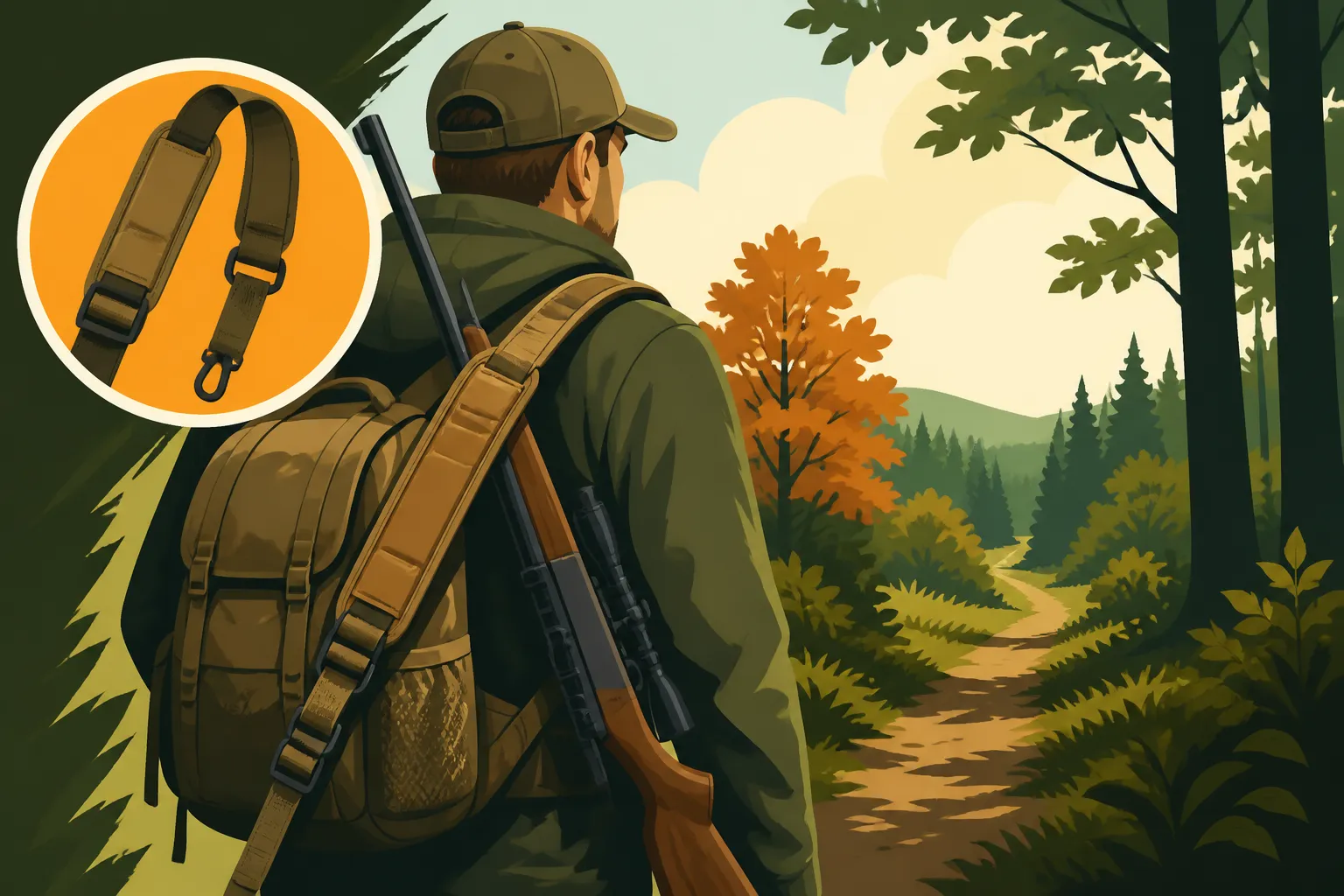
Slings for a Long Wayne Forest Walk
Anyone who has spent a full day still-hunting the steep ravines and tangled timber of Wayne National Forest knows the true meaning of tired shoulders. After hours of traversing uneven ground, climbing over downed logs, and pushing through thick brush, even a lightweight rifle or shotgun can start to feel like a lead pipe. This guide is here to walk you through why a quality sling isn't just a nice-to-have accessory for your rifle or shotgun, but an absolute necessity for comfortable and effective hunting in Ohio's rugged public lands.
Why a Quality Sling Matters for Wayne National Forest Hunts
Hunting the Wayne National Forest or other deep woods in Ohio isn't like walking a groomed trail. It’s an experience that tests your endurance, your gear, and your resolve. The terrain is unforgiving, often requiring long hauls to get to remote areas where deer and turkeys feel less pressured. Without a proper way to carry your firearm, you're fighting an uphill battle against fatigue and potential fumbles.
The Toll of Long Hauls on Rugged Terrain
Imagine spending dawn to dusk picking your way through creek bottoms, climbing those characteristic Appalachian ridges, and navigating dense thickets. Your hands are needed for balance, for pushing branches aside, or for simply resting. If you’re constantly clutching your rifle, your hands will cramp, your arms will ache, and your focus will inevitably shift from the hunt to your discomfort. A rifle sling allows you to distribute the weight across your shoulder, back, or chest, freeing up your hands and significantly reducing fatigue. This is especially true when you’re humping in a pack full of gear for a day hunt, like one might do when hunting the Nelsonville Ranger District. The collective weight adds up quickly.
Think about traversing a steep hillside covered in wet leaves. You need both hands to steady yourself against trees or grab roots. Trying to do that while holding a firearm securely in one hand is an accident waiting to happen. A good sling lets the rifle ride comfortably and securely, so your hands are free to maintain balance, helping you avoid a slip that could damage your firearm or, worse, injure yourself. When you're miles deep in the woods, far from your truck, avoiding injury is paramount. This consideration is a big part of First Aid Kits for Remote Wayne Forest Ground.
Maintaining Readiness and Minimizing Fatigue
Beyond just comfort, a sling plays a crucial role in being ready when the moment of truth arrives. When you’re exhausted from carrying your firearm for hours, the last thing you want is to be fumbling to get it into a shooting position when a deer or turkey suddenly appears. A properly adjusted sling allows for quick, fluid transitions from carrying to aiming. Your rifle is always within reach, at a consistent position on your body, so you don't have to think about where it is or how to grab it. This means less wasted movement, less noise, and ultimately, a better chance at a successful shot.
Furthermore, minimizing fatigue helps maintain mental sharpness. Hunting is as much a mental game as it is physical. If your body is screaming at you, your ability to focus on subtle deer sign, listen for a distant gobble, or patiently wait for a shot opportunity diminishes significantly. A good sling contributes to overall comfort, which keeps you in the game longer and more effectively. It helps you stay focused on Finding Sign in Big Appalachian Timber rather than nursing a sore shoulder. Many hunters find that resources like GoHunt offer great reviews on slings, helping them find one that can truly stand up to the rigors of an all-day hunt.
Key Features of a Great Hunting Sling for Ohio
When you're outfitting yourself for hunting in Ohio's diverse landscapes, from the thick cover of the state forests to the open fields of the farmland, choosing the right sling is as important as choosing the right optics or the right boots. Not all slings are created equal, and some features make a world of difference when you’re miles from the truck.
Material and Durability
The material of your sling dictates its comfort, longevity, and how it performs in Ohio's often unpredictable weather. You're looking for something that can withstand mud, rain, snow, and constant friction against your hunting clothes.
- Nylon or Synthetic Webbing: These are often the most common and affordable options. Look for heavy-duty, tightly woven nylon that resists fraying and stretching. They are generally weather-resistant and quick-drying, making them ideal for Ohio's wet autumns and snowy winters. They also tend to be lighter, which can be a real benefit on long treks.
- Neoprene: Often found in the padded sections of slings, neoprene offers excellent cushioning and a slight stretch. This elastic quality can make the rifle feel lighter as it absorbs some of the shock from walking. Neoprene is also water-resistant and provides good grip on your shoulder, preventing the rifle from sliding around, even with Blaze Orange Jackets Versus Vests that might be slick.
- Leather: While traditional and aesthetically pleasing, leather slings require more maintenance, especially in wet conditions, to prevent cracking and rot. They can also be heavier and less padded. However, a good quality leather sling, if cared for, can last a lifetime and offers a classic look. For those who appreciate tradition, a well-made leather sling can be a beautiful addition, but perhaps less practical for hardcore, all-weather public land hunting.
- Hybrid Materials: Many modern slings combine materials, such as a sturdy nylon webbing for durability with a thick neoprene or padded section for comfort. These often offer the best of both worlds for the demanding Ohio hunter.
Whatever material you choose, ensure the hardware (swivels, buckles, adjusters) is robust, non-corrosive, and made of metal rather than flimsy plastic. A sling is only as strong as its weakest link, and you don't want a buckle to snap when you're navigating a rocky creek bed.
Adjustability and Comfort
A sling that isn't comfortable or properly adjusted is barely better than no sling at all. The ability to quickly modify the length is paramount for different carrying styles, body types, and clothing layers.
- Easy-Adjust Sliders: Look for quick-adjust buckles or sliders that allow you to lengthen or shorten the sling with one hand. This is crucial for switching from a loose carry to a tight, secure carry for crawling or climbing, or quickly adjusting for shooting. A good example is the type of adjustment found on many quality backpack straps, allowing for intuitive changes.
- Padding: This is where comfort truly shines, especially for heavier firearms or longer walks. A wide, well-padded shoulder strap (at least 2-3 inches wide) will distribute weight much more effectively than a thin strip of webbing. Memory foam or thick neoprene padding can make a significant difference, preventing the strap from digging into your shoulder, particularly if you’re carrying a heavier straight-wall rifle.
- Non-Slip Backing: Some slings incorporate a textured or rubberized backing on the padded section to prevent it from sliding off your shoulder. This is a small detail that makes a huge difference, especially when you're moving over broken ground or wearing slick outerwear. Losing your grip and having your rifle slide down your arm can be annoying at best and dangerous at worst. Companies like GoHunt often highlight slings with these ergonomic features in their gear reviews.
Attachment Methods and Security
How your sling attaches to your firearm is critical for security and ease of use. You need a system that is strong, quiet, and reliable.
- Swivels: Most hunting rifles and shotguns come with sling swivel studs. You’ll need quick-detach (QD) swivels that clip onto these studs. Look for metal swivels with a positive locking mechanism to ensure they won't accidentally release. Many hunters prefer models that are quiet and don't jingle against the rifle stock as they walk. There are also flush-mount QD systems that fit into specialized bases for a cleaner look.
- Clips/Hooks: Some tactical or two-point slings use metal clips or hooks that attach to various points on the rifle, such as a buffer tube or Picatinny rail. Ensure these are robust, silent, and won't scratch your firearm's finish. They should also be easy to attach and detach if you need to quickly remove the sling.
- Integrated Systems: A few slings come with integrated attachment points that don't require separate swivels. These can offer a very streamlined and secure setup. For example, some custom stocks might have built-in sling points designed to work with specific sling hardware.
- Sling Material Loops: For firearms without swivel studs, or for those who prefer a simpler, quieter solution, some slings feature robust loops that can be threaded through existing slots on a stock or fore-end. While less common, these can be very secure if properly installed.
- Security: Regardless of the attachment method, test it vigorously before heading into the field. You should be able to shake your rifle, even drop it a short distance (safely, of course), without the sling failing. The last thing you want is your valuable Ohio Legal Firearms for Deer Hunting hitting the rocks because of a cheap or faulty attachment.
Types of Slings and Their Best Uses in Ohio Terrain
Just like there are different hunting methods for various game in Ohio, there are different sling designs tailored for specific needs. Understanding the pros and cons of each will help you select the ideal companion for your rifle or shotgun, especially when navigating diverse environments like Wayne National Forest, which can range from dense timber to open ridge tops.
Two-Point Slings: The Versatile Workhorse
The two-point sling is the classic, most widely used design, and for good reason. It attaches to the firearm at two points: typically near the buttstock and toward the front of the fore-end or barrel. This simple design offers excellent stability and versatility for the average hunter.
When you're slogging through the deep woods or up a steep incline in southeast Ohio, a two-point sling is invaluable. You can wear it over one shoulder, across your back, or across your chest (often called a "hasty sling" or "African carry"). This configuration keeps the firearm close to your body, preventing it from swinging wildly and potentially snagging on branches or making noise. For long walks, especially when you’re covering significant ground while Still-Hunting Shawnee State Forest Ridges or heading to a remote treestand, the two-point sling distributes the weight effectively, making the haul much more manageable.
The beauty of the two-point sling lies in its adaptability. You can adjust it tightly for carrying, then quickly loosen it to bring the rifle to bear. It provides good muzzle control when moving through brush, keeping the barrel from digging into the dirt or hitting obstacles. For hunters who value reliability, simplicity, and hands-free carrying over varied terrain, the two-point sling is hard to beat. It’s also often the most comfortable option for extended periods of walking, especially if it features ample padding. This versatility makes it a favorite for many Ohio hunters who might be hunting deer one week and turkeys the next.
Single-Point Slings: Quick Transitions, but Less Practical for Hiking
A single-point sling attaches to only one point on the firearm, usually at the rear of the receiver or near the pistol grip. This design is favored in more tactical, close-quarters situations where rapid transitions between shooting shoulders or very quick weapon presentation is critical.
The main advantage of a single-point sling is the freedom of movement it offers. The firearm hangs directly in front of you, allowing for very fast transitions from a relaxed hang to a ready-to-shoot position. It’s also easy to switch the rifle from one shoulder to the other, which can be useful if you need to shoot around cover on either side.
However, for a typical Ohio deer or turkey hunt that involves long walks, climbing, or navigating dense brush, the single-point sling presents several significant drawbacks. Because the firearm is only attached at one point, it tends to swing freely. This can lead to the rifle banging against your legs, snagging on brush, or even swinging out unexpectedly if you bend over or climb. This lack of muzzle control is problematic and potentially dangerous in the woods. While it might have niche applications for very specific hunting scenarios that involve minimal movement, it's generally not the best choice for the extensive hiking often required in Wayne National Forest Hunting or other rugged Ohio public lands. The constant movement can also be quite noisy as the rifle bumps against gear or your body.
Specialized Slings: Padded and Backpack-Style Options
Beyond the standard two-point and single-point designs, there are specialized slings designed to enhance comfort and carrying capacity for specific needs.
- Heavily Padded Slings: These are essentially enhanced two-point slings with extra-wide and thick padding, often made from neoprene or high-density foam. They are a godsend for hunters carrying heavier firearms, like many of the straight-wall cartridge rifles used in Ohio, or for those planning truly epic treks into remote areas. The extra padding significantly reduces shoulder strain and discomfort over several hours of walking. Some even have anti-slip surfaces to keep the rifle securely on your shoulder. If you're carrying a large rifle through the unglaciated hills of Southeast Ohio, a well-padded sling is practically a necessity.
- Backpack-Style Slings: These innovative designs take comfort to the next level by allowing you to carry your firearm much like a backpack. They often feature two shoulder straps and sometimes a waist belt, distributing the weight across both shoulders and your hips. This is an excellent option for very long-distance hauling, especially if you’re also carrying a heavy pack. Your hands are completely free, and the firearm is held very securely against your back, minimizing movement and snagging. When you need to shoot, a quick release mechanism allows you to shed the firearm from your back and bring it into action. This style is perfect for those all-day excursions deep into Hunting Southeast Ohio Appalachian Foothills where fatigue can really wear you down. This also pairs well with the overall strategy of Packs Built for a Wayne Forest Day Hunt.
Here’s a quick comparison of sling types:
| Sling Type | Pros | Cons | Best Use in Ohio Terrain |
|---|---|---|---|
| Two-Point | Stable, versatile, good weight distribution | Can snag if not adjusted, slower transitions than 1-pt | General hunting, long walks, varied terrain (most common choice) |
| Single-Point | Rapid presentation, quick shoulder transitions | Swings freely, poor muzzle control, noisy | Specialized tactical situations, not ideal for extensive hiking in dense cover |
| Padded Two-Point | Enhanced comfort, better weight distribution | Can be bulkier than basic two-point | Heavy firearms, very long treks, hunters prioritizing comfort on all-day sits |
| Backpack-Style | Superior weight distribution, hands-free, secure | Slower presentation, can be complex to adjust quickly | Ultra-long distances, climbing, rough terrain where full hands-free movement is key |
Choosing and Using Your Sling Effectively
Finding the right sling is only half the battle; knowing how to properly set it up and use it makes all the difference in the field. A sling that's too loose or too tight, or carried incorrectly, can be more of a hindrance than a help.
Proper Fit and Adjustment for Your Body and Gear
The perfect sling fit isn't a one-size-fits-all solution; it depends on your body type, the specific firearm you're carrying, and even the layers of clothing you're wearing.
First, attach your chosen sling to your rifle or shotgun. For a two-point sling, typically one end attaches to the swivel stud near the buttstock and the other to the stud on the fore-end. Once attached, put the rifle on as you intend to carry it. This might be over one shoulder, or diagonally across your back.
The goal is to adjust the length so that the firearm sits comfortably and securely against your body without being overly restrictive.
- Over-the-Shoulder Carry: If you carry it traditionally over one shoulder, the sling should be snug enough to keep the rifle from sliding off, but loose enough that the buttstock doesn't poke you in the ribs or the muzzle drag on the ground. You should be able to bring the rifle to a ready position relatively smoothly.
- Across-the-Back Carry (African Carry): Many hunters prefer this for long treks, especially in dense woods or when climbing. Adjust the sling so the rifle lies flat across your back, with the muzzle pointing up or down, depending on your preference and safety considerations. It should be tight enough that it doesn't bounce as you walk, but not so tight that it restricts your arm movement. This is an excellent way to keep the firearm protected while crashing through thickets.
- Across-the-Chest Carry: For quick access or when negotiating very steep terrain, carrying the rifle across your chest can be effective. The sling should be adjusted so the firearm rests comfortably, usually buttstock down, muzzle up, at an angle that doesn't impede walking but keeps the rifle accessible.
Always make adjustments with your full hunting gear on, including your jacket and daypack. The fit will feel completely different without those layers. What feels perfect in your living room might be horribly uncomfortable once you've got your Packs for a Day on Wayne National Forest loaded up. Many modern slings, especially those from reputable brands like GoHunt, offer intuitive adjustment mechanisms that make on-the-fly tweaking easy, even with gloves on.
Carrying Positions for Different Situations
Being proficient with your sling means knowing how to use different carrying positions to your advantage throughout the hunt.
- Field Carry (One Shoulder): This is the most common and quickest to deploy. The sling goes over one shoulder, allowing the rifle to hang at your side. It’s ideal for walking relatively open areas or when you anticipate a shot might come quickly. However, it's less stable for truly rugged terrain.
- Sling Carry (Across the Back/Chest): For those longer hikes, or when you need both hands free to climb or navigate difficult obstacles, the sling carry across your back or chest is superior. It offers maximum security and comfort, keeping the rifle out of the way. Just be mindful that bringing the rifle to bear from this position takes a few extra seconds, so use it when you're moving and not actively expecting an imminent shot.
- Hasty Sling for Stability: In a pinch, a two-point sling can be used to improve shooting stability. By wrapping your non-shooting arm through the sling and pulling it tight against your forearm, you create a very stable platform for off-hand or kneeling shots. This technique can be invaluable for taking a precise shot in a tight window, which is often the case when hunting deer in thick Ohio timber. Practice this at the range so it becomes second nature in the field.
- Creek Crossings and Obstacles: When crossing a creek, climbing over a log, or traversing a blowdown, secure your rifle tightly across your back. This ensures it won't swing into the water or get snagged and potentially damaged. Your hands remain free for balance and safety. This is particularly important when Hunting the Ohio River Backwaters where unforeseen obstacles might arise.
Sling Maintenance for Longevity
A good sling is an investment in comfort and safety, and like all hunting gear, it benefits from a little care to ensure it performs season after season.
- Cleanliness: After a wet or muddy hunt, wipe down your sling with a damp cloth to remove dirt and grime. For synthetic slings, a mild soap and water solution can be used, followed by a thorough rinse and air drying. For leather slings, use a specialized leather cleaner and conditioner to prevent drying and cracking. Ensure all metal hardware is clean and dry to prevent rust.
- Inspection: Before and after each season, inspect your sling thoroughly. Check for fraying webbing, especially around the attachment points and buckles. Examine the swivels or clips for any signs of wear, weakness, or corrosion. Make sure springs in quick-detach swivels are still strong. Replace any components that show signs of significant wear; a failure in the field is not an option.
- Storage: Store your sling clean and dry, ideally unclipped from your rifle if you store the firearm separately. Avoid leaving it exposed to prolonged direct sunlight or extreme temperatures, which can degrade materials over time.
By choosing the right sling, adjusting it properly, and maintaining it, you’ll be amazed at the difference it makes on those long, challenging hunts in Ohio's beautiful but demanding terrain. It frees your hands, reduces fatigue, and keeps you ready for whatever the hunt throws your way, allowing you to focus on the experience, not the burden of carrying your firearm.
Disclaimer
This article is for general informational purposes only and does not constitute professional advice. Laws, prices and regulations vary by location and change over time. Consult a qualified professional for guidance on your specific situation.