Upland Guns for Fencerow Cover
Hunting rabbits and pheasants along Ohio's dense fencerows can be an incredibly rewarding experience, but it also presents a unique challenge: these tight, briar-choked corridors demand a specific kind of shotgun that can handle quick, close-range shots. If you've ever found yourself struggling to swing a long-barreled magnum through a tangle of multiflora rose, or missed a flushing cottontail because your choke was too tight, then this guide is for you. We're going to dive deep into selecting the ideal upland gun to conquer Ohio's fencerow cover, making sure your next hunt is as effective as it is enjoyable.
Understanding Ohio's Upland Habitat and Hunting Style
Ohio's landscape, particularly in the agricultural regions, is crisscrossed with fencerows that serve as vital habitat and travel corridors for small game. These aren't vast open prairies, and they're certainly not deep woods. This unique environment dictates a particular approach to both scouting and gun selection.
The Nature of Fencerow Cover in Ohio
Picture a typical Ohio fencerow: a dense, often linear thicket separating two crop fields or pastures. It's usually a chaotic mix of multiflora rose, wild grapevines, honeysuckle, briars, and saplings that have grown unchecked. Sometimes it's bordered by standing corn or bean stubble, providing even more concealment. This isn't just a place for game to hide; it's often their primary home and travel route, offering food, protection from predators, and a buffer against harsh weather.
What this means for the hunter is that shots are almost always close-range and fast. A rabbit might bolt from under your feet, or a pheasant could explode vertically from a seemingly impenetrable tangle just a few yards away. You'll rarely get a long, deliberate shot. Instead, you need a gun that can be brought to bear quickly, swung through tight spaces without snagging, and throw a broad, effective pattern at very short distances. The cover itself is often the biggest obstacle, demanding a gun that's maneuverable rather than a long-range specialist.
Typical Upland Game in Ohio Fencerows
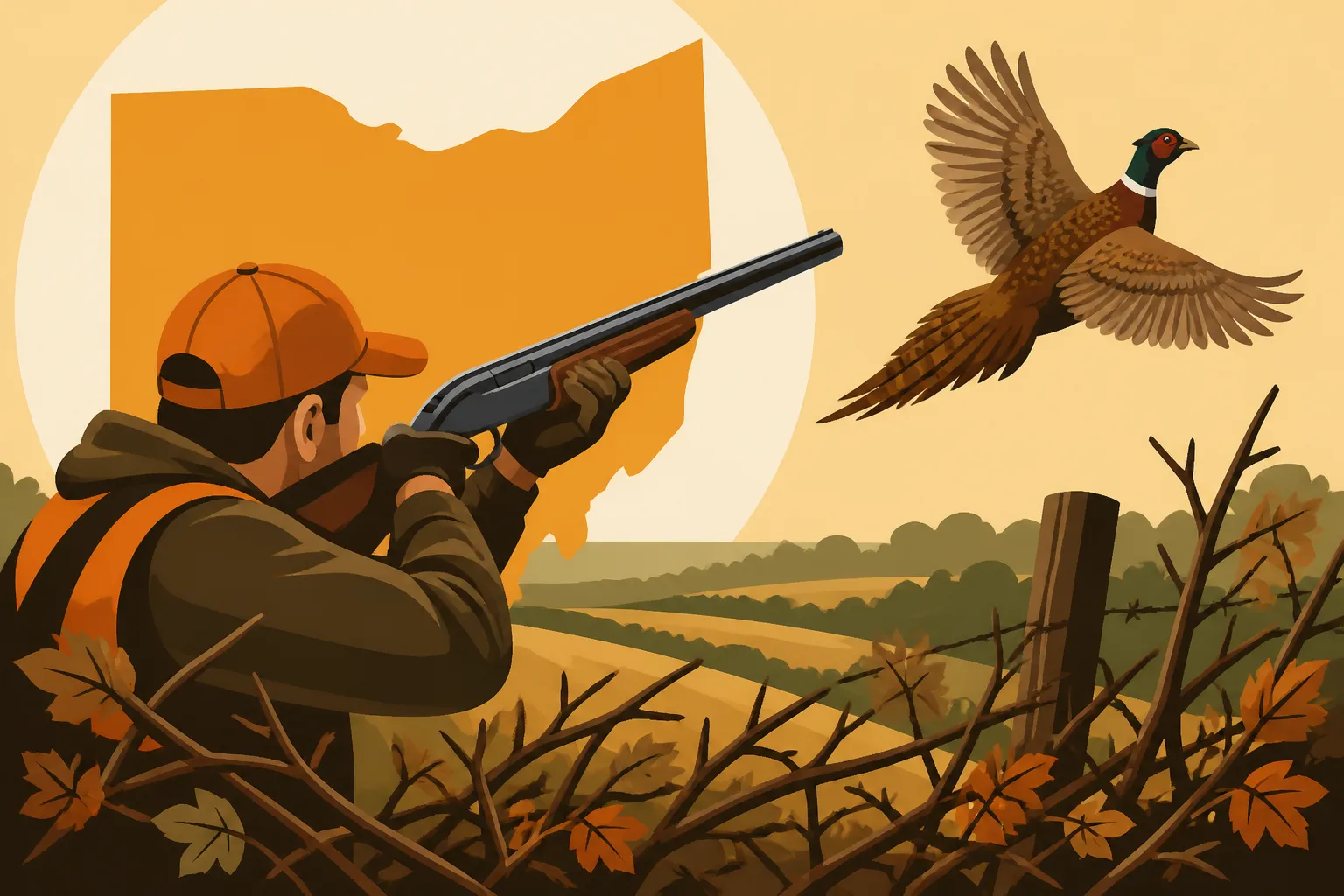
While Ohio's pheasant populations aren't what they once were, those hearty ringnecks that do persist often gravitate towards these dense fencerows, especially in farm country where other cover might be scarce. They'll hold tight, often flushing with an explosive burst that can startle even the most seasoned hunter. Pheasant Hunting Ohio Farm Country can be a real treat, but it requires being ready.
Rabbits, on the other hand, are the undisputed kings of the fencerow. Ohio's cottontails thrive in these linear thickets, darting in and out, often running just ahead of a hunter or dog. Rabbit Hunting Ohio Fencerows is a classic Ohio pastime, and the quick, unpredictable movements of a flushed rabbit demand a shotgun that can put a lot of pellets into a relatively small area, fast. Both of these species thrive on the cover and the readily available food sources found in and around these fencerows, making them prime targets for the upland hunter.
Hunting Pressure and Public Land Considerations
Ohio, being a state with significant hunting pressure, especially on public lands or easily accessible private tracts, means that upland game often gets educated quickly. This pressure can make rabbits and pheasants even more prone to holding tight in the densest fencerows, only flushing when a hunter is practically on top of them. This further reinforces the need for a gun that excels in close quarters.
When hunting fencerows on public hunting land, or even smaller private tracts where access is granted, you might find that birds and rabbits learn to run or flush strategically, using the cover to their advantage. A quick-handling gun helps you adapt to these evasive tactics. Using tools like the Scouting With the Ohio HuntFish App or premium mapping services like GoHunt can help you identify promising fencerow systems on available land, even those that might be overlooked by others. Knowing where the thicker, less-pressured stretches are can give you an edge, and having the right gun ready when that game flushes is paramount.
Shotgun Gauges: Matching Power to Purpose
Choosing the right gauge is perhaps the most fundamental decision when picking an upland gun for Ohio's fencerows. It's a balance between shot payload, recoil, gun weight, and ammunition availability. Each gauge has its loyal proponents, and for good reason—they all have their niche.
The Enduring Versatility of the 12 Gauge
The 12 gauge is, without a doubt, the most popular and versatile shotgun gauge globally, and it holds a strong position in Ohio's uplands too. Its primary advantage is its sheer flexibility. You can find 12-gauge ammunition in an incredible array of shot sizes and loads, from light target loads perfect for rabbits to heavy pheasant loads designed to reach out a bit further. This means you can tailor your ammunition precisely to the game you're pursuing, even if you're mixing rabbit and pheasant hunting in the same outing.
For fencerow hunting, a 12 gauge offers a large shot payload, meaning more pellets in the pattern, which can be forgiving on those lightning-fast, close-range flushes. It's often the go-to for pheasant hunters who want the confidence that their shot will put down a tough bird. The downside, however, can be the gun's weight and the recoil, especially if you're carrying it all day and taking multiple shots. A heavier 12-gauge can feel cumbersome in dense brush, and excessive recoil can lead to flinching over time, impacting accuracy. Still, for its adaptability and knockdown power, many hunters wouldn't consider anything else.
The Nimble 20 Gauge: A Fencerow Favorite
If the 12 gauge is the workhorse, the 20 gauge is the nimble, agile sportscar of upland hunting. It’s gained immense popularity for fencerow and dense cover hunting, and for very good reasons. The primary appeal of the 20 gauge is its lighter weight and reduced recoil compared to a 12 gauge, without a significant compromise in effectiveness for most upland game. This lighter setup makes it far more comfortable to carry for miles through briars and thickets, reducing fatigue and allowing for quicker handling when a bird or rabbit explodes into the air.
For the typical close-range shots encountered in Ohio's fencerows, a 20 gauge with an appropriate choke and shot size is more than capable of cleanly taking pheasants and rabbits. Its slightly smaller shot payload is often offset by the ability to swing and shoot faster and more accurately due to less fatigue and milder recoil. Ammunition is widely available, though perhaps not with the same vast selection as 12 gauge. Many youth and newer hunters also find the 20 gauge a much more pleasant introduction to shotgunning. For those looking to introduce new hunters to the field, especially younger ones, remembering Ohio Youth and Senior License Discounts can help make the experience more accessible. The 20 gauge is a fantastic choice for those who prioritize maneuverability and comfort in dense cover.
Smaller Gauges: 28 Gauge and .410 Bore
Stepping down further, we encounter the 28 gauge and the .410 bore. These are often considered "specialist" gauges, or choices for seasoned hunters looking for an extra challenge.
The 28 gauge is a sweet-shooting, light-recoiling gem. It carries enough shot for rabbits and even pheasants at reasonable distances, especially in the hands of an experienced shooter who can place their patterns effectively. The guns themselves are usually incredibly light and delightful to carry, making them superb for long days in the field. The trade-off is often higher ammunition cost and less availability. It's a fantastic gauge for someone who hunts frequently, knows their gun's capabilities intimately, and appreciates its elegant handling.
The .410 bore, on the other hand, is generally considered the most challenging of the common shotgun gauges. With a very small shot payload and a tight pattern, it demands precise shooting. While it can certainly take upland game, especially rabbits at very close ranges, it's not forgiving. It's often used by expert shooters seeking maximum challenge or by very small-framed individuals for whom even a 20 gauge is too much. For fencerow hunting, where shots are often snap-shots, the .410's unforgiving pattern can lead to more missed opportunities, or worse, wounded game. It’s not typically recommended for beginners or for hunting tough birds like pheasants in heavy cover unless you're truly proficient.
Here’s a quick overview of the popular gauges for upland hunting:
| Gauge | Pros | Cons | Best Use for Fencerows |
|---|---|---|---|
| 12 Ga | Versatile, large payload, wide ammo | Heavier, more recoil, can be cumbersome | Pheasants, mixed bag, adaptable |
| 20 Ga | Lighter, less recoil, good payload | Slightly less ammo variety | Rabbits, pheasants, walking miles |
| 28 Ga | Very light, low recoil, pleasant to shoot | Less ammo, higher ammo cost, smaller pattern | Experienced hunters, high maneuverability |
| .410 | Extremely light, minimal recoil | Very small payload, unforgiving pattern | Expert hunters, very close-range rabbits |
Actions and Features: Choosing the Right Upland Shotgun
Beyond gauge, the action of your shotgun plays a huge role in its handling characteristics, reliability, and cost. Each type of action offers a different experience in the field, with distinct advantages and disadvantages when navigating Ohio's thick fencerows.
Pump-Action Reliability and Affordability
The pump-action shotgun is a classic for a reason: it's incredibly reliable, rugged, and typically the most affordable option. Guns like the Remington 870 or Mossberg 500 have been trust-worthy companions for generations of hunters. For fencerow hunting, a pump-action offers a few key benefits. Its mechanical simplicity means it's less prone to jamming in dirty or dusty conditions, which can be common when busting through brush. You can typically load 2-3 shells (depending on plug laws), giving you follow-up shots if needed.
However, the pump action requires the shooter to manually cycle the fore-end to eject the spent shell and load a new one. This takes practice to do smoothly and quickly, and it's inherently slower than a semi-automatic. The "click-clack" noise of cycling the action can also be a concern if you're trying to remain stealthy or if a game animal is holding tight nearby. For many, the robust nature and sheer dependability of a pump-action, especially when combined with a shorter barrel for maneuverability, make it an excellent choice for the demanding conditions of fencerow hunting. It’s a workhorse that won’t let you down.
Semi-Automatic Speed and Reduced Recoil
Semi-automatic shotguns represent a significant step up in speed and shooting comfort. Brands like Browning, Beretta, and Winchester offer excellent semi-auto upland guns. The biggest advantage here is the ability to fire multiple shots rapidly without breaking your cheek weld or swing, as the gun uses gas or recoil to cycle the next shell automatically. This speed can be a game-changer on a double flush of rabbits or if you misjudge the lead on a fast-flying pheasant. Additionally, the semi-automatic action typically absorbs some of the recoil, making it a much softer-shooting experience, especially with heavier pheasant loads. This can be a huge benefit during a long day of hunting, reducing fatigue and flinching.
The trade-offs? Semi-autos are generally more expensive than pump-actions. They also have more moving parts and can sometimes be more sensitive to specific ammunition loads, occasionally failing to cycle if the load is too light. They also require more diligent cleaning, especially after being exposed to the grit and grime of the fencerows. However, for sheer speed of follow-up shots and reduced recoil, a well-maintained semi-automatic is a fantastic choice for the Ohio upland hunter.
Over-Under and Side-by-Side Elegance and Dual Chokes
For many traditional upland hunters, nothing beats the classic elegance and feel of a break-action double barrel, whether it's an over-under or a side-by-side. These guns offer a unique advantage that other actions can't: the ability to instantly select between two different chokes. Imagine busting a fencerow: your first shot might be at a rabbit that flushes 10 yards away, calling for an open choke like Improved Cylinder. But then a pheasant breaks cover at 30 yards, and you immediately need a tighter Modified choke. With a double barrel, you have that flexibility at your fingertips.
Double barrels are also inherently shorter overall for a given barrel length because they lack a receiver and magazine tube under the barrel, making them quite maneuverable in dense cover. There’s no clacking of an action to alert game, and they are typically very reliable. The main downsides are often cost—good quality double barrels can be significantly more expensive—and capacity, as they only hold two shells. While this requires more disciplined shooting, many hunters enjoy the challenge. Brands like Browning, Beretta, and CZ offer excellent options. The feel, balance, and quick pointability of a well-made double gun can make them a joy to carry and shoot in Ohio's fencerows.
Barrel Lengths, Chokes, and Shot Choices for Close Quarters
Once you've settled on a gauge and action, fine-tuning your barrel length, choke, and shot selection is what truly optimizes your shotgun for the specific challenges of fencerow hunting. These aren't just details; they are critical components for success when game flushes quickly in tight spaces.
The Debate Over Barrel Length for Fencerows
In an open field or waterfowl blind, a longer barrel (28-30 inches) can provide a smoother swing and potentially a slight increase in velocity. However, in Ohio's briar-filled fencerows, maneuverability trumps all else. A long barrel will constantly snag on branches, catch on multiflora rose, and make quick target acquisition incredibly difficult.
This is why most experienced fencerow hunters opt for shorter barrels, typically in the 24 to 26-inch range. A shorter barrel dramatically reduces the gun's overall length and weight forward, allowing it to be brought to bear much faster and swung through dense cover with minimal impedance. While some might argue a slight loss in swing dynamics, the practical advantage of not getting hung up on every piece of brush is enormous. When you’re trying to track a zig-zagging rabbit or a pheasant that’s already put 15 yards between you and it, every fraction of a second counts. For specific insights into this, check out Barrel Length for Walking Fencerows.
Open Chokes Are Your Best Friend
For the vast majority of fencerow shooting, where distances are consistently close (typically under 30 yards, often much closer), an open choke is absolutely essential. Forget Full or Modified chokes; they will give you a pattern that's far too dense at close range, leading to shredded game or clean misses because the pattern simply hasn't opened up enough.
Your best friends for fencerow hunting are Cylinder, Improved Cylinder (IC), or Skeet chokes.
- Cylinder (CYL): Provides the widest, most open pattern. Ideal for extremely close shots (under 15 yards) where game is flushing at your feet.
- Improved Cylinder (IC): A fantastic all-around choice for fencerows. It provides a good balance, opening the pattern quickly enough for 10-25 yard shots but still maintaining enough density for clean kills.
- Skeet (SKT): Often slightly tighter than Cylinder but still very open. Excellent for close, fast-moving targets.
These open chokes allow the shot column to spread out quickly, providing a broader pattern that is more forgiving on fast, unpredictable flushes. You're trying to hit a moving target in a small window of opportunity, and a wider pattern increases your chances dramatically. It’s always a good idea to pattern your shotgun with your chosen loads to see exactly how it performs at different distances. For those interested in understanding choke patterns in different hunting scenarios, Turkey Chokes and Patterning offers valuable insights, even though the species differs.
Shot Size and Material for Upland Success
When it comes to shot size for Ohio's upland game, you're generally looking for smaller pellets to maximize the number of projectiles in your pattern.
- Rabbits: #6 or #7.5 lead shot is typically ideal. These smaller pellets provide a dense pattern that is devastating on a cottontail at close range.
- Pheasants: For pheasants, especially in late season when they're tougher, #5 or #6 lead shot is preferred. While #7.5 can work, the slightly larger pellets of #6 or #5 give you a bit more knockdown power and penetration for a hardy pheasant.
In Ohio, lead shot is generally permissible for upland game hunting on most lands. However, it's crucial to always check current regulations for any specific area you plan to hunt, as non-toxic shot might be required in some unique situations, particularly near certain wetlands or state-managed areas.
When choosing ammunition, also consider the dram equivalent or velocity. For fencerow hunting, a standard 1 oz or 1 1/8 oz load in a 12 or 20 gauge is usually perfect. Don't feel the need for magnum loads, as they increase recoil without providing much practical benefit at these close ranges, especially with an open choke. It's far more important to have a comfortable load that allows for quick, accurate follow-up shots.
Essential Accessories and Considerations for Fencerow Hunting
Having the right shotgun is only part of the equation. To truly optimize your fencerow hunting experience in Ohio, a few key accessories and considerations about gun fit and safety can make all the difference. These elements directly impact your comfort, effectiveness, and overall safety in the field.
Slings and Carry Comfort
Fencerow hunting often involves a lot of walking, climbing over fences, pushing through dense brush, and sometimes even crawling. During these movements, you’ll undoubtedly need both hands free at various points. This is where a good quality sling becomes invaluable. A wide, comfortable sling, preferably made from a material like neoprene or padded nylon, will distribute the weight of your shotgun evenly across your shoulder, reducing fatigue.
More importantly, it allows you to secure your gun to your body, preventing it from snagging on thorns or branches as you navigate tough terrain. Imagine trying to push through a wall of briars while simultaneously trying to keep a shotgun from getting tangled – it's a recipe for frustration, or worse, an accidental discharge. A well-adjusted sling ensures your gun is always secure, yet still easily accessible for that quick shot when game flushes. You'll thank yourself for having one after a few hours of busting brush.
Gun Fit and Mounting Speed
This is one of the most overlooked aspects of shotgun shooting, especially for upland hunting where shots are fast and instinctive. A shotgun that doesn't fit you properly will make consistent, accurate shooting incredibly difficult. If the comb is too high or too low, you won't see down the rib correctly. If the length of pull (distance from the trigger to the butt of the stock) is too long or too short, you'll struggle to mount the gun quickly and smoothly.
For fencerow hunting, you need a gun that comes up to your shoulder, aligns with your eye, and points naturally, almost as an extension of your body. When a rabbit rockets out from under your boot or a pheasant bursts from a hawthorn thicket, you won't have time to adjust your head or shoulder. You need to mount the gun and shoot almost simultaneously. Visiting a reputable gun shop and having them help you check the fit is highly recommended. Many modern shotguns offer adjustable shims for comb height and length of pull, allowing for a more customized fit. A properly fitting gun will significantly improve your shooting accuracy and confidence.
Eye and Ear Protection
Safety should always be paramount, especially when hunting in environments as dynamic and unpredictable as fencerows. Ohio Blaze Orange Requirements are in place for a reason, but eye and ear protection are equally critical, even if not always legally mandated outside of shooting ranges.
- Eye Protection: When pushing through dense brush, thorns and twigs can easily whip back into your face. Good shooting glasses, whether clear, amber, or tinted, will protect your eyes from physical injury. They also help reduce glare and can enhance contrast, making it easier to spot game against cluttered backgrounds. Invest in a comfortable pair that won't fog up.
- Ear Protection: A shotgun is loud, and even a few shots without hearing protection can cause permanent damage. Electronic hearing protection is ideal for hunting. These devices amplify ambient sounds (like rustling leaves or a dog's bell), allowing you to hear game and communicate with hunting partners, but instantly suppress harmful loud noises like gunshots. This means you stay safe without sacrificing your ability to hear what's happening around you.
Finding the Right Gun and Gear
When you're ready to make a purchase or simply want to research further, a trip to your local gun shop is invaluable. Their staff can offer expert advice, let you handle different models to check fit and feel, and answer specific questions about Ohio's hunting regulations. Many also have shooting ranges where you can pattern your potential new shotgun.
Beyond local shops, the internet is a wealth of information. Online resources like GoHunt, for example, often feature gear reviews and detailed specifications that can help you compare different models and read about other hunters' experiences. While GoHunt is more known for big game Western hunting, the principles of detailed gear reviews and understanding hunting conditions apply universally, and their forums or articles might provide insights into general gear suitability, even if specific to different quarry. Similarly, platforms like onX Layers for Ohio Land Status can help you scout and understand the terrain you'll be hunting, identifying prime fencerows before you even step foot in the field. Combining solid research with hands-on experience is the best way to ensure you pick an upland gun that will serve you well in Ohio's challenging fencerow cover. Don't forget that Upland Vests With Water Capacity and Boots for Walking Ohio Farm Country are just as crucial for comfort and effectiveness in these demanding environments.
Disclaimer
This article is for general informational purposes only and does not constitute professional advice. Laws, prices and regulations vary by location and change over time. Consult a qualified professional for guidance on your specific situation.