Turkey Calls Worth Carrying in Ohio
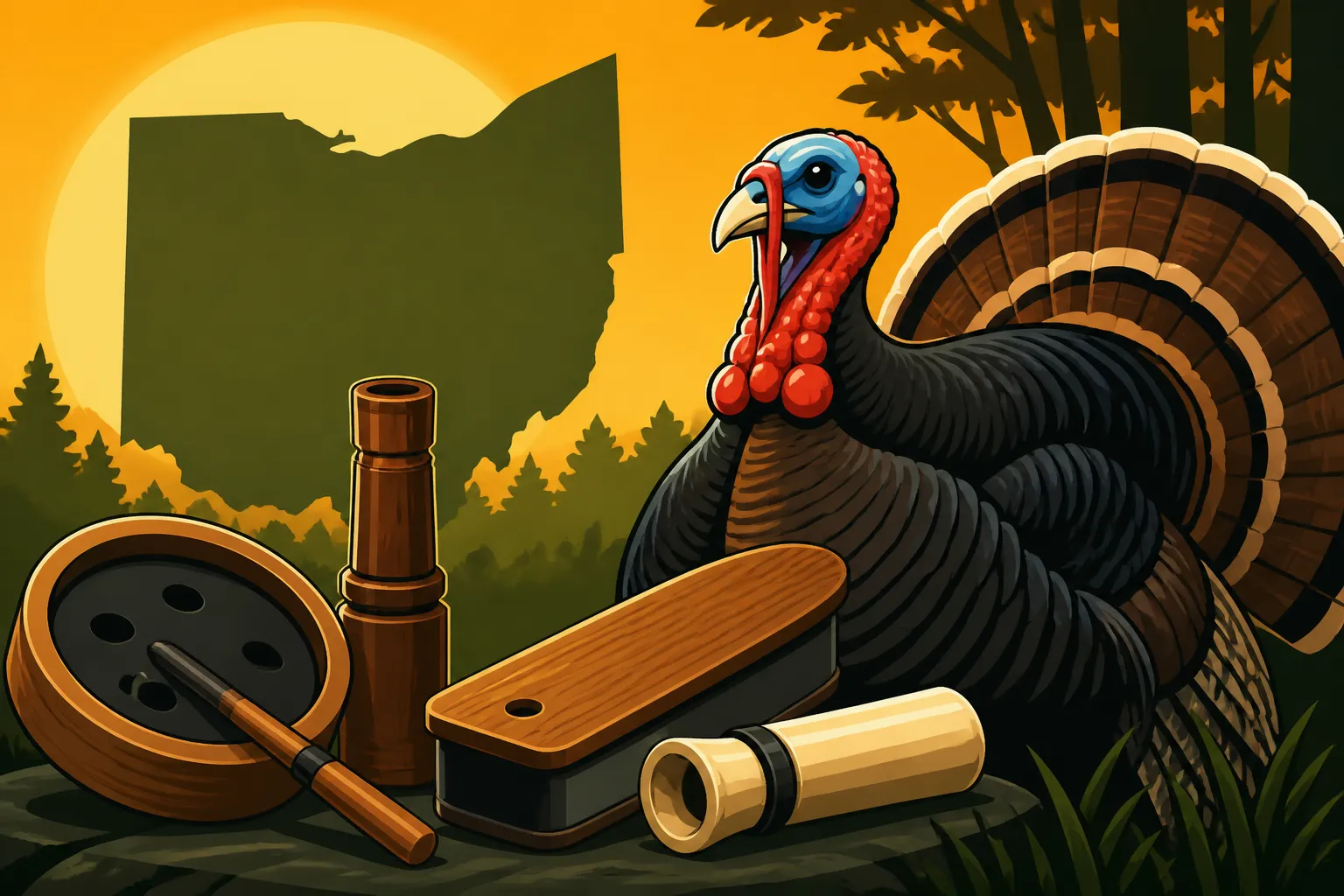
There's nothing quite like the sound of an Ohio gobbler hammering back at your call, but getting them to commit can be one of the most frustrating aspects of spring turkey hunting. Often, hunters carry a handful of calls, but struggle to know when and how to deploy them effectively in the woods, especially when those birds get tight-lipped or heavily pressured. This comprehensive guide will walk you through the various types of turkey calls, explain their strengths and weaknesses, and provide practical advice on how to use them to bag that wary Ohio tom.
The Foundation: Mastering the Mouth Call
When it comes to versatility and hands-free operation, nothing beats a diaphragm, or mouth, call. This small, often overlooked piece of equipment can be the most potent tool in your turkey hunting arsenal, especially when that gobbler is closing in and you can't risk movement. Learning to run one takes practice, but the payoff is immense.
The Versatility of Diaphragm Calls
Mouth calls are incredibly versatile, capable of producing a wide range of turkey sounds from soft clucks and purrs to aggressive yelps and cutts. Because they sit inside your mouth, they allow you to keep your hands on your shotgun or bow, ready for the shot. This is a critical advantage when you have a bird coming in fast, or if you're trying to Run-and-Gun Turkey Tactics on Public Land where quick setups and minimal movement are key. You can go from a loud series of cutting to soft tree yelps without breaking your aiming position, which is truly invaluable in the heat of the moment.
Think about a morning hunt in the Wayne National Forest. You've located a gobbler on the roost, and you're set up tight. As daylight breaks, he starts to gobble aggressively. You need to make soft, sleepy tree yelps to entice him down. A mouth call allows you to do this without moving your hands to a box or slate call, which could spook him if he pitches down closer than expected. Then, as he hits the ground and moves away with hens, you can quickly transition to louder, more excited yelps and cutts, maintaining continuous communication while still being ready for him to suddenly appear through the timber. This seamless transition is where the mouth call truly shines.
Choosing the Right Cut for Ohio Gobblers
Diaphragm calls come in a bewildering array of cuts, from straight-edge reeds to bat wings, ghost cuts, and V-cuts. Each design influences the call's pitch, rasp, and overall tone. For Ohio hunting, especially on public land where birds can be somewhat call-shy, having a few different cuts can make a big difference. A more open, lighter tension reed might be great for soft, clean yelps and clucks, mimicking a young hen. This can be perfect for those birds that are henned up or just not interested in loud, aggressive calling.
On the other hand, a call with a heavier, more complex cut—like a bat wing or ghost cut—will produce more rasp and grit, ideal for mimicking an older, bossy hen or for putting out some serious volume when you're trying to reach a bird across a wide field or deep hollow. Sometimes, an Ohio gobbler needs to hear that distinct, raspy hen to get him fired up. Experiment with a few different cuts to find what feels comfortable and what sounds most realistic to your ear. Many hunters carry 2-3 different mouth calls, ranging from clear to raspy, allowing them to adapt to the bird's mood and the specific scenario. Box Calls Versus Mouth Calls is a common debate, but carrying both gives you the widest range of options.
Practice, Practice, Practice for Realistic Sounds
The biggest hurdle with mouth calls is the learning curve. It takes dedication to produce consistent, realistic sounds. It's not just about making noise; it's about making turkey noise. Start with basic yelps: form an "oooh" or "cooo" shape with your mouth, place the call tight against the roof of your mouth, and push air across the reeds. Focus on getting distinct "yelp" sounds, not just squeaks or squawks. Once you have a consistent yelp, practice varying the tone and rhythm.
Listen to real turkeys, if you can, or high-quality audio recordings. Pay attention to the cadence of their yelps, the subtle clucks, and the sharp cutts. Try to mimic those sounds. Practice different scenarios: soft tree yelps for dawn, excited yelps for midday, and plaintive lost calls. The more you practice, the more natural your calling will become, and the less you'll have to think about the mechanics in the field. Remember, a perfectly executed soft purr can sometimes seal the deal faster than a string of loud yelps, especially when the bird is in close, so don't neglect the subtle sounds.
The Workhorse: Slate and Glass Calls
Friction calls, often referred to as pot calls, are staples in almost every turkey hunter's vest. These calls are known for their rich, pure tones and their ability to produce a wide range of turkey vocalizations with relative ease, making them excellent choices for hunters of all skill levels.
The Subtle Art of Friction Calling
Slate and glass calls produce sound by drawing a striker across a surface. The subtle art comes in varying the pressure, speed, and angle of the striker to create different sounds. They excel at producing soft, contented clucks and purrs that can be irresistible to a wary tom, but can also churn out loud, piercing yelps and cutts to grab attention from a distance. The natural resonance of the pot call often sounds incredibly realistic, mimicking the vocal cords of a hen with remarkable fidelity.
When you're trying to Calling an Ohio Gobbler Off the Roost, a soft series of tree yelps from a slate call can be incredibly effective. The subtle, clear tones don't alarm the bird but let him know there's a hen nearby. As the morning progresses, and you're working a bird that's hanging up just out of range, light clucks and purrs can be the finishing touch. The key is to think like a turkey: what would a hen do in this situation? A friction call gives you the control to mimic those nuanced sounds, adding realism that can often make the difference between a longbeard walking away and him strutting into range.
Material Matters: Slate vs. Glass vs. Aluminum
The material of the calling surface plays a huge role in the sound profile of a friction call.
- Slate calls are generally known for their softer, deeper, and often raspier tones. They are excellent for subtle calling, like soft yelps, clucks, and purrs, and are fantastic for close-in work. They can still be loud, but their sweet spot is often in the mid to close range. They tend to be a bit more forgiving to learn on and are a go-to for many seasoned hunters. However, slate can absorb moisture, making it challenging to use on those dewy Ohio mornings or in a light rain. This is where the concern of Slate and Glass Calls in Wet Weather comes into play.
- Glass calls typically produce higher-pitched, sharper, and often louder sounds. They have excellent volume and are great for reaching out to distant birds or for creating aggressive, high-energy cutts and yelps. Their sharper tone can sometimes cut through wind or rival the calls of other hens. Glass surfaces are also less affected by moisture than slate, making them a more reliable choice in damp conditions.
- Aluminum calls offer a unique, usually high-pitched, metallic sound with excellent volume and a sharp break-over. They are incredibly loud and can be a great option for trying to get a shock gobble from a bird far away, or for running very aggressive cutts. They are often overlooked but can be a secret weapon when birds are being particularly stubborn or when you're hunting windy open areas in Ohio farm country.
Each material has its place, and many hunters carry both a slate and a glass call to cover all their bases. The GoHunt app, when used for scouting, might help you identify open fields versus dense timber, which can influence whether you need a loud glass call or a softer slate.
Striker Selection for Diverse Tones
Just as the surface material matters, so does the striker you use with a pot call. Strikers come in various woods (hickory, osage orange, lignum vitae, purpleheart, carbon, etc.) and even synthetic materials. Each material, length, and tip shape will produce a different tone when drawn across the call surface.
- Hickory strikers are common and produce a good all-around sound, often a balanced tone between clean and raspy.
- Carbon or fiberglass strikers tend to produce sharper, higher-pitched, and louder notes, ideal for aggressive calling or reaching out over long distances.
- Lignum vitae or purpleheart strikers often create deeper, richer, and more resonant tones, great for softer, more subtle calling and adding more rasp.
- Osage orange strikers are known for a crisp, clean sound.
The beauty of pot calls is that by simply switching strikers, you can dramatically alter the sound from the same call. This essentially gives you multiple calls in one. You might use a carbon striker for loud, excited yelps to Roost Hunting Ohio Gobblers at dawn, then switch to a hickory or purpleheart striker for softer, seductive purrs when that gobbler is at 50 yards and needs a little coaxing. Don't underestimate the power of a diverse set of strikers; they are just as important as the call itself in achieving realistic turkey vocalizations.
The Powerhouse: Box Calls and Push-Button Calls
For sheer volume, ease of use, and a classic turkey sound, box calls and their smaller cousins, push-button calls, are hard to beat. They're excellent for beginners and seasoned pros alike, providing reliable sounds with minimal fuss.
Reaching Out with the Classic Box Call
The box call is arguably one of the oldest and most effective turkey calls. It's renowned for its ability to produce loud, attention-grabbing yelps, cutts, and clucks that can carry great distances, making it ideal for locating birds or pulling them across wide open spaces. The unique sound created by the paddle rubbing against the box lip is distinct and often irresistible to gobblers. With a good box call, you can often mimic the full range of hen vocalizations, from soft purrs to excited cackles.
Think about hunting those big, sprawling public tracts like Wayne National Forest or Shawnee State Forest. You're trying to locate a bird in a distant hollow or off a ridge line. A loud series of yelps from a box call can cut through the timber and the early morning breeze, prompting a shock gobble from a bird you never knew was there. It's a fantastic prospecting tool. While they aren't hands-free like mouth calls, they are incredibly easy to operate, often requiring just a quick flick of the wrist. Just be mindful of their size and potential for accidental noise in your vest. They can sometimes be too loud for close-in work, which is why having a mouth call ready for the final approach is a smart move.
Ease of Use with Push-Button Calls
Push-button calls are like the simplified, miniature versions of box calls, offering incredible ease of use. With just a thumb or finger press, you can create realistic clucks, yelps, and even purrs. They are particularly favored by new hunters, youth hunters, or anyone looking for a reliable call that can be operated almost silently and quickly. Their compact size also makes them very easy to carry in a pocket or vest.
These calls are fantastic for those situations where you need to make soft, subtle sounds without much movement. If a gobbler is coming in and gets to about 70-80 yards and hangs up, often looking for the hen, a few soft clucks or yelps from a push-button call can be the perfect reassurance. They offer excellent control for precise, soft calling, and are very difficult to mess up, making them a consistent producer in the field. They might not have the volume to reach birds at extreme distances, but for mid-to-close range interactions, they are a powerful and simple tool.
When to Use Louder, More Aggressive Calls
There are definitely times in Ohio when you need to be loud and aggressive with your calling. This usually comes into play in a few key scenarios:
- Locating Distant Birds: When you're trying to find a gobbler in thick cover or across a large tract of land, a loud, attention-grabbing series of yelps or cutts from a box call, a loud glass call, or even certain mouth calls, can be essential.
- Getting a Bird's Attention: Sometimes, especially on windy days or when birds are not actively gobbling, you need to "break the silence" with some significant volume to pique their interest.
- Aggressive Hens: If you've been working a bird for a while and he's not committing, or if he's henned up, sometimes the best tactic is to imitate an aggressive, dominant hen. Loud, sharp cutts and excited yelps can challenge the real hens or convince the gobbler that there's a new, more desirable hen in town.
It's a fine line to walk, as too much aggressive calling can spook a bird, especially on pressured public lands. But knowing when to turn up the volume and lay down some serious hen talk can often be the trigger that brings that wary Ohio tom strutting into your setup. The GoHunt app can sometimes help identify areas with less hunting pressure, which might make more aggressive calling strategies more effective without immediately spooking birds.
Specialty Calls and Locator Calls
Beyond the primary yelpers, there’s a whole world of specialized calls designed to mimic various turkey vocalizations and even other animals, all with the goal of getting that gobbler to respond.
Bringing Them In: Purrs, Clucks, and Whines
While yelps and cutts are the bread and butter of turkey calling, the softer, more subtle sounds often close the deal.
- Purrs are contented, soft rolling sounds that tell a gobbler a hen is happy and relaxed. They are incredible for close-range work, especially when a tom is at 30-50 yards and looking for the hen. A perfectly executed purr can be the sound that makes him take those last few steps. You can achieve purrs with a mouth call, slate call, or even a push-button.
- Clucks are short, sharp notes that convey curiosity or a soft inquiry. They are great for getting a response from a bird without being overly aggressive, or for breaking up monotonous calling patterns.
- Tree Yelps and Fly-Down Cackles: These specific sequences are critical for morning hunts. Soft, sleepy tree yelps signal hens waking up on the roost. A loud, sharp fly-down cackle simulates a hen pitching off the roost, which can be an excellent way to convince a gobbler to fly down in your direction, especially when paired with an actual fly-down routine, like flapping your hat.
These subtle vocalizations are often the most difficult to master, but they add incredible realism to your calling sequence. Think about the entire narrative of a hen's day, and try to mimic it. Spring Turkey Hunting in Ohio offers diverse scenarios, from dense Appalachian woods to open farmlands, where these nuanced calls become absolutely vital.
Shock Gobbling with Locator Calls
Locator calls aren't meant to sound like turkeys; instead, they mimic other animals or birds that are known to make gobblers "shock gobble" involuntarily. The idea is to get a distant gobbler to sound off, revealing his location, without him associating the sound with a hen. This makes him less wary when you start your turkey calling sequence.
Common locator calls include:
- Owl Hooters: Great for early mornings or late evenings, mimicking an owl.
- Crow Calls: Excellent for mid-morning to midday. Crows are noisy, and turkeys often gobble at them.
- Coyote Howlers: Can be very effective, especially if turkeys are used to coyotes in the area.
- Pileated Woodpecker Calls: A unique, high-pitched call that can sometimes get a gobbler to respond.
The beauty of locator calls is their non-threatening nature. A gobbler will often gobble at an owl or a crow without feeling immediate pressure. This allows you to pinpoint his exact location before moving in and setting up your ambush. Once you know where he is, you can use your hen calls more strategically. Just be careful not to over-call with locators, as too much noise can still put a bird on alert. Knowing Locator Calls for Ohio Gobblers is crucial for effective scouting.
Decoy Movement and Call Synergy
Calling is a visual game as much as an auditory one for turkeys. Combining your calling efforts with realistic decoys can be incredibly effective, especially when you're dealing with birds that might be reluctant to commit. The visual confirmation of a hen or jake decoy paired with convincing hen vocalizations often seals the deal.
For instance, when a gobbler hangs up at 100 yards, seeing a decoy can reassure him that the sounds he's hearing are real. A subtle purr or cluck from your mouth call, coupled with a slight movement of a fan decoy or a full-body hen decoy, can be the ticket to bringing him those last few steps. Some advanced decoys even have remote-controlled movement, adding another layer of realism. Understanding Decoy Placement for Pressured Birds and how it complements your calling strategy is paramount. The goal is to create a realistic scene that tricks the gobbler into believing he's approaching a live hen, and the synergy between sight and sound is what makes that illusion complete.
Adapting Your Calling to Ohio Conditions
Ohio's turkey woods present a variety of challenges, from heavily pressured birds on public land to unpredictable weather. Knowing how to adjust your calling strategy to these conditions is what separates consistent success from frustration.
Public Land Pressure and Soft Calling
Hunting turkeys on Ohio public lands, whether it's a bustling wildlife area like Killdeer Plains or a more remote section of Wayne National Forest, almost guarantees you'll encounter pressured birds. These gobblers have heard it all. They've been yelped at, cut at, and cackled at by dozens of hunters, and they've learned to be extremely wary. Aggressive, loud calling often sends them running in the opposite direction.
This is where soft calling becomes your secret weapon. Instead of trying to scream at a bird from a mile away, focus on subtle, seductive sounds. Use soft tree yelps in the morning, followed by light clucks and purrs when he hits the ground. Keep your volume low, just enough for him to hear. Mimic a single, contented hen, not an entire flock. Often, these softer, more realistic sounds are what convince a pressured gobbler that you're a real hen, not another hunter. Moving in closer before you start calling can also help you communicate more effectively at lower volumes. The GoHunt platform can be useful here, helping you find those overlooked pockets of public land that might see less pressure, making your soft calling more effective.
Weather's Impact on Call Performance
Ohio weather can be fickle during spring turkey season, and conditions like wind, rain, and humidity can significantly impact your calling strategy and call performance.
- Wind: Wind is arguably the biggest challenge for turkey calling. It carries sound away, makes it harder for turkeys to hear, and makes your calls less effective. On windy days, you need louder calls to cut through the noise. This is where a loud glass call, an aluminum call, or an aggressive box call can shine. You also need to adjust your setup to account for the wind, trying to position yourself so your calls carry downwind to the gobbler. Using terrain features to funnel sound can also help.
- Rain and Humidity: Moisture can be a killer for certain calls, especially slate. A damp slate call will often "load up" and produce squeaky, inconsistent sounds. Glass and acrylic calls are much more resilient in wet conditions. If rain is in the forecast, make sure you have calls that can handle it. Slate and Glass Calls in Wet Weather is a real concern, so choose wisely. Humidity can also slightly dampen the sound of friction calls, so be prepared to apply more pressure or use a crisper striker.
- Temperature: While less impactful than wind or rain, cold temperatures can make your hands stiff, affecting your ability to run friction calls smoothly or operate mouth calls comfortably. Warm your calls and your hands if necessary.
Always check the forecast and pack a variety of calls suitable for whatever Mother Nature might throw at you.
Matching Calls to the Ohio Turkey's Mood
Ohio turkeys aren't always in the same mood, and what works one day might fall flat the next. The best callers are those who can read the bird and adapt their calling strategy accordingly.
- Hot Gobbler: If a gobbler is hammering every time you call, gobbling his head off, he's "hot." You can be more aggressive with your calling—louder yelps, more cutts, and a faster cadence. Keep him engaged and excited, but don't overcall to the point where he gets suspicious. Sometimes, shutting up for a minute or two can make him think the hen is leaving and force him to come looking.
- Henned-Up Gobbler: This is a classic frustration in Ohio. He's gobbling, but he's with hens, and he expects them to come to him. Your best bet here is often to sound like a lonesome, slightly aggressive hen. Lots of soft purrs and clucks, with an occasional sharp cutt, might entice him away from his flock. Another tactic is to move around him, trying to get ahead of the flock and intercept him, or to make him think you're leaving.
- Call-Shy or Pressure-Cooked Gobbler: These birds are tough. Soft calling is key here. Think minimalist: a few soft tree yelps, a single cluck, maybe a soft purr. Be patient, let him wonder where the sound is coming from. Sometimes, no calling at all, just a well-placed decoy, is the best call. Using a mapping tool like GoHunt to find pockets of less-pressured woods might put you on birds more willing to respond.
The table below summarizes some key characteristics of popular turkey calls and their best uses in the varied landscapes of Ohio.
| Call Type | Pros | Cons | Best for Ohio Conditions |
|---|---|---|---|
| Mouth Call | Hands-free, versatile (soft to loud), compact, wide range of sounds. | Steep learning curve, can get wet/dirty, less volume than some friction calls. | Close-range, finishing birds, when gun is up, soft calling on pressured public land, fly-down cackles. |
| Slate Call | Rich, realistic soft tones, good rasp, easy to learn, versatile. | Affected by moisture, requires hand movement, can be less loud than glass. | Subtle calling, purrs/clucks, enticing wary birds, mid-range calling, dry weather. |
| Glass Call | High volume, sharp, clear tones, cuts through wind, good in moisture. | Can sound less natural/raspy for soft calls, requires hand movement, higher pitch. | Long-distance locating, aggressive calling, windy conditions, wet weather. |
| Box Call | Excellent volume, very easy to use, great for locating, classic turkey sound. | Requires hand movement, bulky, can get noisy in vest, less subtle for close work. | Locating distant birds, aggressive calling, when high volume is needed, early season. |
| Push-Button Call | Extremely easy to use, quick, soft sounds, great for beginners, compact. | Lower volume, less versatile than other calls, limited range of sounds. | Finishing birds at close range, soft clucks/yelps, minimal movement, youth hunters. |
| Locator Calls (Owl, Crow, etc.) | Non-threatening, prompts shock gobble, helps locate distant birds. | Not a "turkey sound," can over-call and spook birds, doesn't bring them in. | Early morning/late evening, windy days, scouting, pinpointing roosted birds. |
Ultimately, a truly effective Ohio turkey hunter carries a diverse selection of calls, understands their strengths and weaknesses, and knows when to deploy each one based on the situation, the bird's mood, and the prevailing conditions. Don't be afraid to experiment, practice diligently, and listen to the birds themselves – they're the best teachers out there.
Disclaimer
This article is for general informational purposes only and does not constitute professional advice. Laws, prices and regulations vary by location and change over time. Consult a qualified professional for guidance on your specific situation.