Hunting Northwest Ohio Farmland Deer
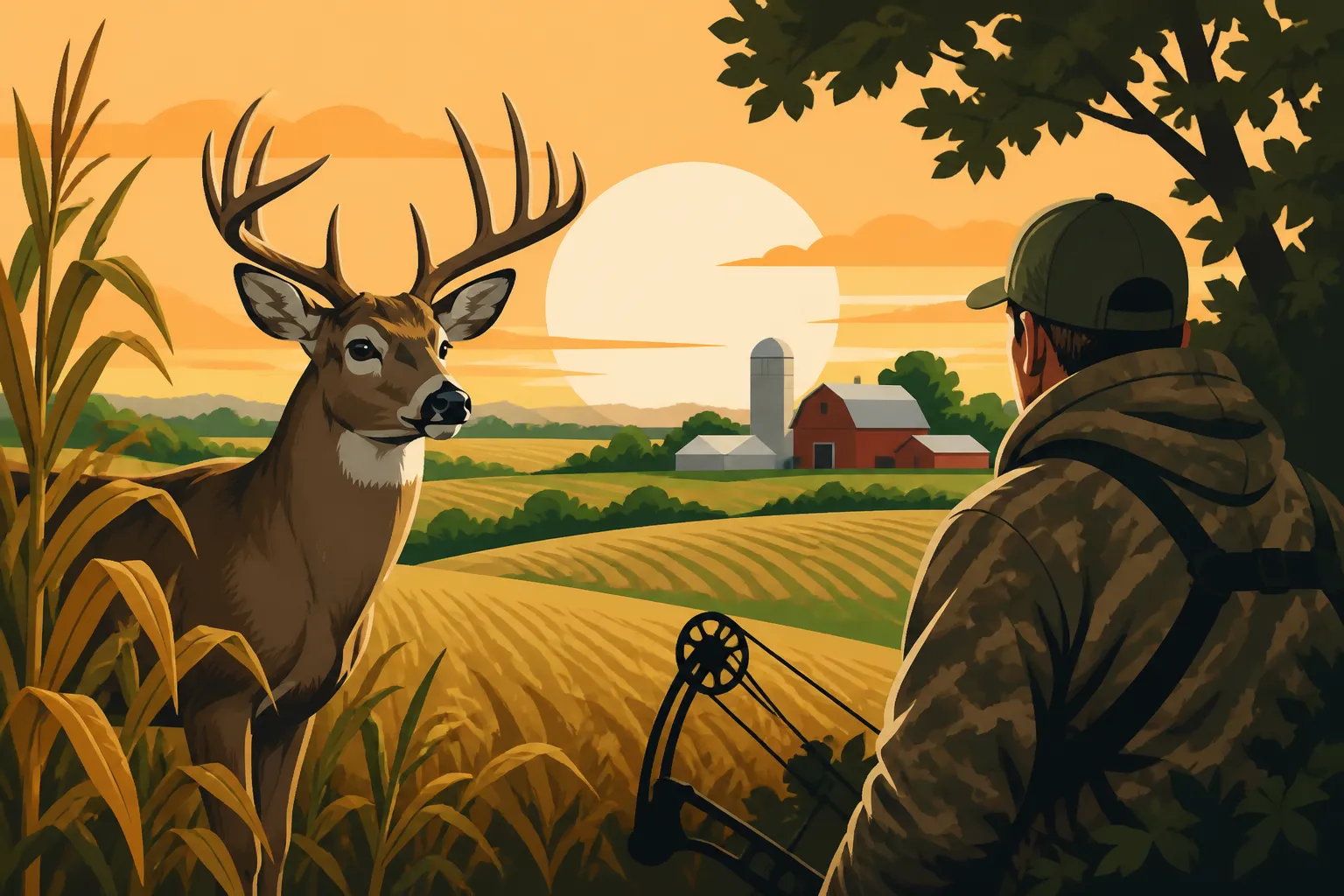
Hunting deer in Northwest Ohio's vast agricultural landscape presents a unique set of challenges and immense rewards. Unlike the sprawling hardwood forests of the Appalachian foothills, this region is a patchwork of immense crop fields, small woodlots, fencerows, and drainages, demanding a completely different approach to finding and harvesting whitetails. This guide will walk you through the specifics of understanding the terrain, scouting smart, employing effective tactics, and choosing the right gear to succeed in Northwest Ohio's distinct farmland environment.
Understanding the Northwest Ohio Deer Landscape
The topography of Northwest Ohio is fundamentally different from the rolling hills and deep timber of the state's eastern and southern regions. Here, flat expanses of fertile soil dominate, carved into endless fields of corn, soybeans, and wheat. While this might seem less "deer-friendly" at first glance, it creates specific patterns of deer movement and bedding that, once understood, can be incredibly predictable.
The Influence of Agriculture on Deer Movement
Deer in Northwest Ohio are intrinsically tied to the agricultural cycle. Think of it: miles of standing corn in late summer and early fall provide not just a seemingly endless food source but also incredible cover. Bucks and does alike will bed deep within these fields, practically invisible to hunters. As the harvest progresses, these fields transform from impenetrable fortresses into open feeding grounds, exposing deer that were previously hidden. This dramatic shift dictates where deer will travel, feed, and bed at different points in the season. When the combines roll, deer are forced to move, often concentrating in the remaining patches of cover. This is a critical period for hunters, as deer suddenly become much more visible and their travel corridors more defined. Understanding this push-pull relationship with the crops is the first step in successful hunting here.
Identifying Key Habitat Features in Flat Country
Even in flat farmland, deer rely on distinct features for survival. These aren't always obvious from the road, so a keen eye and good mapping tools are essential. Small woodlots, often no more than a few acres, become critical bedding and staging areas. These woodlots might seem insignificant, but they offer the only escape from the open fields. Fencerows, especially those with thicker brush, serve as vital travel corridors, connecting larger blocks of cover or guiding deer from bedding to feeding areas. Drainages, even shallow ditches with overgrown banks, can act as miniature canyons, providing hidden pathways for deer to move undetected across open ground. Creek bottoms, even small ones, offer valuable cover and often harbor mature trees that provide mast crops like acorns. Railroad tracks and utility line easements, while man-made, also frequently become overgrown and serve as linear travel routes. Learning to identify these linear features and isolated cover pockets is crucial for finding deer in this predominantly open country.
Scouting Strategies for Farmland Deer
Scouting in Northwest Ohio is less about finding "the perfect tree" and more about understanding the flow of deer across the landscape. Because much of the area is agricultural and private, stealthy and efficient scouting is paramount. This often means leveraging technology and making the most of limited access points.
Utilizing Aerial Imagery and Topographic Maps
Before you even step foot in the woods, or more accurately, along a field edge, you should be pouring over aerial imagery. Tools like Google Earth, onX Hunt, or the Ohio HuntFish App are invaluable for identifying the critical habitat features we just discussed. Look for those isolated woodlots, connecting fencerows, subtle drainages, and even the smallest brushy pockets. Pay close attention to how these features connect different fields or larger tracts of timber. A slight elevation change, even just a few feet, can create a thermal advantage or a dry bedding area, and these nuances often show up on topo maps. Imagine yourself as a deer trying to move from a bedding area to a food source without being seen; this perspective will reveal natural funnels and hidden travel routes that might not be obvious from the ground. Identifying pinch points where deer are forced through a narrow strip of cover between two fields is a classic example of using aerials to predict movement.
Trail Camera Placement and Sign Reading in Open Country
Once you've identified potential hotspots on your maps, it's time for some boots-on-the-ground scouting, usually after crops are harvested or during the off-season. Trail cameras are your best friends in Northwest Ohio. Focus on placing them along those identified fencerows, at the corners of small woodlots, or near the entrances to standing cover adjacent to crop fields. Since deer movement is often linear here, look for scrapes and rubs along these corridors. While you might not find the extensive scrape lines you would in big timber, individual scrapes on field edges or near creek crossings can be highly productive camera locations. Keep an eye out for tracks leading in and out of woodlots, especially where they intersect with fencerows or drainages. Fresh droppings can tell you what deer are feeding on and how recently they've been in the area. Remember, deer will often use the path of least resistance, so look for breaks in fencerows, low spots in ditches, or distinct trails leading into cover. If you're wondering how to maximize your camera's potential, consider internal link Where to Hang a Camera on a Logging Road and adapt those principles for farmland edges.
Hunting Tactics for Field Edges and Woodlots
Hunting Northwest Ohio requires patience and adaptability. Deer are acutely aware of pressure, and their proximity to human activity means they can be particularly wary. Success hinges on being in the right place at the right time and having a strategy for approaching these wary animals.
Setting Up on Productive Field Edges
Field edges are quintessential Northwest Ohio hunting spots, but they demand careful consideration. The key is to think about when deer will use that edge. Early season, when crops are still standing, deer might only emerge into the open fields under the cover of darkness. As the season progresses and fields are harvested, deer become more comfortable feeding in daylight, but often still prefer the cover of twilight. Your stand placement should offer good visibility into the field while providing a backdrop for concealment. Consider placing stands in fencerows that lead into a field, or at a natural break in the tree line that deer might use for entry. Using a ground blind, brushed in effectively, can be incredibly productive, especially if you can get it set up well in advance. For specific advice, check out Setting Up on a Northwest Ohio Field Edge. Remember to account for prevailing winds, as scent control is paramount in open areas where deer can approach from many directions.
Still-Hunting and Stand Placement in Small Woodlots
Small woodlots, or "islands" of timber amidst vast fields, are deer magnets. During daylight hours, especially after fields are harvested, these woodlots become primary bedding areas. Instead of just hanging a stand on the edge, consider still-hunting through these smaller woodlots, paying close attention to thick bedding cover. Move slowly, taking five steps and then stopping for several minutes to scan for movement. The wind is your guide; always hunt into the wind. Alternatively, consider hanging a stand on the downwind side of a known bedding area within a woodlot, focusing on escape routes or subtle trails leading out. If you have permission on a specific piece of ground, Hunting Small Private Tracts in Ohio can offer more insights into maximizing limited space. The smaller size of these woodlots means deer can quickly circle to get downwind of you, so wind direction is absolutely critical. Sometimes, a mobile approach with a saddle hunting setup, like those discussed in Saddle Hunting in Ohio Hardwoods, can be adapted for the more open canopy of many Northwest Ohio woodlots, allowing you to quickly adjust to deer movement.
Dealing with Hunting Pressure and Property Lines
Northwest Ohio's population density, while lower than urban centers, still means that prime hunting ground can see significant pressure. Additionally, the fragmented nature of land ownership means you'll constantly be mindful of property lines.
Strategies for High-Pressure Areas
When hunting areas that see a lot of pressure, deer quickly become nocturnal or move to the thickest, nastiest cover they can find. Your strategy needs to adapt. Instead of hunting the obvious field edges that everyone else does, try to find those overlooked, hard-to-access pockets of cover. This might mean walking a little further into a swampy area, pushing through thorny briar patches, or exploring drainages that most hunters walk past. Deer will often gravitate to these sanctuaries. Hunting during the middle of the day, especially after the initial morning rush or before the evening sit, can sometimes catch deer moving between bedding and feeding areas when other hunters are back at camp or home. Another tactic is to focus on areas that are difficult to access without specialized equipment, such as sections of public land only reachable by wading a creek or using a small boat. Don't be afraid to put in the effort to find ground others ignore. Consider how Finding Ground Others Walk Past might apply to your local woodlots and fencerows.
Navigating Private Land and Permission
Much of Northwest Ohio is privately owned, making securing permission paramount. The traditional method of knocking on doors is still very effective here. Farmers are often dealing with deer damage to their crops, making them more amenable to granting hunting access. When asking for permission, be polite, respectful, and clear about your intentions. Offer to help with chores or share venison. Always carry a written permission slip, even if not legally required in all situations, as it demonstrates professionalism and respect for the landowner. GPS mapping apps, like those from GoHunt, are invaluable for quickly identifying landowners and property boundaries, helping you know exactly whose door to knock on. These tools help visualize the landscape and who owns what, which is a huge advantage. Remember, even if you have permission on one farm, game doesn't respect property lines, so always be aware of where your shots are going and where you might need to retrieve a deer. Having discussions with neighboring landowners, if possible, can also help you understand deer movement across a broader area. Learn more about the process in Knocking on Doors in Ohio Farm Country.
Late-Season Opportunities and Food Sources
As the season progresses into late fall and early winter, Northwest Ohio's deer hunting dynamic shifts dramatically. The landscape becomes stark, and deer focus intently on the few remaining consistent food sources and adequate cover from the elements.
Hunting Cut Corn and Soybean Fields
Once the combines finish their work, vast expanses of cut corn and soybean fields become prime feeding grounds. Deer, having been bedded deep within the standing crops for months, now have limited options for food. They will often emerge into these cut fields in the late afternoon and early morning hours to glean leftover grains and beans. Your scouting focus should shift to identifying which fields still hold significant waste grain. Often, fields harvested later or those that experienced minor combine issues will have more remaining food. Glassing these fields from a distance with good binoculars or a spotting scope can reveal patterns of entry and exit points, as well as preferred feeding locations. Setting up a ground blind along a fencerow bordering one of these fields, or even a tree stand if suitable cover exists, can be highly effective. The key is to get in early and stay late, often enduring colder temperatures. For a deeper dive, read Hunting a Standing Soybean Field.
Finding Winter Cover and Thermal Bedding
As temperatures drop and winter sets in, deer priorities shift to warmth and concealment. While food is still crucial, finding adequate cover from wind and snow becomes equally important. In Northwest Ohio, this often means deer will congregate in the thickest brush available. Look for dense cedar thickets, brushy creek bottoms, deep ditches choked with multiflora rose, or the most overgrown parts of small woodlots. These areas provide both thermal cover and protection from predators. Deer will often bed on south-facing slopes, even very subtle ones, to catch the warmth of the winter sun. Focus your hunting efforts around these areas, especially during midday, as deer might move less during frigid periods. GoHunt's mapping features can also help identify potential thermal cover based on vegetation type and subtle elevation changes. The late season can be tough, but the concentrated nature of deer in these specific cover types offers some of the best opportunities for success. Consider Cold-Weather Sitting Strategy in Ohio for tips on staying comfortable during those long, frigid sits.
| Cover Type | Typical Use | Best Time to Hunt | Stand Type Preference |
|---|---|---|---|
| Standing Corn | Bedding, Daytime Cover | Edges at dusk/dawn | Ground Blind, Elevated |
| Cut Corn/Soy | Feeding | Late afternoon | Ground Blind, Elevated |
| Small Woodlots | Bedding, Staging Area | All day, especially midday | Tree Stand, Still-hunt |
| Fencerows | Travel Corridor, Minor Bedding | Dawn/Dusk (travel), Midday (bedding) | Tree Stand, Ground Blind |
| Thick Drainages | Travel Corridor, Bedding | All day, especially if pressured | Ground Blind, Ambush |
| Cedar Thickets | Thermal Cover, Bedding | Midday in cold weather | Stand overlooking exit |
Gear and Optics for Open Country Hunting
The unique environment of Northwest Ohio's farmlands calls for specific gear choices. Long-range visibility, cold weather, and the need for stealth are all factors to consider when preparing for your hunt.
Optics for Distant Scouting and Observation
In open farmland, good optics are not a luxury; they are a necessity. You'll often be glassing vast fields from a distance, trying to identify deer movement without alerting them. A quality pair of 10×42 binoculars is a solid starting point, offering a good balance of magnification and field of view. However, for serious long-range observation, especially in the late season when deer are spread out across cut fields, a spotting scope can be invaluable. A 15-45x or 20-60x scope will allow you to discern antlers at hundreds of yards, helping you identify mature bucks without having to move closer and risk spooking them. Brands like Vortex, Leupold, and Maven offer excellent options at various price points. Always use a tripod for your spotting scope to ensure a steady image, and don't forget that Binocular Power for Timber Hunting might differ from what's ideal for open fields. In Northwest Ohio, you're less often looking for quick, close-range movement and more often scanning large areas for subtle signs.
Effective Firearm and Ammunition Choices
Ohio's straight-wall cartridge regulations have changed the game for many deer hunters, particularly in open country. While shotgun slugs are still perfectly legal and effective, straight-wall rifles like the .350 Legend, .450 Bushmaster, and .44 Magnum offer increased range and flatter trajectories, which can be a significant advantage when a buck steps out at 150-200 yards across a field. Before the adoption of straight-wall cartridges, the typical range for a shotgun slug gun was often limited to 100-125 yards, which felt like a severe handicap in open fields. Now, these cartridges provide a much-needed boost in confidence and capability. Always practice thoroughly with your chosen firearm and ammunition to understand its effective range. Zeroing your rifle at 100 or even 150 yards is wise for these scenarios. For more detailed information on options, consult Ohio Straight-Wall Cartridge Rules. Whether you opt for a shotgun slug or a straight-wall rifle, ensure your ammunition is appropriate for deer and legal in Ohio.
Disclaimer
Please note that hunting regulations, seasons, and licensing requirements can change. Always consult the official Ohio Department of Natural Resources (ODNR) website or their current hunting digest before planning any hunting activity. This content is for informational purposes only and does not constitute legal advice regarding hunting regulations.