Coyote and Predator Hunting in Ohio
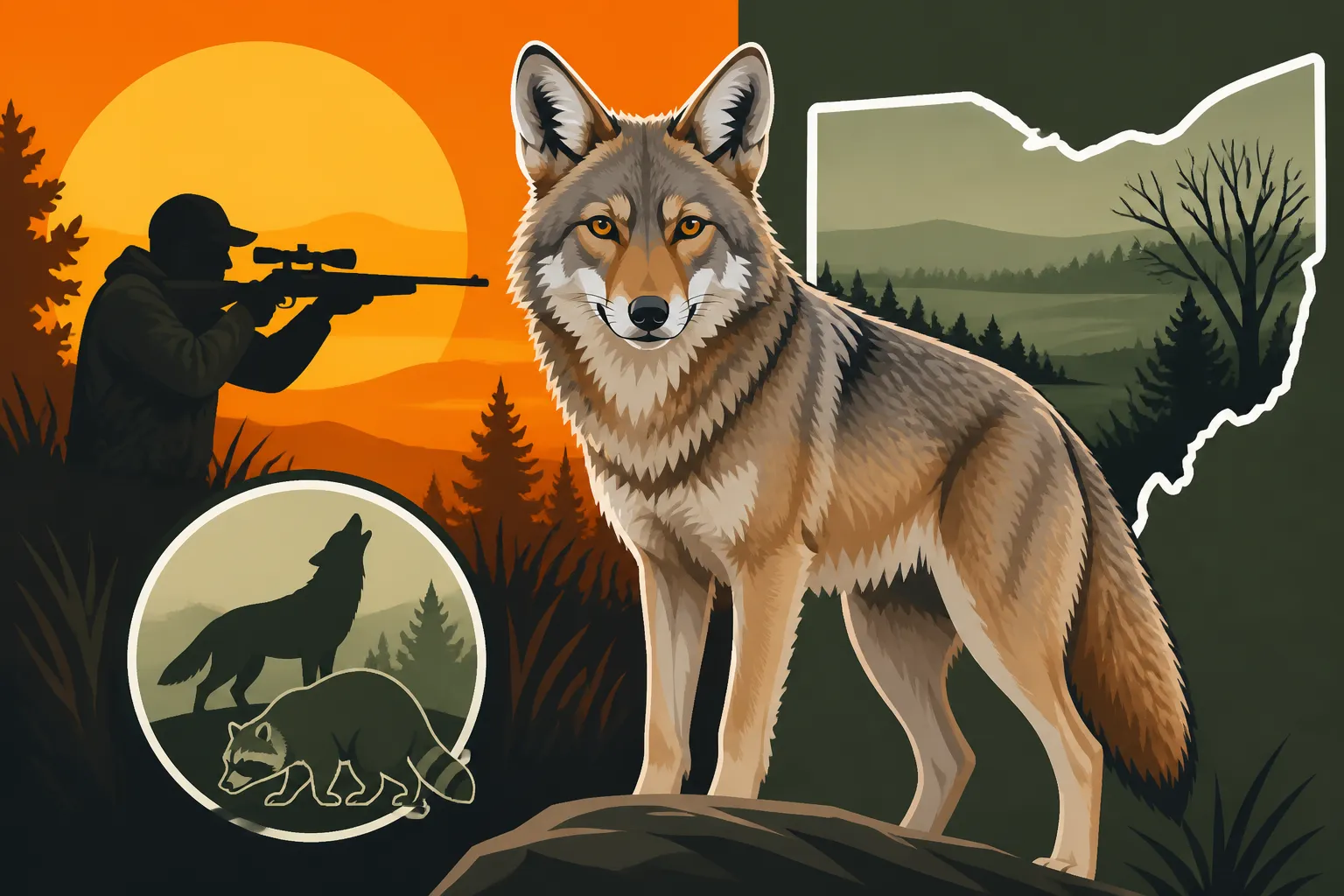
There's a growing challenge for Ohio landowners and hunters alike: the increasing presence and cunning nature of coyotes and other predators. It can feel like these intelligent animals are everywhere, making an impact on deer and turkey populations, and even local livestock. If you're tired of seeing their tracks and hearing their howls, or you just want to take an active role in managing their numbers, this comprehensive guide is for you. We're going to dive deep into everything you need to know about successfully hunting coyotes, fox, and other furbearers across the Buckeye State, from regulations to advanced calling tactics.
Understanding Ohio's Predator Landscape
Ohio has seen some significant shifts in its wildlife populations over the last few decades, and none is perhaps more talked about among hunters than the expansion and proliferation of coyotes. They are incredibly adaptable animals, thriving in everything from the dense woods of Appalachia to the sprawling farmlands of Northwest Ohio, and even in the fringes of our suburban areas. Understanding who we're hunting and where they fit into the ecosystem is the first step to becoming a more effective predator hunter.
The Rise of the Ohio Coyote
It’s hard to believe, but coyotes weren't always a common sight in Ohio. They began expanding their range into the state in the late 1970s and early 80s, gradually moving eastward. Now, they're truly ubiquitous, found in all 88 counties. This widespread distribution means that whether you're hunting in the rolling hills of Southeast Ohio or the flat agricultural fields up north, you're likely to encounter coyotes. Their adaptability is remarkable; they learn quickly, adapt to hunting pressure, and can exist on a varied diet that includes everything from small rodents and rabbits to deer fawns and even domestic livestock. This makes them both a fascinating quarry and a management concern for many, especially farmers. Their cunning nature means that simply walking into the woods and yelling won't cut it. You need a nuanced approach, understanding their habits and how they react to different stimuli, especially when hunting in areas with high Ohio Coyote Range and Density.
Other Key Furbearers: Fox and Bobcat Status
While coyotes are often the primary target for predator hunters, Ohio is also home to other important furbearers, specifically red and gray foxes. Red foxes are typically found in more open, agricultural areas, recognizable by their vibrant rusty-red fur, black "stockings," and a distinctive white-tipped tail. Gray foxes, on the other hand, often prefer denser woods and can even climb trees, which is a neat trick! Both offer exciting hunting opportunities, but their populations aren't as robust or widespread as coyotes. It's important to differentiate them, not just for the challenge but also because bag limits and harvest success vary.
You might also hear talk of bobcats. Ohio's bobcat population has been making a slow but steady comeback, particularly in the unglaciated, rugged terrain of Southeast Ohio. They are a protected species in Ohio, which means there is no open hunting or trapping season for them. If you're lucky enough to spot one, enjoy the rare glimpse, but remember they are off-limits. Their presence highlights the rich diversity of Ohio's wildlife and the success of conservation efforts, even as we focus our hunting efforts on other species. You can read more about their status in Why Ohio Bobcats Have No Open Season. Understanding these differences is crucial for any ethical and legal hunt.
The Role of Predators in Ohio's Ecosystem
Predators, despite sometimes being seen as a nuisance, play a vital role in maintaining healthy ecosystems. Coyotes, foxes, and other furbearers help control populations of rodents, rabbits, and even deer, especially fawns. This natural selection process often targets the weak or sick, contributing to a stronger, healthier prey base. When we engage in predator hunting, we're not just pursuing a challenging quarry; we're often stepping into a management role, especially when populations are high or impacting other desired game species like deer and turkey. It’s a complex balance, and responsible hunting contributes to overall wildlife health rather than simply reducing numbers indiscriminately. Hunters are often the first to notice changes in predator behavior or population trends, making our observations and participation invaluable to wildlife management.
Ohio Regulations and Seasons for Predator Hunting
Navigating hunting regulations can sometimes feel like trying to untangle a knotted fishing line – frustrating and confusing. Ohio, like every state, has specific rules governing when, where, and how you can hunt furbearers. It’s absolutely critical to be well-versed in these rules before you even step foot in the woods. Misinformation or assumptions can lead to hefty fines, loss of privileges, or even legal trouble. Always consult the most current Ohio Department of Natural Resources (ODNR) hunting regulations digest before heading out.
Open Seasons and Legal Hunting Methods
For most furbearers in Ohio, including coyotes, there is an open season that runs for a significant portion of the year, often year-round for coyotes on private land. This is a huge advantage for hunters, allowing for flexibility and plenty of opportunities. However, it’s always best to verify specific dates, especially for foxes, which typically have a defined season from November to January. When it comes to methods, Ohio allows the use of rifles, shotguns, handguns, archery equipment, and even air guns. You can use artificial lights during legal hours, which is a game-changer for night hunting. Electronic calls are also perfectly legal and widely used for attracting coyotes and foxes, offering a distinct advantage. Remember, even though there's an open season, you still need a valid Ohio hunting license and a fur taker permit to hunt certain furbearers. Make sure to check the latest Ohio Trapping and Furbearer Seasons for specific dates and species.
Night Hunting Rules and Restrictions
Night hunting is perhaps one of the most exciting and effective ways to pursue coyotes, offering a unique challenge and often yielding greater success. However, it also comes with a specific set of rules that you absolutely must understand. The biggest one for many is the use of lights. In Ohio, you are allowed to use a headlamp, flashlight, or other artificial lights to hunt furbearers at night. However, there are restrictions on when and where you can do this. On private land, you generally have more leeway. On public land, however, the rules can be stricter, with many wildlife areas prohibiting night hunting or limiting the types of lights or firearms that can be used. It's also important to remember the safety implications of shooting in the dark; positive target identification is paramount. Always know what's beyond your target, and never shoot at sounds or eyeshine alone. For all the specifics, check out Night Hunting Rules for Ohio Coyotes to ensure you're compliant and safe.
Licensing Requirements and Exceptions
Before you even think about setting up a call, you need to ensure you're properly licensed. In Ohio, any resident 18 years or older needs a valid hunting license to pursue coyotes. If you're targeting other furbearers like foxes for their fur, you'll also need a fur taker permit, which often comes bundled with a trapping license. For non-residents, the requirements are similar but with different fee structures. There can be exceptions for landowners hunting on their own property, but even then, it's wise to double-check the specifics with the ODNR. Youth hunters also have specific regulations regarding supervision and licensing. Think of your license and permits as your entry ticket to the field; without them, you’re not just breaking the law, you’re disrespecting the system that funds wildlife management and conservation efforts across the state. It's a small investment for the privilege of pursuing game and contributing to a healthier ecosystem.
Essential Gear for Predator Hunters
You wouldn't go deer hunting with a slingshot, and you shouldn't go predator hunting ill-equipped either. The right gear can make all the difference between a frustrating bust and a successful stand. Predator hunting, especially for cunning coyotes, demands a blend of precise shooting equipment, keen optics, and the tools to effectively lure your quarry within range. Don't skimp on essentials; investing in quality gear pays dividends in the field.
Firearms and Ammunition Choices
When it comes to firearms for predator hunting in Ohio, versatility is key. Many hunters opt for flat-shooting, fast-performing cartridges. The .223 Remington (or 5.56 NATO) is a perennial favorite, offering excellent accuracy, relatively low recoil, and a wide variety of affordable ammunition. For those looking for a bit more punch, especially in windy conditions or at longer ranges, cartridges like the .22-250 Remington or the .204 Ruger are fantastic choices, known for their blistering velocities. Shotguns, particularly those chambered in 12 gauge, loaded with buckshot or heavy predator loads (like TSS), are also highly effective, especially in thick cover or for close-range opportunities. Remember, in Ohio, straight-wall cartridge rifles are legal for deer, and many hunters might use these for predators as well, especially if they already own one, but smaller, faster rounds are generally preferred for coyotes. Always choose a bullet designed for rapid expansion to ensure a quick, ethical kill. Bullet weights typically range from 35-55 grains for varmint calibers.
| Caliber | Typical Bullet Weight (grains) | Pros | Cons |
|---|---|---|---|
| .223 Remington | 40-62 | Versatile, accurate, affordable ammo | Can be light for longer shots in wind |
| .22-250 Rem. | 40-55 | Very fast, flat trajectory | More expensive ammo, barrel heat |
| .204 Ruger | 32-40 | Extremely fast, low recoil, accurate | Limited bullet weight options |
| 12 Gauge | Buckshot/Predator Loads | Devastating at close range, versatile | Limited range, heavy |
| .17 HMR | 17-20 | Extremely flat, quiet, low recoil | Best for fox/small predators, limited range |
Optics for Day and Night Hunting
Good optics are non-negotiable for predator hunting. During daylight hours, a quality rifle scope with variable magnification (e.g., 3-9x or 4-12x) is essential for precise shot placement, especially at the distances coyotes often stop at. Look for scopes with good light-gathering capabilities and a clear reticle.
When the sun dips below the horizon, your optics game changes dramatically. Night hunting for predators, especially coyotes, truly shines with specialized gear. Thermal optics are rapidly becoming the gold standard. They detect heat signatures, making it possible to spot a coyote in complete darkness, through brush, or even partially obscured. Brands like Pulsar and ATN offer fantastic thermal monoculars for scanning and thermal scopes for shooting. If thermal is out of your budget, digital night vision (like what Sightmark offers) is a more affordable alternative, though it relies on some ambient light or an IR illuminator. Having a dedicated scanner (thermal monocular) and a separate mounted scope (either thermal, digital night vision, or a powerful traditional scope with an IR clip-on) allows you to scan effectively without constantly pointing your rifle around, which is a critical safety consideration. The ability to spot a coyote before it spots you, especially in the dark, gives you a massive advantage.
Calls, Camouflage, and Scent Control
Beyond your firearm and optics, your "soft" gear can be just as crucial.
- Calls: This is your primary tool for attracting predators. Electronic callers, like those from Foxpro or Primos, are incredibly popular for their versatility, offering a vast library of sounds from rabbit distress to coyote howls. They allow for hands-free operation and precise volume control. Hand calls, including open-reed and closed-reed models, offer a more personal touch and can be invaluable for subtle sounds or quick adjustments. Learn more about effective sounds in Coyote Calling in Ohio Winter and Coyote Calling in Ohio Farm Country.
- Camouflage: Predators have keen eyesight. Blending into your surroundings is critical. Choose camo patterns that match Ohio's diverse environments, whether it's the deep woods or open fields. Layers are essential for managing Ohio's often unpredictable weather, allowing you to stay warm and comfortable without adding bulk.
- Scent Control: This is perhaps the most overlooked aspect. Coyotes have an incredible sense of smell. Play the wind religiously, always setting up downwind of where you expect the predator to approach. Using scent-eliminating sprays, washing your hunting clothes in scent-free detergent, and storing them properly can reduce your human odor signature. Even something as simple as a clean pair of rubber boots can prevent you from tracking human scent into your setup. Ignoring scent control is a sure way to educate the local coyotes and make them even warier.
Effective Calling Techniques for Ohio Predators
Calling predators isn't just about making noise; it's about telling a convincing story with sound. It's an art and a science, requiring patience, practice, and a deep understanding of predator behavior. The goal is to pique their curiosity, trigger their hunger, or challenge their territorial instincts enough to draw them into effective shooting range.
Mastering Electronic Callers
Electronic callers, like those from Foxpro or Primos, have revolutionized predator hunting. They offer a vast library of realistic sounds, from dying rabbits and screaming birds to coyote howls, barks, and pup distress. The key to mastering them lies in understanding sound sequences and volume control. Start with subtle sounds, perhaps a lone howl to announce your presence, followed by a distress sound like a rabbit in trouble. Vary your sequences, trying short bursts followed by periods of silence to mimic real animal behavior.
One common mistake is playing sounds too loudly, too soon. In Ohio's diverse landscapes, sound carries differently. In open farm fields, you might need more volume, but in dense Appalachian timber, less is often more. Placing your caller 30-50 yards upwind and away from your position can help direct the coyote's attention away from you, giving you an extra edge when they approach. Experiment with different sounds based on the time of year and location. Early season might favor pup distress or fawn bleats, while the breeding season (late winter/early spring) is excellent for territorial howls and challenge barks. Many hunters also find success with GoHunt's detailed maps which help identify optimal call placement based on terrain features.
The Art of Hand Calling
While electronic callers offer convenience, hand calls bring an unparalleled level of realism and adaptability. Open-reed calls allow you to produce a wide range of sounds, from high-pitched mouse squeaks to deep, guttural coyote barks, all with a simple change in lip pressure and breath. Closed-reed calls are often easier for beginners, producing consistent distress sounds.
The true art of hand calling lies in its immediacy. You can instantly react to a coyote's response – a subtle whimper, a sharp bark, or a quick dash. If a coyote hangs up at 200 yards, a delicate mouse squeak might be the irresistible invitation it needs to close the distance. On the other hand, if a coyote approaches aggressively, a series of sharp barks can simulate a challenge, drawing it closer for a territorial confrontation. Practice different cadences and volumes. Learn to make a sound that truly sounds distressed, not just loud. There's a satisfaction in luring a coyote in with nothing but your breath and a piece of plastic or wood that electronic callers just can't match.
Decoy Strategies and Setup
Decoys add a visual element to your auditory presentation, making your setup incredibly convincing. A simple furry decoy, like a rabbit, or even a turkey feather attached to a stake, can draw a coyote's attention and provide a target for them to focus on rather than your well-camouflaged position. This buys you precious seconds to raise your rifle and take a shot.
When placing decoys, consider the wind and the expected approach of the predator. Place the decoy upwind of your position and slightly off to the side, ensuring it's visible but not directly between you and your anticipated shot lane. The idea is for the coyote to approach the decoy, offering you a broadside shot as it focuses on the visual distraction. Motion decoys, like those with a subtle twitch or flutter, can be incredibly effective, especially on wary or pressured coyotes, adding an extra layer of realism. Experiment with height and visibility; sometimes a decoy popped up on a small hill or rise can be seen from farther away, drawing distant predators into your setup.
Location, Location, Location: Scouting Ohio Predator Hotspots
You can have the best calls and the most expensive rifle, but if you're not in an area with predators, it's all for naught. Scouting is arguably the most critical component of consistent predator hunting success. It’s about understanding the landscape, reading the signs, and pinpointing where coyotes and foxes live, travel, and hunt. This is where your homework truly pays off.
Reading the Landscape: Sign and Travel Routes
Predators are creatures of habit and efficiency. They'll use the easiest travel routes and frequent areas that offer food, water, and cover. Your job as a scout is to find these patterns. Look for fresh tracks in mud or snow along field edges, logging roads, and creek bottoms. Scat can tell you a lot about their diet and recent activity. Listen for howling at dawn or dusk, which can give away their general location. In the rugged terrain of Southeast Ohio, look for saddles and pinch points on ridges; these are natural travel corridors. In farm country, focus on wooded fencerows, drainages, and areas adjacent to standing corn or bean fields, especially during winter when natural cover is sparse. Think about where prey animals (deer, rabbits, rodents) are active; predators won't be far behind. This is much like Scouting Ohio Public Land Before Season for deer, just with a different target in mind.
Public Land vs. Private Land Access
Ohio offers ample opportunities for predator hunting on both public and private lands, but each comes with its own considerations.
- Public Land: Ohio boasts numerous Wildlife Areas and State Forests, like Wayne National Forest and Shawnee State Forest, where predator hunting is permitted. The challenge here is often finding areas less pressured by other hunters. Look for remote corners, areas difficult to access, or spots a good walk from parking lots. Use tools like the ODNR's interactive
Ohio HuntFish App(or a more robust app like GoHunt) to identify land ownership, trails, and terrain features. Remember that competition can be high, so stealth and quiet approaches are paramount. Always verify specific regulations for each public land unit, as some might have special rules regarding night hunting or certain firearms. - Private Land: Gaining permission to hunt private land often unlocks some of the best predator hunting, as these areas typically receive less pressure. Farmers, in particular, are often eager to have coyote numbers reduced due to concerns about livestock and fawn depredation. When asking for permission, be respectful, offer to share your successes (and even some meat if you take deer), and always follow up with a thank-you. Building a good relationship with landowners is invaluable and can lead to long-term hunting access. Many hunters find that starting a conversation during the off-season, well before deer season, is the best approach.
Leveraging Technology for Scouting
In today's hunting world, technology is a powerful ally, and predator hunting is no exception. Mapping apps like GoHunt are indispensable for effective scouting. With satellite imagery, topo maps, and land ownership overlays, you can virtually scout an area before ever stepping foot in it. Look for:
- Pinch Points and Funnels: These are natural travel corridors, such as narrow strips of woods between large fields, creek bends, or saddles on a ridge.
- Edge Cover: Where different habitat types meet (e.g., woods and fields), these transition zones are prime predator hunting grounds.
- Elevation Changes: Contours can reveal hidden draws and sheltered valleys where coyotes might bed down or travel undetected.
- Water Sources: Especially in drier times, water sources can be magnets for all wildlife, including predators.
Using these tools, you can identify potential setup locations, anticipate approach vectors, and plan your entry and exit routes, minimizing disturbance. GoHunt's public land layers, in particular, are fantastic for quickly identifying accessible hunting grounds and understanding the surrounding private parcels. You can also drop pins for coyote sign you find, marking scat, tracks, or known denning areas for future reference. This digital reconnaissance saves countless hours of boot leather and makes your time in the field more efficient.
Advanced Tactics and Strategies for Success
After you've got the basics down – understanding the regulations, having your gear ready, and knowing where to go – it's time to refine your approach. Ohio's predators, especially coyotes, are incredibly smart and quickly learn from their mistakes. To consistently tag them, you need to employ advanced tactics that outwit their keen senses and experience.
Dealing with Wary and Pressured Coyotes
Ohio's coyotes have seen it all. They've heard every rabbit distress call under the sun, they know what a truck door sounds like, and they've probably been shot at more than once. This means you can't just set up and blast away. Dealing with pressured coyotes requires a nuanced approach:
- Vary Your Calls: Instead of constant rabbit distress, try different sounds. Fawn bleats, bird distress, or even subtle mouse squeaks can be less threatening and more intriguing. Sometimes, silence is your best call.
- Longer Stands: Instead of 15-20 minute stands, extend them to 30-45 minutes, sometimes even an hour. Wary coyotes might circle far downwind or take their sweet time to commit. Patience is a virtue here.
- Stealthy Approaches: Park further away, walk quieter, and take extra time getting to your setup location without alerting any animals. Always approach into the wind.
- Blind Calling: Sometimes, calling to an area you think holds coyotes, even without seeing immediate sign, can pay off. They might be just out of sight, listening.
- Decoys as Distraction: A simple movement decoy can draw their attention away from your hiding spot, giving you precious seconds to prepare for a shot.
- Moving Your Call: Place your electronic call 50-75 yards away from your position, perhaps even in a different direction than your primary focus. This draws their attention away from you and gives them another point to focus on, similar to the tactics used when Rattling and Grunting in Ohio for deer, you want to redirect attention.
Integrated Night Hunting Approaches
Night hunting for coyotes is not only legal in Ohio but can be incredibly effective, especially when coyotes become nocturnal due to hunting pressure. But it’s not just about turning on a light and hoping for the best.
- Thermal/Night Vision Scouting: Use your thermal monocular to scan fields and wood lines before even setting up. You might spot a coyote working an area, allowing you to plan a perfect ambush. This is where the investment in good optics truly pays off.
- Call and Wait: Often, coyotes respond better to calls at night because their visual advantage is reduced. Start with some howls, then switch to distress calls. Give plenty of time between call sequences.
- Red Light vs. White Light: While white lights are legal, many hunters prefer red lights (or green) on their weapon-mounted lights because predators often don't react to them as strongly. Slowly sweep the light, looking for eyeshine. When you spot them, hold the beam steady.
- Safety First: Never, ever shoot at just eyeshine. Always confirm your target and what's beyond it. Night hunting demands an even higher level of shot discipline and awareness. Use Night Hunting Rules for Ohio Coyotes as your primary guide.
- Scent Control is Crucial: At night, scent still travels. Always play the wind, as a coyote's nose is just as effective in the dark as it is in daylight.
Weather and Wind Considerations
Weather and wind play a massive role in predator hunting success, and understanding them can greatly increase your odds.
- Wind: The most critical factor. Always, always hunt with the wind in your face or quartering. Coyotes and foxes will almost always try to circle downwind to get your scent. Setting up to anticipate this circle is key. In hilly terrain, understand how thermals work: they rise in the morning and fall in the evening, affecting scent distribution.
- Cold Weather: Predators need to eat more in cold weather to maintain their body temperature, making them more susceptible to distress calls. A crisp, cold, clear day with little wind can be prime hunting. When Muzzleloader Tactics in January Cold for deer, we know animals move, and so do the predators after them.
- Snow: Fresh snow is a predator hunter's best friend. It makes tracks easy to spot for scouting, and it deadens sound, allowing for quieter approaches. Visibility in an open field also improves dramatically.
- Rain/Fog: These conditions generally make for poor calling, as sound doesn't travel well, and animals often hunker down. However, a light drizzle after a hard rain can sometimes be productive as animals emerge to hunt.
- Post-Front: After a cold front moves through, especially one with high winds or precipitation, predators are often more active as they've been less active during the weather event and are now hungry. This is a prime time to be in the field.
Post-Hunt Considerations: Processing and Fur Care
A successful predator hunt doesn't end when the shot rings out. The responsible hunter understands what comes next, whether it's processing for fur, meat (for specific species), or simply respecting the animal. This section covers the practical steps after the retrieve.
Field Dressing and Skinning Techniques
For coyotes and foxes, field dressing isn't always necessary immediately if you're planning to skin them for fur within a few hours, especially in cold weather. The internal organs can sometimes keep the fur warm, making it easier to skin if you do it quickly. However, if it's a warmer day or you're not getting to skinning immediately, removing the entrails helps cool the carcass and prevents hair slippage.
Skinning a coyote or fox for fur is typically done "cased" (like pulling off a sweater) rather than open-faced like a deer.
- Preparation: Lay the animal on its back. Make an incision from the heel pad of one hind leg, up the inside of the leg, across the vent, and down the inside of the other hind leg to its heel pad.
- Around Legs: Carefully cut around the front leg joints, freeing them from the carcass.
- Start the Pull: Begin to separate the skin from the muscle with your knife, working around the hindquarters.
- Pulling the Case: Once you have enough skin separated, you can often start pulling the hide down like a sock, using your fist to push between the hide and the body. Work slowly, cutting connective tissue where necessary.
- Head and Tail: These are the trickiest parts. Carefully skin around the ears, eyes, and nose. For the tail, you can use a split stick or special tail puller to separate the bone from the hide.
Practice makes perfect. Watch some online tutorials specific to coyotes or foxes; seeing it done once can be more helpful than a hundred written descriptions.
Fur Preparation and Selling Options
Once skinned, the fur needs to be properly handled to maintain its value. This involves fleshing and stretching.
- Fleshing: This is the process of removing all fat and muscle tissue from the inside of the hide. It’s crucial because any remaining tissue can lead to spoilage and hair slippage. A fleshing beam and a fleshing knife are the ideal tools. Work carefully to avoid cutting the hide.
- Stretching: After fleshing, the hide is stretched fur-side out (for coyotes and foxes) on a wooden or wire stretching board. This helps the fur dry properly and gives it a uniform shape, which is important for buyers. Pin the hide smoothly, ensuring no wrinkles.
- Drying: Hang the stretched hide in a cool, well-ventilated area, away from direct sunlight or heat. Proper drying prevents rot and locks in the quality.
When it comes to selling, the fur market fluctuates, but there are options. Local fur buyers often make rounds or attend specific events during the trapping season (which often overlaps with the hunting season for furbearers). You can also attend fur auctions or sell directly online to crafters or taxidermists. The quality of your prep work directly correlates to the price you'll get, so meticulousness is key. For more information on Running a Trapline in Rural Ohio and general fur handling, these same principles apply.
Meat Utilization (if applicable)
While coyotes and foxes aren't typically consumed in Ohio (or most places), understanding that some cultures do consume them is important. For the vast majority of hunters, however, the primary motive for harvesting these animals is either population control, sport, or fur.
If you are harvesting an animal for its fur, always ensure that the carcass is disposed of respectfully and legally. This usually means burying it on private land (with landowner permission) or taking it to an approved disposal site. Leaving carcasses visible to the public or in accessible areas is poor form and can reflect negatively on hunters. Ethical hunting means respecting the animal in life and in death, even if you don't utilize every part.
Conservation and Ethical Considerations
Being a predator hunter in Ohio comes with a significant responsibility. We're not just taking an animal; we're interacting with the ecosystem, influencing public perception, and upholding the integrity of our hunting heritage. Ethical considerations are paramount, guiding our actions from the moment we step into the field until long after the hunt is over.
The Hunter's Role in Population Management
Predator hunting, especially for coyotes, often functions as a crucial tool in wildlife management. As deer and turkey populations thrive, so too can their predators. An unchecked coyote population, for example, can have localized impacts on fawn and poult survival rates, or even on livestock for farmers. By responsibly hunting these animals, we contribute to a balanced ecosystem, potentially helping other game species flourish. It's a proactive approach to maintaining health within the wild, rather than waiting for overpopulation issues to arise. Data collected from coyote harvests, when reported (though not mandatory for coyotes in Ohio like deer), can offer valuable insights for Ohio Wildlife Disease Monitoring and population trends. We are part of the solution, ensuring the health and sustainability of Ohio’s natural resources.
Respectful and Safe Hunting Practices
Beyond the law, ethics dictate how we conduct ourselves.
- Positive Identification: Never shoot at anything you haven't positively identified. Especially at night or in low light, this is critical. Know your target and what's beyond it.
- Fair Chase: Uphold the principles of fair chase. Don't use unfair advantages that diminish the challenge or the animal's chances. This is subjective, but generally, it means avoiding situations where the animal has no chance of escape or defense.
- Shot Placement: Strive for clean, ethical kills. Practice your shooting and know your firearm's limitations. A wounded animal is a testament to poor ethics and preparation.
- Respect for the Animal: Even if you view predators as nuisance animals, they deserve respect. Handle harvested animals respectfully, avoid unnecessary displays, and dispose of carcasses properly.
- Public Image: Be mindful that your actions reflect on all hunters. Conduct yourself in a way that promotes a positive image of hunting. Avoid sensationalism or disrespectful posts on social media.
- Blaze Orange: While not always required for predator hunting (check specific Ohio Blaze Orange Requirements), especially if you are concealed and calling, consider wearing it when moving through public lands during overlapping deer seasons as a safety measure. It's better to be safe than sorry.
Public Perception and Education
The non-hunting public often has strong opinions about predator control, and sometimes, about hunting in general. As predator hunters, we have an opportunity, and perhaps a responsibility, to educate others.
- Share Your Knowledge: Explain why you hunt predators – for population management, to protect livestock, for the challenge, or for their fur.
- Be a Good Neighbor: If you're hunting on private land, be discreet and considerate of neighboring properties. Inform them of your presence if appropriate.
- Highlight Conservation: Emphasize how hunting funds conservation efforts and that hunters are often the most ardent supporters of wildlife and habitat.
- Counter Misinformation: Address misconceptions about predators and their roles in the ecosystem with factual information, rather than emotion.
By embodying responsible, ethical, and informed hunting practices, we not only ensure the future of predator hunting in Ohio but also strengthen the public's understanding and appreciation for all wildlife management efforts. It's about being a good steward of the land and its creatures.
Disclaimer
Please note: Hunting regulations and seasons can change. Always consult the latest Ohio Department of Natural Resources (ODNR) hunting and trapping regulations before engaging in any hunting activities. This guide is for informational purposes only and does not supersede official state regulations. It is the hunter's responsibility to know and follow all applicable laws.