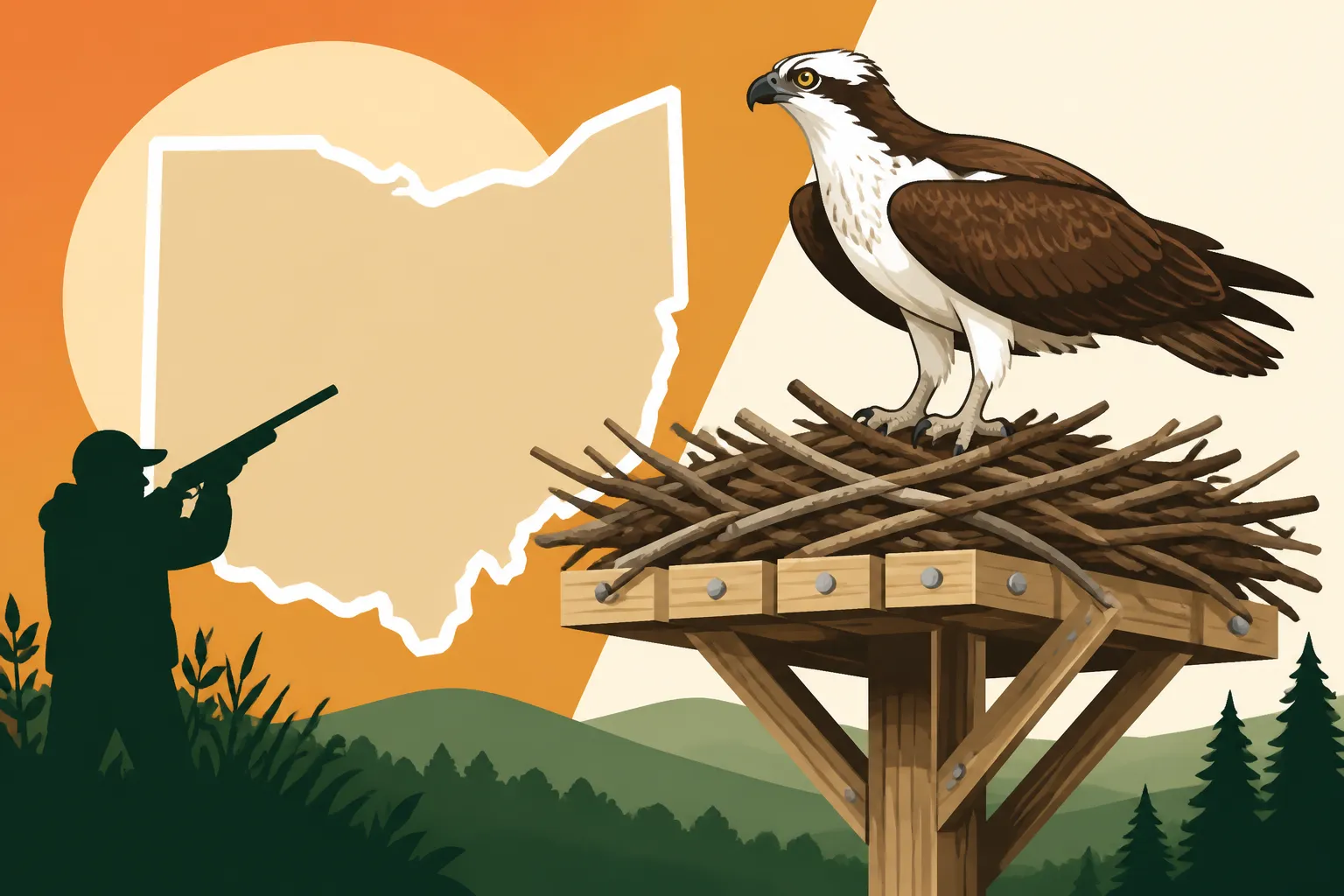
Ohio Osprey Nesting Platforms
For those of us who cherish Ohio's wild places, whether we're deep in the Wayne National Forest Hunting for deer or setting out decoys for waterfowl on Lake Erie, there’s a shared love for all the creatures that call our state home. For many years, the sight of a magnificent Osprey circling overhead, then plunging feet-first into the water to snatch a fish, was tragically rare in Ohio. These iconic raptors faced immense challenges, but thanks to dedicated conservation efforts, particularly the thoughtful construction and placement of specialized nesting platforms, Ospreys are now a much more common and welcome sight across the Buckeye State. This guide will dive into the history of Ospreys in Ohio, the crucial role these nesting platforms play in their resurgence, and how we can all appreciate and support their continued success.
The Osprey's Struggle and Ohio's Recovery Story
It's hard to imagine today, but the skies over Ohio were once virtually empty of Ospreys. These powerful raptors, perfectly adapted to hunt fish, suffered dramatically from habitat destruction and, perhaps even more acutely, from the widespread use of certain pesticides. Their story in Ohio is a stark reminder of how human activity can impact wildlife, but also how dedicated conservation can bring species back from the brink.
A History of Decline and Extirpation
Before the mid-20th century, Ospreys nested throughout Ohio, particularly in areas rich with lakes, large rivers, and extensive wetlands. They were a natural part of our aquatic ecosystems, a sight many took for granted. However, by the 1950s and 60s, their numbers began a steep and alarming decline. The primary culprit was the widespread use of DDT and other organochlorine pesticides. These chemicals, accumulating in the food chain, caused Osprey eggshells to thin, leading to reproductive failure. Nests failed year after year, and young birds rarely hatched or survived.
Combine this chemical poisoning with the draining of wetlands and development along major waterways, which destroyed their natural nesting sites and foraging grounds, and you had a recipe for disaster. By 1980, the Osprey was functionally extirpated as a breeding bird in Ohio. You might spot a migrating bird passing through, but the idea of a pair building a nest and raising young was, sadly, a thing of the past. It was a disheartening period for anyone who cared about Ohio's wildlife.
The Reintroduction and Early Efforts
The good news is that Ohio wasn't going to let these magnificent birds disappear forever. A dedicated reintroduction program began in 1983, spearheaded by the Ohio Department of Natural Resources (ODNR) in collaboration with zoos and other conservation partners. The initial phase involved "hacking" young Osprey chicks. This process involved bringing chicks from healthy populations in other states—like Maryland and Virginia—and raising them in artificial nests (called hack boxes) at protected sites in Ohio. The idea was that these young birds, once fledged, would imprint on Ohio as their birthplace and return to nest here as adults.
These hack sites were often strategically chosen near large bodies of water with ample fish populations, such as Mosquito Creek Wildlife Area or areas around Lake Erie. It was a painstaking effort, requiring constant monitoring, feeding, and protection of the young birds. It took years, but slowly, the program began to show results. The first successful nesting of reintroduced Ospreys occurred in 1988, a monumental achievement that sparked hope for the species' future in the state. This early success proved that with the right intervention and a lot of patience, extirpated species could indeed be brought back. It’s a testament to the fact that Ohio's wildlife recovery efforts have seen great success across many species.
Building a Future: The Anatomy and Placement of Nesting Platforms
Once the Ospreys started returning, a new challenge emerged: where would they nest? Natural nesting sites, such as large dead trees near water, were still scarce in many developed areas. This is where the ingenuity of artificial nesting platforms became absolutely critical. These structures aren't just random poles; they are carefully designed and strategically placed to offer Ospreys a safe, elevated, and attractive place to raise their young.
Designing the Ideal Osprey Home
An Osprey nesting platform might look simple at first glance—a pole with a flat top—but its design is rooted in understanding Osprey behavior and needs. Typically, these platforms consist of a tall, sturdy pole, often treated wood or metal, sunk deep into the ground or secured to a substantial base. The height is crucial; Ospreys prefer elevated sites that offer a commanding view of their surroundings, helping them spot prey and detect potential threats.
On top of the pole, a square or circular platform is affixed, usually constructed of rot-resistant wood or heavy-gauge wire mesh. This platform provides a stable base for the Osprey's large, bulky nest, which they construct from sticks, branches, and other debris. Sometimes, a small amount of "starter" nesting material, like some sticks or an old tire, is placed on the platform to encourage birds to investigate and build upon it. This subtle invitation often does the trick. Below the platform, some designs incorporate predator guards, simple metal cones or sleeves that prevent climbing predators like raccoons or snakes from reaching the nest and harming eggs or chicks. It's all about creating a safe, secure, and appealing "real estate" option for a nesting pair.
Strategic Siting for Success
Placement of these platforms is arguably as important as their design. You can build the perfect platform, but if it's in the wrong spot, Ospreys won't use it. ODNR biologists and local conservation groups carefully scout locations that meet several key criteria. First and foremost, a platform must be near a reliable source of fish, whether that's a large lake, a river, a reservoir, or extensive wetlands. Ospreys are obligate piscivores (fish-eaters), so proximity to food is non-negotiable.
Secondly, the platform needs to be relatively isolated from human disturbance, though Ospreys have shown a surprising tolerance for activity once they're established. They also need a clear flight path to and from the nest. Finally, the platforms are often placed in open areas, away from dense tree cover that could obstruct their view or make approaching the nest difficult. You'll frequently see these platforms in reclaimed strip mine lakes, along large agricultural drainage ditches, on islands in reservoirs, or within state wildlife areas like Killdeer Plains Wildlife Area Region or Magee Marsh Area Waterfowl Access. When you're out exploring potential hunting spots, a tool like GoHunt or other mapping apps can help you identify these aquatic features where Ospreys might thrive, even if you’re focused on something else like Scouting Ohio Public Land Before Season. The success of these platforms truly hinges on understanding both the bird's biology and the local environment.
The Impact and Continued Success of Osprey Platforms
The investment in Osprey reintroduction and habitat restoration through nesting platforms has paid off handsomely. What was once a ghost species in Ohio is now a thriving population, regularly delighting birdwatchers, anglers, and hunters alike with their spectacular aerial displays and fishing prowess. Their return is a clear victory for Ohio's conservation community.
Monitoring Success and Population Growth
Since the reintroduction began, ODNR and its partners have diligently monitored Osprey nesting success. Biologists track the number of active nests, the number of eggs laid, and crucially, the number of young Ospreys (fledglings) that successfully leave the nest each year. This data is vital for understanding population trends and identifying any new threats or challenges.
The results have been overwhelmingly positive. From a handful of nesting pairs in the early 2000s, Ohio's Osprey population has grown to well over 100 nesting pairs, with that number steadily increasing each season. Ospreys are now nesting in many counties across the state, far beyond the initial reintroduction sites. This growth demonstrates the efficacy of the nesting platform program and the general improvement in environmental conditions. It's a joy to see them back, a visible sign of healthy waterways and thriving fish populations. When you're looking at aerial photos on an app like GoHunt to scope out Hunting the Ohio River Backwaters or Hunting the Lake Erie Marsh Zone Waterfowl, keep an eye out for these distinctive platforms; they often indicate prime wildlife habitat.
Broader Conservation Implications
The success of Ohio's Osprey program extends far beyond just the birds themselves. Ospreys are often considered an indicator species for aquatic health. Their presence signifies clean water and abundant fish, which benefits countless other species, including those we hunt. A healthy Osprey population suggests that efforts to control pollution and manage fisheries are working.
Furthermore, the public awareness generated by the Osprey's return helps foster a broader appreciation for wildlife conservation. People see these magnificent birds and become more invested in protecting the habitats they share. This increased awareness can translate into support for other conservation initiatives, from wetland restoration to managing Chronic Wasting Disease in Ohio Deer. The platforms themselves, often highly visible, serve as powerful symbols of what can be achieved through dedicated effort and community involvement. It’s a compelling story of what can happen when humans decide to lend a helping hand to nature, much like the successful Ohio River Otter Recovery.
Witnessing Ohio's Ospreys: Viewing and Citizen Science Opportunities
Part of the joy of the Osprey's return is the opportunity to witness these incredible birds in their natural, or rather, reintroduced, habitat. Their nests are often quite visible, making them excellent subjects for birdwatching. Beyond just observing, there are also ways for ordinary citizens to contribute to their ongoing conservation.
Finding Active Nests and Prime Viewing Locations
Locating active Osprey nests has become a popular pastime for birdwatchers and nature enthusiasts in Ohio. While Ospreys are now widespread, certain areas offer more consistent viewing opportunities. Large reservoirs like Alum Creek Lake, Hoover Reservoir, and Grand Lake St. Marys are known hotspots. Along Lake Erie, particularly in protected marsh areas and island chains, you'll also find numerous nesting pairs. Many state parks and wildlife areas that feature large bodies of water have intentionally placed platforms and are excellent places to start.
When searching for Ospreys, look for tall structures near water. Power poles, old communication towers, and, of course, the dedicated nesting platforms are all potential sites. Bring binoculars or a spotting scope to get a better view of the birds, their nests, and any young chicks. Observing an Osprey plunge into the water and emerge with a fish is an unforgettable experience. Websites and apps can often provide recent sighting data, which can be useful for planning a trip. Always remember to maintain a respectful distance from active nests to avoid disturbing the birds, especially during nesting season.
How You Can Support Osprey Conservation
Even if you're not directly building a nesting platform, there are many ways Ohio citizens can support Osprey conservation. One of the simplest is to report your sightings, especially nesting activity, to the ODNR. This citizen science data is invaluable for biologists tracking population growth and distribution. Many state agencies and local birding groups have online portals or apps where you can submit observations. Using a mapping platform like GoHunt can help you mark a location to report later, ensuring accuracy.
You can also support organizations that are actively involved in habitat restoration and wildlife protection in Ohio. Donations, volunteering for cleanup efforts, or participating in educational programs all contribute to a healthier environment for Ospreys and other wildlife. Advocating for clean water policies and responsible land use also has a direct positive impact. A healthy ecosystem benefits everyone, from the top predators like Ospreys and Coyotes and Predators in Ohio to the smallest fish in the stream, and ultimately, to us, the stewards of these amazing natural resources.
By appreciating and understanding the journey of the Ohio Osprey, we can all play a part in ensuring these magnificent birds continue to grace our skies and waterways for generations to come. Their story is a powerful reminder that with effort and care, even the most challenging conservation battles can be won.
Disclaimer
This article is for general informational purposes only and does not constitute professional advice. Laws, prices and regulations vary by location and change over time. Consult a qualified professional for guidance on your specific situation.