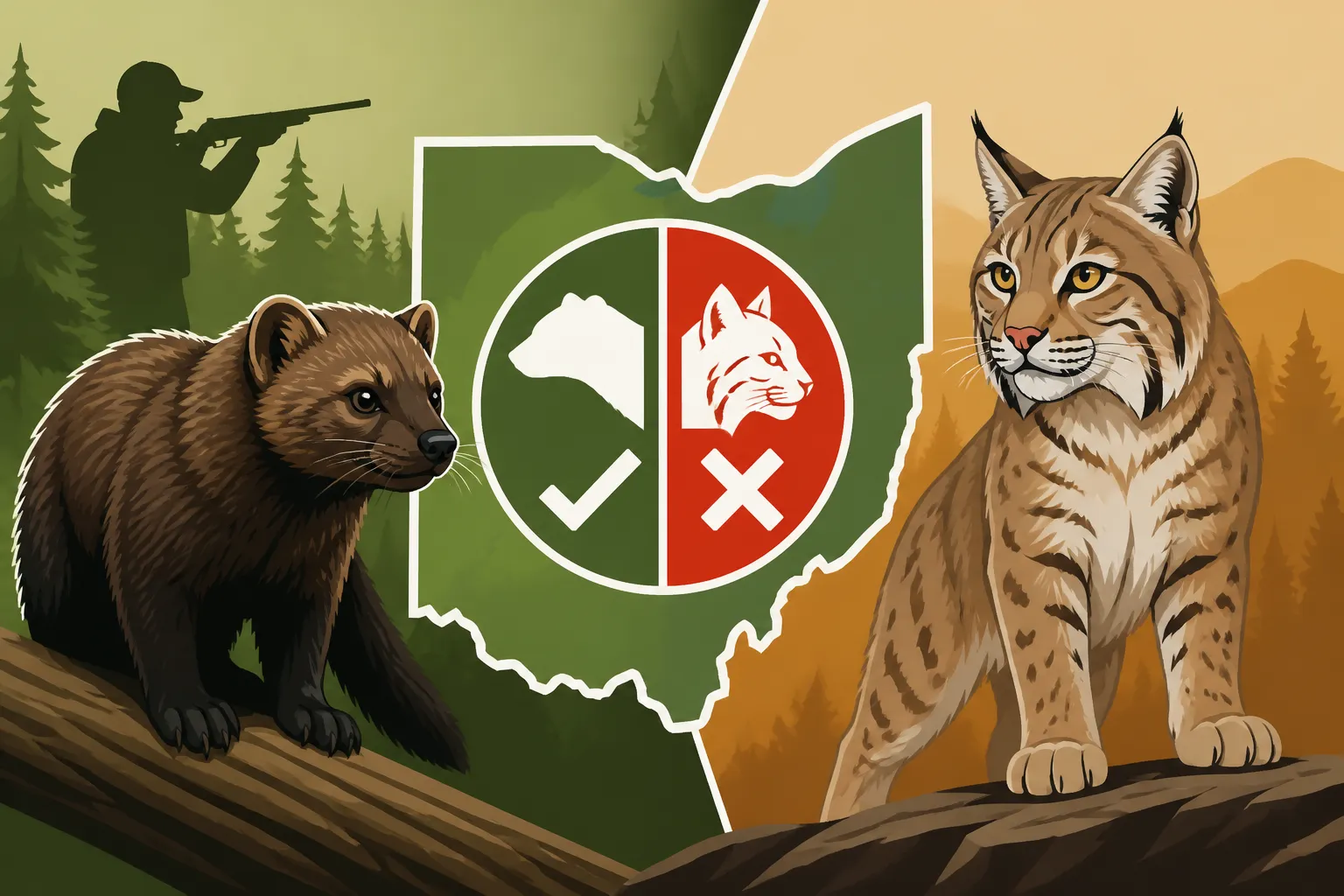
Ohio Fisher and Bobcat Legal Status
It can be incredibly frustrating to hear whispers and rumors about species making a comeback in Ohio, especially when you're an avid outdoors person, only to find conflicting information or realize that what you hoped was true isn't quite the reality. Many hunters and wildlife enthusiasts wonder about the legal status of animals like bobcats and fishers, often mistaking increased sightings for open seasons. This guide will meticulously break down the current legal protections and management strategies for these fascinating furbearers in the Buckeye State, clarifying exactly why you won't find them on your list of huntable game.
The Elusive Ohio Bobcat: A Recovery Story and Legal Status
For decades, the very idea of seeing a bobcat in Ohio felt like a pipe dream, a relic of a wilder past. These beautiful, secretive felines were once common, but habitat loss, unregulated hunting, and human encroachment pushed them to the brink, leading to their extirpation from the state by the mid-19th century. Yet, against the odds, bobcats have made a remarkable return, slowly but surely reclaiming their ancestral grounds in certain parts of Ohio.
From Extirpated to Rebounding: A Conservation Success
The return of the bobcat to Ohio isn't the result of a direct reintroduction program like some other species; instead, it's a testament to natural recolonization from neighboring states and the resilience of wildlife when conditions improve. Starting mainly in the rugged, forested hills of southeastern Ohio, bobcats began to filter back across the border from West Virginia and Kentucky. These areas, particularly the unfragmented forests of counties like Washington, Athens, and Gallia, provided the dense cover and abundant prey needed for them to establish a foothold.
It's truly inspiring to witness. For so long, these animals were just a memory. Now, seeing one, even just a fleeting glimpse on a trail camera or a set of tracks in the snow, sends a thrill through any outdoors enthusiast. The Ohio Department of Natural Resources (ODNR) has been monitoring their population growth diligently, tracking sightings, roadkills, and remote camera captures. While still considered a state-endangered species, their numbers have shown a consistent upward trend, spreading gradually beyond their initial strongholds. This rebound speaks volumes about the conservation efforts that have improved habitat and reduced historical pressures, laying the groundwork for species like the bobcat to thrive once more. If you're keen to understand the broader context of how species populations are assessed, exploring articles like Ohio Deer Population Estimate can offer insight into the science behind wildlife management.
Why No Hunting Season for Ohio Bobcats Yet
Despite their encouraging return, there is currently no open hunting or trapping season for bobcats in Ohio. This is a crucial point that often surprises or confuses people. The primary reason for this continued protection is their state-endangered status. While their population is growing, it's not yet considered robust or widespread enough to sustain any level of harvest without risking a reversal of their hard-won recovery. The ODNR operates on a principle of caution, especially when dealing with species that were once lost from the state.
The decision to open a season for any species is a complex one, driven by scientific data, population models, and a thorough assessment of the species' long-term viability. For bobcats, factors such as population density across their range, successful reproduction rates, and genetic diversity all play a role. Until the ODNR determines that these metrics are consistently strong across a significant portion of the state, ensuring the species' continued health and expansion, they will remain fully protected. Hunters who are passionate about conservation understand this logic, even if it means waiting longer to pursue such an iconic animal. It's about ensuring a sustainable future for wildlife, and that sometimes means patience.
Reporting Bobcat Sightings and Encounters
You might not be able to hunt them, but you can absolutely contribute to their ongoing recovery by reporting any bobcat sightings. This citizen science is invaluable to the ODNR. Every reported observation helps biologists better understand their distribution, population density, and habitat preferences. If you're out Scouting Ohio Public Land Before Season or just enjoying a hike, and you spot a bobcat, or even find clear tracks or scat, take notes!
The ODNR encourages the public to submit sightings through their online reporting system or by contacting a local wildlife office. Include as much detail as possible: date, time, specific location (GPS coordinates are best!), and any photos or videos you might have. If you come across a deceased bobcat, reporting it immediately is also critical, as biologists can collect valuable data for disease monitoring and genetic analysis. Knowing what to do if you come across a sick or injured animal is also important, and information like that often ties into broader efforts like Ohio Wildlife Disease Monitoring. These reports are vital pieces of the puzzle that help paint a clearer picture of the bobcat's presence across Ohio and inform future management decisions. If you use a sophisticated mapping tool like GoHunt, you can often pinpoint your location with great accuracy for reporting purposes.
Ohio's Fishers: A Return to the Buckeye State's Forests
While bobcats made their way back to Ohio naturally, another elusive furbearer, the fisher, owes its resurgence to a more direct human intervention. These intriguing members of the weasel family, known for their dark fur and agile movements, were also driven out of Ohio many years ago. However, thanks to dedicated conservation efforts, they are once again part of the state's diverse wildlife tapestry.
The Fisher's Comeback: Reintroduction and Range Expansion
The story of the fisher in Ohio is one of intentional restoration. Historically, fishers were native to Ohio, but like bobcats, they disappeared due to habitat destruction and unregulated trapping by the early 1900s. Recognizing the ecological importance of these predators, the ODNR initiated a reintroduction program in 2014. Fishers were captured from healthy populations in New York and released into specific, large forested areas in southeastern Ohio, particularly within the expansive Wayne National Forest and surrounding state forests.
This project was a huge undertaking, requiring careful planning and execution. The goal was to establish a self-sustaining population that could help restore ecological balance in these hardwood forests. Since their reintroduction, these "forest cats" (a common misconception, as they are not cats at all but rather large weasels) have shown promising signs of dispersal and reproduction. Their presence is a good indicator of healthy forest ecosystems, as they prefer dense, mature forests with plenty of denning sites and prey. It's another point of pride for Ohio's conservationists, demonstrating that with strategic planning, lost species can indeed return. If you're interested in the broader context of furbearer management, reading about Ohio Trapping and Furbearer Seasons can provide a good overview of how other species are managed.
Legal Protection for Fishers in Ohio
Much like bobcats, there is no open hunting or trapping season for fishers in Ohio. They are currently listed as a state-threatened species, a status that grants them full legal protection. This means it is illegal to harvest, harm, or possess a fisher in Ohio. The reintroduction program is still relatively young, and while the population is growing and expanding, it's considered too vulnerable for any take at this time.
The "threatened" designation signifies that while the species is no longer facing immediate extirpation, its population numbers and distribution are still below a healthy, secure level. The ODNR's objective is to allow the fisher population to continue to grow, spread throughout suitable habitat, and become firmly established before any consideration of a regulated season. This careful approach ensures that the significant investment in their reintroduction pays off in the long run. Any violation of these protections can result in significant penalties, including fines and potential legal action, emphasizing the serious nature of their protected status. For detailed information on other protected furbearers, you might find articles such as Ohio River Otter Recovery interesting, as they share similar recovery stories.
Distinguishing Fishers from Other Furbearers
For hunters and trappers, or just anyone spending time in Ohio's forests, it's incredibly important to be able to correctly identify a fisher to avoid accidental encounters or illegal take. They can sometimes be confused with other furbearers, especially when seen quickly or from a distance. Here's how to tell them apart:
| Feature | Fisher | Long-Tailed Weasel | Raccoon | Bobcat |
|---|---|---|---|---|
| Size (Body) | Medium (20-30 inches, not including tail) | Small (8-10 inches) | Medium-Large (16-28 inches) | Medium (25-40 inches) |
| Weight | 3-15 lbs (males larger) | 3-9 oz | 10-30 lbs | 15-30 lbs |
| Color | Dark brown to black, often grizzled/frosted | Brown back, white belly (can change in winter) | Grayish-brown, black mask & ringed tail | Tan/brown with black spots/stripes |
| Tail | Long, bushy, black, usually 13-16 inches | Long, thin, black-tipped (half body length) | Bushy, distinct black rings | Short, "bobbed" tail (4-7 inches) |
| Head/Face | Pointed snout, small rounded ears | Small, pointed face | Distinct black mask across eyes | Tufted ears, short face, sideburns |
| Movement | Agile, good climber, bounds on ground | Quick, sinuous, low to ground | Lumbering, climbs well | Stealthy, powerful, cat-like |
| Legal Status | State-Threatened, No Hunting/Trapping | Huntable/Trappable (specific seasons/limits) | Huntable/Trappable (Ohio Raccoon and Fox Season Dates) | State-Endangered, No Hunting/Trapping |
| Primary Habitat | Mature, dense hardwood/conifer forests | Diverse: forests, fields, suburban | Diverse: forests, urban, agricultural | Dense forests, rugged terrain |
Fishers are larger and much more robust than the common long-tailed weasel, with a notably darker, often almost black, coat. Their long, bushy tail is also a key identifier, distinguishing them from the shorter-tailed bobcat. They have a distinctive, low-to-the-ground bounding gait, but they are also excellent climbers, often found in trees. Recognizing these unique characteristics is vital for responsible outdoor recreation in Ohio. A good mapping app like GoHunt can also help you identify areas of prime fisher habitat where you might be more likely to encounter one.
Understanding Ohio's Furbearer Management
The stories of the bobcat and fisher in Ohio highlight a broader truth about wildlife conservation: it's a dynamic, ever-evolving process rooted in scientific data and public participation. The ODNR doesn't make decisions about hunting or trapping seasons lightly; every choice is meticulously weighed against conservation goals and the overall health of the ecosystem.
The Role of Scientific Data and Public Input
When it comes to managing furbearers, the ODNR relies heavily on robust scientific data. This includes population surveys (e.g., track counts, camera trap studies, genetic sampling), habitat assessments, harvest data from huntable species, and disease monitoring. For species like the bobcat and fisher, where population data is still being gathered and evaluated, every piece of information is critical. Biologists analyze trends in population growth, reproduction rates, survival rates, and genetic diversity to determine if a species is thriving or if it still requires protection. This detailed approach is central to how they track other key species, as you can see when learning about Ohio Deer Harvest Records.
Beyond the science, public input plays a significant role. The ODNR holds public meetings, takes comments, and considers the sentiment of hunters, trappers, landowners, and the general public. While scientific data provides the foundation, community values and concerns also inform management decisions. It's a balancing act: ensuring the long-term health of wildlife populations while also providing opportunities for outdoor recreation where appropriate. This transparency in decision-making is essential for building trust and ensuring that management strategies are supported by the very people who cherish Ohio's natural resources.
Looking Ahead: Potential Future Management Changes
So, what would it take for Ohio to potentially establish a hunting or trapping season for bobcats or fishers? It's not a simple switch, and it certainly won't happen overnight. For either species, the key factor will be a sustained, verifiable increase in population numbers and range expansion, consistently demonstrating that they are secure and self-sustaining across a significant portion of the state.
For bobcats, this means moving beyond their "endangered" status to "threatened," and eventually, to being delisted entirely. This would require many more years of consistent population growth, evidence of widespread breeding, and a broader distribution beyond the southeastern counties. For fishers, already at "threatened" status, the path would involve continued expansion from their reintroduction sites, robust reproduction, and reaching population densities that biologists deem stable enough to withstand a regulated harvest.
Any potential season would likely start with very conservative limits, perhaps in limited geographical areas, and with strict regulations. It would be a gradual, carefully monitored process, always prioritizing the long-term health of the species. Until then, these magnificent animals remain a protected treasure in Ohio's wild places, a testament to the power of conservation and the patience of those who work to protect our natural heritage. If you're interested in other furbearers that are currently managed with seasons, you can delve into Coyote and Predator Hunting in Ohio or Running Hounds for Ohio Raccoon for comparison.
Disclaimer
The information provided in this article is for general guidance and informational purposes only. Hunting and trapping regulations are subject to change and can be complex. Always consult the most current Ohio Department of Natural Resources (ODNR) hunting and trapping regulations before engaging in any hunting or trapping activities. It is your responsibility to know and follow all applicable laws.