How Ohio Deer Management Permits Work
It's no secret that Ohio's deer hunting regulations can sometimes feel like trying to untangle a particularly stubborn knot. You've got your regular permits, then you hear about these "Deer Management Permits," and suddenly, you're scratching your head, wondering if you're missing out on opportunities or, worse, if you're misunderstanding a crucial rule. This guide is here to unravel the mystery of Ohio's Deer Management Permits (DMPs), explaining exactly what they are, how they work, and how they fit into your overall hunting strategy for a successful season.
What Exactly are Ohio Deer Management Permits?
For many hunters, the idea of an "extra" deer tag can be a bit confusing. You've already bought your general deer permit, so why would you need another one, and what's the catch? Ohio's Deer Management Permits (DMPs) are a specific tool designed by the Ohio Department of Natural Resources (ODNR) to help manage the state's deer population, particularly in areas where deer numbers are higher than desired. They aren't just another tag; they represent a deliberate strategy to achieve very specific management goals.
Defining the Antlerless-Only Restriction
The most defining characteristic of an Ohio Deer Management Permit is its strict antlerless-only restriction. Unlike your general deer permit, which allows you to harvest either an antlered or antlerless deer, a DMP is exclusively for female deer or male deer with antlers less than 3 inches in length. This critical distinction is at the heart of their purpose. By focusing harvest pressure solely on does, the ODNR aims to directly impact the reproductive capacity of the deer herd in designated areas. This isn't about targeting trophy bucks; it's about reducing the number of deer that can reproduce, thereby slowing population growth.
Imagine you're hunting a prime patch of private land in central Ohio, perhaps near Delaware or Licking County, where deer numbers are robust, and you consistently see multiple does. While a general permit lets you take one deer, a DMP provides an additional opportunity to harvest a doe, contributing directly to local population control. This focus on antlerless deer is crucial for maintaining a healthy balance between deer populations and their habitat, preventing overbrowsing and other issues that arise from too many deer in one area. Understanding these nuances can really help you plan your season effectively.
The Core Purpose: Population Control and Harvest Objectives
The existence of DMPs is a testament to the ODNR's commitment to scientific wildlife management. The core purpose isn't to simply sell more tags; it's to provide hunters with an effective means to help achieve specific population objectives. Across various parts of Ohio, particularly in many agricultural counties and suburban zones, deer populations can often exceed ecological carrying capacity or present significant challenges to human interests, such as crop damage or deer-vehicle collisions.
The ODNR uses extensive data, including harvest reports, deer-vehicle collision statistics, and habitat assessments, to determine which counties require additional harvest pressure on does. When you purchase and fill a DMP, you are directly participating in this critical management effort. It's a partnership between hunters and the state to ensure a sustainable and healthy deer herd for future generations. For instance, in areas like Holmes or Tuscarawas counties, where deer densities are high and agriculture is prevalent, DMPs are vital for mitigating impacts on local farms. Think of it as a shared responsibility: the ODNR sets the framework, and hunters, by utilizing these permits, become active participants in maintaining ecological balance and community well-being. This proactive approach helps to avoid larger issues down the line.
Who Can Use Deer Management Permits and Where?
One of the common questions about DMPs revolves around who is eligible to use them and, perhaps more importantly, where they are actually valid. Ohio's hunting regulations are highly specific, and DMPs are no exception. They are a targeted tool, meaning their availability and use are tied to specific conditions, primarily geographic location and hunter residency status. It's essential to understand these parameters before you purchase one, lest you find yourself with an unusable tag.
Resident Versus Non-Resident Eligibility
When it comes to Ohio's hunting licenses and permits, residency often plays a role in cost and sometimes availability. Thankfully, for Deer Management Permits, both Ohio residents and non-residents are generally eligible to purchase and utilize them. The key difference, as with all other permits, lies in the initial cost of the required base hunting license and deer permits. For example, an Ohio resident hunting license option will be considerably less expensive than a non-resident hunting license option. This equal access to DMPs for both resident and non-resident hunters underscores the ODNR's focus on population management rather than revenue generation through these specific tags. The goal is simply to increase the antlerless harvest where needed.
However, irrespective of residency, every hunter must possess a valid Ohio hunting license and a general deer permit before purchasing DMPs. The DMPs are always purchased in addition to your initial deer permit. So, if you're planning an out-of-state trip to chase Ohio whitetails, understanding these permit layers is crucial. Platforms like GoHunt can be invaluable for non-residents, providing up-to-date information on permit requirements and helping to streamline the planning process. Knowing you can contribute to deer management regardless of where you call home makes these permits a great option for any hunter looking to extend their season or fill their freezer.
Understanding County-Specific Regulations and Availability
Deer Management Permits are not available statewide in every county every year. Their availability is dynamic and determined annually by the ODNR based on deer population assessments. Essentially, DMPs are issued for counties where the ODNR has determined that additional antlerless harvest is necessary to meet management objectives. This means that while one county might have unlimited DMPs, a neighboring county might have none at all, or only a very limited number. This localized approach allows for precise control of deer numbers where they are highest.
Before heading afield, always check the current Ohio deer season structure explained by the ODNR to confirm DMP availability in your target county. You'll typically find an interactive map or a detailed list outlining which counties offer DMPs and whether they are unlimited or have specific caps. For instance, counties in the fertile farmland regions of Northwest Ohio farm country often have liberal DMP allocations due to high deer densities, whereas some Appalachian Ohio foothills counties might have fewer, reflecting different habitat and population dynamics. This localized strategy is paramount to effective wildlife management, preventing overharvest in areas with lower deer numbers while encouraging it where populations are thriving. It’s not a one-size-fits-all approach, and staying informed is key.
Special Urban Deer Hunts and DMP Opportunities
Beyond the general county-level allocations, Deer Management Permits play a particularly significant role in Ohio's special urban deer hunts. These hunts are specifically designed to address deer overpopulation issues in suburban and urban areas where traditional hunting methods might be restricted or less effective. In these zones, deer often thrive due to abundant food sources, lack of natural predators, and limited hunting pressure, leading to increased conflicts with human populations.
Many of these urban hunts, such as those in specific parks or controlled access zones around cities like Columbus or Cincinnati, often rely heavily on DMPs, sometimes even making them the primary or only type of deer tag valid within their boundaries. The goal is to reduce deer numbers in these contained environments safely and efficiently. Hunters participating in these special hunts will find that DMPs are often unlimited, emphasizing the intense need for antlerless harvest in these specific contexts. These programs are a testament to how flexible and essential DMPs are in tailoring management strategies to unique population challenges. They offer unique opportunities, often for archery hunters, to contribute to local conservation efforts while experiencing a different kind of hunting challenge closer to home.
How DMPs Differ from Regular Deer Permits
At first glance, a Deer Management Permit might just seem like another tag, but a closer look reveals several key distinctions that set it apart from your standard deer permit. These differences aren't just bureaucratic nuances; they directly influence how you plan your hunt, what you can harvest, and the overall cost of your season. Understanding these variances is crucial for any Ohio deer hunter looking to maximize their opportunities and stay within the bounds of the law.
Cost and Availability Differences
One of the most immediate differences you'll notice between a general deer permit and a Deer Management Permit is the cost. While both require a base hunting license, the antlered/antlerless deer permit carries a higher price point, reflecting its broader utility (allowing for an antlered buck). Deer Management Permits, on the other hand, are typically less expensive. This reduced cost is an intentional incentive from the ODNR to encourage hunters to harvest more antlerless deer in areas identified for population reduction. It makes it more economical for hunters to acquire multiple tags specifically for does.
As we touched on earlier, the availability of DMPs is also highly variable, often dictated by county-specific deer densities and management goals. Your general deer permit is available statewide for purchase. In contrast, DMPs are often limited to specific counties where the ODNR determines there's a need for increased antlerless harvest. This means that while you can always buy a general deer permit, you might not always be able to purchase a DMP for every county you plan to hunt. Websites like GoHunt often compile this information, making it easier for hunters to quickly check county-specific availability and plan accordingly. This targeted availability ensures that harvest efforts are concentrated where they are most impactful.
Impact on Bag Limits and Season Structure
The way DMPs interact with Ohio's deer bag limits and season structure is another crucial differentiator. Each hunter in Ohio is typically allowed to harvest a maximum of six deer per license year. This overall bag limit includes any deer harvested with a general deer permit and any deer harvested with a DMP. However, the specific rules around Ohio deer management permits allow hunters to take up to four additional antlerless deer with DMPs, provided they are in counties where DMPs are available. This means that if you've already filled your general antlered or antlerless tag, DMPs provide additional opportunities to continue hunting and harvesting does.
For example, if you harvest a buck with your general permit, you can then continue to use DMPs (in counties where they are valid) to take antlerless deer, up to your season limit. The season structure itself also plays a role; DMPs are generally valid during the archery, gun, and muzzleloader seasons, mirroring the general deer permit. However, always refer to the specific Ohio deer season structure explained for exact dates and weapon restrictions. This flexibility allows hunters to use DMPs throughout the various phases of the season, providing ample opportunity to contribute to management efforts and keep their freezers stocked. It's a system designed to give hunters options without compromising the overall management goals.
Strategic Considerations for Filling Tags
Understanding the distinction between these permits opens up new strategic possibilities for hunters. For many, the general deer permit is reserved for the pursuit of an antlered buck. While it can be used for an antlerless deer, many hunters hold onto it, hoping to encounter a mature buck. This is where DMPs shine. By purchasing a DMP, a hunter can effectively "save" their general permit for a buck while still taking advantage of opportunities to harvest antlerless deer, often earlier in the season or from areas with higher doe populations. This dual-permit strategy allows for greater flexibility.
Consider a scenario where you're hunting during the early archery season in a high-density area. You might encounter multiple does, but no mature bucks. With a DMP, you can harvest a doe, contributing to population control and securing venison, all while keeping your general permit valid for that dream buck later in the rut. This approach helps in managing Ohio deer population estimates more effectively and provides hunters with a practical way to extend their time in the field, even after taking an antlered deer. It’s about being smart and adaptable, using the tools the ODNR provides to enhance your hunting experience and success.
| Feature | General Deer Permit | Deer Management Permit (DMP) |
|---|---|---|
| Harvest Type | One antlered or one antlerless deer | One antlerless deer only |
| Cost (Approx.) | Higher | Lower |
| Availability | Statewide in all open counties | County-specific, based on ODNR needs |
| Purchase Limit | One per hunter per year | Up to four per hunter per year |
| Total Bag Limit Impact | Counts towards 6-deer maximum | Counts towards 6-deer maximum |
| Purpose | General harvest opportunity | Specific population reduction (does) |
| Required For | First deer of the season | Additional antlerless deer |
The Role of DMPs in Ohio's Deer Herd Management
Ohio's white-tailed deer herd is a significant natural resource, providing recreational opportunities for thousands of hunters and economic benefits to local communities. However, managing this resource effectively requires a delicate balance. Too many deer can lead to ecological damage, agricultural losses, and safety concerns, while too few diminish hunting opportunities. Deer Management Permits are a key component of the ODNR's comprehensive strategy to maintain this balance, acting as a crucial lever in their management toolkit.
ODNR's Objectives for Deer Population Health
The Ohio Department of Natural Resources (ODNR) sets specific objectives for deer populations across different regions of the state. These objectives are not arbitrary; they are based on scientific research, habitat assessments, and public input. Broadly, the ODNR aims to maintain a healthy and sustainable deer herd that is in balance with the available habitat, minimizes conflicts with human interests (such as vehicle collisions and crop damage), and provides ample hunting and viewing opportunities. DMPs are directly tied to these goals.
In areas where deer densities are high, and the population is exceeding the desired threshold—perhaps in a county where Ohio deer harvest records indicate consistent overpopulation—the ODNR will make DMPs available. This signals to hunters that their efforts to harvest does are particularly valuable in that area. Conversely, in areas where deer populations are closer to target levels, or even slightly below, DMPs might not be offered or will be very limited, reflecting a desire to reduce harvest pressure. This adaptive management approach ensures that hunting regulations are responsive to the actual conditions of the deer herd on the ground. It's a complex undertaking, but DMPs provide a flexible way to achieve these finely tuned objectives.
How DMPs Influence Local Deer Densities and Habitat
By allowing for increased harvest of antlerless deer, DMPs have a direct and measurable impact on local deer densities. Does are the reproductive engine of the deer herd. Each doe has the potential to produce one to three fawns annually. Therefore, removing does directly reduces the number of new deer entering the population in subsequent years. This is particularly effective in agricultural areas or suburban green spaces where food is abundant, and deer survival rates for fawns can be very high.
Reduced deer densities, facilitated by DMP use, can lead to healthier habitats. When deer populations become too high, they can overbrowse vegetation, destroying understory plants, impacting forest regeneration, and reducing food sources for other wildlife species. By bringing deer numbers down to a more sustainable level, DMPs help to alleviate this pressure, allowing native plant communities to recover and thrive. This, in turn, can improve overall ecosystem health and even enhance the quality of the deer herd itself over time, as remaining deer have access to better nutrition. Utilizing a DMP can therefore be seen as an act of habitat stewardship, contributing to the long-term well-being of the landscape and all its inhabitants.
Balancing Hunter Opportunity with Ecological Needs
The implementation of DMPs is a delicate balancing act for the ODNR. On one hand, they want to provide ample hunting opportunities for Ohio's passionate hunting community. On the other, they have a responsibility to manage the ecological health of the state's wildlife resources. DMPs represent a successful strategy in achieving both. By offering these permits at a lower cost and in specific areas, the ODNR encourages hunters to participate in population control, which might not always be the primary goal for every hunter focused on antlered deer.
This system allows hunters who want to fill their freezers with venison to do so while simultaneously contributing to a crucial conservation effort. It also provides flexibility for hunters to extend their time afield during periods when antlered buck activity might be low, such as during the late-season rut lull or after the peak rut. For example, a hunter pursuing Ohio's archery season runs into February might find DMPs incredibly useful for taking a doe late in the season, when other opportunities have passed. It's a win-win scenario: hunters gain additional opportunities, and the deer herd benefits from appropriate management, fostering a more sustainable hunting culture.
Navigating the Checking and Reporting Process with DMPs
Once you've successfully harvested an antlerless deer with your Deer Management Permit, your responsibilities as a hunter don't end there. Proper checking and reporting are not just bureaucratic steps; they are vital for the ODNR to collect accurate data on deer harvest, which in turn informs future management decisions. Mishandling the check-in process can lead to legal issues, so understanding the requirements for DMPs is just as important as knowing how to use them.
Mandatory Check-In Procedures for All Harvests
Every deer harvested in Ohio, regardless of the permit used, must be checked in through the state's official system. For DMPs, the process is identical to that for a general deer permit. You need to register a deer through Ohio's check-in system typically within 24 hours of harvest, or before the deer is transported out of the state. This can be done online via the ODNR website, through the HuntFish Ohio mobile app, or by phone. It's a straightforward process, but it requires attention to detail. You'll need information like the county of harvest, the weapon used, and the type of deer (antlered/antlerless).
When checking in a deer taken with a DMP, ensure you select the correct permit type during the reporting process. This ensures that the ODNR's data accurately reflects the role of DMPs in the overall harvest. The system will then generate a confirmation number, which must be written on the permit itself and kept with the deer until it reaches its final processing destination. For a new hunter, this can seem a bit daunting, but practicing the steps or using the GoHunt app to record details can make it much smoother. The integrity of this data is fundamental to how Ohio deer population estimates are derived and how future hunting seasons are structured.
Carcass Movement Restrictions, Especially in CWD Surveillance Areas
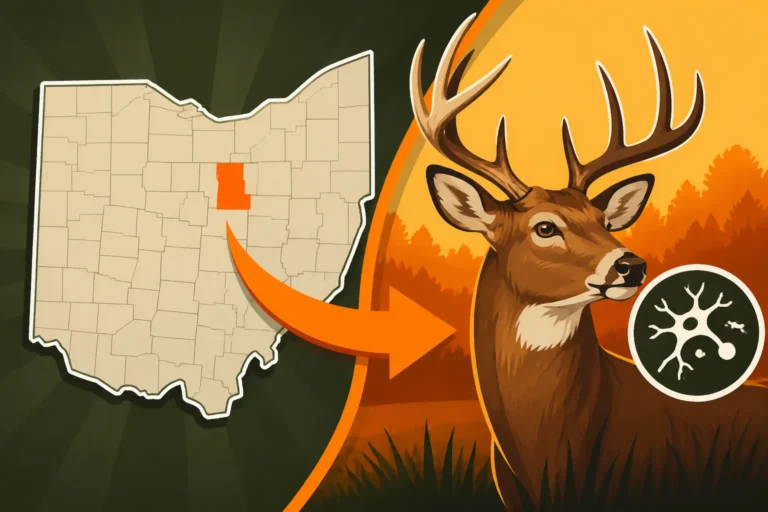
While the general check-in process applies statewide, there's an additional, critical consideration for carcass movement, particularly if you harvest a deer within Ohio's Chronic Wasting Disease (CWD) Surveillance Area (DSA). The ODNR has established specific rules to prevent the spread of this fatal neurological disease, and these rules apply equally to deer taken with DMPs. If you harvest a deer in a DSA county, like Wyandot, Hardy, or Marion, you generally cannot remove the entire carcass from that county or the adjacent CWD-positive counties.
The primary exceptions are for boned-out meat, capes (without skull or spinal column), antlers (clean of all tissue), and taxidermy-ready hides. Any part containing spinal column or brain material must remain within the DSA or be taken to an approved processor or taxidermist within the zone. These regulations are serious, and violations can carry stiff penalties. Before you even head out, if you're hunting in or near a CWD area, familiarize yourself with Ohio's chronic wasting disease surveillance area rules and consider handling venison from a DSA county safely. This proactive approach not only keeps you compliant but also plays a vital role in protecting Ohio's deer herd from further disease spread.
Maximizing Your Season: Strategies and Common Misconceptions
Deer Management Permits offer a fantastic way to extend your hunting season, secure more venison, and contribute meaningfully to wildlife management. However, like any tool, they are most effective when used strategically and when common misconceptions are dispelled. Let's dive into how you can make the most of your DMPs and clarify some of the myths surrounding them.
Are DMPs Only for 'Extra' Deer? Dispelling Myths
One of the most common misconceptions about Deer Management Permits is that they are only for "extra" deer, somehow less important or desirable than a deer taken with a general permit. This simply isn't true. Every deer harvested contributes to the overall management goals and provides valuable venison. The term "management" might imply a less exciting hunt, but the reality is that filling a DMP can be just as challenging and rewarding as any other deer hunt.
In fact, focusing on antlerless deer can sometimes be more challenging, requiring careful scouting for doe bedding areas and feeding patterns, rather than relying solely on rutting buck behavior. A successfully harvested doe, whether it's the first deer of your season or the sixth, is a testament to your hunting skill and ethical practice. It's also a great way to put food on the table. For many hunters, especially those focused on providing venison for their families, DMPs are not just "extra" tags but essential components of their annual harvest strategy. They allow you to fill your freezer without the pressure of waiting for a trophy buck, and they teach valuable lessons about deer movement and behavior.
Strategic Use for Filling Freezers and Managing Local Herds
The strategic value of DMPs cannot be overstated, especially for hunters aiming to fill their freezers. As mentioned, these permits are typically less expensive than general permits and are often unlimited in high-density areas. This provides an economical way to increase your venison harvest. Many experienced Ohio hunters will prioritize taking one or more does early in the Ohio archery season using DMPs. This secures a significant portion of their annual meat supply, reduces pressure later in the season, and allows them to focus their remaining general tag on an antlered deer during the peak of the rut.
Beyond personal venison goals, actively using DMPs in high-density areas directly benefits the local deer herd and habitat. By selectively removing does, you help to balance the sex ratio, reduce competition for food, and potentially improve the overall health and size of the remaining deer, including future generations of bucks. This is especially true when hunting Northwest Ohio farmland deer or in other areas where deer populations can rapidly rebound due to abundant resources. Think of yourself as an active land manager, using the tools provided to foster a healthier ecosystem. Whether you're hunting public hunting land in Ohio or private parcels, strategically using DMPs is a responsible and highly effective way to engage with Ohio's deer season.
Disclaimer
Please remember that hunting regulations, seasons, and permit availability can change. Always consult the most current Ohio Department of Natural Resources (ODNR) hunting regulations before heading afield. This guide provides general information and should not be considered a substitute for official ODNR publications.