How Long Ohio CWD Results Take
One of the most nerve-wracking parts of hunting in certain areas of Ohio these days isn't the shot itself, but the waiting game afterward for Chronic Wasting Disease (CWD) test results. If you've hunted in a Disease Surveillance Area (DSA) like those around Wyandot County, you know the anxiety of wondering how long you'll be in limbo, especially with restrictions on what you can do with your venison. This guide is here to walk you through the typical timeline for CWD results in Ohio, explaining the process, the factors that affect the wait, and how you can access your information to finally get that much-needed peace of mind.
Understanding CWD Testing in Ohio
Hunting in Ohio's CWD Surveillance Area can add a layer of complexity and anxiety to an otherwise exciting season. When you harvest a deer in one of these designated counties, like parts of Wyandot, Hardin, or Marion counties, getting that animal tested isn't just a suggestion; it's a critical part of the state's effort to monitor and contain the disease. This commitment helps ensure the health of Ohio's deer herd for future generations, but it does mean a bit of extra work and patience on your part.
The Initial Submission Process
So, you've tagged a deer in the DSA, you've checked it online, and now it's time for the CWD sample. The Ohio Department of Natural Resources (ODNR) has made efforts to streamline this, primarily through easily accessible self-serve kiosks located throughout the affected areas. You'll typically find these at local wildlife areas, ODNR offices, or even some local businesses during designated periods, especially during the mandatory testing windows like the opening weekends of gun season.
The process usually involves taking the deer's head to a kiosk. You’ll find clear instructions on how to properly remove specific lymph nodes or a brainstem sample, or in many cases, simply deposit the entire head into a designated freezer. It's crucial to follow these instructions to the letter to ensure a viable sample can be collected by ODNR staff. Each sample needs to be clearly marked with your harvest confirmation number and contact information. This step is where your journey of waiting officially begins, and it’s critical for ensuring you receive your results promptly once they are processed. For more details, you can refer to information on Submitting a Deer Head at a Sampling Kiosk and Finding a Self-Serve CWD Sampling Kiosk.
Behind the Scenes: The Lab Work
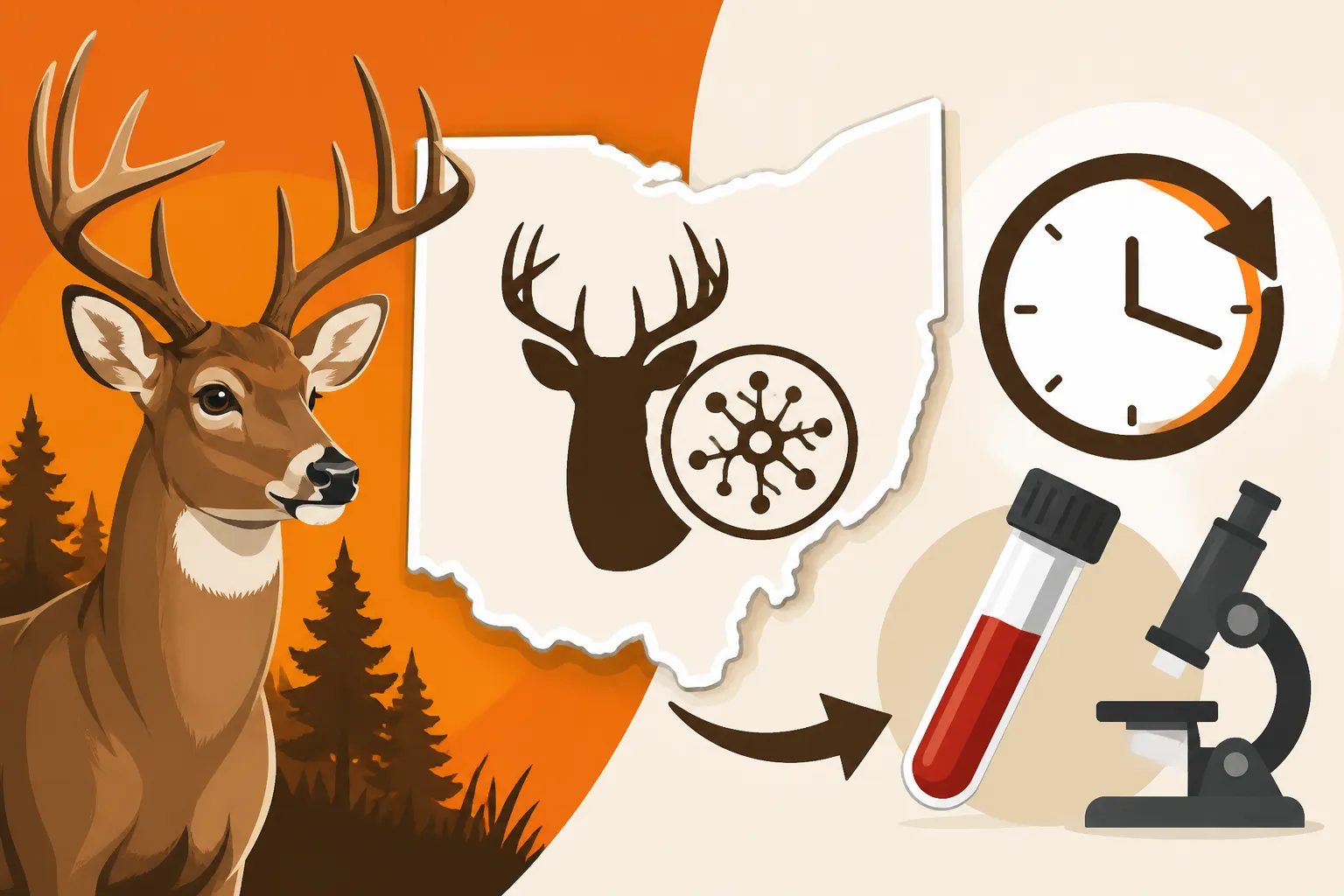
Once you've dropped off your sample, it's out of your hands and into the meticulous world of veterinary diagnostics. The samples are collected by ODNR staff and transported to a specialized laboratory, usually out of state, that is equipped to conduct CWD testing. These labs are certified and utilize highly sensitive immunohistochemistry (IHC) or enzyme-linked immunosorbent assay (ELISA) tests to detect the presence of prions, the abnormal proteins responsible for CWD.
This isn't a quick, in-house test. Each sample must be processed individually, often involving multiple steps including tissue preparation, staining, and microscopic examination. Quality control is paramount, as a false positive or negative could have significant implications for herd management and public confidence. The technicians are looking for specific tell-tale signs of the disease, and this requires careful, unhurried work. This is why you rarely get same-day results; it's a scientific process that demands precision over speed.
Factors Influencing Turnaround Times
It’s completely understandable to feel impatient when you’re waiting on CWD results. You’ve got venison to process, freezers to fill, and maybe even plans to travel. But the reality is, several factors can significantly impact how quickly those results come back, often leading to frustrations that are completely out of your control. It’s not about how fast the lab could be, but how many samples they're handling and what time of year it is.
Peak Hunting Pressure
Imagine a major holiday shopping rush, but instead of gifts, it's deer heads flooding into testing centers. That's essentially what happens during Ohio's peak hunting seasons, particularly the opening weekends of the statewide gun deer season. Suddenly, thousands of samples from counties within the Ohio's Chronic Wasting Disease Surveillance Area are submitted simultaneously. During these periods, especially the mandatory testing windows like Mandatory Testing on Early Gun Opening Weekend and Mandatory Testing on Statewide Gun Opening Weekend, labs become inundated.
The sheer volume means a backlog is almost inevitable. While labs work hard to process everything efficiently, there's a finite amount of equipment and skilled personnel. This surge can easily double or even triple the typical processing time. Hunters often experience the longest waits if they submit their samples during these high-volume days, a frustrating but necessary consequence of mass testing efforts. It's a classic bottleneck scenario, and unfortunately, you're caught in the middle.
Sample Volume and Staffing
Beyond the peak season spikes, the overall volume of samples throughout the year plays a huge role. As the CWD footprint grows or as testing efforts expand, more samples are collected, placing a continuous strain on laboratory resources. These specialized labs aren't just processing Ohio samples; they might be handling submissions from multiple states, all grappling with CWD management.
Staffing levels also impact turnaround. Recruiting and retaining highly skilled lab technicians is a challenge, and these labs can only process so many samples per day per person. Equipment maintenance, supply chain issues for reagents, and unexpected staffing shortages (like illness) can all cause delays. It’s a delicate balance, and any disruption can ripple through the entire system, slowing down the delivery of those crucial results. The ODNR provides information on Ohio CWD Prevalence Rate in the DSA, and the volume of positive cases can also sometimes affect how samples are prioritized and re-tested.
Seasonal Fluctuations
The hunting calendar itself dictates much of the CWD testing rhythm. Early archery season typically sees fewer CWD submissions, leading to faster turnaround times. As we move into October and November, especially during the rut and the primary gun seasons, the volume explodes. After the main gun seasons wrap up, things tend to slow down again through the late archery and muzzleloader seasons.
This means if you're lucky enough to tag a deer in late September or early October, your wait might be considerably shorter than if you fill your tag on the opening morning of the December gun weekend. The lab essentially has seasonal "rush hours" and "off-peak" periods. Planning your hunt, if possible, for less congested times might subtly reduce your waiting period, though for most hunters, you go when the opportunity arises! Understanding these fluctuations can help manage your expectations about when you'll get your results.
Typical Waiting Periods and How to Check
The suspense of waiting for CWD results can be agonizing, especially when you're trying to figure out what to do with your venison. While Ohio's testing system is robust, the turnaround time isn't always instant. Knowing what to expect and how to check your results can help ease some of that stress.
General Timeframes for Results
Generally, Ohio hunters can expect to wait anywhere from 2 to 6 weeks for CWD test results. However, this is a broad estimate and can fluctuate wildly depending on the factors we've already discussed.
- Early Archery Season (Late September – October): During these months, when harvest numbers are lower and the mandatory testing windows haven't kicked in, you might see results on the faster end of the spectrum, sometimes as quickly as 2-3 weeks. There's less competition for lab time, so things move along more swiftly.
- Peak Gun Season (November – Early December): This is where the wait can become quite prolonged. With thousands of deer being harvested and submitted during the two main gun deer weekends, the labs become overloaded. During this high-pressure period, it's not uncommon to wait 4-6 weeks, or even longer. In years with particularly high harvest numbers, some hunters have reported waits extending beyond that. This is when the phrase "patience is a virtue" really hits home.
- Late Archery and Muzzleloader Season (Late December – January/February): As the season winds down, the volume of samples decreases again. Results generally fall back into the 3-4 week range.
It's important to remember that these are averages. A specific sample might get processed faster or slower due to unforeseen lab issues, re-testing requirements (if an initial result is inconclusive), or variations in shipping schedules. While you're waiting, you can also look up historical data on Ohio CWD Prevalence Rate in the DSA to understand the scope of the issue.
Here’s a simplified breakdown of typical waiting periods:
| Season Period | Expected Wait Time (Weeks) | Factors Influencing Time |
|---|---|---|
| Early Archery (Sep-Oct) | 2-3 | Lower sample volume, less pressure on labs |
| Peak Gun (Nov-Dec) | 4-6+ | High sample volume, mandatory testing surges, lab backlog |
| Late Archery/Muzzleloader (Dec-Feb) | 3-4 | Decreased sample volume post-gun season, steady processing |
Accessing Your CWD Test Results
The good news is that accessing your CWD results in Ohio is a straightforward process once they're available. The ODNR has a dedicated online portal where you can check the status of your submitted sample.
You'll need your harvest confirmation number, which you received when you checked your deer through the Ohio game check system. This unique number is your key to tracking your specific sample. The ODNR website will usually have a clear section for CWD results. Simply navigate there, enter your confirmation number, and the system will display the status of your test.
- "Pending": Means the sample has been received and is awaiting or undergoing laboratory analysis.
- "Negative": The sample tested negative for CWD. This is the result everyone hopes for!
- "Positive": The sample tested positive for CWD. While rare, especially for individual hunters, this result triggers specific protocols from the ODNR. If your deer tests positive, you will likely be contacted directly by an ODNR official to discuss the implications and next steps, including guidance on carcass disposal.
The ODNR may also send an email notification if you provided your address during the submission process. If you have any trouble accessing your results online or have specific questions about a positive result, you should contact the Ohio Special CWD Reporting Line or your local ODNR wildlife office. Planning your hunts and understanding regulations is critical, and while GoHunt is a great tool for Western states, for Ohio-specific CWD information, the ODNR website is your definitive source.
Why the Wait Matters: Carcass Movement and Peace of Mind
The waiting period for CWD results isn't just an inconvenience; it carries real implications for hunters, particularly concerning the handling and movement of venison. Understanding these regulations and managing the mental toll of the wait are crucial parts of hunting responsibly in a CWD-affected landscape.
Navigating Ohio's Carcass Movement Restrictions
This is perhaps the most significant practical headache caused by the CWD testing wait. Ohio has strict Ohio Carcass Movement Restrictions in place for deer harvested within the Disease Surveillance Area. The primary goal is to prevent the accidental spread of CWD prions to new areas via deer carcasses or certain parts.
What does this mean for you? If you harvest a deer in a DSA county, you generally cannot move the entire carcass out of that county or the larger DSA boundary until a negative CWD test result is confirmed. This restriction means you'll need to field dress your deer and either process it fully within the DSA, or at least bone out the meat and remove high-risk materials like the brain, spinal cord, and certain lymph nodes before leaving the area. Only boned-out meat, capes (without the head), antlers, and certain low-risk parts can be transported out of the DSA prior to a negative test.
This is a huge frustration for many hunters who may live outside the DSA but hunt within it. It often necessitates extra time, resources, or even finding a local processor who can handle the deer according to the rules. The delay in results directly impacts when and how you can take your hard-earned venison home. It can also be logistically challenging, especially for hunters traveling from further away. For example, if you're successful in Wyandot County – which unfortunately Why Wyandot County Drives Ohio's CWD Numbers – and live outside the DSA, you need to be prepared to handle your deer on-site. Knowing how to Handling Venison From a DSA County Safely is paramount here.
Managing Expectations and Reducing Anxiety
The uncertainty of waiting can frankly suck the joy out of the experience for some. You've worked hard, made a clean harvest, and now you're left to stew, wondering about the health of your animal and the safety of its meat. This anxiety is completely valid.
Here are a few ways to manage it:
- Be Prepared for Delays: Go into your hunt in a DSA knowing that results might take several weeks, especially during peak season. Don't plan on quick processing or sharing meat with family immediately after the hunt. Adjusting your expectations upfront can soften the blow of a longer wait.
- Understand the "Why": Remind yourself that these measures are in place for the long-term health of the deer herd and to protect hunting traditions. CWD is a serious, fatal neurological disease, and Ohio's efforts are about responsible wildlife management.
- Focus on the Processed Meat: While the carcass movement is restricted, boned-out meat is generally okay. If you're skilled, you can process your deer yourself within the DSA to alleviate some of the waiting burden.
- Utilize Resources: Keep the ODNR CWD page bookmarked on your phone or computer. Check it periodically, but don't obsess over it daily. Remember, no news is usually good news in this scenario. You will be contacted directly if your deer tests positive. While GoHunt can be a handy tool for mapping and general planning, remember that official CWD results and regulations always come directly from the ODNR.
- Plan Ahead for Processing: If you're new to hunting in a DSA, research local meat processors within the zone. Call them ahead of time to understand their capacity and how they handle CWD-restricted deer. Having a plan in place before you pull the trigger can significantly reduce stress after the fact.
The waiting game for CWD results is undeniably a modern challenge for Ohio hunters, but with preparation, patience, and an understanding of the process, you can navigate it successfully.
Disclaimer
The information provided in this guide is for general informational purposes only and does not constitute legal advice or official guidance from the Ohio Department of Natural Resources (ODNR). Hunting regulations, CWD protocols, and testing turnaround times can change. Always consult the most current Ohio hunting regulations and contact the ODNR directly for the most accurate and up-to-date information regarding CWD testing and carcass movement restrictions before and after your hunt.