Ohio Grouse Habitat Loss Causes
It’s a heart-wrenching reality for many Ohio upland bird hunters: the drumming of a ruffed grouse, once a common sound echoing through our Appalachian hills, has grown tragically quiet. The frustration is palpable when you head to a favorite cover only to find it silent, knowing that a significant piece of our hunting heritage is fading. This guide dives deep into the unfortunate causes behind Ohio's ruffed grouse habitat loss, exploring the complex factors that have led to their steep decline and what it means for the future of grouse hunting in our state.
The Disappearing Young Forest: A Critical Loss
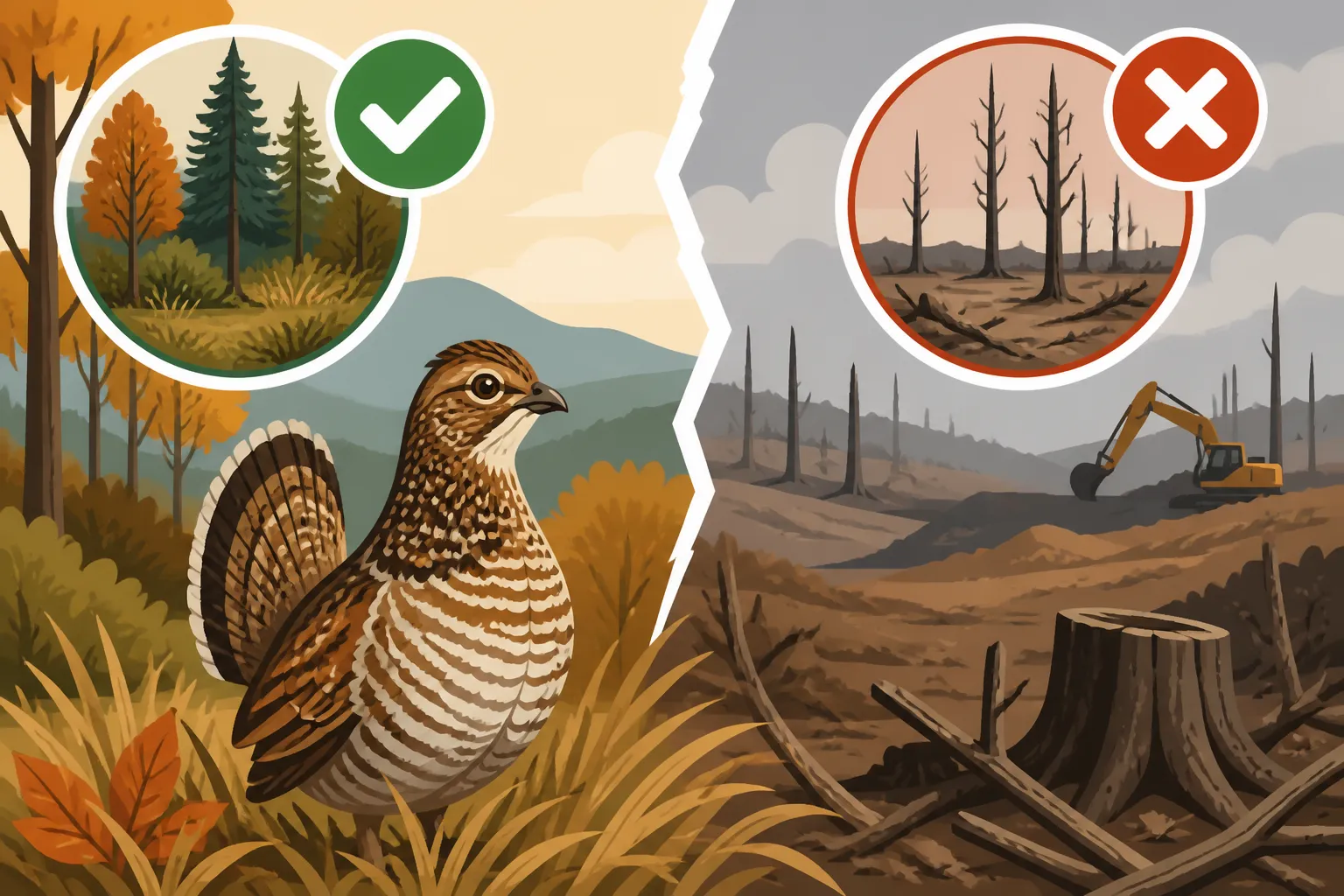
For ruffed grouse, "home" isn't just any patch of woods; it's a specific, vibrant, and often messy ecosystem known as young forest. This dense, regenerating cover, typically less than 20 years old, provides the security and food sources these birds absolutely need to thrive. When this type of habitat vanishes, so do the grouse. Many hunters remember a time when finding such areas was commonplace, but those days are increasingly rare.
Forest Maturation and Succession
One of the primary culprits behind vanishing young forest is simply time. Forests naturally grow and mature, a process called ecological succession. What starts as a thicket of saplings and shrubs after a logging operation, wildfire, or strong storm eventually grows into mature timber with a high canopy and an open understory. While these older forests are wonderful for other species, they're a death knell for grouse.
Imagine walking through a mature oak-hickory stand in southeastern Ohio. The trees are tall, the canopy is closed, and sunlight barely penetrates to the forest floor. There might be some big mast crops, which deer love, but for a small bird like a grouse, there's no escape cover. A hawk can spot them from a mile away, and a fox has an easy path to stalk. Without dense thickets of young trees, briars, and shrubs, grouse simply can't hide, nest, or raise their young safely. The continuous march of forest maturation, without intervention, steadily reduces the critical early successional habitat that grouse rely on. This is a subtle but relentless force, turning what was once ideal grouse country into a beautiful but barren landscape for these specific birds. You can see this firsthand when scouting historical grouse spots, often finding them completely grown out. Ruffed Grouse in Decline Across Ohio highlights just how impactful this natural process has been.
Lack of Active Timber Management
Coupled with natural forest maturation is the severe lack of active timber management practices aimed at creating young forest habitat. For decades, land management strategies, both on public and private lands, often focused on allowing forests to grow old or on selective logging that didn't create the necessary regenerating clearings. Many smaller, private woodlots in particular go completely untouched for generations.
Consider the economics for a private landowner: clear-cutting often isn't seen as aesthetically pleasing or immediately profitable compared to selective harvesting of mature trees. On larger public tracts, budget constraints, public perception, and a focus on other forest values (like old-growth preservation or recreation) can limit the scope and frequency of timber harvests. This isn't to say old growth isn't important, but a mosaic of forest ages is crucial for biodiversity, including grouse. When large sections of forest are allowed to age simultaneously without intentional disturbance, we lose the continuous creation of that vital young growth. Hunters often lament that areas that were clear-cut 20 or 30 years ago, and then held amazing grouse populations, are now too mature to hold more than a sparse bird or two. Why Ohio Grouse Numbers Fell So Far directly addresses this management challenge.
Changing Land Use and Development Pressures
Ohio's landscape is constantly evolving, and much of that evolution, unfortunately, comes at the expense of wildlife habitat. As human populations expand and land use priorities shift, the spaces where grouse once thrived are either shrinking or becoming too fragmented to support viable populations.
Suburban and Rural Sprawl
Across many parts of Ohio, especially on the fringes of once-rural areas, suburban and even exurban development continues to consume forest land. Housing developments, new roads, commercial buildings, and infrastructure spread into what was once contiguous woodland. Each new construction project, no matter how small, fragments existing habitat.
Imagine a large timber block in eastern Ohio that once supported a healthy grouse population. Over time, a new housing development springs up on one edge, then a new road is cut through the middle, and eventually, smaller rural subdivisions pepper the surrounding landscape. What was once a vast, interconnected forest becomes a patchwork of isolated woodlots separated by houses, lawns, and pavement. This fragmentation makes it incredibly difficult for grouse to move between areas to find mates, escape predators, or locate food resources. Small, isolated populations become vulnerable to local extinctions from disease, predation, or harsh winters. It’s a slow erosion, but it’s undeniably impactful, leaving hunters with fewer and smaller areas to pursue these elusive birds. Utilizing tools like GoHunt can help you overlay property boundaries and recent developments, giving you a stark visual of how much open land has been consumed over time.
Agricultural Expansion and Intensification
While less of an impact in the traditionally forested grouse strongholds of southeastern Ohio, agricultural practices in some regions can also contribute to habitat loss or degradation. In areas where forests border farmland, expansion of crop fields or conversion of brushy fencerows into larger, more efficient fields can remove important edge habitat and travel corridors for grouse.
Consider the historical landscape of much of Ohio, where small woodlots were interspersed with farms, creating a varied mosaic. As farming practices became more industrialized, there was a drive to maximize tillable acreage. This often meant clearing small, unproductive woodlots or straightening and clearing fencerows and creek bottoms that once provided cover. While a dense fencerow might not be core grouse habitat, it could serve as a valuable travel lane or provide supplementary cover adjacent to suitable forest. The intense use of pesticides and herbicides in agricultural landscapes can also indirectly impact insect populations that are a critical food source for grouse chicks. This subtle but widespread habitat simplification contributes to the overall decline of many upland species, not just grouse. Ohio's Declining Ruffed Grouse Range highlights how these changes collectively impact populations.
Ecological Stressors and Environmental Factors
Beyond direct habitat removal, several environmental stressors are compounding the problem for Ohio's ruffed grouse, making it even harder for them to survive and reproduce. These factors often interact, creating a complex web of challenges for an already struggling species.
Increased Predation Pressure
With habitat becoming scarcer and more fragmented, ruffed grouse are often more exposed to predators. Mature, open forests offer little escape cover, making grouse easy targets for avian predators like goshawks and great horned owls, as well as mammalian predators such as coyotes, foxes, and bobcats.
Think about a grouse drumming log in an older, open forest. While the drumming itself is part of their mating ritual, it also makes the bird vulnerable. In a dense young forest, a predator might hear the drumming but struggle to pinpoint the location or navigate the thick cover for a successful strike. In an open understory, the odds shift dramatically in the predator's favor. Furthermore, some predator populations, like coyotes, have expanded their range and density in Ohio, adding another layer of pressure. When grouse habitat becomes isolated patches, these predators can more easily key in on the remaining birds, leading to higher rates of mortality. This is a particularly tough pill to swallow for hunters who witness the sheer number of generalist predators in areas that once held grouse.
| Factor Causing Loss | Primary Impact on Grouse Habitat | Effect on Grouse Population |
|---|---|---|
| Forest Maturation | Conversion of young, dense stands to mature, open forest | Loss of escape cover, nesting sites, and food sources |
| Lack of Timber Management | Prevents regeneration of critical early successional habitat | Continuous decline in suitable acreage, no new habitat creation |
| Suburban/Rural Sprawl | Direct removal and fragmentation of forest land | Reduced range, isolated populations, increased road mortality |
| Agricultural Expansion | Removal of edge habitat, fencerows, and small woodlots | Loss of travel corridors, supplementary cover, and insect food |
| Increased Predation | Greater exposure to avian and mammalian predators | Higher mortality rates, especially for vulnerable chicks and adults |
| Disease (West Nile Virus) | Direct mortality; weakens birds, making them more susceptible to other stressors | Population declines, reduced reproductive success |
| Climate Change Effects | Shifts in vegetation, insect cycles, and weather patterns | Disrupts breeding, food availability, and overall survival |
Disease: West Nile Virus
A more insidious and relatively recent threat to grouse populations is West Nile Virus (WNV). While not a direct habitat loss, WNV can decimate already stressed populations, especially in areas where habitat is already compromised. Research from other states has strongly linked WNV outbreaks to significant declines in ruffed grouse numbers.
Imagine a grouse population struggling in fragmented habitat, already facing pressure from predators and limited food resources. An outbreak of WNV, transmitted by mosquitoes, can sweep through such a population, causing direct mortality. Even birds that survive might be weakened, making them less capable of avoiding predators, finding food, or successfully reproducing. Unlike habitat loss, which is visible over time, the impact of WNV can be sudden and devastating, further eroding the foundation of Ohio's grouse numbers. It's a silent killer that adds another layer of complexity to the conservation challenge. While not affecting all game species, it is a major factor for grouse.
Climate Change and Shifting Habitats
The long-term effects of climate change, while complex and often subtle, are also believed to play a role in the broader decline of ruffed grouse across their southern range, including Ohio. These changes can affect everything from the timing of insect hatches (a vital food source for young grouse) to the prevalence of certain tree species.
Consider subtle shifts in weather patterns: earlier springs can lead to premature insect hatches, meaning less food is available when grouse chicks actually emerge. Warmer, wetter winters or hotter, drier summers can also impact grouse survival and reproductive success. Over time, these larger environmental shifts can subtly alter the composition of forests, favoring species that grouse don't rely on or increasing the range of pests and diseases. While Ohio's climate changes might not be as dramatic as those in far northern regions, even slight alterations can tip the delicate balance against a species already facing numerous challenges. Understanding these broad ecological shifts, perhaps by consulting historical weather patterns on a platform like GoHunt, helps paint a more complete picture of the grouse's plight.
The Path Forward: Hope Through Active Management
While the causes of Ohio's ruffed grouse habitat loss are significant and complex, there is still hope. The key lies in understanding these challenges and committing to active, science-based forest management that prioritizes the creation and maintenance of young forest habitat. This often means working with state agencies, private landowners, and conservation organizations.
Public Land Initiatives
Ohio’s public lands, such as state forests and wildlife areas, offer the best opportunity for large-scale habitat restoration. Agencies like the Ohio Department of Natural Resources (ODNR) are aware of the plight of the grouse and are implementing timber management plans designed to create early successional habitat. This might involve clear-cutting smaller blocks, thinning operations, or prescribed burning.
Visiting areas like Zaleski State Forest Hunting or Tar Hollow State Forest Hunting might reveal recent timber sales or managed clearings. These aren't always pretty immediately after a cut, looking like a "mess" to the untrained eye, but give it a few years, and they transform into impenetrable havens for grouse and other wildlife that rely on dense cover, like rabbits and woodcock. Hunters can support these efforts by advocating for continued funding and sensible forestry practices on public lands. It's a long game, but these strategic cuts are vital for the future of grouse in Ohio. When planning your next hunt, check the ODNR website or use the GoHunt app to identify areas with recent timber activity, as these could be future hotspots for finding a bird.
Private Landowner Engagement and Education
A vast amount of Ohio's forest land is privately owned, making private landowner engagement absolutely critical. Many landowners might not be aware of the habitat needs of ruffed grouse or the forestry practices that can benefit them. Educational programs and incentive programs can encourage private landowners to implement habitat-friendly management.
Imagine a family that owns 50 acres of mature woods. They love their property but have never considered timber harvesting for wildlife. By providing them with information, resources, and potentially financial incentives, they might be encouraged to conduct a small clear-cut or patch-cut to diversify their forest age classes. This not only benefits grouse but also deer, turkeys, and countless songbirds. Landowners who want to contribute to conservation can make a huge difference in the overall health of Ohio's grouse population. Programs that connect landowners with foresters who specialize in wildlife habitat management are invaluable in this effort, allowing for tailored plans that meet both personal and conservation goals.
Continued Research and Monitoring
Finally, ongoing research and monitoring are essential to truly understand the dynamics of Ohio's ruffed grouse populations and the effectiveness of conservation efforts. This includes tracking population trends, studying disease prevalence, and evaluating the success of different habitat management techniques.
Scientists are continuously working to pinpoint specific factors that impact Ohio Ruffed Grouse Numbers Today, from nesting success to predator interactions. This data helps state agencies make informed decisions about where and how to best allocate resources for habitat restoration and population recovery. As hunters and conservationists, our support for these scientific endeavors, whether through license purchases that fund research or by participating in surveys, is vital. It ensures that the strategies we implement are based on the best available science, giving our beloved ruffed grouse the best possible chance to rebound. The sound of a drumming grouse is a sound worth fighting for, and understanding these habitat loss causes is the first step in that battle.
Disclaimer
This article is for general informational purposes only and does not constitute professional advice. Laws, prices and regulations vary by location and change over time. Consult a qualified professional for guidance on your specific situation.