Where Wild Pheasants Persist in Ohio
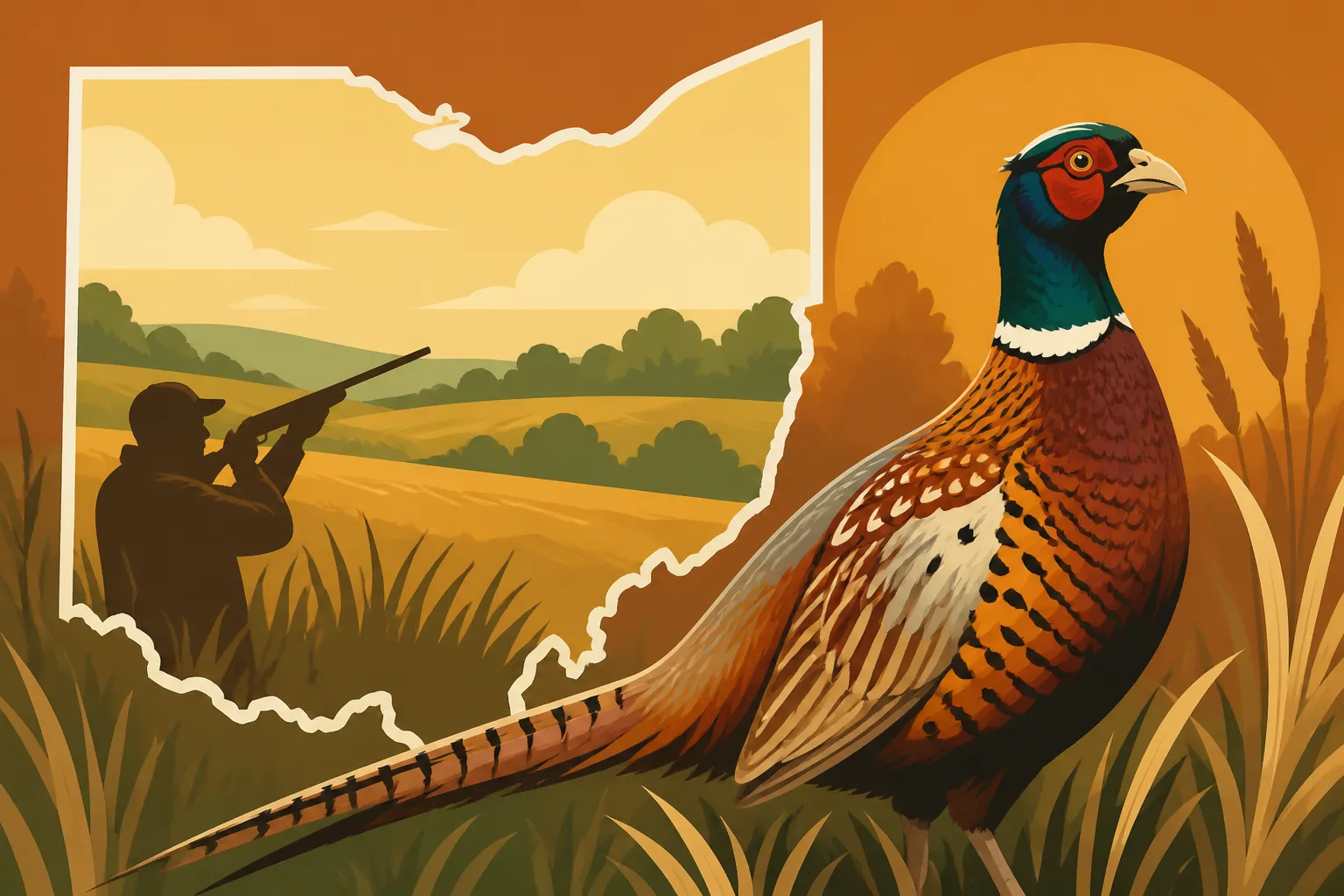
There’s a certain magic to the thought of a wild pheasant bursting from cover, its unmistakable cackle echoing across the Ohio landscape. For many of us, that's a memory from childhood stories, not recent hunts. The reality is, finding genuinely wild pheasants in Ohio today feels like searching for a needle in a haystack – a beautiful, frustrating needle. This guide isn't about the stocked birds you might find on managed release sites; it's about understanding why true wild populations are so elusive, where they might still cling to survival, and how a dedicated hunter might just find one of these magnificent birds.
The Vanishing Act: Why Wild Pheasants Are So Hard to Find in Ohio
If you've spent any time chasing pheasants in Ohio, you've probably noticed that seeing a truly wild bird is becoming an increasingly rare occurrence. It's not just your imagination; the populations have plummeted over the decades. This isn't due to any single factor, but a complex web of environmental shifts that have made life incredibly tough for these colorful game birds. It’s disheartening, to say the least, to think of the pheasant-rich fields our grandparents hunted.
Habitat Loss and Fragmentation
The single biggest culprit in the decline of wild pheasants across Ohio, and indeed much of the Midwest, is the relentless march of habitat loss and fragmentation. Think about the landscape your grandparents or even parents might have known: small family farms, diverse crop rotations, countless miles of fencerows thick with multiflora rose and sumac, wetlands dotting the fields, and plenty of idle corners. That picture is largely gone.
Modern agriculture, while incredibly efficient, has transformed vast stretches of Ohio into an ecological monoculture. Fields stretch for hundreds of acres with no breaks, fencerows have been ripped out to accommodate larger equipment, and wetlands have been drained to maximize tillable land. All of these features were once critical for pheasants. They relied on those thick fencerows for travel corridors and winter cover, the small woodlots for roosting, and diverse hayfields or grassy areas for nesting. Now, these essential pieces of their survival puzzle are missing, cut up into isolated, insufficient patches. Even federal programs like the Conservation Reserve Program (CRP) that encourage setting aside land for wildlife, while helpful, haven't been enough to reverse the tide on a broad scale, especially as land enrollment ebbs and flows with commodity prices.
Predation and Modern Farming Practices
Beyond just losing places to live, wild pheasants face an uphill battle against an ever-increasing array of threats. Predation is a natural part of any ecosystem, but when pheasant populations are already stressed and concentrated in smaller, less secure pockets of habitat, predators can have a disproportionately severe impact. Ohio has seen a significant increase in generalist predators like coyotes, raccoons, and skunks, all of whom are opportunistic hunters that readily prey on pheasant nests, eggs, and even adult birds. With less dense, expansive cover, pheasants and their vulnerable nests are simply easier targets.
Then there are the farming practices themselves. Gone are the days of small-scale hay cutting that left ample time for ground-nesting birds to hatch. Modern haying operations, often done with large machinery at high speeds, can decimate pheasant nests and chicks before they have a chance to fledge. Fall tillage, which used to be less common, now frequently leaves fields barren through the winter, removing crucial food sources and cover just when pheasants need them most to survive the harsh Ohio cold. Even pesticides and herbicides, while necessary for crop production, can indirectly affect pheasant survival by reducing the insect populations that young chicks rely on for protein in their early weeks of life. It’s a tough world out there for a wild pheasant trying to make a living.
Pockets of Persistence: Where to Focus Your Search for Wild Birds
Despite the challenges, glimmers of hope remain. Wild pheasants haven't completely vanished from Ohio, but you're going to have to adjust your expectations and really know where to look. Forget sweeping, open-field hunts in most places. The wild birds that persist are in specific niches, often where a combination of unique habitat and less intensive land use provides them just enough of what they need. It’s a testament to their resilience, but it also means hunters need to be incredibly strategic and persistent.
Northwestern Ohio's Agricultural Landscapes
If there's a traditional stronghold left for wild pheasants in Ohio, it's generally considered to be the flat, fertile agricultural belt of the northwest part of the state. Counties like Wyandot, Hancock, Hardin, and sometimes even parts of Paulding or Defiance, still offer the occasional glimpse of a truly wild bird. But even here, it’s not like it used to be. You're not looking for vast fields teeming with birds; you're looking for the overlooked, the neglected, the places where modern farming simply can’t dominate.
Think small. Wild pheasants in this region cling to areas with diverse cover that breaks up the monotony of corn and soybean fields. This means searching drainage ditches that have grown up with heavy weeds and brush, wide grassy waterways that are left unmowed, and small, isolated conservation areas or patches of native prairie. Often, these areas are found on private land where a landowner might have a few acres enrolled in a conservation program or simply chooses to leave some fencerows overgrown. These aren't the places you'll find readily on public hunting maps for Ohio Pheasant Season and Stocking (as many public areas are primarily stocked), but rather the spots adjacent to them or on well-managed private parcels. Understanding the subtle variations in these agricultural landscapes is key, as one farm might be a wasteland while the next could hold a covey.
Southwestern Ohio's Scattered Cover
Southwestern Ohio isn't typically on the radar for wild pheasants, and for good reason—populations here are even more scattered and localized than in the northwest. However, if you're truly dedicated and willing to put in the legwork, you might find an isolated pocket or two. These are often along river valleys, particularly the Great Miami River or the Little Miami River, where the landscape is a bit more diverse than the flat plains.
Here, you're looking for areas that combine a mosaic of smaller agricultural fields, unkempt fencerows, and neglected riparian zones. Picture stream bottoms with thick brush, patches of dense cattails, and perhaps some small, unworked farm fields left to go fallow. Counties like Preble, Butler, or even parts of Darke, might offer these rare opportunities. These aren't places where you’d expect to find multiple coveys, but rather a single, tenacious family of birds that has managed to hold on. Success in this region often comes down to sheer luck combined with diligent scouting and, most importantly, gaining access to private land where such small, diverse habitat patches exist. The key is to think "edge habitat" on a micro-scale.
Conservation Reserve Program (CRP) Lands and Wildlife Areas
While many public hunting grounds in Ohio are stocked with pheasants specifically for hunting opportunities, these areas can occasionally act as a nucleus for wild birds, or at least offer a template for the kind of habitat wild birds need. The true heroes for wild pheasant persistence, however, are often found on or adjacent to lands enrolled in the Conservation Reserve Program (CRP). CRP provides financial incentives to farmers to convert highly erodible cropland or other environmentally sensitive acreage to vegetative cover, like native grasses, trees, and wildflowers. This creates the dense, undisturbed nesting and brood-rearing cover that pheasants desperately need.
You'll find larger concentrations of CRP lands, and thus potentially more wild birds, in the northwestern counties mentioned earlier. Places like the Killdeer Plains Wildlife Area Region or the Big Island Wildlife Area, while they conduct stocking, also have significant amounts of ideal cover that could support wild birds, especially on surrounding private parcels. When scouting on maps, look for large blocks of unbroken grassland near agricultural fields. It’s also worth checking with ODNR for specific public hunting areas that might manage habitat in a way that benefits wild upland birds, even if it’s not their primary focus. Remember, the goal isn't just seeing a pheasant, but finding one that hatched and grew up entirely in the Ohio wild. These areas provide the best chance, offering a glimpse into what the landscape once was.
Key Habitat Components for Wild Pheasant Survival
Understanding where wild pheasants persist isn't just about naming counties; it's about recognizing the intricate mosaic of habitat components they absolutely must have to survive Ohio's diverse seasons. These birds are masters of camouflage and resilience, but without specific types of cover and food, they simply cannot complete their life cycle. A successful wild pheasant hunt isn't just about good dog work or shooting; it starts with finding these critical habitat ingredients.
| Habitat Component | Importance for Wild Pheasants | Why it's Critical in Ohio |
|---|---|---|
| Nesting Cover | Undisturbed grassy areas for egg laying and early chick protection. | Needs dense, waist-high vegetation for 6-8 weeks, safe from predators and farming disturbance during spring/early summer. |
| Brood-Rearing Cover | Areas with insects and light cover for young chicks to forage and hide. | Open enough for movement, dense enough for predator escape; crucial for chick survival during vulnerable early weeks. |
| Winter Roosting Cover | Dense, brushy, or marshy areas for thermal protection and concealment. | Essential to survive Ohio's harsh winters, providing shelter from cold winds, snow, and predators. |
| Food Sources | Waste grains, weed seeds, insects, soft mast. | Provides energy for survival and reproduction, especially critical during winter and for growing chicks. |
| Travel Corridors | Hedgerows, fencerows, unmanaged field edges. | Allows safe movement between different habitat types, reducing exposure to predators and humans. |
Nesting and Brood-Rearing Cover
For wild pheasants, the spring and early summer are all about survival for the next generation, and that hinges entirely on undisturbed nesting and brood-rearing cover. Hens need dense, robust cover, ideally 18-24 inches high, to conceal their nests from predators like raccoons, opossums, and even aerial threats. Think about what a fencerow used to look like, or a patch of cool-season grass that hasn't been mowed or grazed since last fall. These are the unsung heroes of pheasant reproduction. Without this kind of cover, a hen's nest is easily found, and the whole effort is for naught.
Once those precious chicks hatch, the demands shift slightly to brood-rearing cover. This still needs to be thick enough to offer protection, but also open enough at the ground level for tiny chicks to run around and, crucially, forage for insects. Insects are the primary protein source for growing pheasant chicks, so areas with a rich insect population – often found in diverse, unmowed grassy fields, clover patches, or along the edges of small grain fields – are absolutely vital. When this cover is absent or disturbed too early by haying operations or intensive grazing, chick mortality skyrockets, making it nearly impossible for a population to sustain itself.
Winter Roosting and Thermal Cover
Surviving the breeding season is one thing, but making it through an Ohio winter is a whole different beast for a pheasant. This is where dense, robust winter roosting and thermal cover become non-negotiable. Pheasants need protection from bitter winds, heavy snow, and sub-zero temperatures. Without it, they simply freeze or starve. This kind of cover often looks like thickets of multiflora rose, dense patches of switchgrass, cattail marshes, thick evergreen stands, or even old, abandoned farmsteads with overgrown shrubs.
Imagine a frigid January day with a biting wind and several inches of snow on the ground. A pheasant trying to survive in a short, sparse hayfield or a bare picked-cornfield doesn't stand a chance. They need cover that can accumulate snow on top, creating an insulating blanket, or dense, thorny brush that breaks the wind and offers a secure hiding place from predators that are also struggling to find food. The lack of this crucial winter cover is a major limiting factor for many potential wild pheasant populations in Ohio, as even if birds can nest successfully, they can’t make it to the next breeding season. Understanding this need helps tremendously when Scouting Ohio Public Land Before Season or asking for permission on private ground, as you'll know precisely what habitat features to prioritize.
Reliable Food Sources
Just like us, pheasants can't live on good cover alone; they need to eat, and they need a consistent, accessible food supply year-round, but especially in the leaner months. While they'll feast on insects during the warmer months – a critical protein source for growing chicks – their winter diet is dominated by waste grains, weed seeds, and small fruits.
Think about a picked cornfield where a combine might have missed a few ears, or a soybean field that dropped a significant amount of beans. These "waste" grains become a pheasant's lifeline. Additionally, fields with diverse weed populations – like smartweed, ragweed, or foxtail – provide a wealth of nutritious seeds. Farmers who leave standing strips of corn or other grain crops, often referred to as food plots or wildlife strips, provide an invaluable resource. The challenge is that modern farming aims for maximum efficiency, leaving very little waste grain or diverse weed growth. When you're searching for wild pheasants, look for these areas where agricultural efficiency might have broken down a bit, or where a farmer has intentionally left food for wildlife. It's often this combination of persistent winter food and solid cover that makes the difference between an area holding a few wild birds and an area that's simply empty.
Strategies for Hunting Ohio's Elusive Wild Pheasants
Hunting wild pheasants in Ohio isn't like walking through a game farm. It demands an entirely different approach – one rooted in extensive scouting, securing good ground, and often employing traditional upland hunting tactics with a bit of a twist. It's a grind, but the reward of a truly wild bird makes it all worthwhile. Forget the easy limits; think about the satisfaction of outsmarting a genuinely wild, wily game bird in its natural, albeit limited, habitat.
Scouting and Permission are Paramount
Given the scarcity of wild pheasants, simply driving around hoping to jump birds is a fool's errand. Your success will be directly proportional to the amount of effort you put into pre-season scouting. Start long before the season opens, even in late summer or early fall. Look for the habitat components we discussed earlier: those thick fencerows, overgrown ditches, small woodlots adjacent to agricultural fields, or patches of switchgrass. Use tools like satellite imagery (apps like GoHunt can be invaluable here for identifying these key habitat features from your armchair) to pinpoint promising areas.
Once you've identified potential habitat on a map, the next, and arguably most critical, step is securing private land permission. The vast majority of remaining wild pheasant habitat is on private property. Don't be shy – knock on doors, be polite, and offer to help the landowner in some way. Many farmers appreciate hunters who respect their land and are willing to share their harvest. Explain your intent: you're looking for wild pheasants, not just running dogs aimlessly. Building a relationship with a landowner over time is far more valuable than a one-time request. Understanding Getting Private Land Permission in Ohio is absolutely essential, as most of the spots where pheasants persist aren't public.
Hunting with Dogs and Group Tactics
Let's be clear: hunting wild pheasants in Ohio without a good bird dog is like trying to find a needle in a haystack blindfolded. These birds are notorious for holding tight, running, and flushing wildly when pressured. A well-trained bird dog – whether it's a pointing breed that locks up on scent, allowing you to walk in for the flush, or a flushing spaniel that systematically works cover – is your most important asset. The dog's nose will find birds you'd walk right past, and their instincts will help pin them down.
Often, the most effective way to hunt wild pheasants, especially in thick, linear cover like a long fencerow or a narrow strip of dense grass, is with a small group of hunters. Employing simple drive tactics can be incredibly effective. Have one or two hunters walk through the cover, pushing the birds towards "blockers" strategically placed at the end of the cover or along likely escape routes. This can work wonders in areas like Rabbit Hunting Ohio Fencerows too. Communication is key, and safety is paramount when hunting with a group. This isn't about simply walking and shooting; it’s about systematically working challenging cover to get these elusive birds airborne. Always ensure you and your hunting partners are visible, following all Ohio Blaze Orange Requirements.
Timing and Weather Considerations
The timing of your hunt and the prevailing weather conditions can significantly impact your success when chasing wild pheasants in Ohio. Unlike some game, pheasants are highly reactive to changes in temperature, wind, and precipitation. Early in the season, when temperatures are milder and cover is still dense, birds might be more apt to run ahead of dogs or flush at a greater distance. As the season progresses and cold weather sets in, especially after a light snowfall, pheasants tend to hold much tighter.
A fresh, light snow can be a game-changer. It not only makes tracking easier, revealing where birds are moving and roosting, but the cold often makes birds less willing to run and more inclined to sit tight in heavy cover, waiting for the hunter to pass. This is when a good pointing dog really shines. Conversely, a warm, sunny day might see birds out in more open areas foraging, but they'll likely be skittish. Hunting during windy conditions can also be beneficial, as the wind helps mask your approach and can disorient the birds, making them more reluctant to flush or harder for them to hear you coming. Understanding how these factors influence pheasant behavior will allow you to adapt your strategy and increase your chances of success.
The Future of Wild Pheasants in Ohio: Conservation Efforts and Hope
While the picture for wild pheasants in Ohio might seem bleak at times, it's not entirely without hope. Dedicated conservation efforts, both large-scale and local, are continually working to improve habitat and, in some cases, even re-establish small, self-sustaining populations. As hunters, we have a vital role to play in supporting these initiatives, not just for pheasants, but for all upland game and wildlife that rely on similar habitats. The future of these magnificent birds depends on a collective effort.
Current Conservation Programs
The Ohio Department of Natural Resources (ODNR), along with various non-profit organizations like Pheasants Forever and Quail Forever, are tirelessly working on habitat restoration and protection projects across the state. These programs focus on creating and maintaining the specific types of cover we've discussed: dense grasslands for nesting, shrubby fencerows for travel and winter cover, and diverse food plots. Many of these efforts are directed at public lands managed by the ODNR, where you can find some of the Ohio Wildlife Areas with the best upland bird habitat.
A significant portion of this work involves assisting private landowners with enrolling in federal programs like the Conservation Reserve Program (CRP), Wetlands Reserve Easements (WRE), or other state-specific initiatives. These programs incentivize farmers to convert marginal farmland into wildlife-friendly habitat, providing critical nesting and brood-rearing cover, as well as winter thermal protection. While the primary focus of these programs isn't always solely on wild pheasants, any effort to increase and diversify habitat for upland birds or small game, like improving the Ohio Cottontail Population Trend, inevitably benefits pheasants as well. These efforts represent the best chance for wild pheasants to gain a toehold and begin to rebound.
How Hunters Can Contribute
As hunters, we are often the first line of defense for wildlife conservation. Our dollars, our time, and our voices are incredibly powerful. Every time you purchase an Ohio Hunting Licenses and What They Cost or an Ohio deer permit, a portion of that revenue goes directly into funding wildlife management and habitat restoration projects carried out by the ODNR. This is why supporting hunting is supporting conservation.
Beyond licenses, consider joining and actively participating in local chapters of organizations like Pheasants Forever or Quail Forever. These groups are on the ground, working directly with landowners, planting habitat, and advocating for policies that benefit upland birds. Volunteering your time for a habitat workday or simply attending a local chapter meeting can make a real difference. Furthermore, educating yourself and others about habitat needs, and perhaps even engaging with local farmers about wildlife-friendly practices, can foster a greater appreciation for the importance of diverse landscapes. By actively contributing, we ensure that future generations might still experience the thrill of a wild pheasant hunt in Ohio, rather than just hearing stories of the past.
Disclaimer
Please remember that hunting regulations, seasons, and licensing requirements in Ohio are subject to change. Always consult the most current Ohio Department of Natural Resources (ODNR) hunting regulations before planning any hunting trip. This guide is for informational purposes and does not supersede official ODNR guidelines.