Reading Ohio Snow for Fresh Deer Movement
Winter in Ohio can feel like hitting a wall for deer hunters. The leaves are down, the rut is mostly a memory, and finding consistent deer movement can be incredibly frustrating. But what if I told you the season's quietest period actually presents one of your loudest scouting advantages? This comprehensive guide will walk you through exactly how to interpret the silent language written in Ohio's snow, helping you locate fresh deer movement and boost your late-season success.
The Unbeatable Advantage of Snow for Ohio Deer Hunters
When the snow flies and blankets the Buckeye State, it transforms the landscape into a giant, open book for deer hunters. That frustrating lack of visible sign from late fall suddenly becomes a treasure trove of information. Deer can't help but leave a detailed record of their lives etched into the fresh white canvas, and knowing how to read it is like having a secret weapon.
Why Snow Transforms Your Scouting Efforts
Think about trying to find deer sign in a dry, leaf-covered woods. You might stumble upon an old rub, see some droppings, or maybe catch a glimpse of a faint trail. It's often guesswork and hoping you're in the right general area. But with snow, every step, every pause, every interaction with the environment is crystal clear. You're not just looking for where a deer was, but when they were there, what they were doing, and how they were moving. This isn't just about finding deer; it's about understanding their current patterns, which is critical for a successful Cold-Weather Sitting Strategy in Ohio.
Snow also helps simplify the visual clutter. All those crunchy leaves that make you sound like a herd of elephants? Gone. The intricate patterns of the forest floor? Smoothed over. What remains are distinct, undeniable indicators of wildlife activity. This is particularly valuable if you're Scouting Ohio Public Land Before Season, but even more so during the season when deer behavior is fluid. You can cover more ground, quickly assessing areas for fresh sign without having to second-guess every twig snap.
Understanding Ohio's Winter Deer Behavior
Ohio's deer herd, whether you're talking about the big woods of Wayne National Forest or the farm country of northwest Ohio, shifts its priorities dramatically once winter truly sets in. Gone are the days of chasing does during the peak of the rut, or even the Hunting the Late-Season Rut Lull strategies. Survival becomes the number one goal. This means two things: food and thermal cover.
Deer will spend their days seeking out reliable Late-Season Food Sources for Ohio Whitetails, whether that's leftover agricultural crops like standing corn or soybeans, or natural browse like honeysuckle, green briar, or even acorns that might have been buried under the snow. Their travel routes will often become more direct, connecting bedding areas to these crucial food sources with minimal detours. When snow is on the ground, these patterns become incredibly evident. You'll see concentrated tracks leading to and from specific feeding areas, and distinct trails winding through thickets or along ridge lines that offer protection from the biting winds. For those venturing out for Ohio Muzzleloader Season Tactics in January, understanding these shifts based on snow sign is paramount.
Decoding Deer Tracks in the Snow
The most obvious and often most valuable sign in the snow is the track itself. But it's not enough to just see a track; you need to interpret what it's telling you.
Identifying Freshness and Direction
Determining the age of a track is probably the most critical skill. A track made last night is gold; one made three days ago is mostly useless for current hunting strategy.
Here’s what to look for:
- Sharp Edges: A fresh track will have crisp, well-defined edges. The snow pushed up around the hoof print will still be intact and sharp. As time passes, especially if temperatures fluctuate or wind picks up, these edges will start to melt, soften, or erode.
- Snow Condition Inside the Track: If the track was made recently, the snow inside the print will often be a different texture or consistency than the surrounding snow, showing where it was compressed. If it's old, it might be filled with lighter, wind-blown snow, or even have a thin crust of ice from a thaw-and-refreeze cycle.
- Debris: Look for small, undisturbed bits of snow or ice that might have fallen back into the track. If these are still sitting undisturbed, it’s a good sign the track is fresh. If they've been melted or blown away, it's older.
- Overlapping Tracks: Sometimes, a deer will step directly into an older track, making it hard to discern. Look closely for multiple layers or subtle differences in definition.
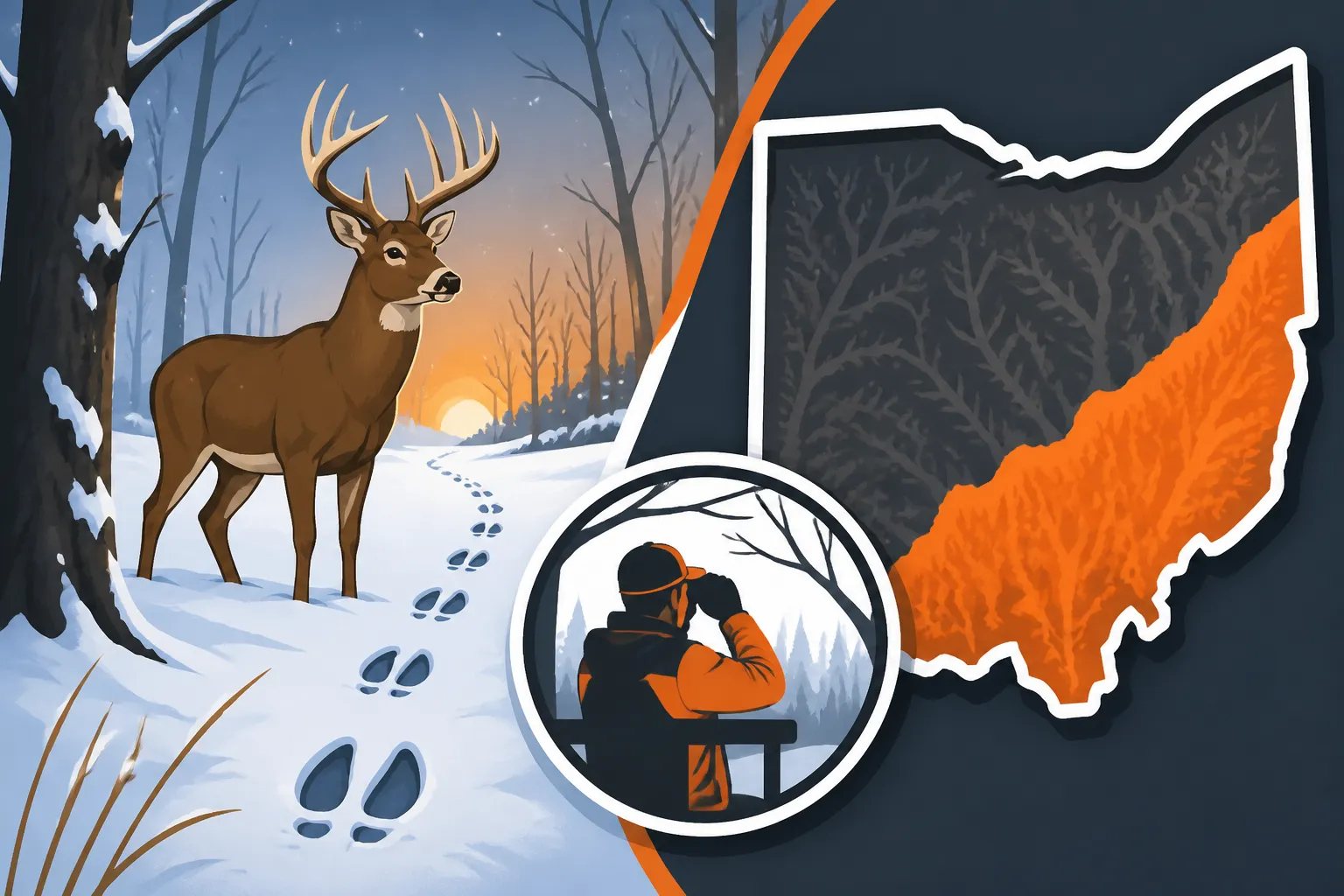
When assessing direction, remember that deer tracks are usually pointed in the direction of travel. The dewclaws (the small claws behind the main hoof) will often register in deeper snow, leaving two small indentations behind the main print. These also point forward. Pay attention to which way the snow is pushed up. Deer push snow forward as they step, so a small ridge of snow will often be visible at the front of the track.
Interpreting Gait and Speed
A deer's stride tells a story about its mood and intent. Was it calmly browsing, or fleeing danger?
- Walking: When a deer walks, its stride is relatively short and even. The hind foot often lands in or very close to the impression left by the front foot on the same side. This creates a neat, often single-file line of tracks, especially in deeper snow or when they are trying to conserve energy. This is a calm, unpressured deer.
- Trotting: A trotting deer will have a slightly longer stride, and the tracks will be more spread out. The hind feet will land ahead of the front feet. This often indicates a deer moving purposefully, perhaps between a bedding area and a food source, or simply covering ground.
- Bounding/Running: A deer that is bounding or running will have a very long stride, with all four tracks often grouped together as it pushes off the ground. The hind feet will land well ahead of the front feet. This is a deer that is startled, fleeing, or moving at high speed, usually a sign it's been pressured or spooked. If you see this, chances are the deer is long gone, and you should consider a different approach or area.
Knowing this helps you determine if the deer you're tracking is relaxed and likely to stop to feed or bed, or if it's already on high alert.
Differentiating Buck from Doe Tracks
This is one of the holy grails of snow tracking, and while it's not foolproof, there are some indicators that can help you make an educated guess.
Here’s a comparative table:
| Characteristic | Buck Track | Doe Track |
|---|---|---|
| Size | Generally larger, longer, and wider | Typically smaller and narrower |
| Shape | More blunt or rounded at the toe | More pointed or heart-shaped at the toe |
| Dewclaw Marks | Often register, especially in deeper snow | Less likely to register, unless in very deep snow |
| Stride | Wider stance, sometimes slight drag marks | Narrower, often more precise, single-file |
| Associated Sign | Often accompanied by rubs (especially if rut is still lingering a bit or they're working out aggression), larger droppings | Less likely to have rubs associated directly, smaller droppings |
Remember, these are tendencies, not hard rules. A large doe can have tracks that rival a smaller buck, and a young buck might have tracks similar to a mature doe. However, when you see consistently large, blunt tracks with a wide gait, especially if combined with big rubs on nearby trees, your chances of following a buck increase significantly. This kind of detailed scouting can be further enhanced by leveraging mapping tools like GoHunt, which can help you overlay snow data with topographical maps to identify potential buck travel routes.
Beyond Tracks: Reading Other Snow Sign
While tracks are essential, deer leave a wealth of other information in the snow. Learning to see the whole picture is what makes you a truly effective winter hunter.
Locating Winter Food Sources and Feeding Areas
Deer are creatures of comfort and efficiency in winter. They're trying to conserve energy, so they won't travel far from cover to feed unless absolutely necessary. Snow makes it incredibly easy to spot where they've been munching.
Look for:
- Browsed Vegetation: Bare twigs where buds or small branches have been nipped off. If it's fresh, you might even see sap where the deer fed. In an area with thick honeysuckle or green briar, you'll see paths worn through the snow, leading to where deer have been feeding on the green leaves that persist.
- Disturbed Snow Around Crops: In agricultural areas, look for large patches of disturbed snow in standing cornfields, soybean fields, or even winter wheat. Deer will dig through the snow to reach fallen ears of corn or beans. These areas can be absolute hotspots, especially during or after a fresh snowfall. Knowing the local farming practices is key here, as fields might be harvested at different times, influencing available Late-Season Food Sources for Ohio Whitetails.
- Acorn Scrapes: Even under snow, deer will paw through it to find acorns. Look for areas where the snow has been clearly scraped away, revealing bare earth or leaves beneath. This is particularly common under oak trees on ridges or in hollows, a sign often found when Finding Sign in Big Appalachian Timber.
These feeding areas are prime locations for setting up a stand or ground blind.
Pinpointing Bedding Areas and Travel Corridors
Deer beds in the snow are unmistakable. They're typically oval-shaped depressions where a deer has melted the snow with its body heat, often leaving a patch of bare ground or wet leaves.
What to look for:
- Location: Bedding areas are almost always in thick cover – dense briar patches, thick pines, fallen treetops, or steep leeward slopes that offer protection from the wind. In big woods, they might be on the sunny side of a ridge that catches the morning sun. You'll often find multiple beds clustered together, especially for does and fawns. Bucks might bed alone or in smaller groups.
- Freshness: A fresh bed will show a clear impression, possibly still damp, and usually a few fresh droppings nearby. Older beds will be filled with snow, or the edges will be rounded by melting and refreezing.
- Exit/Entry Trails: Look for distinct trails leading into and out of bedding areas. These are their highways. They'll often take the path of least resistance, following contours, old logging roads, or the edges of thick cover. These trails are especially visible in snow and can reveal consistent travel patterns. Mapping apps like GoHunt can help you identify these natural travel funnels by showing terrain features and cover changes.
By finding fresh beds and understanding the travel corridors, you can position yourself strategically. A classic setup might be along a trail connecting a bedding thicket to a known food source.
Uncovering Rubs, Scrapes, and Droppings
While rubs and scrapes are usually associated with the rut, you can still find them in the snow, and they offer clues.
- Rubs: Bucks will still rub trees, though less frequently than during the rut. A fresh rub in winter means a buck was recently there. Pay attention to its size. A large rub on a substantial tree suggests a mature buck. Snow can also show you if a deer recently visited an existing rub line.
- Scrapes: Most scraping activity ceases by late December, but you might occasionally find a pawed-out patch of snow or leaves under an overhanging branch. This usually indicates residual rut activity or a buck just passing through. Focus more on fresh tracks and feeding sign.
- Droppings (Scat): These are little treasures in the snow. Fresh droppings will be soft, dark, and typically still warm. They'll often be in piles where a deer has fed or bedded. Over time, they'll become hard, faded, and might be partially covered by snow. Droppings tell you a deer was there, and the volume can indicate how long or how many deer were in the area. Pay attention to the size and consistency – smaller pellets for does/fawns, larger ones for bucks.
When you put all these pieces together – fresh tracks, visible feeding, warm beds, and scat – you build a powerful picture of exactly what deer are doing, right now, in the exact area you're hunting.
Leveraging Snow for Your Late-Season Strategy
Now that you know how to read the snow, it's time to put that knowledge into action. This is where the rubber meets the road, or rather, the boots meet the snow.
Planning Your Approach on Public and Private Land
Hunting in the snow requires a deliberate plan. First, you need to decide if you're going to still-hunt, set up an ambush, or actively track.
- Still-Hunting: This is a fantastic tactic in fresh snow, especially in thick cover. The snow silences your footsteps, allowing you to move incredibly slowly and deliberately, scanning ahead for deer and new sign. Focus on areas that offer dense cover and known food sources. With a fresh blanket of snow, you'll be able to tell exactly how recently a deer has passed through an area. This is a great way to move through big timber where you might not have set a stand previously, like when Hunting the Ohio River Valley Ridges.
- Ambush Hunting: If you find a clear, fresh travel corridor connecting bedding to feeding, or a consistently used feeding area, setting up an ambush is your best bet. A well-brushed-in ground blind can be incredibly effective when Using a Ground Blind on Ohio Public Land, as it offers concealment and helps cut down on scent dispersion in the cold air. For treestand hunters, identify key pinch points or funnels revealed by deer travel through the snow. Remember that deer move slower in snow, so their travel times might be extended.
- Private Land Considerations: On private land, especially smaller parcels, snow reveals just how much deer are using your property. You might discover deer are bedding in a neighbor's thicket but feeding on your winter wheat. This knowledge allows you to place stands perfectly to intercept them. Always respect property boundaries, which can be easily identified on mapping software from GoHunt.
Tracking in the Snow: When and How
Active tracking is perhaps the most exhilarating and challenging way to hunt deer in the snow, particularly if you're comfortable with long days afield during Ohio's Two-Weekend Gun Deer Season. This is especially true for the late gun weekend or during the statewide Muzzleloader Deer Hunting in Ohio.
- When to Track: The best time to track is immediately after a fresh snowfall, especially if it's still lightly snowing or very calm. This ensures the tracks you're following are as fresh as possible and minimizes the chance of them filling in. If you're going to attempt Tracking a Deer in Fresh Ohio Snow, focus on finding a single, distinct track that you can stick with.
- How to Track:
- Identify the Target: Find a fresh, distinct track you want to follow. Look for specific characteristics to ensure you don't lose it in a maze of other prints.
- Slow and Steady Wins the Race: Move at a snail's pace, always looking 10-20 yards ahead for the next track. Avoid staring at your feet. Your goal is to spot the deer before it spots you.
- Read the Trail: Pay attention to the deer's behavior. If the tracks become erratic, or the deer starts circling back or hiding in thick cover, it likely knows it's being followed. Be extra cautious here.
- Wind is King: Always keep the wind in your favor. If the deer changes direction and the wind shifts to your back, you need to circle around to get ahead of it again, even if it means losing ground.
- Utilize Terrain: Use hills, ravines, and thickets to your advantage for cover. Approach ridges slowly, peeking over the top, as deer often bed just below a crest to watch their backtrail.
- The Bedding Challenge: If you find fresh beds, the deer is likely nearby. Approach very slowly, scanning all around. Sometimes, the deer will jump and run, giving you a quick shot. Other times, you might spot them before they bolt. This takes immense patience and stealth.
Tracking requires incredible focus and a deep understanding of deer behavior. It's a demanding method, but when done successfully, it's one of the most rewarding experiences a hunter can have in Ohio's winter woods. The ODNR's detailed Ohio Deer Season Structure Explained offers specific dates for when these late-season opportunities are available.
Final Thoughts on Ohio Snow Hunting
Hunting in the snow is not just about braving the cold; it's about embracing a unique opportunity to gain an intimate understanding of Ohio's deer. The snow strips away the guesswork, laying bare the habits and travel patterns that are so difficult to discern at other times of the year. Whether you're carefully still-hunting, strategically setting up an ambush, or actively tracking a set of fresh prints, the white blanket is your ultimate guide. So, don't let the dropping temperatures keep you inside. Bundle up, grab your gear, and head out to read the story the snow is waiting to tell you.
Disclaimer
The information provided in this article is for educational and informational purposes only and is not intended as legal advice. Hunting regulations and seasons in Ohio can change, and it is the responsibility of every hunter to consult the official Ohio Department of Natural Resources (ODNR) hunting regulations and laws before participating in any hunting activities. Always prioritize safety and ethical hunting practices.