Hunting a Ridge-Top Saddle for Rutting Bucks
For many Ohio deer hunters, the peak of the rut is a time of incredible excitement, but it can also be incredibly frustrating when you're struggling to pinpoint where those elusive mature bucks are traveling. You spend countless hours in a stand, hoping a big one cruises by, only to see does and yearlings. This guide is all about one of the most consistently productive locations for intercepting rutting bucks in Ohio's diverse landscape: the ridge-top saddle. We'll dive deep into what they are, why they're so effective, and how you can find and hunt them successfully, making the most of those precious November days.
Understanding Ridge-Top Saddles and Why They Matter
Ridge-top saddles are subtle, often overlooked terrain features that act as natural magnets for deer, especially during the breeding season. Many hunters think of big, obvious funnels, but sometimes it's these less dramatic features that hold the key to consistent success.
What Exactly is a Saddle?
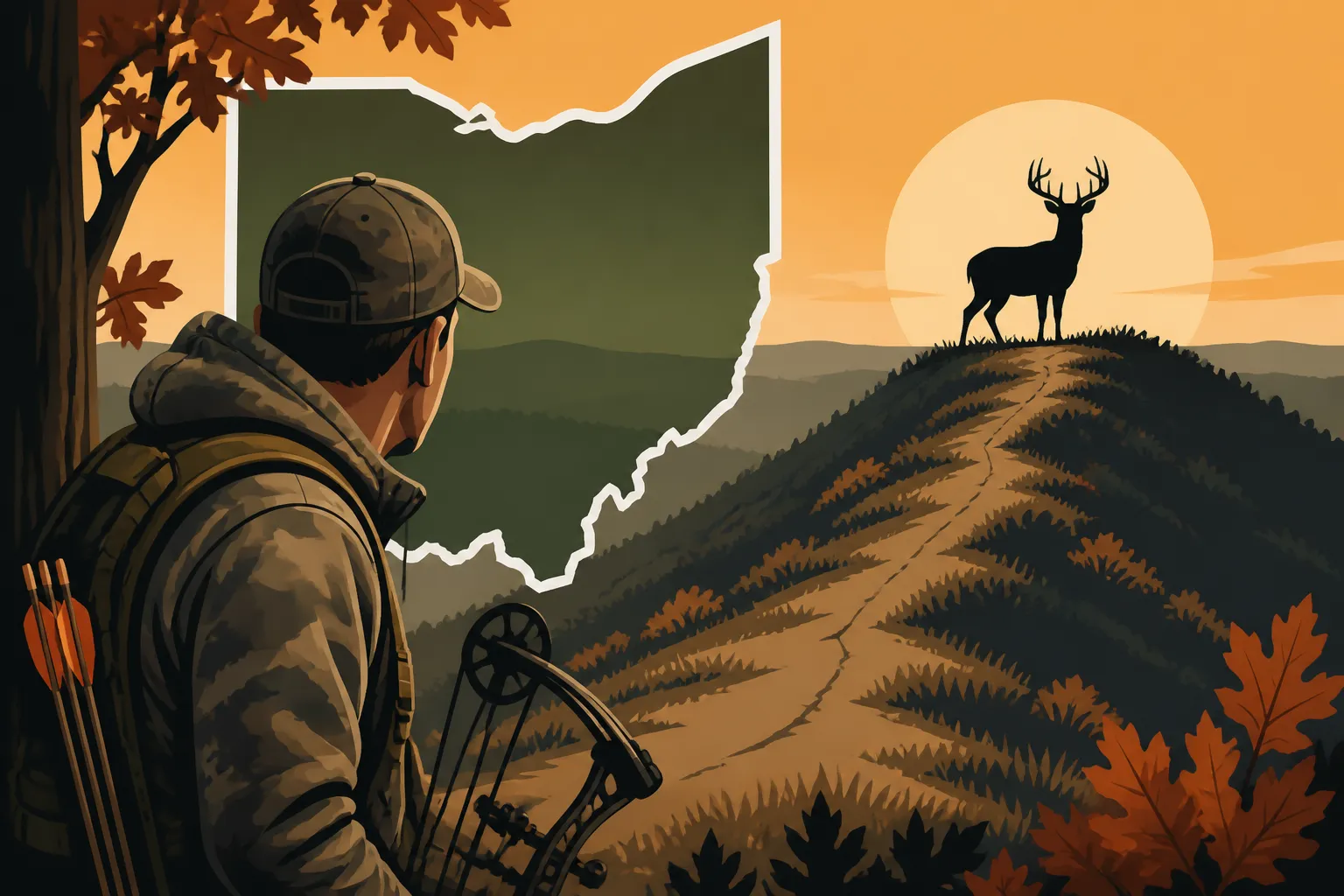
A saddle, in geographical terms, is a low point or depression along a ridge line, connecting two higher points or peaks. Imagine two hills with a lower, gentler rise between them – that depression is a saddle. It's like a dip in a roller coaster track along the top of a hill. In Ohio's hill country, particularly in areas like Wayne National Forest or Shawnee State Forest, these features can be very pronounced. In flatter, farm-belt regions of Ohio, they might be more subtle, perhaps just a slight dip in elevation on a long, sprawling wooded finger that stretches out into crop fields. What makes them so special isn't their dramatic appearance, but their function in the deer woods. They provide the easiest path of travel for deer moving from one side of a ridge to another, or from one valley system to an adjacent one.
Why Bucks Use Saddles During the Rut
During the rut, bucks are constantly on the move, searching for does. This is a high-energy, high-risk period for them, and they'll always opt for the path of least resistance when traveling, especially if it offers cover and allows them to check for scent. Saddles are prime travel corridors for precisely these reasons.
First, they're typically less steep than going directly over a peak, conserving a buck's energy. Second, they often provide excellent thermal cover and visual concealment as the ridge drops on either side, making a deer feel secure. Think about a mature buck scent-checking downwind as he travels from a bedding area to a feeding area, or cruising between two known doe groups. A saddle offers a natural pinch point where he can move relatively quickly and still have good visibility and scenting conditions to his sides.
They also serve as natural congregation points. Does will use saddles, and where the does go, the bucks will follow. These spots become intersection points where bucks will stop to scent-check, leave rubs and scrapes, and often encounter other deer. This is especially true during the seeking and cruising phases of the rut, typically in early November, when bucks are covering a lot of ground. If you're looking for where the big boys are moving, understanding Hunting the Rut in Early November is crucial, and saddles are a key part of that puzzle.
Scouting for Productive Ridge-Top Saddles
You can't just pick any saddle and expect results. Successful saddle hunting starts long before the season with thorough scouting, both on a map and on the ground. This preparatory work can save you countless hours of unproductive sitting.
Reading Topo Maps and Aerial Imagery
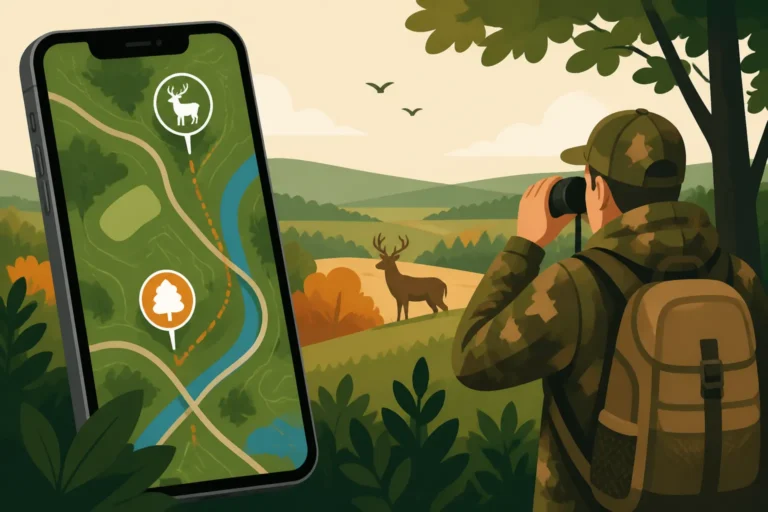
Before you ever set foot in the woods, your best friend will be a good mapping application. Tools like GoHunt's mapping system allow you to pour over topographic maps and high-resolution aerial imagery, looking for those tell-tale dips in contour lines that signify a saddle. Start by identifying long, prominent ridge lines. Then, look for where these ridges drop slightly, creating a "neck" between two higher points.
Pay close attention to how the saddle connects different habitat types or features. Does it link a dense bedding thicket on one side to a food source or open timber on the other? Does it bridge two different drainages or creek bottoms? A saddle that acts as a natural bridge between multiple deer destinations is often a goldmine. Look for subtle nuances, too. Sometimes, a series of smaller saddles along a long ridge might be even better than one obvious, large one, as they can represent multiple crossing points. Using a mapping tool to plan your approach and identify potential stand locations before you even visit the area is a huge advantage for Scouting Ohio Public Land Before Season.
Boots-on-the-Ground Reconnaissance
Once you've identified potential saddle locations on your map, it's time to put boots on the ground. This is where you confirm your theories and find the real proof of deer activity. Walk the ridge lines and through the saddles you've marked. Look for well-worn deer trails, rub lines, and old scrape locations. During the rut, these signs will be much more apparent.
Often, you'll find multiple trails converging into a saddle, indicating it's a major travel corridor. Pay attention to the size of the rubs – bigger rubs often mean bigger bucks are using the area. Look for tracks in soft soil or muddy areas within the saddle. Also, consider the cover. Is there dense regenerating timber on one side offering security, or maybe a stand of mature oaks on the other providing mast? The combination of easy travel and good cover is what makes these spots so appealing to rutting bucks. Don't be afraid to walk all the way through and beyond the saddle, identifying potential bedding areas or primary food sources on either side.
Effective Hunting Strategies for Ohio Saddles
Hunting a saddle effectively requires a strategic approach, focusing on stand placement, wind management, and knowing when to use calling tactics. These elements work together to give you the best chance at intercepting a buck on the move.
Stand Placement for Optimal Advantage
The exact placement of your treestand or ground blind in a saddle is critical. Your goal is to intercept a buck as he travels through, without him detecting you. Generally, you want to set up downwind of the most active deer trails in the saddle. However, remember that deer often circle downwind of a saddle before entering it, using their nose to check for danger.
Consider prevailing winds. If the wind consistently blows from the west, setting up on the east side of the saddle, facing west, might be ideal. This allows you to watch the deer approach from downwind of your stand while your scent blows away from their primary travel path. Look for trees that offer good concealment and a clear shooting lane down the most active trail. Often, you'll find old rubs or scrapes indicating the exact travel path bucks prefer. When you're Hanging a Stand on an Appalachian Ridge, consider a mobile setup like a saddle hunter or a hang-and-hunt treestand, as conditions can change quickly, and you might need to adjust based on real-time intel. A good portable stand will let you be flexible.
Playing the Wind and Thermals
Understanding Wind and Thermals on an Appalachian Ridge is paramount when hunting saddles, especially in the rugged terrain of Southeast Ohio. Wind is obvious; always hunt with the wind in your favor, blowing your scent away from where you expect deer to approach or travel. But thermals, the rising and falling air currents, can be trickier.
In the mornings, as the air warms, thermals generally rise up the ridge, carrying your scent uphill. In the evenings, as the air cools, thermals tend to fall down into the valleys. Saddles, being low points on a ridge, can create swirling or unpredictable thermal patterns. It's not uncommon for thermals to drop into a saddle and then rise back up the opposite side, or for cold air to settle in the depression. Always arrive early and observe the thermal activity by watching a milkweed pod or a puff bottle. Sometimes, it's best to set up just below the top of the saddle on the downwind side, letting your scent drift into the valley below, rather than across the saddle itself. Checking a weather app like GoHunt's integrated weather forecasting can help you anticipate wind direction and thermal shifts before you head out.
Calling Tactics in Saddle Locations
During the rut, bucks are vocal and responsive to calling, and a saddle can be an excellent place to deploy your calls. Grunts and rattling sequences can be particularly effective because the natural funneling effect of a saddle often means a buck responding to your call will have to travel directly into or through the area you're watching.
Start with soft grunts to mimic a cruising buck or a tending pair. If you don't get a response after 15-20 minutes, you can escalate to more aggressive rattling sequences, especially if you believe there's a mature buck in the vicinity. Remember that sound travels differently in hill country. Rattling might echo off the hillsides, making it difficult for a buck to pinpoint your exact location, which can actually work to your advantage by drawing him in to investigate. Always be ready with an arrow nocked or your rifle up after a calling sequence, as bucks can appear quickly and silently. For more advanced techniques, diving into Rattling and Grunting in Ohio can give you an edge in these crucial scenarios.
Common Mistakes and How to Avoid Them
Even with the best intentions, hunters can make mistakes that compromise their chances in productive saddle locations. Being aware of these pitfalls can help you avoid spooking that trophy buck.
Overhunting and Scent Contamination
Saddles are high-traffic areas for deer, which also means they can become high-traffic areas for hunter scent if you're not careful. One of the biggest mistakes is overhunting a productive saddle. If you hunt the same saddle too many times in a short period, especially if you're leaving a lot of scent or being busted by deer, you'll quickly turn it into a dead zone. Bucks are smart; they'll learn to avoid areas with persistent human presence.
Limit your hunts in any single saddle location. Instead of sitting there all day, consider hunting it during prime morning or evening hours and then moving to another spot. Always use extreme scent control measures: shower with scent-eliminating soap, wear clean clothes, and spray down with a scent killer. Be mindful of your entry and exit routes. Try to approach and leave your stand in a way that minimizes disturbance and keeps your scent away from the active deer trails in the saddle. This might mean taking a longer, more circuitous route, but it’s worth it to keep the spot fresh.
Ignoring Transition Zones
While the saddle itself is the main attraction, don't overlook the transition zones immediately adjacent to it. Deer rarely just pop into a saddle out of thin air; they travel through specific areas leading up to and away from it. These transition zones could be old logging roads, bench cuts along the hillside, or areas where thick cover meets more open timber.
A buck might travel along a bench parallel to the ridge, then cut up into the saddle. Or he might pop out of a bedding area just below the saddle, cross through, and continue down the ridge. Setting up your stand to cover both the saddle and a key transition zone can significantly increase your odds. Use GoHunt to identify these subtle changes in topography and cover. Look for slight changes in slope or vegetation density on the maps. Often, the biggest bucks will skirt the very edge of the most obvious travel routes, using the slightly denser cover of a transition zone to their advantage, before stepping into the main saddle.
Pros and Cons of Hunting Ridge-Top Saddles
| Aspect | Pros | Cons |
|---|---|---|
| Deer Activity | High buck travel during the rut; natural funnel points. | Can be inconsistent if not properly scouted; deer may "skirt" the main trail. |
| Accessibility | Often easier travel for hunters compared to steep ridges. | Can be physically demanding to reach in rugged terrain; requires good cardio. |
| Scent Control | Predictable thermal movement (mostly) up/down ridge. | Swirling winds possible within the depression; can be difficult to manage. |
| Stand Placement | Clear shooting lanes often found where trails converge. | Limited tree options; may require mobile hunting setups. |
| Hunting Pressure | Can be overlooked by other hunters if subtle. | Popular spots can get overhunted, making deer wary. |
| Rut Effectiveness | Excellent for intercepting cruising bucks and checking does. | Less effective outside of the rutting phases; primarily a rut tactic. |
Disclaimer
Hunting is an activity with inherent risks. Always prioritize safety, follow all Ohio Department of Natural Resources regulations, and obtain appropriate licenses and permits, such as those detailed in Ohio Deer Season Structure Explained and Ohio Deer Management Permits. Scout thoroughly, respect private property, and be aware of your surroundings. The information provided is for educational purposes and should not replace professional guidance or local expertise. Always check current regulations before heading afield.