Crow Hunting Seasons and Tactics in Ohio
For many Ohio hunters, crows are often seen as a nuisance, a flock of black shadows picking at fields or making a racket in the woods. But what if I told you there’s a whole world of challenging and rewarding hunting opportunities when it comes to these incredibly intelligent birds? This guide is here to unravel the often-misunderstood world of crow hunting in Ohio, from navigating the seasons to mastering the tactics that will put more birds in your bag.
Understanding Ohio's Crow Seasons and Regulations
Crow hunting in Ohio isn't like deer or turkey hunting, with rigid, often short seasons. The regulations are a bit more unique, largely due to their status as a migratory game bird under federal law, but also their classification in many areas as a nuisance species. This duality means the seasons are often quite generous, but it’s still critical to know the rules before you head afield. Ignoring them could land you in hot water with the Ohio Department of Natural Resources (ODNR).
Ohio's Unique Crow Season Structure
Ohio's crow season is essentially split into two long windows, reflecting their migratory habits and their impact on agriculture. Generally, you'll find an open season running from early June through late March, with a brief closure in April and May. This extended season provides ample opportunity, whether you're looking for some off-season action or a way to stay sharp between other pursuits. The reason for this long season often boils down to crop protection; crows can cause significant damage to newly planted fields or mature crops, making them a target for landowners.
The specific dates can shift slightly each year, so always double-check the current Ohio hunting regulations from the ODNR website or their printed digest before you plan your hunts. Understanding these dates is paramount. Many hunters, especially those new to crow hunting, mistakenly believe they can hunt crows year-round, but that short closed period in spring is a non-negotiable federal requirement for migratory birds. This break is intended to allow them to nest and raise their young without undue pressure.
It's this unique season structure that makes crow hunting such a fantastic option. When the deer woods are quiet, and turkey season is months away, you can still get out, hone your calling skills, and practice your shotgunning on challenging, fast-flying targets. Plus, it provides a valuable service to farmers who are often desperate to mitigate crop damage, offering a perfect opportunity to build relationships for future hunting access on private land.
Legal Firearms and Ammunition for Crow Hunting
When it comes to gear, crow hunting is relatively straightforward, and you probably already own most of what you need if you're a shotgun hunter. In Ohio, crows are typically hunted with shotguns, and there aren't many restrictions on gauge or shot size. Most hunters opt for a 12-gauge or 20-gauge shotgun, which offers a good balance of power and maneuverability, especially if you're working thick cover or need to swing quickly on a fast-approaching bird.
As for ammunition, lead shot is generally permissible for crows, unlike waterfowl hunting Where Nontoxic Shot Is Required in Ohio. However, you'll want to choose a shot size that gives you a good pattern and enough energy to cleanly take crows. Many crow hunters prefer #6, #7.5, or even #8 shot. These smaller shot sizes throw a dense pattern, which is crucial for hitting these agile birds, and they still have plenty of knockdown power at typical crow hunting ranges. Some hunters even experiment with Choke Choice for Fast Rabbit Flushes as a starting point for their crow gun. The key is to pattern your shotgun with your chosen load to see how it performs at various distances.
While shotguns are the primary tool, it's worth noting that some states allow air rifles or even small-caliber rimfire rifles for crow hunting under specific conditions. However, in Ohio, the most common and effective method remains the shotgun due to the birds' flight patterns and the often close-range, fast-paced action. Always review the current Ohio hunting laws for specific regulations on legal firearms for small game and migratory birds to ensure compliance. You might be surprised at how much versatility you have, but always err on the side of caution and legality.
License Requirements for Crow Hunters
Navigating the licensing process for any type of hunting in Ohio can sometimes feel a bit like wading through quicksand, but crow hunting is fairly simple. To hunt crows in Ohio, you absolutely need a valid Ohio hunting license. There's no special "crow permit" or extra tag required, but that basic hunting license is your ticket to the field. If you're an Ohio resident, you'll want to look into Ohio Resident Hunting License Options. Non-residents, of course, will need to purchase an Ohio Nonresident Hunting License Cost.
Beyond the general hunting license, there's another crucial requirement if you're hunting migratory birds, which crows are considered. You'll need to possess an Ohio Migratory Bird Harvest Information Program (HIP) certification. This isn't a separate physical stamp or permit in the traditional sense; it's a certification you typically get when you purchase your hunting license, indicating that you plan to hunt migratory birds. It's a simple, free process, but it's often overlooked by hunters who aren't regularly pursuing ducks or doves. You can usually get your Ohio HIP Certification for Bird Hunters right when you buy your annual license online or at a vendor.
It’s important to remember that these licenses and certifications are critical for ethical and legal hunting. Wildlife officers can and do check for compliance, and penalties for hunting without the proper licenses can be significant, including fines and loss of hunting privileges. Always keep proof of your valid license and HIP certification on your person while hunting, whether it's the physical copy or an electronic version on your phone, as allowed under current Ohio law. Don't let a simple oversight ruin your day in the field or jeopardize your hunting future.
Essential Tactics for Successful Crow Hunting
Crow hunting isn't just about showing up and shooting. These birds are incredibly intelligent, wary, and have excellent eyesight. Successful crow hunting requires a blend of careful scouting, effective calling, and meticulous concealment. It’s a chess match against a highly adaptable opponent, and that’s what makes it so engaging.
Scouting and Location Selection
Just like Scouting Ohio Public Land Before Season for deer, effective scouting is the cornerstone of successful crow hunting. You can't just pick a random woodlot and expect to find birds. Crows are creatures of habit, often flying predictable routes between their roosting areas and their feeding grounds. Your primary goal during scouting is to identify these patterns. Look for areas with high crow activity – this might be a large concentration of birds feeding in an agricultural field (corn, soybeans, even freshly manured ground), or simply an area where you consistently hear them cawing.
Roosting sites are goldmines for crow hunters. Crows often gather in massive numbers at dusk, sometimes hundreds or even thousands, in dense stands of timber to spend the night. These roosts can be in urban parks, suburban woodlots, or deep in rural forests. Pinpointing a roost can be done by simply driving around at dusk and watching the flight lines, or by using tools like the GoHunt app to identify potential timber blocks near agricultural fields. Once you locate a roost, don't hunt it immediately; observe it for a few days to understand their entry and exit routes and patterns. The best hunting spots are often near these roosts, along their travel corridors, or in their primary feeding areas where they feel safe enough to congregate.
Remember, crows are observant. They'll quickly associate loud noises or strange vehicles with danger. When scouting, be as inconspicuous as possible. Avoid driving right up to a potential hunting spot in your truck. Park a good distance away and walk in, using binoculars to observe from a distance. The more information you gather about their habits and preferred locations without disturbing them, the better your chances of a successful hunt. This meticulous pre-season work sets the stage for everything else.
Decoy Setups and Calling Strategies
Once you've scouted a promising location, it's time to think about bringing those wary birds in. Decoys and calls are absolutely critical for crow hunting success. Crows are highly social animals, and they respond strongly to both visual and auditory cues from their kind. For decoys, a spread of six to twelve full-body crow decoys or even silhouette decoys placed in an open area, like a field edge or a clearing in a woodlot, can be incredibly effective. Arrange them naturally, as if they are feeding or congregating. Some hunters even add an owl or hawk decoy in a dominant position to simulate a predator that the crows would mob.
Calling is where crow hunting truly becomes an art form. There are several types of crow calls, and mastering them takes practice. A "distress call" mimicking a crow in trouble is often the most effective for drawing birds in aggressively. Crows are fiercely territorial and will come to investigate (and often mob) a perceived threat to their flock. "Assembly calls" or "come-here" calls are used to gather scattered birds or simply let them know other crows are in the area. "Fighting calls" can also be very effective, simulating a squabble over food or territory, which draws in curious birds. Using an electronic caller, like those offered by FoxPro or Primos, can be incredibly effective for replicating these sounds with consistency and volume.
When using calls, vary your sequences. Don't just blast one call continuously. Start with a few loud, aggressive distress calls, then quiet down to a few assembly caws, then back to distress. Watch the crows' reactions; if they're coming in, keep doing what you're doing. If they're hanging up or veering off, try switching your call type or intensity. Wind is also a factor; call louder into the wind so the sound carries. Just like Grunt Calls in Mature Ohio Timber can be effective for deer, the right sequence of crow calls at the right time can turn a slow hunt into a frenetic, fast-paced shooting gallery.
Concealment and Shot Placement
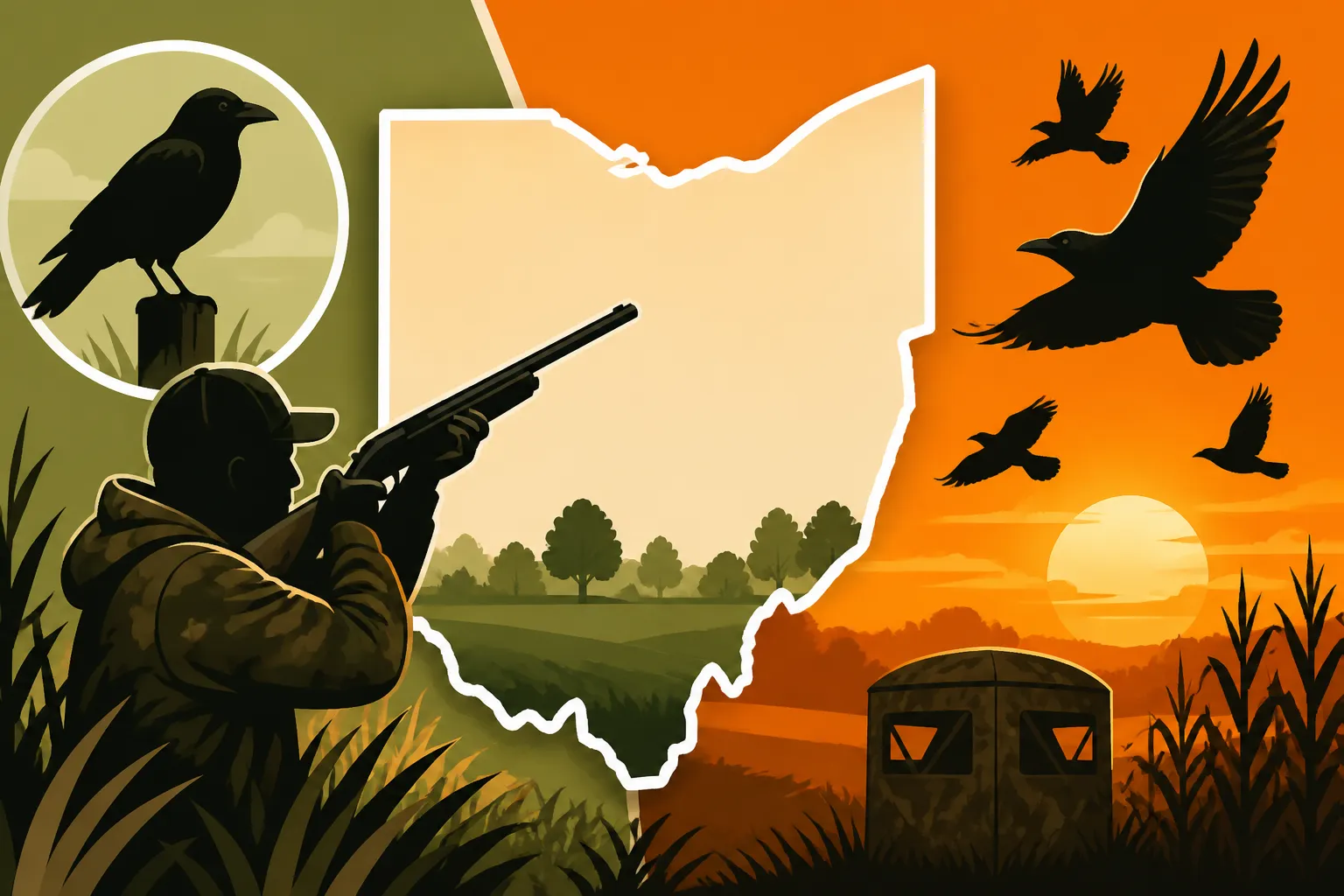
Crows are often described as having "eyes like a hawk and a brain like a monkey," meaning they are incredibly sharp-sighted and learn quickly. This makes concealment paramount. Unlike some other forms of hunting where a little exposed skin or movement might be forgiven, crows will spot you. Any flicker of movement, an uncamouflaged face, or the glint of a gun barrel can send them veering off, sometimes before they're even in shotgun range. A good ground blind is invaluable, especially if you're hunting in open fields or on the edge of a woodlot. Make sure to brush it in thoroughly with natural vegetation from the area, breaking up its outline. Even if hunting within thicker timber, set up against a wide tree or dense brush, ensuring you have cover from all angles.
Wearing full camouflage, including a face mask and gloves, is not just recommended, it's essential. Pay attention to the sun's position; try to set up with the sun at your back, making it harder for incoming birds to see you. Minimize movement once the birds start to approach. Wait until they commit and are well within range before mounting your shotgun. Remember, the goal isn't just to shoot at crows, but to take them cleanly and ethically.
When it comes to shot placement, aim for the body of the bird. Crows are relatively small, and their vitals are in the chest cavity. A good, dense pattern of shot from your 12 or 20-gauge shotgun, using #6 or #7.5 shot, will be sufficient for clean kills out to 40 yards or so. It's crucial to understand your effective range with your chosen shotgun and load. Don't take Hail Mary shots at birds that are too far out; you'll likely wound them or miss entirely, and educate the flock in the process. Patience and disciplined shooting are key to successful and ethical crow hunting.
Advanced Tips and Considerations for Ohio Crow Hunters
Once you've got the basics down, you might find yourself looking for an edge, especially if you're hunting more pressured birds or trying to increase your success rate. Crow hunting, like all hunting, has its nuances that can make a big difference.
Timing Your Hunts for Maximum Success
The time of day and prevailing weather conditions play a significant role in crow activity and, consequently, your hunting success. Crows are most active during the early morning and late afternoon/early evening. These are the periods when they are moving between roosting areas and feeding grounds, making them more visible and often more responsive to calls. Hunting during the middle of the day can be productive, especially if they are feeding heavily, but the action might be slower and require more patience.
Weather is another major factor. Overcast, drizzly days, or even light snow can be fantastic for crow hunting. The low light and reduced visibility often make crows less wary and more likely to commit to decoys and calls. Wind can also be your friend; a stiff breeze makes it harder for crows to pinpoint the exact location of your calls, and it can also make their flight patterns more predictable as they use the wind. However, avoid hunting in extremely high winds or heavy downpours, which can make it dangerous for you and make the birds seek heavy cover.
Another smart move is to observe crow activity relative to local crop cycles. Freshly tilled fields, newly planted corn, or fields with mature, exposed crops are often crow magnets. After a major harvest, like corn or soybeans, many crows will congregate to feast on dropped grains. Using tools like the GoHunt platform to identify local agricultural zones can help predict where they’ll be feeding. Timing your hunts to coincide with these feeding opportunities can dramatically increase your chances of finding large numbers of birds.
Hunting Pressure and Crow Behavior
Just like deer on public land, crows become incredibly wise to hunting pressure. If you hunt the same roost or feeding area too often, or if you make too many mistakes, the crows will quickly learn to avoid that spot. They are extremely intelligent and have excellent memories. This means you need to be strategic in how and when you hunt a particular location. Once you’ve had a good hunt in an area, consider giving it a rest for a week or two to let the birds settle down.
When hunting pressured birds, you'll need to double down on your concealment. Even a small flaw in your blind or a bit of exposed skin can send them flaring. Be more subtle with your calling, starting with quieter assembly calls before ramping up to distress calls if they don't respond. Sometimes, less is more with calling, especially if birds are already wary. You might also want to try different setups; instead of a field edge, try setting up deeper in a woodlot along a suspected flight corridor.
Understanding how Hunting Pressure on Ohio Public Land affects all game, including crows, is crucial. Crows can travel significant distances, so if one area becomes too hot, they'll simply shift their activity. Having multiple scouted locations is a huge advantage. This allows you to rotate your spots, ensuring you don't over-pressure any single area and keep the birds guessing. Think of it as having several chess pieces on the board; if one move doesn't work, you have others to try.
Ethical Considerations and Local Nuances
While crows are often seen as pests, responsible hunting practices are still essential. Always strive for clean, ethical kills and abide by all local laws and regulations. If you're hunting on private land, ensure you have explicit Asking an Ohio Farmer for Permission. A good relationship with landowners is invaluable, and showing respect for their property and their concerns will go a long way. Make sure you understand Ohio Trespass and Permission Law to avoid any unintentional violations.
Another ethical consideration is dealing with harvested birds. While some people enjoy eating crow meat (often described as gamey, similar to duck), many hunters pursue crows for sport and pest control rather than table fare. If you don't plan to eat them, consider what you will do with the birds. You can often bury them or dispose of them properly, especially if you're on private land and have the landowner's permission. Never leave a pile of dead crows in a conspicuous place or where they could cause issues.
Finally, be mindful of local nuances. If you're Hunting Small Woodlots Near Suburban Columbus, your tactics might need to be different than if you're deep in Hunting Northwest Ohio Farm Country. Noise ordinances, proximity to homes, and public perception are all factors to consider in more populated areas. Always be a good ambassador for hunting. Your actions reflect on all hunters, so always conduct yourself with respect for the wildlife, the land, and non-hunting members of the community.
Ohio Crow Hunting Summary
| Aspect | Detail |
|---|---|
| Season Dates | Typically two long windows: June to late March, with a brief closure in April/May. Always verify current ODNR regulations annually. |
| Bag Limit | No daily bag limit in Ohio. |
| Legal Hours | Generally, legal shooting hours for small game apply, usually from 30 minutes before sunrise to 30 minutes after sunset. |
| Licenses | Valid Ohio Hunting License required, plus a Migratory Bird Harvest Information Program (HIP) certification. |
| Firearms | Shotguns (12, 20 gauge most common) with #6, #7.5, or #8 lead shot. Always confirm current regulations. |
| Tactics | Scouting: Locate roosts, feeding areas, and flight corridors. Decoys: Use 6-12 crow decoys, possibly with an owl/hawk. Calling: Distress, assembly, and fighting calls (electronic or mouth). Concealment: Full camo, face mask, gloves, well-brushed ground blind or natural cover. Timing: Early morning/late afternoon, overcast/light snow days are best. Pressure: Rotate hunting spots, be subtle. |
Disclaimer
Please note that hunting regulations, seasons, and licensing requirements can change. While I strive to provide accurate and up-to-date information, it is the individual hunter's responsibility to consult the official Ohio Department of Natural Resources (ODNR) hunting regulations annually before heading into the field. This article is for informational purposes only and should not be considered legal advice.