Decoy Placement for Pressured Birds
It’s incredibly frustrating, isn't it? You spend hours scouting, planning, and setting up your decoys, only to have a group of turkeys skirt your spread or a flock of ducks flare at 100 yards. Pressured birds are some of the toughest to fool, and often, it's not the quality of your decoys, but their placement and overall presentation that makes the difference. This guide will walk you through advanced decoy placement strategies specifically designed to outsmart those wary, educated birds here in Ohio, giving you a real edge in the field.
Understanding Pressure and Bird Behavior
Before we even talk about where to put your decoys, we need to understand why birds become pressured and how that changes their behavior. It's not just a hunch; it's a learned response to human activity and hunting pressure. Think about those public land spots that get hit hard every season – the birds there aren't dumb; they've simply adapted.
The Learned Caution of Educated Birds
Imagine a seasoned gobbler that has had a few close calls with hunters hiding behind a full-strut decoy. He might have seen his buddy get shot right in front of him, or perhaps he’s just seen enough unnatural setups to know something is amiss. These birds develop an instinctual wariness, often approaching new situations with extreme caution. They’ll observe from a distance, looking for any deviation from what's truly natural. This isn't just about avoiding hunters; it's about avoiding anything that seems "off" in their environment, because "off" often means danger.
This learned caution can manifest in various ways: a turkey might hang up at 100 yards, circling your setup endlessly, or a flock of Canada geese might bank hard right when they were on a string, never even committing to the landing zone. They're constantly evaluating the scene, comparing it to their past experiences, and a decoy spread that worked like magic in a private field on opening day might be completely ignored or even actively avoided by birds on heavily hunted public land later in the season. Understanding this heightened sense of scrutiny is the first step in crafting a successful decoy strategy for pressured birds.
Reading Body Language and Flight Patterns
The beautiful thing about wildlife, even when pressured, is that they're constantly communicating, if you know how to listen. Their body language and flight patterns can tell you a lot about how wary they are and what they're looking for. A gobbler craning his neck and slowly strutting, constantly looking around, is a different bird than one charging in. Similarly, ducks that are "cupped and committed" look very different from those that are high, tight, and making wide, hesitant circles.
Pay close attention to how birds approach your setup. Do they swing wide? Do they land short? Do they immediately look towards a certain element of your spread? These observations are gold. If you notice turkeys consistently hanging up in a certain brush line or waterfowl landing consistently outside your main kill hole, that's immediate feedback telling you where your setup needs adjustment. Sometimes, even a slight shift in the position of a single decoy or the orientation of your blind can make all the difference. Tools like the Ohio HuntFish App can help you mark these observations on a map, allowing you to learn from each encounter and refine your tactics for the next hunt.
Turkey Decoy Strategies for Wary Gobblers
Hunting pressured gobblers is a chess match. They've seen it all, and the flashy, aggressive spreads that work on naïve birds often just make them shy away. Subtlety, realism, and dictating their approach are your best friends.
Subtle Setups Near Roost Sites and Strut Zones
When dealing with gobblers that have been called to, shot at, and generally harassed, your best bet is often to reduce the "threat" and increase the natural appeal. Instead of a full-strut tom and multiple hens, consider a much more minimalist approach. A single hen decoy, positioned as if casually feeding or loafing, can be incredibly effective. Sometimes, two hens subtly arranged, one looking, one feeding, is all you need. The idea is to present a non-threatening, natural scene that doesn't scream "challenge" or "trap."
Think about where these gobblers feel safe. Often, that's near their Roost Hunting Ohio Gobblers or in their traditional strut zones where they feel dominant. Setting up just outside these comfort zones, offering a simple, inviting visual, can draw them in. You're not trying to challenge them; you're just offering an easy social interaction. Placing this simple hen or two slightly off-center from your position can also give the bird the confidence to come in closer, focusing on the decoy rather than scrutinizing your well-hidden blind. For more insights on general turkey strategies, consider checking out guides on Run-and-Gun Turkey Tactics on Public Land as well.
Decoy Positioning to Dictate Approach Angles
This is where you become a puppet master, subtly influencing where that gobbler will present himself for a shot. Pressured birds are notorious for circling, trying to get an advantageous look. You can use your decoys to exploit this natural behavior. If you're using a jake and hen setup (a less aggressive, but still effective option for some pressured birds), place the jake facing away from your position, with the hen slightly in front of it. A real gobbler, especially a dominant one, will often approach the jake from the front or side, looking to challenge it face-to-face.
By orienting your decoys this way, you encourage the gobbler to swing around, positioning himself for a perfect broadside shot at a comfortable range. For instance, if you're left-handed and shooting from a ground blind, you might want the bird to approach from your left, presenting its vitals. Your decoys can be set up to make that approach the most natural path. Experiment with angles; sometimes having the hen facing slightly towards you, as if she's just noticed something interesting in your direction, can lure a gobbler into that perfect shooting lane. Remember, it's about creating a scene that feels safe and natural, compelling the gobbler to move exactly where you want him.
The Art of Minimalist Spreads
On heavily hunted lands, less is often more. A huge spread of decoys, especially those with lots of motion or aggressive postures, can be a red flag for educated gobblers. They've likely seen it before, or it just looks too unnatural. A minimalist spread means using only one or two highly realistic decoys, positioned with purpose. This approach reduces the visual clutter and makes your setup seem less intimidating.
Instead of a full family group, try a single submissive hen or a young jake. These presentations convey less threat and more invitation. A key advantage of a minimalist spread is that it's also much quicker and quieter to set up, which is crucial when you're Calling an Ohio Gobbler Off the Roost at dawn or trying to be mobile. Focus on the realism of the decoys themselves—their feather detail, paint scheme, and even how they reflect light. A high-quality, realistic hen from brands like Avian-X or Dave Smith Decoys used sparingly can be far more effective than a dozen cheap, shiny decoys that don't look quite right. For strategies in specific hunting areas, consider reading up on Turkey Tactics for Farmland Field Edges where minimalist setups can be particularly effective.
Waterfowl Decoy Tactics for Public Land Ducks and Geese
Waterfowl, especially those that frequent public marshes and fields, develop an uncanny ability to spot anything out of place in a decoy spread. They've dodged hunters all season, so your setup needs to be flawlessly realistic and inviting.
Creating Natural-Looking Landing Zones
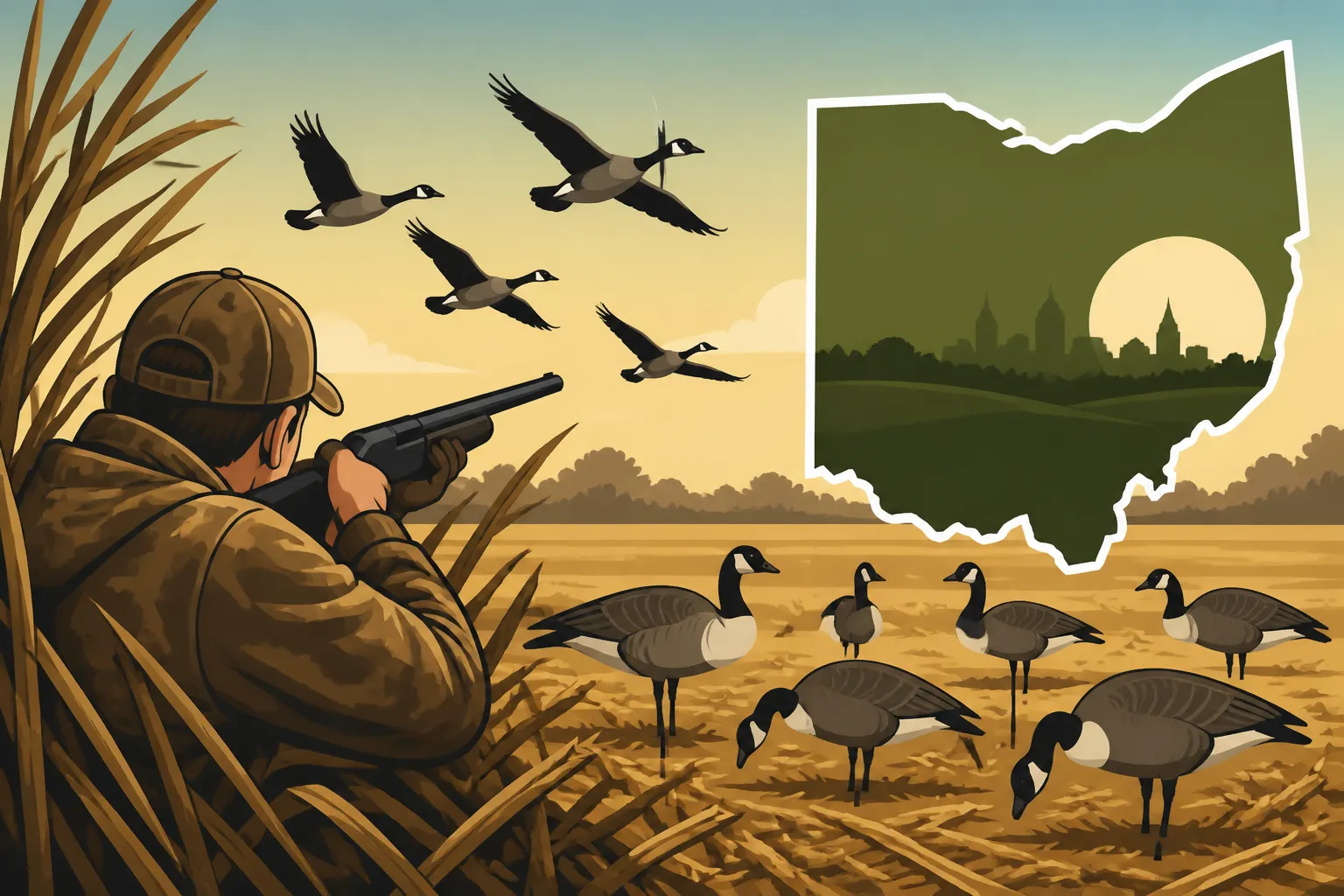
Pressured ducks and geese are constantly looking for safe places to land, feed, and rest. Your decoy spread needs to clearly define this safe zone, often called a "kill hole" or "landing strip," and it needs to look utterly natural. Avoid perfectly symmetrical or unnaturally dense spreads. Real birds don't land in perfect rows. Instead, they’ll group up, spread out, and leave open areas. Your spread should mimic this organic chaos.
For ducks in a marsh, create a natural-looking "pocket" of open water in front of your blind, surrounded by small groups of dabblers and divers. This pocket should be wide enough for them to confidently commit to, but not so large that they can land far out of range. For geese in a cut cornfield, arrange small family groups of full-body decoys, leaving a wide, clear "runway" directly into the wind, ending right in front of your layout blind. The goal is to make the decision to land an easy, comfortable one for the birds. A well-designed landing zone can even draw in reluctant birds that have been circling high. When scouting, especially with tools like GoHunt, pay attention to where birds naturally land and try to replicate that environment with your spread. This is particularly important for Hunting Lake Erie Marsh Zone Waterfowl.
Divers and Dabblers: Mixing Your Spread for Realism
One common mistake, especially on public water, is using a single species spread when multiple species are present. A mixed bag of decoys adds incredible realism to your spread and can appeal to a wider range of birds. On larger bodies of water, like Lake Erie or the Ohio River backwaters, you’ll often find both dabblers (like mallards and wood ducks) and divers (like bluebills and canvasbacks).
Dabblers typically feed in shallower water, tipping up, while divers feed in deeper water, often disappearing completely. Your decoy spread should reflect this natural behavior. Place dabbler decoys closer to the shorelines or in shallower sections of your spread, and diver decoys further out in deeper water. This creates a highly convincing scene of a thriving, diverse waterfowl population. Using a mix of active (feeding, preening) and resting postures also enhances the illusion. For more specific diver tactics, check out Decoy Spreads for Lake Erie Divers. Understanding Hunting the Ohio River Backwaters can also help with mixing decoys for different species.
The Importance of Movement and Motion Decoys
Static decoy spreads can be a dead giveaway to pressured waterfowl, especially on calm days. Real birds are rarely completely still; they swim, preen, and flap their wings. Adding movement to your spread can be the single most effective way to entice wary birds to commit. Jerk strings, often overlooked, are simple, inexpensive, and incredibly effective for ducks. A single pull can make a whole string of decoys look alive, creating ripples and flashing subtle movement.
Battery-operated motion decoys, like spinning-wing ducks (Mojos), can be game-changers, especially on windy days or when birds are working from a distance. However, sometimes pressured birds can become wary of constant, unnatural motion. For these birds, intermittent motion or subtle flappers might be more effective. Consider a "feeder" motion decoy that bobs and dips, mimicking a feeding bird, rather than a constantly spinning wing. Experiment with placement; sometimes a single spinning-wing in the middle of a large spread is perfect, other times placing it far out, acting as a beacon, works better. Always observe how the birds react and be prepared to adjust. When you're in a Layout Blind Hunting a Cut Cornfield, even a simple flag can make a difference.
General Principles for All Pressured Game
While turkey and waterfowl demand specific tactics, there are overarching principles that apply universally when trying to fool pressured game in Ohio. These are the foundations upon which all successful decoy strategies are built.
Concealment is Paramount
This might seem obvious, but it bears repeating: your decoys can be perfect, but if the birds spot you, the hunt is over. Pressured game animals are hypersensitive to human presence. This means your blind, whether it's a pop-up, a layout, or natural cover, needs to be absolutely flawless. Brush it in until it looks like part of the landscape. Use natural vegetation to break up your outline, paying close attention to shadows and light. Don't leave any gaps.
Beyond the blind itself, think about your entry and exit routes. You can’t pressure birds on your way in or out. Approach your setup under the cover of darkness for turkeys, or use natural topography to mask your approach for waterfowl. Make sure your face and hands are fully covered and that there’s no shine from your gear. Even a subtle flash of light reflecting off a watch or a scope can send wary animals scattering. On some public lands, like those you might find using scouting features on GoHunt, this level of attention to detail is the only way to avoid educating more animals. If you're Hunting Pressure on Ohio Public Land, this level of concealment becomes even more critical.
Adaptability and Scouting Are Key
No two hunting days are ever exactly alike, and what worked yesterday might not work today. This is especially true for pressured birds. You need to be adaptable, constantly reading the conditions, the birds' reactions, and being willing to change your setup on the fly. Maybe the wind shifted, and your landing zone is now awkward. Perhaps the turkeys are hanging up further out than usual. Don't be afraid to adjust. That might mean getting out of your blind and moving a decoy, or even packing up and moving to a completely new location if the birds just aren't cooperating.
Scouting is the backbone of adaptability. You need to know what the birds are doing right now. Where are they feeding? Where are they roosting? What routes are they taking? Fresh intel is invaluable. Use binoculars to observe from a distance, long before you even think about setting up decoys. Pay attention to their typical flight lines, travel corridors, and preferred resting spots. This will inform not just where to put your decoys, but if you should even use them at all, and what type of spread would be most convincing. Continual scouting helps you Finding Ground Others Walk Past and adapt your strategies for success.
Realism Over Quantity
This is a recurring theme for pressured birds, and it cannot be stressed enough. A dozen cheap, shiny, poorly-painted decoys will never outperform two or three ultra-realistic, well-placed ones. When birds are wary, they're looking for inconsistencies. A decoy that looks unnaturally stiff, has peeling paint, or a peculiar shine will be spotted quickly. Invest in high-quality decoys from reputable brands like Avian-X, Higdon, or Dave Smith Decoys that mimic the natural coloration and postures of the species you're hunting.
Also, consider the scale. If you're hunting a small woodlot edge for turkeys, a massive flock of decoys looks out of place. Similarly, if you're on a small pond, a huge spread of waterfowl decoys can seem unnatural. Match the size of your spread to the size of the location and the number of birds typically found there. A few perfectly placed, highly realistic decoys that look like part of the environment are far more convincing than a crowd of mediocre ones that stick out like a sore thumb.
| Decoy Type/Spread | Pressure Level | Key Tactics | Common Mistakes to Avoid |
|---|---|---|---|
| Turkey Hen (Single) | High | Subtle feeding/loafing pose, dictate approach. | Too close to hunter, unnatural posture. |
| Turkey Jake & Hen | Medium-High | Jake facing away from blind, hen slightly in front. | Overly aggressive jake, too many decoys. |
| Waterfowl (Small groups, mixed species) | Medium-High | Natural spacing, defined landing zone, mix dabblers/divers. | Symmetrical lines, too dense, single species. |
| Waterfowl (Motion decoys) | Medium | Intermittent motion, subtle ripples. | Constant, unnatural spinning, too many. |
| Waterfowl (Shells/Silhouettes) | High | Realistic grouping, bulk up numbers, natural angles. | Shiny surfaces, flat appearance from all angles. |
| Minimalist (1-2 decoys) | Very High | Ultra-realistic, non-threatening, perfect concealment. | Any deviation from natural appearance/behavior. |
Ultimately, hunting pressured birds with decoys is a skill developed through observation, patience, and a willingness to learn from every encounter. By focusing on realism, dictating approach, and making your presence absolutely invisible, you'll greatly increase your odds of success on Ohio's most wary game.
Disclaimer
Hunting is an inherently dangerous activity. Always follow all local, state, and federal hunting regulations. Ensure you have the proper licenses and permits. Prioritize safety, including wearing blaze orange when required, understanding your target and beyond, and using appropriate safety gear for treestands. This guide provides general information and should not replace professional instruction or local wildlife officer guidance. Be aware of private land boundaries and always obtain permission before hunting on private property.