Setting Up Against a Big Oak
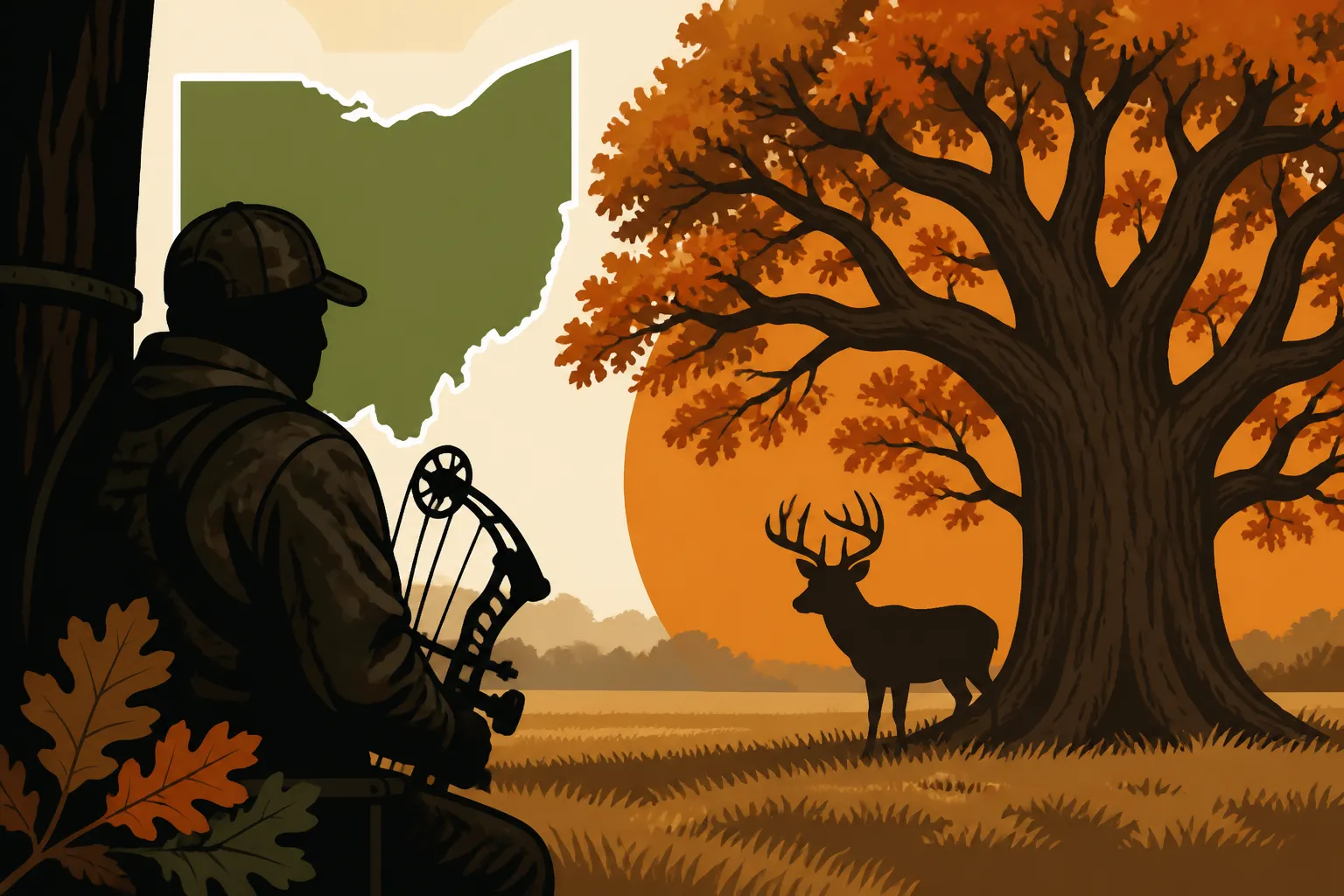
There’s nothing quite like the feeling of finding that perfect setup, especially when you’re trying to go a little lighter, maybe just a saddle or a comfortable ground-level position, and you spot that massive oak. It feels like a natural blind, a fortress in the woods. But often, what seems like a great spot at first glance can quickly turn into a frustrating bust if you haven't considered all the angles. This guide will walk you through how to master setting up against those magnificent big oak trees in Ohio, turning them into your personal whitetail ambush points.
Understanding the Appeal of the Big Oak for Ohio Whitetails
Big oak trees aren't just pretty to look at; they're magnets for deer, especially during key periods of the hunting season. Their sheer size often provides significant cover, but it's the bounty they offer that truly draws deer in. Knowing which oak, and when, is the first step to a successful setup.
Acorn Production and Deer Attraction
Let's be real, an Ohio whitetail’s love affair with acorns is legendary. When those acorns drop, deer will often abandon other food sources to gorge themselves on this energy-rich forage. But not all oaks are created equal, and not all years are banner acorn years. You've got to be a bit of an amateur botanist to truly capitalize on this.
Different species of oaks mature their acorns at different times, and some are preferred over others. White oaks, for instance, typically drop their acorns earlier in the fall, usually from late September through October. These acorns are lower in tannins, making them sweeter and highly palatable to deer. You’ll often find deer hitting white oak groves hard right as Ohio Archery Season Opening Day kicks off. Red oaks, on the other hand, produce acorns with higher tannin content, making them a bit more bitter. They drop later, often extending well into November and even December, providing a crucial food source when the white oak buffet has long been picked clean. This becomes especially important when you're thinking about Late-Season Food Sources for Ohio Whitetails. To really hone in on the best spots, you can use tools like GoHunt that integrate with mapping software, allowing you to identify oak stands on aerial imagery, then confirm on the ground. You're looking for signs under these trees: fresh droppings, chewed acorn caps, and disturbed leaves. If you find a spot that’s been hit hard, that’s your first clue. Remember, a poor acorn year can drastically shift deer patterns, so always scout current conditions.
Natural Cover and Strategic Location
Beyond the food, big oaks offer invaluable cover for deer. Their large trunks and sprawling crowns provide shelter from the elements and visual obstruction from predators, including hunters. Deer often use these prominent trees as staging areas before heading into open fields, or as bedding spots on slight ridges where they can watch their backtrail.
When scouting for your big oak, consider its position relative to other features. Is it on a ridge top where deer might bed and catch thermal drafts? Is it along a travel corridor connecting bedding areas to feeding fields? Is it near a creek bottom, offering both water and a hidden travel route? The best big oaks aren't isolated; they're part of a larger deer habitat puzzle. A massive oak with thick undergrowth around its base offers even more concealment, making it a perfect spot for deer to feel secure. These majestic trees are often found in mature timber, providing a natural bottleneck or pinch point that deer are funneled through. When you're Reading a Ridge for Southeast Ohio Deer, pay close attention to where these large oaks are concentrated, as they can reveal high-traffic areas.
Strategic Setup: Blending In and Maximizing Your Shot Opportunity
Once you've identified a promising big oak, the real work begins: setting up effectively. This isn't just about leaning against a trunk; it's about becoming part of the forest, using the tree to your advantage while mitigating your own presence.
Wind, Thermals, and Scent Control
Wind and thermals are your biggest enemies and, if understood, your greatest allies. Deer possess an incredible sense of smell, and any whiff of human scent will send them scattering faster than you can blink. This is especially true when you're on the ground, where your scent cone is lower and spreads more broadly.
Before you even step foot in the woods, check the wind. Use a reliable weather app, and don't just look at wind direction, but also wind speed. When hunting big oaks, particularly those on a ridge or slope, understanding Wind and Thermals on an Appalachian Ridge, is paramount. In the mornings, thermals generally rise, carrying your scent uphill. In the evenings, they fall, carrying your scent downhill. Position yourself so that the prevailing wind and thermals carry your scent away from where you expect deer to approach or pass. This might mean setting up on the leeward side of the oak, or slightly downwind of a known trail. Even with ideal wind, practice meticulous scent control. Use scent-eliminating sprays, wash your clothes in scent-free detergent, and avoid handling anything with bare hands that might transfer human odor. Consider a scent-containment bag for your hunting clothes until you’re at your spot. Remember, even a slight shift in wind can betray you, so always have a backup plan or adjust your position subtly if conditions change. Using an app like GoHunt to track wind and thermal predictions can be a huge advantage.
Concealment and Shooting Lanes
The big oak itself provides a massive amount of cover, but you still need to optimize your position to blend in completely and ensure clear shooting lanes.
The key here is to truly become part of the tree. Don’t just sit directly against it. Instead, find a spot where the trunk breaks up your outline, perhaps where a large limb forks, or where there’s a cluster of smaller saplings growing tight to the oak’s base. Use any natural vegetation – fallen branches, thick briars, or even a small ground blind – to further break up your silhouette. Your face and hands are often the most visible parts of your body, so wear a face mask and gloves that match your surroundings.
Once you're settled, identify your shooting lanes. While you want good cover, you can't harvest a deer if you can't get a shot. Look for natural clearings or areas where you can quietly (and legally) trim a few small branches with hand pruners before the season, if on private land, or well in advance on public land. For those hunting public land, remember that trimming vegetation is usually prohibited, so focus on natural lanes. Often, these big oaks offer shots at various distances, so range important landmarks around you – stumps, rocks, other trees – so you can quickly gauge distances when a deer appears. A quick reference table for common oak types and their general acorn drop times can be helpful for planning:
| Oak Species | Acorn Characteristics | Typical Drop Period (Ohio) | Deer Preference |
|---|---|---|---|
| White Oak | Low Tannins, Sweet | Late September – October | High |
| Bur Oak | Low Tannins, Sweet, Large | October | High |
| Swamp White Oak | Low Tannins, Sweet | Late September – October | High |
| Red Oak | High Tannins, Bitter | Late October – December | Medium to High (late season) |
| Pin Oak | High Tannins, Bitter, Small | Late October – December | Medium to High (late season) |
| Black Oak | High Tannins, Bitter | Late October – November | Medium |
Hunting Tactics from Your Oak Fortress
Setting up is only half the battle. How you hunt from your big oak position, and the strategies you employ, will determine your success. Patience and observation are your best friends here.
Patient Observation and Minimal Movement
Hunting from a big oak, especially on the ground, demands an exceptional level of patience and minimal movement. Every twitch, every rustle, every glance can be picked up by a wary whitetail. Think of yourself as a statue, an extension of the tree itself.
Once you’re in position, settle in for the long haul. Scan your surroundings slowly, using your eyes more than your head. Utilize binoculars to pick apart the shadows and confirm what you’re seeing. Deer can materialize out of thin air, and a slow, methodical scan will help you detect them before they detect you. Pay close attention to subtle movements – a flick of an ear, a swish of a tail, the gleam of an antler through thick brush. These tiny clues often precede the appearance of the entire animal. When you need to move to get ready for a shot, do it in slow motion, taking advantage of any distraction the deer might have, like when they put their head down to feed. This passive, patient approach is particularly effective when Hunting the Ohio Rut in Early November, as bucks are often moving cautiously, scent-checking for does. You might be surprised at how close deer will pass if they truly believe you're just another part of the natural landscape.
Calling and Decoys
While the big oak itself is your primary draw, strategic use of calls and even a subtle decoy can enhance your chances, especially during the rut.
If you’re hunting during the rut, a well-timed grunt call or rattle can bring a curious buck right into your lap. From the concealment of a big oak, you can be incredibly effective with these tools. Use Grunt Calls in Mature Ohio Timber, mimicking the sounds of a buck cruising for a doe or a sparring match. Always remember to call sparingly and realistically. Overcalling can quickly alert deer to your presence, or worse, make them think something isn't quite right. A few soft grunts are often more effective than a long, aggressive rattling sequence, especially if the deer population has seen some pressure. Consider placing a single doe or buck decoy, like a Montana Decoy, slightly downwind and visible from your position. The decoy provides a visual focal point for incoming deer, drawing their attention away from you and potentially providing a shot opportunity as they investigate. However, be cautious with decoys on public land, especially during gun season, as they can be mistaken for a live animal. Make sure to choose a location where the decoy is clearly visible and identifiable as artificial to other hunters.
Adapting Your Big Oak Strategy Through the Seasons
Ohio's hunting seasons offer a dynamic range of conditions, and your big oak strategy needs to evolve with them. What works in early fall might be ineffective by the deep chill of late winter.
Early Season Adaptations
The early archery season in Ohio, typically kicking off in late September, means warmer temperatures and abundant food sources. Your big oak strategy should focus on food and cover.
Deer haven't faced significant hunting pressure yet, so they might be less wary. Focus on white oak stands that are actively dropping acorns. Since the leaves are still mostly on the trees, visibility can be reduced, making your concealment even stronger. However, warm weather also means increased scent production, so meticulous scent control is paramount. During this time, deer often move in the mornings and evenings, preferring to bed down during the midday heat. Your big oak setup should be positioned to intercept deer traveling between bedding areas and active feeding trees. Consider a slightly more aggressive approach with scouting, really getting in to find the freshest sign. Remember that mosquitoes and ticks are still active, so insect repellent (scent-free, of course!) is a must. Many hunters utilize the GoHunt platform to map out known oak clusters and scout them electronically before ever stepping foot in the timber.
Late Season Challenges and Opportunities
By the time late muzzleloader season rolls around in January, conditions in Ohio are often starkly different. The woods are bare, temperatures plummet, and natural food sources are scarce. This is when the hardier red oaks and their bitter, tannin-rich acorns truly shine.
Deer are now highly pressured, wary, and focused intensely on finding reliable food and conserving energy. Your big oak setup needs to reflect this. Focus on red oaks or other late-dropping oaks that still have acorns available, especially those near thick thermal cover where deer can bed. Visibility is dramatically increased without leaves, so your concealment needs to be absolute. Utilize every bit of the oak’s structure and any surrounding brush to break up your outline. Your entry and exit routes become even more critical; you cannot afford to bump deer, as they are on high alert. Cold-Weather Sitting Strategy in Ohio, is also vital; dress in layers, use hand warmers, and consider a warm ground pad to stay comfortable and still for extended periods. Deer movement will often be confined to midday during colder snaps, so be prepared for longer, colder sits. A big oak can offer a crucial windbreak in these bitter conditions, making it a more appealing spot for a deer to pause and feed, and for you to wait.
Final Thoughts on Your Big Oak Ambush
Setting up against a big oak is a classic hunting technique for a reason. These magnificent trees offer both sustenance and security for whitetails, making them natural focal points for hunters. But it's not enough to just find a big tree; you need to understand the nuances of deer behavior, the environmental factors at play, and how to become truly invisible within your chosen spot. Patience, keen observation, and an adaptive approach to changing seasonal conditions will turn those grand old oaks into your most reliable hunting partners. So next time you're scouting Ohio’s hardwoods, keep an eye out for those towering giants – with a little planning, they might just be the key to your next successful hunt.
Disclaimer
Hunting is an inherently dangerous activity. This article provides general information and recommendations only. Always prioritize safety, adhere to all local, state, and federal hunting regulations, and obtain proper licenses and permits before hunting. The author and publisher are not responsible for any accidents, injuries, or legal issues that may arise from using the information presented. Always scout your specific hunting area and be aware of your surroundings.