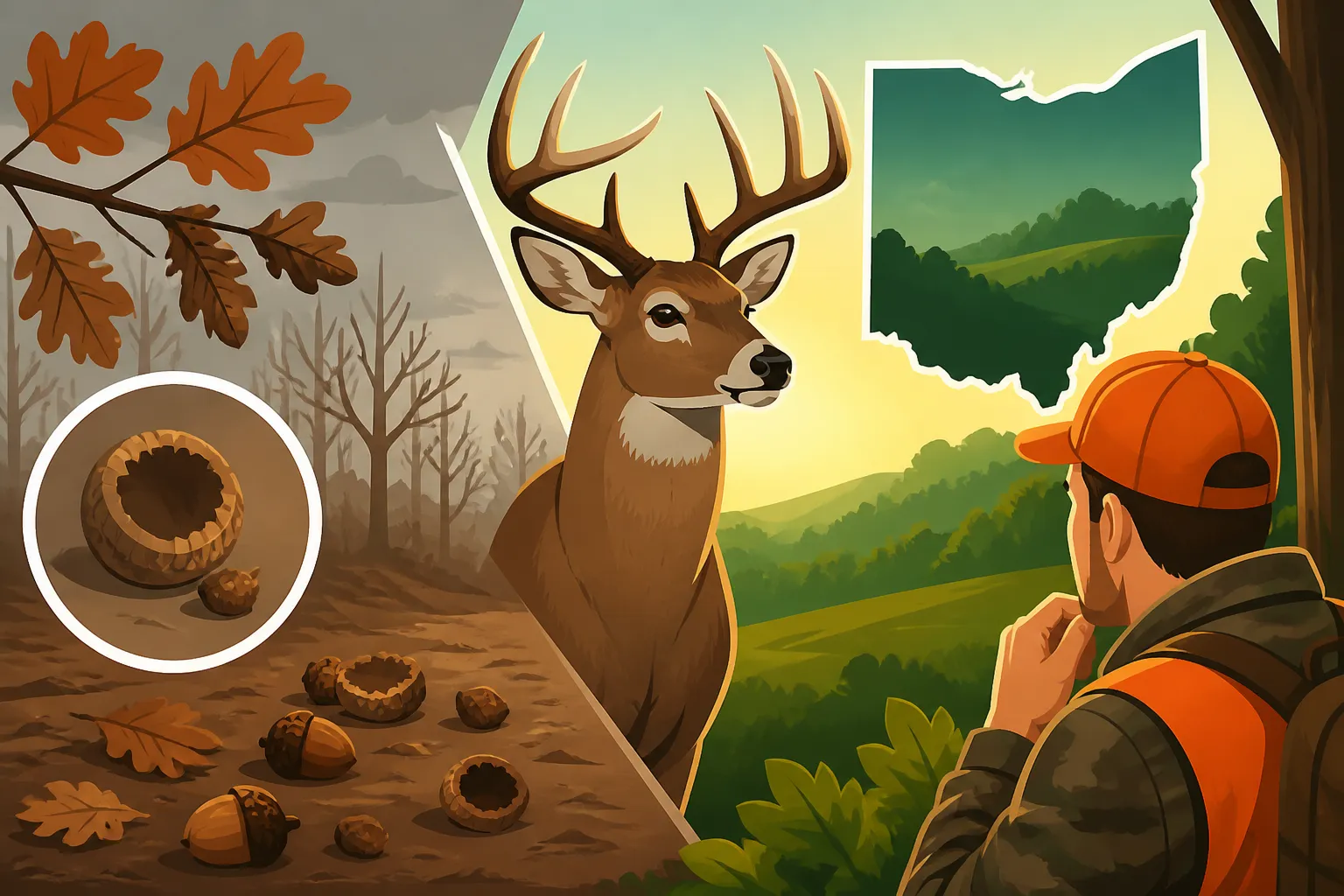
Hunting After a Poor Acorn Year
There's nothing quite like the crushing disappointment of finding your favorite oak flat barren, the ground devoid of those precious acorns that usually bring the deer running. We've all been there – scouting hard, getting excited about a productive stand, only to have a bad mast year turn our usual hunting strategy upside down. When Ohio's whitetails can't rely on their primary food source, it forces them to change their entire pattern, and that means we, as hunters, have to change ours too. This guide will walk you through understanding how a poor acorn year impacts deer in Ohio, how to shift your scouting and hunting tactics, and what alternative food sources you should be focusing on to stay successful, even when the oak crop fails.
The Ripple Effect of a Poor Acorn Crop on Ohio Deer
A truly poor acorn year isn't just a minor inconvenience; it's a seismic shift in the deer woods. Ohio's white-tailed deer are incredibly adaptable creatures, but their seasonal movements and dietary preferences are heavily dictated by the availability of high-energy foods, and acorns sit right at the top of that list for a good portion of the year. When that primary food source suddenly disappears or becomes extremely scarce, it sends a ripple effect through the entire deer herd.
Why Acorns are King in Ohio's Deer Diet
For much of the late summer and fall, acorns are essentially gold for deer. They're packed with carbohydrates and fats, providing a dense, easy-to-digest energy source that's crucial for deer to put on weight before the lean winter months and fuel the rigors of the rut. Whether you're hunting in the Appalachian foothills of Southeast Ohio or the flatter farm country of Northwest Ohio, oak trees are ubiquitous, and deer have evolved to rely heavily on their bounty. You can almost set your watch by their appearance in a productive oak grove during a good mast year. When acorns hit the ground, deer movement in other areas can slow significantly as they concentrate on these prime feeding grounds. Understanding the larger picture of White-Tailed Deer Across Ohio helps put this dependence into perspective.
This reliance means that in a normal year, a hunter might find success simply by locating a good white oak or red oak stand and setting up shop. Deer will literally line up to feed in these areas, often from late afternoon well into the evening, and sometimes even throughout the day in low-pressure zones. The sheer volume of acorns can sustain a large number of deer, making these spots magnets for both does and mature bucks. The nutritional boost from acorns helps bucks recover from the summer's antler growth and prepares them for the intense breeding season, while does need the calories for gestation and milk production. It's a critical component of the Ohio Deer Population Estimate and overall herd health.
How Deer Behavior Changes Without Abundant Mast
When the acorn crop fails, deer don't just sit around and starve. They immediately begin searching for alternative food sources, and this search fundamentally changes their movement patterns. Instead of concentrating in those predictable oak flats, deer will disperse, covering wider areas as they forage for whatever else is available. This can make them feel a lot more "ghostly" and unpredictable for hunters who are used to them being tied to specific areas. You might find deer in places you've never seen them before, simply because that's where the food happens to be this year.
This increased travel and dispersal also impacts the rut. In a banner acorn year, bucks might cruise through oak flats, knowing that's where they're likely to find concentrations of does. But when acorns are scarce, does are spread out, meaning bucks have to travel even more extensively to find receptive females. This can lead to a more drawn-out and less intense "rutting window" in any one specific location, as bucks aren't as tightly patterned to a few key feeding areas. While Hunting the Ohio Rut in Early November is always a prime time, a poor mast year adds an extra layer of challenge to predicting buck movement. Suddenly, those traditional rut funnels might not be as hot if they're not connecting key alternative food sources.
Adapting Your Scouting and Strategy
A poor acorn year is the ultimate test of a hunter's adaptability. It forces us out of our comfort zones and makes us truly "hunt" rather than just waiting in a familiar spot. This means starting your scouting earlier and focusing on different signs than you might in a good mast year. It also means staying flexible and willing to adjust your plan based on what the deer are actually telling you.
Pre-Season Recon: Focusing Beyond the Oaks
Your pre-season scouting becomes even more critical when acorns are a bust. Instead of just checking your favorite oak ridges, you need to expand your search to identify every conceivable alternative food source. This means getting out there in late summer and early fall, before the leaves drop, to see what other trees are producing. Are there good hickory crops? Are the wild apple trees loaded? What about persimmons? These "soft mast" sources become incredibly important. Tools like GoHunt can be invaluable here. Using their aerial imagery and property line layers, you can identify potential food sources on public land or accessible private parcels, then mark them for in-person investigation. This lets you cover a lot of ground digitally before ever lacing up your boots.
When you're out there, don't just look for dropping food. Pay attention to browse lines – areas where deer have been heavily nipping at twigs and leaves of various plants. This indicates a general food shortage or heavy reliance on browse. Focus on areas with a diverse mix of tree species and undergrowth, rather than just monocultures of oaks. Scouting Ohio Public Land Before Season takes on new importance in these lean years, pushing you to look for the overlooked pockets of nutrition that deer will gravitate towards. Also, remember to look for signs of recent timber cuts or regenerating areas within state forests like Zaleski or Tar Hollow; these sites often provide excellent browse for deer.
In-Season Adjustments: Reading the Sign
Even with the best pre-season scouting, deer patterns can change quickly. This means your in-season scouting needs to be constant. Every time you're in the woods, you should be looking for fresh sign around alternative food sources. Are there new droppings under a particular persimmon tree? Is there fresh browsing on a patch of honeysuckle? Are deer trails leading directly into a standing corn field? These observations are your clues. Don't be afraid to move your stand or set up a ground blind if you find a new hotspot that wasn't active a week ago.
On private land, if you have permission, it's worth checking with landowners about their agricultural fields. Are soybeans still standing, or have they been cut? Is there winter wheat being planted? These are huge draws for deer when acorns aren't an option. Observing deer movement from a distance, perhaps from a vehicle on a public road near a field edge, can give you invaluable real-time information. While you can't hunt from your vehicle or public roads, it helps you identify active feeding areas. Remember, deer might become more nocturnal around these open, accessible food sources, so understanding evening and early morning entry/exit routes becomes paramount. Using a tool like GoHunt to mark active areas and potential routes can help visualize these patterns on your map.
Key Alternative Food Sources to Target in Ohio
When acorns are scarce, deer turn to a wider variety of foods to meet their nutritional needs. As hunters, our job is to understand what those alternatives are and where to find them. This shift from one primary food source to many secondary sources is what makes hunting in a poor mast year so challenging, yet also incredibly rewarding when you crack the code.
Identifying Hard Mast Alternatives
While oaks get all the glory, other trees produce hard mast that deer will readily consume when acorns are limited. Hickories, for example, are common throughout Ohio, especially in the central and eastern parts of the state. While not as universally preferred as acorns, hickory nuts are high in fat and protein, making them a valuable food source. Beech nuts, though smaller and often harder to find in large quantities, are also eagerly sought out by deer and other wildlife. You'll often find beech trees growing in similar habitats to oaks, so keep an eye out for their smooth, gray bark and distinctive triangular nuts. Black gum trees also produce a small, dark fruit that deer will consume, especially in bottomland areas or on edges of swamps, although these are less common as primary food sources.
Learning to identify these trees and their nuts is a crucial skill. It’s not just about looking for the obvious oak leaves; it’s about understanding the entire forest ecosystem. In areas like the Wayne National Forest or Shawnee State Forest, these alternative mast trees might not be as dense as oaks, but finding a productive patch can be a game-changer. Deer will travel to these more scattered sources, sometimes even bedding closer to them if pressure allows. When you're out scouting, look for evidence of feeding—broken shells, disturbed leaves, and fresh droppings under these less-common mast trees.
Soft Mast and Agricultural Opportunities
Soft mast refers to fruits and berries, and these become incredibly important in a low-acorn year. Wild apples, often found around old homesteads, field edges, or along abandoned logging roads, can be absolute deer magnets. Persimmons, common in southern Ohio, drop their sweet, orange fruits from late fall into winter and are a top-tier deer food. Wild grapes, honeysuckle berries, and even the berries of certain dogwood species can all provide crucial calories. These sources are often found along fencerows, creek bottoms, and the edges of timber.
Beyond natural forage, agricultural fields are huge draws. Standing cornfields offer both food and cover, and deer will live in them until harvest. Once harvested, the waste grain on the ground can provide an immense amount of food throughout the fall and early winter. Similarly, soybean fields, particularly if they remain standing through early hunting season, are incredibly attractive. After harvest, the remaining beans and leaves are still a good food source. Hunters focused on Hunting a Standing Soybean Field in a poor acorn year will likely have more success than those clinging to empty oak groves. Farmers planting winter wheat or rye as cover crops also create attractive food plots that deer will hit hard, especially as other food sources diminish in late fall.
| Food Source Category | Examples | Deer Preference (Low Mast Year) | Typical Location |
|---|---|---|---|
| Hard Mast (Alt.) | Hickory nuts, Beech nuts, Black gum fruits | High | Mixed hardwoods, ridges, bottomlands |
| Soft Mast | Wild apples, Persimmons, Wild grapes | Very High | Field edges, old clearings, fencerows, creek bottoms |
| Agricultural | Standing corn/beans, waste grain, wheat | Very High | Farmland, crop fields |
| Browse | Greenbrier, Sumac, Honeysuckle, Maple | Moderate to High | Clear-cuts, thickets, edge habitat, swamps |
| Forbs | Clover, broadleaf weeds | Moderate | Food plots, open areas, forest clearings |
Natural Browse and Forbs
When all else fails, or even when other options are available, deer will always rely on browse—the twigs, leaves, and shoots of woody plants—and forbs, which are broadleaf plants. In a poor mast year, their consumption of these items will increase dramatically. Areas that have been recently timbered, like clear-cuts in public lands such as Zaleski State Forest or Athens Unit Wayne National Forest, can offer a buffet of regenerating saplings and herbaceous plants that deer will devour. These areas provide both abundant food and thick cover, making them prime spots.
Thickets of greenbrier, honeysuckle, and multiflora rose, while a pain to walk through, are often loaded with deer in these lean years. These plants provide year-round forage and excellent security cover. Don't overlook creek bottoms and swamp edges, where different vegetation thrives, offering options not found on drier uplands. Areas with heavy deer sign that lack obvious mast trees might be indicating a shift to browse and forbs. It's not as nutrient-dense as acorns or agricultural crops, but it's consistent, and deer will work these areas hard. Focus on identifying these types of habitat using your GoHunt app and then getting in to scout them for fresh sign.
Effective Hunting Tactics for Low-Mast Years
Hunting after a poor acorn year requires more than just finding new food sources; it demands a strategic shift in how you hunt. You can't just sit and wait; you need to anticipate deer movement and be more proactive. This often means moving more, being stealthier, and focusing on the crucial travel routes between these scattered food sources and bedding areas.
Increased Emphasis on Funnels and Travel Corridors
When deer are dispersed and moving more to find food, the importance of funnels and travel corridors skyrockets. These are natural pinch points in the landscape that concentrate deer movement, regardless of what they're eating. Think about narrow strips of woods between open fields, saddles on ridges, creek bottoms that lead between bedding and feeding areas, or even brushy fencerows connecting two woodlots. Deer have to use these to get from point A to point B, and in a low-mast year, their travel distances between food and cover will be greater, increasing the odds of encountering them in these spots.
Using a mapping tool like GoHunt to analyze topography and cover can help you identify these natural funnels. Look for areas where thick cover narrows, or where open terrain forces deer into a smaller travel lane. These spots become high-percentage ambush points. Consider setting up treestands or ground blinds strategically along these routes, focusing on wind direction. Remember, deer will often move with greater urgency when they are on a mission to find food, so anticipating their exact route becomes even more critical. Understanding Hunting a Funnel Between Two Woodlots or reading terrain features for natural pinch points is a tactic that truly shines when food is scattered.
Still-Hunting and Ground Hunting Strategies
In years where deer are widely dispersed and not tied to one particular food source, traditional stand hunting can be less productive. This is where still-hunting and ground hunting really come into their own. Still-hunting involves moving slowly and deliberately through the woods, taking a few steps, then pausing for several minutes to scan for movement. You're actively hunting, using your eyes and ears to spot deer before they spot you. This allows you to cover more ground, effectively scouting as you hunt, and increase your chances of stumbling upon a deer that's foraging in an unexpected area.
When still-hunting, pay close attention to the wind, move into it or crosswind, and use terrain features for cover. Focus on areas where you suspect deer might be browsing or moving between bedding and feeding. This is particularly effective in large tracts of public land like the Shawnee State Forest, where deer aren't concentrated in obvious spots. Still-Hunting Shawnee State Forest Ridges can be an incredibly productive way to find deer that are spread out across a large area, using the natural contours of the land to your advantage. Ground blinds, either pop-up or brushed-in, can also be effective, especially if you find a hot, active feeding area in a low-pressure spot that you can’t get a treestand into easily.
Leveraging the Late Season
The late season, typically January in Ohio, becomes even more challenging after a poor acorn year, but it can also present unique opportunities. By this point, most natural food sources are depleted, and deer are truly feeling the pressure. Their primary focus shifts entirely to survival and finding any remaining calories. This means agricultural leftovers, persistent soft mast (like dried persimmons), and concentrated browse in thick cover become absolute magnets. Hunting around these specific, limited Late-Season Food Sources for Ohio Whitetails can be incredibly productive, as deer have fewer options and are forced to congregate.
As snow begins to fall, Reading Ohio Snow for Fresh Deer Movement becomes your ultimate scouting tool. Fresh tracks will tell you exactly where deer are traveling, feeding, and bedding. Look for trails leading to cut cornfields, patches of winter wheat, or dense thickets where deer might be bedding down during the coldest parts of the day. Patience and cold-weather gear are essential, as deer activity might be limited to short bursts of feeding. Remember, even in a tough year, a determined hunter who understands deer needs can find success by focusing on the remaining, vital resources when everything else is gone.
Disclaimer
Always consult the latest Ohio Department of Natural Resources (ODNR) hunting regulations before heading afield. Hunting seasons, bag limits, and specific rules can change annually.