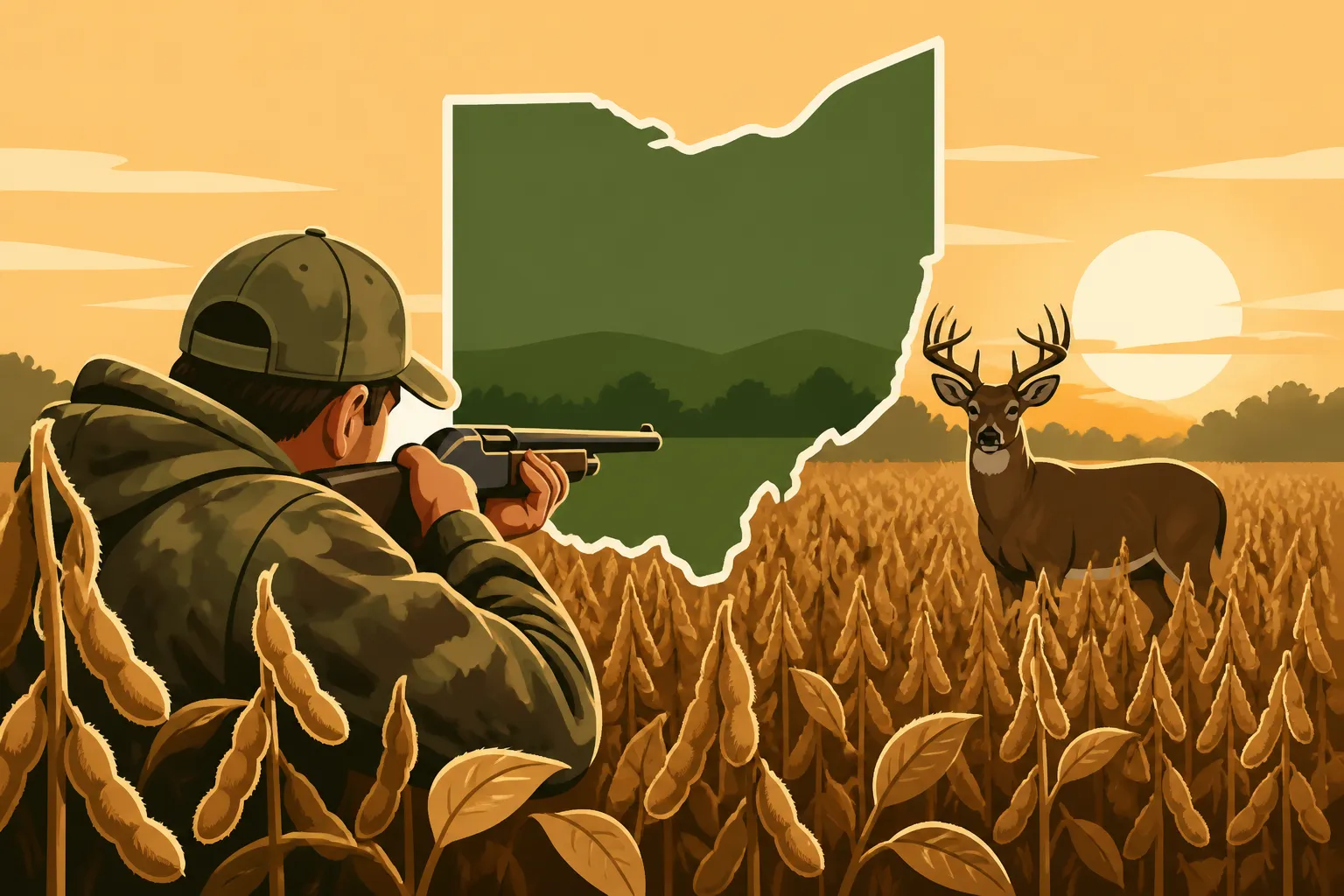
Hunting a Standing Soybean Field
There's nothing quite like the sight of a mature Ohio whitetail stepping out into a standing soybean field just before dark, but actually getting a shot at one can feel like trying to catch smoke. Those big, leafy fields offer deer both an irresistible food source and incredible cover, often leaving hunters scratching their heads about how to effectively hunt them. This guide is all about breaking down the mystery of standing soybean fields, giving you the real-world strategies and insights you need to turn those frustrating sightings into successful hunts.
Why Standing Soybeans Are a Deer Magnet
Standing soybean fields are a veritable buffet and a sanctuary for deer, drawing them in like moths to a flame, especially as the season progresses. Understanding why they are so attractive is the first step to figuring out how to hunt them.
Nutritional Value and Seasonal Appeal
Initially, when soybeans are green and lush, they offer high protein content from their leaves and developing pods. Deer will browse these vigorously, much like they would alfalfa or clover. This makes them a prime draw during the early archery season, when deer are looking to pack on pounds before the rut. As fall deepens and the leaves begin to yellow and drop, the nutritional focus shifts entirely to the beans themselves. These dried beans are rich in energy-dense carbohydrates and fats, providing crucial calories that deer need to sustain themselves through the grueling rut and into the colder winter months. It's a powerhouse food source, constantly evolving in its appeal throughout the season.
Think about it from a deer's perspective: it's like a convenience store that’s open 24/7, stocked with everything they need. During the Ohio Archery Season Opening Day, those green pods are tender and easy to digest. Later, when frost hits and everything else starts to fade, those mature, high-calorie beans become an absolute lifeline. This makes understanding the maturity stage of the beans in your hunting area paramount. If the beans are still green in October, deer might be nibbling the leaves. Come late November and December, once they're dried and hard, the deer are specifically targeting the actual beans themselves.
Unrivaled Cover and Security
Beyond the food, standing soybeans provide an incredible amount of security for deer. The tall, dense foliage, especially in fields where the plants are waist-high or taller, offers near-perfect concealment. A mature buck can lie down in the middle of a large bean field and virtually disappear, feeling safe from predators and human intrusion. This cover is often underestimated by hunters who are used to looking for deer in traditional woodlots or thickets.
This dense cover allows deer to move, feed, and bed down within the field itself, sometimes never even needing to leave its boundaries during daylight hours. This is especially true in areas with fragmented cover or heavy hunting pressure nearby. A big buck might spend his entire day bedded deep inside a vast bean field, only to stand up and start feeding right there in the afternoon. This phenomenon frustrates many hunters who watch deer pour into bean fields from the woods at last light, only to realize the biggest bucks were already there. They simply emerged from the depths of the field, unseen, until they were visible along the edges.
Transition Zones and Travel Corridors
Soybean fields are rarely isolated islands. More often than not, they border woodlots, fencerows, creek bottoms, or even standing cornfields, creating vital transition zones and natural travel corridors. Deer will often use the edges of these fields as highways, moving between bedding areas and other food sources. These edges, where the beans meet other cover types, are prime ambush points.
Consider a large bean field that has a thick fencerow running through its middle or a timber edge along one side. Deer will often follow these natural lines, using the standing beans for cover as they travel. They might pop out of a woodlot, walk 50 yards along the edge of the beans, and then cut into the field to feed. This makes scouting these edge habitats just as important as studying the field itself. Paying attention to these subtle travel routes can lead you to a productive setup. For more insights on how deer utilize these spaces, check out Entry Routes Through Standing Corn. While it focuses on corn, many of the principles of travel and cover apply equally to soybean fields.
Scouting Strategies for Soybean Fields
You can't effectively hunt what you don't understand, and that starts with thorough scouting. Hunting standing beans successfully requires a keen eye and a strategic approach to deciphering deer movement within and around these expansive food sources.
Glassing from a Distance
One of the most effective, and least intrusive, ways to scout a standing soybean field is to glass it from a distance. This means finding a vantage point, preferably across a road or on an elevated piece of ground, that allows you to observe the field without disturbing any deer. This is where high-quality optics truly shine. A good pair of 10×42 binoculars or a spotting scope can make all the difference in identifying subtle movements or patterns.
Dedicate several evenings, and even some early mornings, to watching these fields, especially during the hours leading up to dusk and just after dawn. Pay close attention to where deer enter and exit, but also try to discern where they might be bedding within the field. Are they always coming from the same corner? Is there a particular low spot or a cluster of thicker growth they seem to disappear into? Note these observations down, perhaps even drawing them on a map. This intelligence gathering is crucial. Remember, deer in these fields are often complacent because they feel safe, so they might offer longer viewing opportunities than deer in more exposed areas. Companies like GoHunt offer detailed mapping overlays that can help you identify these vantage points and potential access routes without ever stepping foot in the field itself.
Reading Entry and Exit Points
Deer are creatures of habit, and standing soybean fields are no exception. They will create distinct entry and exit points, especially if they are consistently moving from a specific bedding area to feed. Look for obvious trails beaten down into the field edge, where the plants are matted down or broken. These trails will often be funneling deer from thicker cover into the beans.
Beyond the obvious, pay attention to less visible cues. Are there tracks in the mud along the edge? Is there fresh droppings or rubs nearby? While rubbing isn't common in a bean field, it might be present on trees just inside the adjacent woodlot where a buck is staging before entering the field. The fresher the sign, the more current the deer activity. Consider the wind direction on the days you find fresh sign—this often indicates how deer are approaching and leaving the field to keep the wind in their favor. Reading Aerial Photos for Southeast Ohio Deer can give you a similar approach to identifying these critical access points, even if your fields are in a different part of the state.
Using Technology to Your Advantage
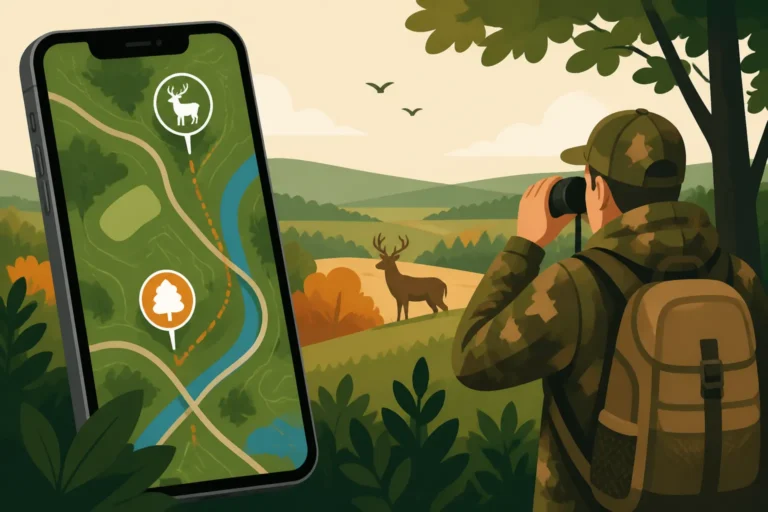
In today's hunting world, technology is an indispensable scouting tool. Apps like GoHunt provide invaluable aerial and topographical maps that can help you dissect a soybean field before you ever set foot near it. You can identify potential pinch points, subtle terrain changes within the field, or hidden draws that might concentrate deer movement.
Use these mapping tools to pinpoint adjacent cover, whether it’s a woodlot, a CRP field, or a creek bottom. Look for anomalies in the field itself, like a small island of timber, a drainage ditch, or a fenceline that could act as a travel corridor. You can mark potential stand locations, observe property lines, and plan your access routes to minimize disturbance. Some advanced platforms even show current and historical crop data, which can help you predict where the most attractive food sources will be year after year. Understanding how these features interact with the field can significantly narrow down your search for where to set up.
Effective Tactics for Hunting Standing Soybeans
Once you've done your homework and understand the layout and deer activity, it's time to put a plan into action. Hunting standing soybean fields effectively requires patience, a smart setup, and often, a willingness to adapt your strategy to the specific conditions of the day.
Stand Placement Along Edges
For most hunters, especially those using archery gear, setting up along the edge of a standing soybean field is the go-to strategy. The key here is to find the right edge. This typically means an edge that connects directly to a bedding area or a major travel corridor, and one that offers you a favorable wind direction for your hunt. Deer will often stage in the timber or thick cover just inside the woods before stepping out into the open field to feed.
Consider a mature buck. He might scent-check the field edge for 15-30 minutes from the security of the trees before committing to stepping out. Your stand needs to be positioned to intercept him during this staging phase or as he just breaches the edge. This often means hanging your treestand or placing your ground blind 10-20 yards inside the timber, overlooking the field. This allows you to catch them before they're fully exposed and gives you a bit more cover for drawing your bow or raising your gun. For more detailed advice on this, refer to Setting Up on a Northwest Ohio Field Edge. Always account for the sun's position during your hunt times to avoid being silhouetted or having the sun directly in your eyes.
Still-Hunting or Stalking
While often challenging, still-hunting or stalking a standing soybean field can be incredibly productive, especially during certain conditions. This tactic is not for the faint of heart and requires immense stealth and patience. The ideal conditions for stalking include high winds that will mask your movements and sounds, or a soft rain that dampens the foliage and makes your steps quieter. The standing bean plants themselves can offer surprising cover if you move slowly and deliberately.
To attempt this, you need to identify where deer are likely to be bedded or feeding within the field. This comes back to your distant glassing. Approach slowly, using rows of beans as cover, frequently stopping to scan ahead for movement or parts of a deer. Use your binoculars constantly. It's a game of inches and patience, looking for a flick of an ear, a patch of hide, or the tell-tale horizontal line of a deer's back against the vertical lines of the plants. This method is particularly effective for filling an Ohio Antlerless-Only Permit Rules later in the season when deer are grouped up. It’s also crucial to have an exit strategy if you bump deer, allowing them to move off without revealing your presence to every animal in the field.
Hunting the Late Season Advantage
As late fall transitions into winter, and especially after the rut winds down, standing soybean fields become an even more critical food source. Many fields will have already been harvested, leaving only stubble, but if you can find standing beans, you've hit the jackpot. These unharvested fields, often overlooked or difficult for farmers to get to, become a late-season deer magnet when other food sources like acorns are depleted and most ag fields are bare.
Deer will converge on these fields, sometimes in large groups, trying to put on weight for the colder months. This is when those energy-rich dried beans truly come into their own. Hunting these fields during the Ohio Muzzleloader Season Dates or the bitter cold of January can be incredibly productive. Focus on hunting midday, especially if temperatures are frigid. Deer need to feed during these times to maintain their body heat. Often, during these late-season hunts, deer will hit the fields for extended periods, offering more opportunities. For insights into what deer seek out when other foods are scarce, read up on Late-Season Food Sources for Ohio Whitetails.
Gear Considerations for Soybean Field Hunting
Having the right gear is always important, but when you're hunting expansive, often open, standing soybean fields, certain items become absolutely critical. You're dealing with different sight lines, potentially longer shots, and the need for maximum stealth.
Optics and Visibility
In a standing soybean field, your eyes are your most important tool, and good optics extend their reach significantly. High-quality binoculars, preferably 10×42 or 12×50, are essential for scanning vast areas, picking apart the dense foliage, and identifying deer parts. A good pair will reduce eye strain and allow you to discern subtle details at a distance. You'll be spending a lot of time glassing, so comfort and clarity are paramount.
A rangefinder is also a non-negotiable item. While a shot across a bean field might seem straightforward, judging distance accurately in an open, uniform landscape can be surprisingly difficult. Whether you're archery hunting along the edge or considering a longer shot with a rifle, knowing the exact distance is key to ethical shot placement. For open fields, even a budget rangefinder can provide the crucial information you need. Check out advice on Optics for Appalachian Ohio Ridges for more general tips on selecting binoculars and rangefinders that apply to any open hunting situation.
Clothing and Scent Control
Being hidden and scent-free in a relatively open environment like a bean field edge is more challenging than in dense timber. Your clothing needs to blend seamlessly with the environment. Earth tones and camouflage patterns that mimic the colors and textures of dormant fields and dried stubble are ideal. Avoid anything that creates a stark silhouette against the sky or the field. Layering is also important, as temperatures can fluctuate, especially in the late season.
Scent control is absolutely critical. Deer in bean fields are often relaxed but not dumb. They are constantly using their noses to detect danger. Utilize scent-eliminating sprays, wash your hunting clothes in scent-free detergent, and store them properly. Play the wind as much as possible, as even the best scent control won't entirely negate a direct swirl. A good understanding of how wind and thermals affect scent dispersal is vital when choosing your stand location. For advice on minimizing your impact when approaching your stand, see Scouting Ohio Public Land Before Season, which includes tips on maintaining a low profile.
Firearms and Shot Placement
When hunting standing soybean fields, the choice of firearm often comes down to the season and specific regulations. For Ohio's gun seasons, many hunters opt for a straight-wall cartridge rifle. These offer greater accuracy and range than traditional shotguns with slugs, which can be a significant advantage in wider fields where deer might hold up further out. Calibers like the .350 Legend or .450 Bushmaster are popular choices in Ohio, providing ample knockdown power for deer. For more information on these specific firearms, look into Straight-Wall Rifles for Ohio Deer.
For archery hunters, choosing the right broadhead and practicing at various distances is paramount. You might have deer present at close range, or you might need to make a slightly longer shot than you're used to if they are just skirting the edge of the field. Regardless of your weapon, always prioritize ethical shot placement. In dense standing beans, a poorly placed shot can lead to a very difficult, if not impossible, recovery. Be confident in your shot, wait for the right angle, and know your effective range.
Understanding Deer Behavior in Soybean Fields
Deer aren't just randomly milling about in soybean fields; their movements are often dictated by time of day, weather, and the specific stage of the beans. Cracking this code is essential for consistent success.
Morning Versus Evening Movements
Hunting soybean fields in the morning can be a challenge. Deer that have fed all night will often still be in the field at first light, but their primary objective is to move back to heavy cover for bedding. This means they are often moving quickly, and you run the risk of bumping them on your way in or as they're trying to leave. If you plan to hunt mornings, your setup needs to be focused on intercepting deer as they leave the field to return to a bedding area. This usually means positioning yourself between the field and known bedding cover, along a clear travel corridor.
Evening hunts, on the other hand, are often more productive. Deer typically filter into soybean fields from bedding areas as daylight fades, ready to feed throughout the night. Your setup should focus on intercepting them as they enter the field. This usually means a stand or blind positioned on the downwind side of a major entry point. Patience is key, as deer might not appear until the last 30-60 minutes of legal shooting light. Using a Ground Blind on Ohio Public Land can be particularly effective for these evening field edge setups, as it allows for quicker deployment and better concealment than a treestand in certain situations.
Impact of Weather Conditions
Weather plays a huge role in deer activity in soybean fields. Cold, crisp days, especially after a front, can really get deer moving, driving them to feed heavily to build up energy reserves. Overcast days with light precipitation can also be excellent, as the reduced visibility and damp ground can make deer feel more secure and mask your approach.
However, avoid hunting open field edges during bright, sunny, high-pressure days with no wind. Deer will often hold tight in their bedding areas or deep within the field itself, waiting for more favorable conditions. High winds can also be tricky; while they can help mask your scent and sound, they can also make it difficult for deer to hear and feel secure, sometimes causing them to stay bedded down or to move more cautiously. Pay attention to fronts rolling through, as deer often feed heavily just before a storm hits and immediately after it passes.
Pressure and Pattern Adjustments
Deer are highly adaptable creatures, and they quickly learn to avoid areas with heavy hunting pressure. If a soybean field is being hunted consistently, deer will change their patterns. They might start entering the field only under the cover of full darkness, or they might shift their entry points to less exposed areas. This is why scouting throughout the season, not just before opening day, is so important.
If you notice a sudden drop in daylight activity, it might be a sign that deer are feeling the pressure. In such cases, consider moving to a more remote part of the field, trying a different entry/exit point, or even switching to a still-hunting approach if conditions allow. Sometimes, a field that sees a lot of evening pressure might become a morning destination if deer feel safer leaving it than entering it at dusk. Using your GoHunt mapping data can help you find overlooked corners or pockets of cover that other hunters might be ignoring, giving you a distinct advantage.
Strategies for Challenging Soybean Field Hunts
Even with the best scouting and planning, soybean fields can present unique challenges. Sometimes you're dealing with vast, featureless landscapes, or deer that seem to vanish into thin air. Don't despair—there are still ways to find success.
Hunting Mid-Field Pockets and Anomalies
While most hunters focus on the edges, some of the biggest bucks might spend their entire day bedded in a large soybean field, only emerging when they feel completely safe. This often occurs in specific mid-field pockets or anomalies. Look for small islands of trees, a single large tree, a significant depression or hump in the terrain, a drainage ditch, or a fenceline that runs through the middle of the field. These features can offer just enough cover or elevation for a deer to feel secure.
If your scouting reveals consistent activity around such an anomaly, carefully plan a subtle approach. A ground blind brushed into one of these mid-field features, used when the wind is perfect, can be a deadly tactic. This requires careful consideration of your entry and exit to avoid spooking the entire field. It’s a higher-risk, higher-reward strategy, but it can pay off with a deer that has seen little human disturbance.
Utilizing Natural Funnels and Bottlenecks
Even in seemingly open soybean country, deer will still use funnels and bottlenecks to move between different areas. These might not be as obvious as a saddle in a ridge, but they exist. A narrow strip of woodlot that connects two larger timber blocks, with soybean fields on either side, creates a natural choke point. A small waterway or ditch that deer prefer to cross in a specific spot, rather than wading through dense beans, also forms a funnel.
Identify these natural funnels on your GoHunt app or other mapping software. These areas force deer into predictable travel paths, increasing your odds of an encounter. Setting up on a funnel that funnels deer into or out of a soybean field can be incredibly productive. Deer often feel more comfortable moving through these tighter spaces, especially if they are well-covered, before breaking out into the open. The principles of Hunting a Funnel Between Two Woodlots can be directly applied here, even if the surrounding habitat is agricultural.
The Art of the "Sneak and Peek"
When all else fails, or when you simply can't get a deer to commit to an edge during legal shooting light, a "sneak and peek" can sometimes work. This involves a very slow, methodical approach along a field edge, using available cover, with the primary goal of spotting deer and then attempting a stalk. This is different from a full still-hunt within the beans; it's more about using the field itself as your observation platform.
This tactic works best when you have a slight elevation advantage, like walking along a ditch bank or a slight rise that allows you to see over the first few rows of beans. Move only when the wind is strong enough to cover your sound, or during a light rain. Take two steps, stop, and glass for several minutes. Look for movement, subtle shapes, or flashes of hide. The goal isn't necessarily to stalk into range from the field edge, but to identify where deer are holding and then make a more informed decision about how to proceed—perhaps setting up a quick ground blind if cover allows, or backing out to return with a better plan. This method requires extreme patience and discipline to avoid simply walking in and spooking everything.
Table: Early vs. Late Season Soybean Hunting
| Feature | Early Season (Green Pods/Leaves) | Late Season (Dried Beans) |
|---|---|---|
| Primary Attraction | High protein leaves & tender pods | High calorie, energy-rich dried beans |
| Deer Behavior | Browsing, bedding in field, transitioning | Heavy feeding, thermal cover in cold |
| Best Hunting Time | Evening (entering from bedding) | Evening (heavy feeding), Midday (extreme cold) |
| Typical Tactics | Edge stands, focus on trails to/from timber | Edge stands, still-hunting within field |
| Gear Focus | Scent control, quiet clothing | Thermal layering, high-power optics, rangefinder |
| Wind Importance | Crucial for concealment on approach | Even more critical, deer often hold deeper |
| Pressure Impact | Can quickly shift deer to nocturnal habits | Deer may tolerate more pressure due to food need |
Disclaimer
Please note that hunting regulations, seasons, and licensing requirements can change. Always consult the latest Ohio Department of Natural Resources (ODNR) hunting digests and regulations before planning your hunt. This guide is for informational purposes only and should not replace official sources or responsible hunting practices. Adhere to all safety guidelines and respect private property.