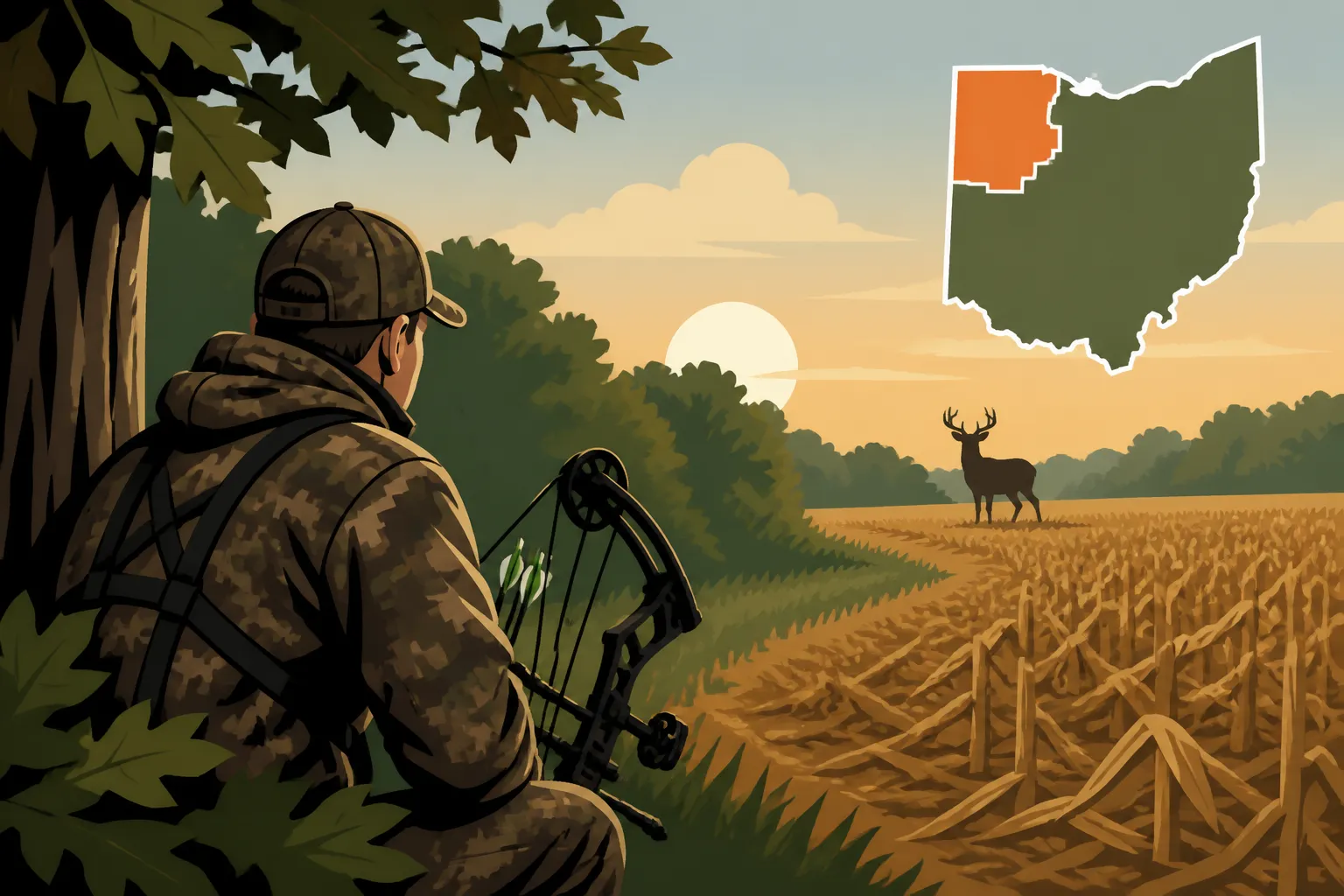
Setting Up on a Northwest Ohio Field Edge
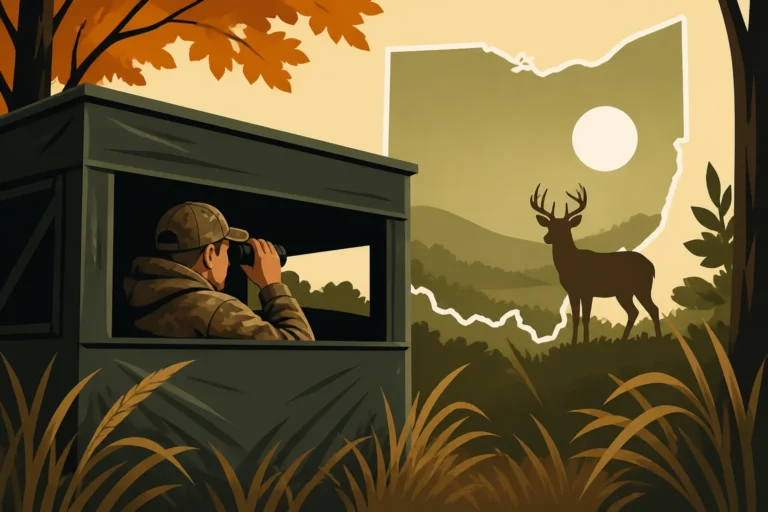
Hunting deer in Northwest Ohio can feel like a completely different ballgame compared to the steep, timber-choked ridges of the Appalachian foothills. Where you might find yourself glassing vast expanses of agriculture, the challenge isn't elevation, but rather finding those subtle breaks in the monotony that deer use for cover and travel. Setting up effectively on a field edge here is paramount, demanding careful consideration of wind, cover, and deer movement, which this guide will break down for you in detail.
Understanding the Northwest Ohio Landscape and Deer Behavior
Northwest Ohio is defined by its fertile, flat agricultural lands, a stark contrast to the rugged topography found in other parts of the state. This unique environment shapes deer behavior in significant ways, making field edge strategies absolutely critical for hunters.
The Flatland Challenge and Farmland Deer Habits
When you look across the counties like Wyandot, Hardin, or even parts of Paulding, you'll see endless fields of corn, soybeans, and wheat, broken only by scattered woodlots, fencerows, and drainage ditches. This lack of prominent elevation means deer can't rely on elevation changes for security or thermal advantage in the same way they might in the hills. Instead, they become masters of using whatever linear cover is available. They'll hug a fencerow like it's a security blanket, or travel the ditch lines that dissect fields, seeking any small dip or rise that offers a bit of concealment.
The deer here are incredibly attuned to human presence because they often live in close proximity to farming operations and suburban development. They learn quickly to use the cover of darkness for widespread movement across open fields, often emerging from thick cover at dawn or dusk to feed. During the day, they'll bed down in the densest cover they can find – be it a small, overgrown woodlot, a stand of tall weeds in a ditch, or even sometimes, the middle of a massive standing cornfield. Understanding these habits is the first step to successfully intercepting them. You can't just plop down anywhere; every movement of a deer here is calculated, and so must yours be. These Hunting Northwest Ohio Farmland Deer are different beasts entirely.
Key Elements of a Northwest Ohio Field Edge
A "field edge" in Northwest Ohio isn't just where the woods meet the open. It's often a much more nuanced line, sometimes a subtle transition, but always a critical intersection of food and cover. These edges provide deer with relatively safe travel corridors and access to abundant food sources.
Think about it: a mature timber stand bordering a cut cornfield offers shelter and a buffet. But even a thin, brushy fencerow alongside a standing soybean field is a high-traffic highway for deer. They'll use these edges to move from bedding areas to feeding grounds, to seek out other deer during the rut, or simply to feel more secure than being exposed in the wide-open. Look for transitions where cover changes abruptly. A line of thick honeysuckle bushes next to a freshly mowed hayfield, a creek bottom lined with mature trees, or even a deep drainage ditch filled with cattails bordering a winter wheat field. Each of these elements creates a distinct edge that deer rely on. The type of crop also plays a huge role; deer will hit standing soybeans hard in the early season, transition to corn as it matures, and then pick through harvested fields for leftover grains or seek out green winter forage later in the year.
Scouting and Locating Prime Field Edge Setups
Alright, so you know the general lay of the land. Now comes the nitty-gritty: figuring out exactly where those wary Northwest Ohio deer are moving and how to get in front of them without spooking the entire county. This takes some serious homework, both from your armchair and with your boots on the ground.
Reading Aerial Photos and Topo Maps (Even on Flat Ground)
Even though Northwest Ohio is relatively flat, don't discount the power of aerial photos and topographical maps. While you won't be looking for dramatic elevation changes, you'll be seeking out subtle features that become massive magnets for deer in this environment. Drainage ditches, creek beds, small woodlots, and even variations in crop types become your "terrain" features. Pay close attention to how fencerows connect larger blocks of timber or how ditches create natural funnels. Are there any small, isolated patches of woods in the middle of a huge field? These are often prime bedding spots, and the edges around them will see significant traffic.
Tools like the Ohio HuntFish App are invaluable for this, but more advanced platforms like GoHunt really shine when you're trying to dissect these flatland habitats. You can layer aerial imagery with property lines, identify potential pinch points where deer are forced to move through a narrow strip of cover, or pinpoint the exact location of a small, brushy island that serves as a core bedding area. When you're Scouting With the Ohio HuntFish App, remember to zoom in close and look for those faint lines that indicate a path less traveled by humans but heavily used by deer. GoHunt's detailed satellite imagery can reveal subtle changes in vegetation height or density that indicate better cover. Look for the "veins" of cover that allow deer to travel undetected, often linking one larger patch of woods to another, or providing a sheltered path to a prime feeding field.
Boots-on-the-Ground Reconnaissance
As helpful as digital maps are, there's absolutely no substitute for walking the ground. You need to get out there and confirm what your maps are telling you, and more importantly, find the fresh sign that tells you where deer are moving right now. This means lacing up your boots and putting in the miles, preferably outside of hunting season or during periods of low deer activity to avoid disturbing them.
Walk the field edges, fencerows, and woodlot borders. What are you looking for? Well, deer trails, of course! But not just any trail. Look for well-worn paths that indicate consistent, heavy usage. Check for fresh droppings, which can tell you how recently deer have been using that specific path. Are there rubs on trees along the edge, indicating bucks are working these areas? Fresh scrapes, especially during the pre-rut and rut, are like neon signs pointing to active buck movement. Pay attention to where trails enter and exit fields – these are often the best spots to set up. Identifying these specific entry and exit points, especially into a Hunting a Standing Soybean Field or an alfalfa patch, is key to positioning your stand for a shot. Even on flat ground, reading the nuances of tracks and disturbance can tell you volumes. After a fresh snow, you can clearly see Reading Ohio Snow for Fresh Deer Movement, which provides a goldmine of real-time information.
Strategic Setup Tactics for Field Edges
Once you've done your scouting homework and identified those high-potential field edges, the next step is perhaps the most critical: placing your stand or blind in a way that maximizes your chances and minimizes your footprint. In Northwest Ohio, deer often have fewer places to hide, which means they're exceptionally good at detecting danger.
Wind Direction and Scent Control are Paramount
If there's one golden rule for hunting field edges in Northwest Ohio, it's this: always play the wind. In open country, your scent will carry, and deer will bust you from incredible distances if you're not careful. There's simply less terrain to break up scent currents, making wind direction the absolute non-negotiable factor in your setup. Before every hunt, check multiple weather forecasts and have a good wind checker on hand. Your stand or blind must be positioned so that the prevailing wind carries your scent away from where you expect deer to approach or travel.
This might mean having multiple setup locations for different wind directions, or being flexible enough to move your setup entirely. Even subtle thermals, which are usually associated with hills, can occur in flatland, especially around ditches or creek beds where cold air settles in the mornings and warm air rises in the afternoons. Always consider scent control a full-time job. Shower with scent-free soap, wash your hunting clothes in scent-eliminating detergent, and store them in airtight containers. Use scent-eliminating sprays on your clothes and gear before heading out. Don't compromise on this – in these flat, open environments, a single whiff of human odor can ruin your hunt before it even begins.
Choosing the Right Stand or Blind
The type of stand or blind you choose for a Northwest Ohio field edge will largely depend on the specific cover available and your hunting style. Each has its advantages and disadvantages in this unique terrain.
- Treestands: If you have access to mature trees along the field edge, a treestand can offer an excellent elevated vantage point, allowing you to see over tall crops or brush and keeping your scent dispersed above the deer's nose. Ladder stands are great for semi-permanent setups, while hang-on stands offer more flexibility for moving between spots. Just be sure the tree offers sufficient cover to break up your outline; a lone hunter silhouetted against the sky will be easily spotted. Pay attention to how the sun will hit your position in the mornings and evenings.
- Saddle Hunting: A saddle offers incredible versatility and a 360-degree shooting radius, which can be a huge advantage when deer might approach from any direction along a field edge. It also allows for incredibly stealthy setups and takedowns, perfect for moving with the deer patterns.
- Ground Blinds: Often, the timber along Northwest Ohio field edges is sparse or consists of younger, smaller trees not suitable for treestands. This is where a well-placed and brushed-in ground blind truly shines. A good blind provides excellent concealment, protects you from the elements, and allows for comfortable, all-day sits. When hunting in open country, blending your blind into the natural surroundings is key. Consider using natural vegetation, like corn stalks, brush, or hay bales, to further break up its outline. You can get a lot of mileage out of Using a Ground Blind on Ohio Public Land by making sure it truly disappears into the landscape.
| Setup Type | Pros | Cons | Best For |
|---|---|---|---|
| Treestand | Elevated view, scent dispersion, better sight lines. | Requires suitable trees, can be exposed if not well-covered. | Mature timber edges, overlooking lower crops, early season. |
| Saddle Hunt | Ultimate mobility, 360-degree shooting, stealthy. | Steeper learning curve, requires good trees and comfortable positioning. | Flexible setups, adapting to changing patterns, active hunters. |
| Ground Blind | Excellent concealment, weather protection, comfortable, easy access. | Limited visibility if not placed well, deer might pattern if overused. | Sparse timber, fencerows, ditch lines, late season, Brushing In a Blind on a Field Edge. |
Entry and Exit Strategies
This is where many hunters mess up, especially in flat, open country. Your approach to and departure from your hunting location can be just as important as the setup itself. Deer in Northwest Ohio are hyper-aware, and spooking them on your way in or out will educate them quickly, making them even harder to hunt.
Always plan your entry and exit routes meticulously. Use any available cover to your advantage. Are there standing cornfields that can provide excellent concealment for an Entry Routes Through Standing Corn? What about deep ditches or creek beds that allow you to walk below the sightline of deer? Even a tall fencerow can offer enough visual barrier to sneak in undetected. Aim to enter well before daylight and exit well after dark, minimizing the chances of bumping deer that might be moving in the fields. If you absolutely have to move during daylight, do so slowly, cautiously, and always against the wind. Sometimes, simply taking the long way around, even if it adds a half-mile to your walk, is worth it to avoid alerting deer. Never walk directly across an open field if you can help it; always skirt the edges or use natural features to your advantage. A clean, silent entry and exit are paramount to keeping deer unaware of your hunting presence.
Adapting to Conditions and Season
Deer behavior changes throughout the hunting season, and your field edge tactics need to evolve with them. What works in early fall might be completely ineffective during the peak of the rut or in the dead of winter. Flexibility and observation are your best friends.
Early Season Field Edge Opportunities
The early season in Ohio, typically September and October for archery, is all about food. Deer are still largely on a summer pattern, hitting high-protein food sources to put on weight before the rigors of winter and the rut. This means field edges bordering alfalfa, standing soybeans, or even early cut cornfields are prime locations. Bucks might still be in bachelor groups, and does will be in family units, often feeding out in the open during the last hour of daylight.
During this time, focus on the most active food sources. Use your binoculars to scan the field edges from a distance during the late afternoons. A good pair of Binocular Power for Timber Hunting can still serve you well in this open country for spotting deer at range. Notice where deer are entering the fields, where they're feeding, and where they're exiting back into cover. This can help you fine-tune your setup location. Be patient; early season hunting can mean long waits for deer to make their appearance, but when they do, they're often more relaxed and focused on feeding than later in the season. Your best bet is to be present when they naturally emerge to fill their bellies.
Rut and Late Season Tactics
As November rolls around and the rut kicks in, deer behavior shifts dramatically. Bucks are no longer solely focused on food; their primary objective is finding does. This means they'll be cruising travel corridors with renewed vigor, and field edges become major highways for these love-struck bucks. Instead of simply feeding, bucks will walk parallel to field edges, scent-checking for does that might be feeding or traveling within the cover. During Hunting the Rut in Early November, don't be surprised to see a buck trot across an open field in broad daylight.
Focus your rut setups on those crucial transition areas, funnels like Hunting a Funnel Between Two Woodlots, or pinch points where deer are naturally pushed together. A field edge that connects two blocks of timber or provides the only secure path between bedding areas can be dynamite. Consider aggressive tactics like rattling and grunting, as a buck cruising an edge might respond well to sounds that indicate a rival buck or a receptive doe.
By late season, the focus shifts back to food, but with a critical difference: deer are now desperately seeking calories. Harvested cornfields, standing winter wheat, and even leftover soybeans become crucial Late-Season Food Sources for Ohio Whitetails. Cold temperatures mean deer need to feed more frequently. Set up on field edges that border the densest thermal cover, as deer will often bed nearby and only move short distances to feed. Fresh snow can reveal exactly which food sources are being used most heavily.
Hunting Pressure and Adapting
Northwest Ohio's accessible farmland, while often privately owned, still experiences significant hunting pressure, especially on public land. Deer learn quickly when and where they're being hunted, and they will adapt their movements to avoid detection. If you're hunting an edge that sees a lot of human activity, don't expect deer to waltz out in the open during legal shooting hours.
When Hunting Pressure on Ohio Public Land is high, deer will become more nocturnal, moving primarily under the cover of darkness. They'll also stick to the thickest, most overlooked pockets of cover. This means you might need to hunt deeper into the small woodlots or fencerows, rather than right on the field edge. Look for the "hidden" edges – those that are less obvious, perhaps a small finger of timber that extends into a field, or a drainage ditch that offers more cover than meets the eye from the road. Be willing to walk further, climb higher, or sit longer in less conventional spots. The deer that survive in these pressured areas are the ones that have learned to avoid the obvious setups, so you'll need to think outside the box to find them. Remember, adaptation is key to long-term success on these wily farmland whitetails.
Disclaimer
Please note: Hunting regulations and seasons in Ohio can change. Always consult the latest official Ohio Department of Natural Resources (ODNR) hunting regulations before heading afield. This guide is for informational purposes only and does not supersede state law.