Run-and-Gun Turkey Tactics on Public Land
Hunting wild turkeys on Ohio's public lands can feel like a game of hide-and-seek where the turkeys always have the better hiding spots. They're smart, they're wary, and after the initial morning rush, they often go silent, making traditional sit-and-wait tactics frustratingly ineffective. This guide is all about mastering the "run-and-gun" strategy, a dynamic and effective approach for locating and engaging those elusive gobblers, particularly when you're covering extensive public ground in Ohio.
Understanding the Run-and-Gun Philosophy
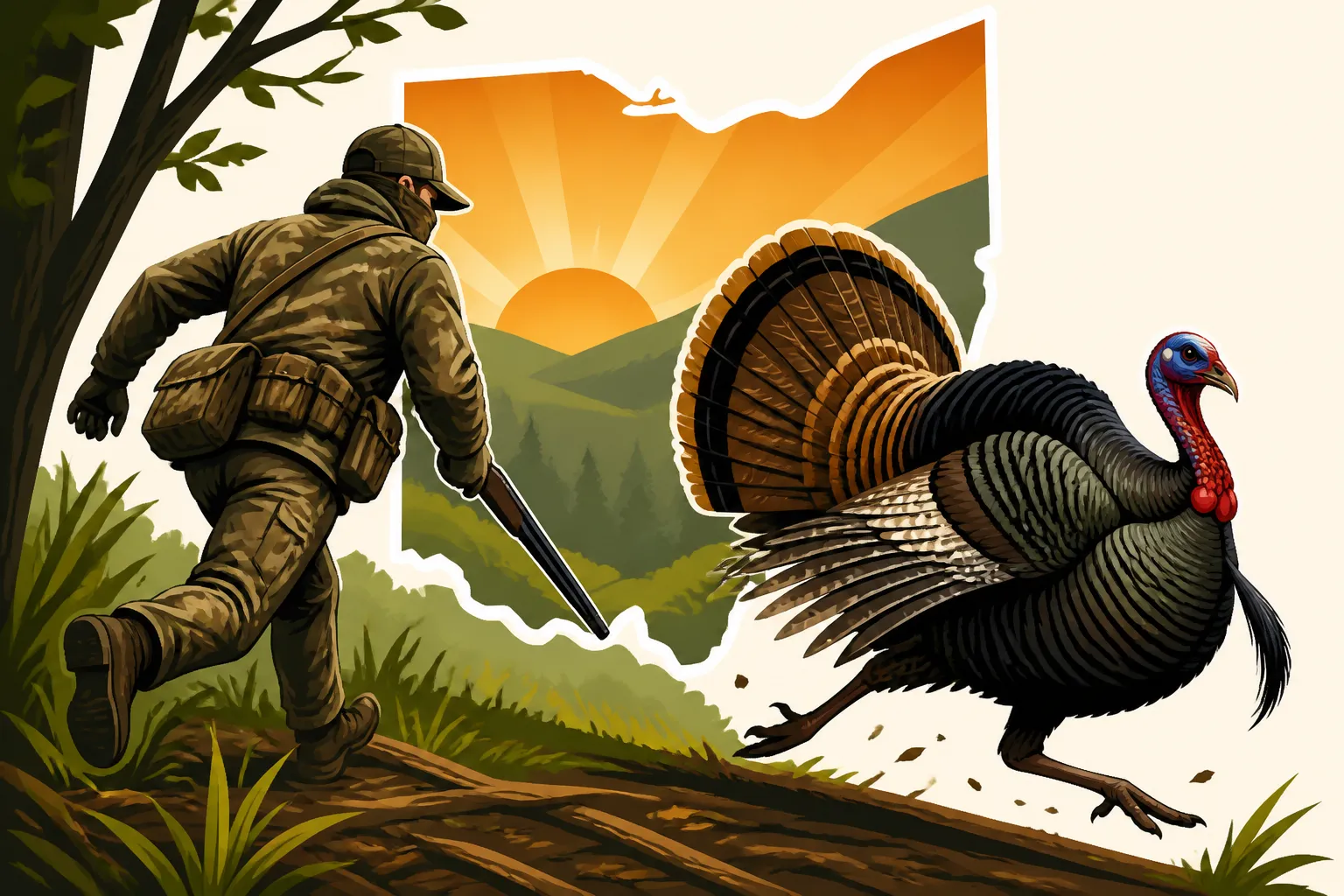
The essence of run-and-gun turkey hunting is simple: don't sit still and wait for the birds to come to you. Instead, you're actively seeking them out, covering ground, listening intently, and moving quickly to new positions to call. It's a high-energy, high-reward approach that challenges you to be a more intuitive and aggressive hunter, perfectly suited for the sprawling, often pressured landscapes of Ohio's public hunting areas.
Why Go Mobile on Public Land?
Public land turkeys are, for lack of a better word, educated. They’ve encountered countless hunters, heard every call sequence imaginable, and have learned to associate human presence with danger. Trying to call a wary gobbler to a static setup, especially from a spot that’s easy to access and gets hammered by other hunters, is often an exercise in futility. These birds are not typically going to come strutting into your lap unless you happen to catch them in a moment of extreme weakness or pure chance. This is where a mobile strategy becomes your best friend. By constantly moving, listening, and repositioning, you increase your odds of stumbling upon a bird that hasn't been pressured yet, or of catching a gobbler off guard by presenting a fresh setup from an unexpected angle. You're putting in the work to find the birds, rather than hoping they find you.
Think about the vastness of some of Ohio's public hunting destinations, like the Wayne National Forest or portions of the Shawnee State Forest. These aren't small woodlots where birds have limited places to go. Sitting in one spot all day, hoping a gobbler eventually wanders into your shooting lane, can be an incredibly disheartening experience. The run-and-gun method allows you to literally put miles on your boots, systematically scouting and calling across large tracts of timber, open fields, and creek bottoms. You're playing an active role in discovering where the birds are holding, rather than relying on luck. It’s about being proactive and taking the initiative in a challenging environment.
Furthermore, mobility allows you to adapt to the unpredictable nature of wild turkeys. They might gobble furiously on the roost, then clam up the moment they hit the ground. They might move quickly through thick cover, or be quietly strutting far off the beaten path. A stationary hunter is stuck, but a mobile hunter can react. If a bird gobbles a half-mile away, you're not cursing your luck; you're formulating a plan to close the distance quickly and quietly. This dynamic approach is particularly effective after the initial morning fly-down rush subsides, when many other hunters might head home, leaving the woods quieter for those still willing to work.
Reading the Terrain: When to Move, When to Sit
The term "run-and-gun" might sound like chaotic wandering, but nothing could be further from the truth. Successful execution hinges on a deep understanding of turkey habitat and a keen ability to read the terrain. You're not just walking; you're moving with purpose, scanning for natural travel corridors, saddles between ridges, creek beds, and field edges—places where turkeys naturally feed, roost, and travel. When you get that first faint gobble echoing through the timber, your mind should instantly begin mapping out the most strategic and quiet route to get closer, all while considering how that particular bird might approach your position. For example, hearing a gobble from a distant, steep hillside will require a different approach than one coming from a flat, open woodlot.
Knowing precisely when to stop and listen is equally as crucial as knowing when to move. After you’ve made a calling sequence, especially if you've received a response, it’s imperative to pause. Stand absolutely still, straining your ears for every sound. Listen for subtle hints: another gobble, the soft drumming of a strutting tom, the faint "spit-and-drum" that indicates a close bird, or the tell-tale rustle of leaves as a turkey walks. Sometimes, a bird will answer from a distance, then fall completely silent as he closes the gap. This is your cue to remain motionless, melt into the cover, and prepare for a close encounter. If a gobbler is responding consistently and actively closing the distance, that’s your signal to immediately set up against a wide tree and let him come the rest of the way. Pushing too hard when a bird is committed is a surefire way to spook him.
Consider the time of day and the typical turkey behavior patterns. Early mornings, especially during fly-down, might warrant a more prolonged sit near a known roost tree. However, as the morning progresses and birds disperse from their roosts to feed and breed, that’s when the run-and-gun strategy truly comes into its own. Midday hours, often considered a "lull," can also be incredibly productive for mobile hunters. Turkeys might be loafing, dusting, or feeding quietly, making them harder to locate. But if you can find them in their midday haunts, a well-placed series of calls can often elicit a response from a lonely tom who might otherwise remain silent. This constant assessment of bird behavior and terrain dictates your pace and strategy.
Scouting for Mobile Success
The foundation of any successful turkey hunt, especially a run-and-gun endeavor on public land, is thorough scouting. You can't just show up on opening morning and expect to connect with a bird using a mobile strategy if you don't know where to start looking. Scouting effectively saves you countless hours of unproductive walking and increases your chances of encountering turkeys.
Pre-Season Digital Scouting with Tools like GoHunt
Before you even lace up your boots, the most effective run-and-gun hunters are already meticulously planning their attack from the comfort of their home. This is where modern digital scouting tools truly shine. Platforms like GoHunt are absolutely invaluable for pre-season reconnaissance. They allow you to dive deep into topographic maps, high-resolution aerial imagery, and detailed public land boundary overlays, helping you identify critical turkey habitat features without expending any energy in the field. You can spend hours poring over these maps, searching for key indicators such as mature timber stands located near water sources (prime roosting areas), open fields or clearings (ideal feeding grounds), and natural travel corridors like creek drainages or saddles between ridges that connect these vital areas. These identified spots become your initial listening posts and potential starting points for your mobile hunt.
GoHunt offers robust layers that can show you minute details like elevation changes, specific vegetation types, and even old logging roads or trails that might not be visible on basic maps. This level of detail empowers you to meticulously plan out potential routes, identify strategic access points, and, most importantly, pinpoint areas that might be less accessible or less obvious to the average hunter. For instance, a steep, thickly vegetated ridge or a wetland area that looks daunting on a map might deter casual hunters but could be precisely where unpressured turkeys are holding. By marking these promising locations as waypoints on your digital map, you create a virtual roadmap that will guide your movements once you're actually in the field, making your hunting efforts far more efficient.
Beyond simply identifying good habitat, digital scouting also allows you to anticipate and avoid human pressure. Look for areas with common parking lots, well-worn trails, or easily accessible ridge lines that are likely to draw significant hunter traffic, especially on weekends. Instead, use your digital tools to seek out those hidden pockets, those remote benches, or the forgotten creek bottoms that are harder to reach. These are the places where a run-and-gun strategy truly flourishes because the birds here haven't been relentlessly pursued. Gathering this intelligence beforehand gives you a significant tactical advantage, helping you to find the "path less traveled" that often leads to success.
Boots-on-the-Ground Reconnaissance
While digital scouting provides an incredible foundation, there is absolutely no substitute for getting your boots dirty and confirming your findings in person. Actual scouting trips before the season opens are non-negotiable for the serious run-and-gun turkey hunter. Take the time to walk those areas you’ve identified digitally. Pay close attention to the details on the ground: fresh turkey tracks in soft soil, scattered droppings, distinctive wingtip drag marks in dusty patches, and dusting bowls where turkeys have ruffled their feathers. These physical signs confirm that birds are actively using the area. Perhaps most importantly, listen intently during evening fly-up and morning fly-down periods for distant gobblers. These direct observations are the real-world validation of your digital assumptions and give you an invaluable feel for the true terrain.
During these reconnaissance missions, pay meticulous attention to the subtle features of the landscape. Where are the best spots to set up quietly, offering both concealment and a good vantage point? What natural obstacles—fallen trees, thick briar patches, steep ravines—might influence a turkey’s travel path or your own approach? Are there areas of heavy undergrowth or dense timber that turkeys might use for security cover, which other hunters might tend to avoid due to the difficulty of navigating them? Finding and understanding these nuanced details can be the critical difference between a successful encounter and simply walking past a bird. You’re not just looking for turkeys; you’re looking for opportunities to effectively and quietly get into a position to call one in. This critical groundwork is what defines effective Scouting Ohio Public Land Before Season.
Don't be afraid to make a few soft turkey calls during your pre-season scouting, but do so judiciously and without putting too much pressure on the birds. Use very subtle clucks or soft tree yelps and listen intently for responses without directly trying to pull a bird in. This helps you gauge the general location and responsiveness of turkeys in the area without alerting them to your intentions too early. You are, in essence, gathering intelligence rather than actively hunting. Remember, the overarching goal of this pre-season fieldwork is to build a robust, real-world mental map of where birds are likely to be, so that when opening morning arrives, you’re not guessing; you’re executing a well-informed strategy.
Essential Gear for the Run-and-Gun Hunter
When your primary tactic involves covering miles of varied terrain, the gear you carry makes a huge difference. Every ounce, every rustle, and every piece of equipment either helps or hinders your mobility and stealth. A run-and-gun setup prioritizes lightness, versatility, and efficiency.
Lightweight and Versatile Shotgun Setups
When you're committing to covering serious ground, a heavy, unwieldy shotgun quickly transforms from a tool into a tiresome burden. For the run-and-gun hunter, selecting a lighter 12 or 20-gauge shotgun is paramount. Look for models with a shorter barrel, typically between 24 and 26 inches, which makes the gun much easier to maneuver through thick brush and quickly shoulder for an unexpected shot. Many hunters favor models from manufacturers like Mossberg (think the 500 or 835 series) or Benelli (like the Nova or SuperNova) for their proven reliability and relatively lighter overall weight. A comfortable, durable sling is not just a nice-to-have; it's an absolute necessity for carrying your shotgun over long distances, freeing up your hands for calls or navigating difficult terrain.
Beyond the physical gun, your choice of choke and ammunition is critical for maximizing effectiveness. A tight constriction, such as a full or extra-full choke, is essential for delivering a dense, consistent pattern that can anchor a gobbler, as you might not always get a perfectly close-range shot. It's vital to experiment with various premium loads, such as Federal Heavyweight TSS, Winchester Long Beard XR, or Browning TSS, to find the specific brand and shot size that patterns best with your particular shotgun and choke combination. Spend time at the range patterning your shotgun at various distances—20, 30, and 40 yards—to understand its effective range and shot density. This crucial step will build your confidence and ensure you're prepared for shots at different ranges. You can delve deeper into optimal setups by reading about Turkey Shotguns and Chokes.
While advanced optics like red dot sights or low-power scopes can certainly aid in precise aiming, especially in low light, consider their weight and potential bulk if you're truly aiming for an ultralight setup. Often, a simple, high-visibility fiber optic front sight is more than adequate for the close-to-medium ranges typical of run-and-gun turkey hunting. The overarching goal is not long-range precision shooting, which might be more suited for stationary deer hunting; rather, it’s about achieving rapid, accurate target acquisition and maneuverability in dynamic, often dense, environments. Simplicity and efficiency often yield the best results when you're moving constantly.
Calling Arsenal for All Scenarios
The ability to communicate with a gobbler, or even simply get him to respond, is the core skill of any turkey hunter, and a versatile calling arsenal is the very heart of the run-and-gun strategy. You’ll need calls that can project sound over long distances to locate birds, as well as calls capable of producing soft, subtle sounds for close-range deception. A quality box call or a pot call (available with slate, glass, or aluminum surfaces) is excellent for generating significant volume and initiating contact with distant gobblers through loud yelps and sharp cuts. However, mouth calls, also known as diaphragm calls, are indispensable because they allow for entirely hands-free operation. This is absolutely critical when a gobbler is closing in, and you need to remain perfectly still with your shotgun shouldered, ready for the shot.
It's wise to carry a variety of mouth calls, featuring different cuts and reed configurations. Each type will produce a slightly different tone and range of hen sounds, from excited, aggressive cutting and loud yelps to soft, seductive clucks and purrs. You can never predict what a particular gobbler will respond to on any given day, so having options allows you to adapt your calling strategy. Furthermore, don't overlook the importance of a good locator call. An owl hooter, crow call, or even a coyote howler can often "shock gobble" a silent tom into giving away his position without directly calling to him, thus keeping your actual hen calls fresh for when you’re closer.
Consistent practice with all your calls, not just a week or two before the season, is paramount. Learn to produce realistic, natural-sounding yelps, clucks, and purrs, and understand the nuances of when to employ aggressive versus subtle calling. On public lands, where turkeys are often highly educated and wary, mastering the art of subtle and realistic calling can often make the critical difference. Sometimes, a few soft, pleading tree yelps after fly-down are far more effective at enticing a pressured bird than a barrage of loud, aggressive cutting. Your calls are your voice in the woods, and being able to speak the turkey language fluently is your biggest asset.
Comfortable, Quiet Mobility Gear
Your choice of clothing and pack is just as critical as your shotgun for comfortable, stealthy movement. Layering is non-negotiable for Ohio’s famously unpredictable spring weather, which can swing from frosty mornings to warm afternoons. Start with lightweight, breathable, moisture-wicking base layers to manage sweat. Add a comfortable fleece mid-layer for insulation, and top it off with a quiet, durable outer layer in an effective camouflage pattern. Brands like Sitka Gear, First Lite, or NOMAD often offer excellent options specifically designed for active hunting, using fabrics that minimize noise as you brush against branches and undergrowth. Look for outer layers with reinforced knees and elbows, as you'll likely be kneeling, crawling, and leaning against rough surfaces.
A well-designed turkey vest or a specialized hunting pack, such as those from Primos, Alps Outdoorz, or Tenzing, is an absolute essential. It needs to efficiently organize and carry all your calls, spare ammunition, water, snacks, and any other critical items without being bulky, noisy, or cumbersome. A vest with an integrated, pull-out seat cushion is a genuine game-changer, allowing for quick, comfortable setups against a tree trunk without having to carry a separate stool. Ensure that your most frequently used calls are easily accessible without significant fumbling or noise. Features like a chest strap and hip belt can significantly help distribute the weight evenly across your torso, making those long, multi-mile hikes far less fatiguing.
Finally, comfortable, supportive, and waterproof boots are paramount. You will be traversing a wide variety of challenging terrains, from muddy creek bottoms and marshy areas to rocky ridge lines and steep hillsides. Investing in high-quality boots from reputable brands like Irish Setter, Kenetrek, or Lowa will protect your feet, provide crucial ankle support, and offer superior traction on slick or uneven ground. Remember, tired, blistered feet can quickly lead to a tired mind, which increases the likelihood of making mistakes in the field. Therefore, investing in top-tier footwear is not just about comfort; it's a direct investment in your overall hunting success and endurance.
Executing the Strategy: Calling and Movement
With your gear dialed in and your scouting complete, it’s time to put the run-and-gun strategy into action. This phase is all about the artful combination of aggressive calling, strategic movement, and keen situational awareness to get within range of a gobbler.
Aggressive Calling and Patient Listening
The "run" aspect of run-and-gun implies a more assertive approach to calling, especially when you're initially trying to locate a bird in a vast public land tract. Don’t be timid; loud, commanding yelps and aggressive cutting sequences are often necessary to cut through the ambient forest noise and elicit an initial shock gobble from a tom that might be hundreds of yards away. The primary goal at this stage is to simply get a reaction, to make a gobbler give away his position. Feel free to hit that box call with authority or rattle off an excited series of yelps on your pot call. Once you get a response, then you can and should scale back your calling intensity.
After your initial aggressive calling sequence, a period of patient listening is absolutely critical. Often, a gobbler will shock gobble in response, then fall completely silent as he listens intently for more sounds from the "hen." During this period, stand perfectly still for several minutes, straining your ears for any subtle sound: a distant gobble, the soft drumming of a strutting tom, or the tell-tale rustle of leaves as he slowly closes the distance. If you receive no further response after five to ten minutes of intense listening, it's time to move to your next predetermined listening post, typically 200-400 yards away, and repeat the calling sequence. This methodical approach allows you to efficiently cover ground without overcalling any one area, which can quickly educate pressured public land birds.
It’s important to remember that sometimes, even after an aggressive series of calls, a gobbler might not gobble again but could still be silently approaching. This is where your woodsmanship, experience, and absolute patience truly come into play. Always operate under the assumption that a silent bird might be on his way. As soon as you finish calling, quickly and quietly get into a ready setup position, and meticulously scan your surroundings. A locator call, such as an owl hooter or crow call, can be an excellent tool here, as it can often provoke a gobble without giving away your exact location to the turkey. Remember, mastering Calling an Ohio Gobbler Off the Roost effectively requires a delicate balance of both assertive and subtle tactics.
Strategic Movement Between Setups
Movement is arguably the most defining characteristic of the run-and-gun strategy. After calling from a specific spot and patiently listening for several minutes, if you don't hear a gobble or feel confident that a bird is actively approaching, it's time to relocate. Your movement should always be purposeful and as quiet as possible. Aim to travel along natural contours, old logging roads, or ridge lines that allow for relatively silent progression while simultaneously maximizing your ability to hear distant gobblers. Make a conscious effort to avoid crashing through dense underbrush, which generates significant noise and can alert distant birds to your presence.
Always keep the wind and thermals in mind, particularly when hunting in Ohio’s often-hilly terrain. You want your calls to carry effectively, but you absolutely do not want your scent to be carried downwind, alerting a circling gobbler to your presence. Utilize the terrain to your advantage: move from high points where you can scan and listen across wider areas, down into creek bottoms or valleys to check for birds holding lower, and then back up onto the next ridge. When you finally hear a gobble, use that information to close the distance quickly but with extreme stealth. Position yourself strategically where you can either observe the bird's likely approach or anticipate his travel route, ensuring you have a clear shooting lane.
Every time you decide to stop and call again, your setup should be meticulous. Always strive to position yourself with a tree trunk that is wider than your shoulders directly at your back. This provides crucial concealment and a vital safety barrier from any other hunters in the area. Before you settle in, take a few moments to quietly clear any small sticks, dry leaves, or other debris from your immediate area. This ensures that if the gobbler comes in close and you need to shift slightly to take a shot, you won't make any startling noise. Learning how to properly get Setting Up Against a Big Oak can be a game-changer for concealment and safety.
Decoy Use or Lack Thereof for Mobile Hunts
The decision to use decoys in a run-and-gun scenario can be a real conundrum, a double-edged sword for the mobile turkey hunter. On one hand, a well-placed decoy can be incredibly effective at sealing the deal, drawing a wary gobbler those crucial last few yards and holding his attention, allowing you to make your final move or shot. On the other hand, carrying multiple full-sized decoys adds significant weight and bulk to your gear, which directly contradicts the lightweight, mobile philosophy of run-and-gun. For hunters committed to covering extensive ground, a single, lightweight hen decoy, or even a compact reaping fan, often represents an excellent compromise, providing some visual appeal without being overly cumbersome.
If you opt to use a decoy, strategic placement is key. Always position your decoy so that an approaching gobbler will naturally look towards the decoy, rather than directly at your position. A good rule of thumb is to place it approximately 15-20 yards in front of where you're set up, slightly off to one side. This ensures that as the gobbler commits and approaches the decoy, he will present a broadside or slightly quartering-away shot, offering you a clear and ethical shot window. However, it's absolutely vital to be acutely aware of public land safety concerns. Some hunters choose to forgo decoys entirely, particularly in heavily hunted areas, due to the inherent risk of being mistaken for a turkey by another hunter. If you do use a decoy, it is always a wise practice to wear a patch of blaze orange while carrying it in and out of the woods, removing it only when you are safely set up.
Many highly successful run-and-gun hunters, embracing the minimalist approach, choose to forego decoys entirely. They rely instead on superior calling, exceptional concealment, and acute woodsmanship. This decision significantly streamlines their gear, allowing for maximum mobility and stealth. It also forces the hunter to become even more proficient at reading the terrain, anticipating the gobbler's exact approach, and achieving absolute stillness as the bird closes the distance. Ultimately, there is no universally "right" or "wrong" answer regarding decoy use; it largely depends on your personal hunting style, the level of hunting pressure in the area, and the specific behavior of the gobbler you are pursuing on that particular day.
Adjusting to Public Land Pressure
Hunting turkeys on Ohio's public lands means you'll almost certainly share the woods with other hunters. Mastering the run-and-gun strategy in these environments involves not just finding turkeys, but also navigating around and even benefiting from the presence of your fellow hunters.
Finding Overlooked Pockets of Birds
The single biggest challenge when hunting on Ohio's public lands isn't necessarily the turkeys themselves, but the sheer volume of other hunters. To consistently succeed with a run-and-gun strategy, you absolutely must develop an uncanny ability to find and access areas that other hunters overlook or are unwilling to pursue. This frequently translates to being willing to walk significantly further than the average hunter, to penetrate deeper into seemingly impenetrable thickets, or to navigate areas with particularly rugged or challenging terrain. Actively seek out those steep ravines, dense briar patches, remote ridge systems, or hard-to-access pockets that aren't easily reached from commonly used trails or parking areas. These are the unsung sanctuaries where turkeys might feel significantly more secure and less subjected to constant human pressure.
Utilize your advanced mapping tools, like the capabilities offered by GoHunt, to specifically identify these "green spaces" or less-traveled corridors. Sometimes, success lies in a small, isolated patch of mature timber that's surrounded by agricultural fields but requires a long walk across a property edge, or a less-visited parcel of public land that demands crossing a shallow creek or navigating a tangle of blowdowns. Turkeys are incredibly intelligent and quickly learn to avoid heavily trafficked areas, developing a strong preference for secure, unpressured zones. Therefore, diligently finding and accessing these hidden sanctuaries is paramount. Don’t shy away from putting in the extra miles; the reward is almost always an encounter with unpressured birds that are far more likely to respond naturally to your calls. This diligent work is precisely what defines Finding Ground Others Walk Past.
If your schedule allows, consider hunting mid-week. Weekends, particularly during the opening segments of the season, consistently see the heaviest hunter pressure across Ohio’s public lands. A hunt on a Tuesday or Wednesday can dramatically increase your chances of finding less disturbed gobblers. These birds, having experienced a few days of relative quiet, might be more vocal, more responsive to calls, and significantly less wary of human presence compared to their weekend counterparts. This strategic timing can provide a noticeable advantage in an otherwise crowded environment.
Adapting to Other Hunters
Encountering other hunters is an almost inevitable aspect of public land hunting. When you do, always prioritize courtesy, respect, and safety above all else. If you hear another hunter calling, or if you can tell from their sounds or movements that they are actively working a bird, it is always best practice to quietly and respectfully move in another direction. Never attempt to crowd them, interfere with their hunt, or try to "cut" their bird. There is generally ample public land in Ohio for everyone to enjoy. A simple, quiet wave or a nod from a distance, if appropriate, can often convey mutual respect and avoid any potential conflicts.
Interestingly, other hunters can sometimes inadvertently assist your hunt. If another hunter happens to bump a gobbler, that bird might fly or run directly into an area you are working or planning to move into, creating an unexpected opportunity for you. Always maintain a heightened sense of awareness of your surroundings and actively listen for sounds of other hunters moving through the woods—footsteps, calls, or even distant vehicle doors slamming. This awareness should actively influence your movement, pushing you towards areas less likely to be disturbed, or allowing you to anticipate potential bird movements.
Safety, of course, is paramount in every hunting scenario. Always, without exception, positively identify your target and be absolutely certain of what lies beyond it before taking any shot. Wearing a patch of blaze orange when you are actively moving between setups, even if it's not strictly legally required for turkey hunting in Ohio, is a highly recommended practice, particularly on pressured public land. You can easily remove or tuck away the orange once you've settled into your stationary setup. This simple measure significantly enhances your visibility to other hunters and helps ensure a safer experience for everyone in the woods.
Midday and Late-Season Shifts
The run-and-gun strategy truly shines during those times when traditional, stationary hunting methods often fall flat: the midday lull and the late season. After the initial flurry of morning fly-down action dissipates, and gobblers have finished breeding and moved to their preferred feeding areas, they often become significantly quieter. This is precisely when many hunters decide to pack it in and head home. However, for the mobile, persistent hunter, this is prime time to find success. Turkeys are still very much active, but they tend to be less vocal and more spread out, requiring you to actively seek them out.
During the midday hours, shift your focus to feeding areas. This includes open fields, timber openings, areas with abundant mast crops, or spots rich in bugging habitat. A gobbler might be quietly strutting in an open area, or perhaps even re-roosted in a large tree for a mid-day break. Begin your calling with soft, subtle clucks and purrs. If you get no response, gradually increase your volume and repertoire. Sometimes, a persistent series of subtle clucks and purrs, mimicking a contented hen, can pique the interest of a lonely gobbler that might otherwise remain silent. This is also an excellent time to implement strategies that are effective for When Ohio Gobblers Go Quiet in Late May.
Late in the season, after weeks of sustained hunting pressure, gobblers become incredibly wary and educated. They've heard every call, seen every decoy, and experienced every hunter's trick. This is exactly when your mobility allows you to slip into their secluded sanctuaries, locate a bird that hasn't been relentlessly pursued, and present him with a fresh, uncompromised setup. At this stage, concentrate your efforts on areas with exceptionally low hunting pressure—often deep within public land tracts, or in spots that present unique access challenges that deter the majority of hunters. The birds in these less-disturbed areas might be surprisingly more responsive simply because they haven't been subjected to the constant harassment that their easily accessible counterparts have endured.
Post-Hunt Analysis and Improvement
Every hunting trip, whether it results in a filled tag or not, is a valuable learning experience. The run-and-gun method, with its dynamic nature, offers continuous opportunities for self-assessment and refinement. Becoming a truly skilled run-and-gun hunter means always evaluating your tactics and learning from every encounter.
Reviewing Your Tactics
After each run-and-gun outing, it's incredibly beneficial to take some dedicated time to meticulously review what transpired. This isn't just about recounting the story; it's about critical self-analysis. Ask yourself specific questions: Where exactly did you hear gobblers, and at what times of day? What specific calls did you use, and how did the birds respond (or fail to respond)? Was your movement between setups efficient and quiet, or did you make too much noise? Did you select the most optimal setup locations, considering concealment and shot angles? Be brutally honest with your self-assessment. Did you spook a bird? If so, what was the likely cause—your movement, your calling, or perhaps misjudging the bird's approach?
Consider revisiting your mapping tools immediately after the hunt. Mark the precise locations where you heard gobblers, where you attempted setups, and any significant observations you made, such as fresh turkey sign or the presence of other hunters. Over time, accumulating this detailed data will build an incredibly valuable personal knowledge base about specific public land areas and the behavioral patterns of turkeys within them. You'll begin to discern consistent patterns related to roosting sites, travel corridors, and feeding areas, which will enable you to refine your strategy for subsequent hunts. This systematic review process is a cornerstone for evolving into a consistently successful run-and-gun hunter.
Take the time to reflect on the exact sequence of events. Did you call too frequently, or perhaps not enough to hold a bird's interest? Was your movement between setups as silent as it could have been? Did you choose the ideal tree for concealment, one that blended you seamlessly into the background? Even seemingly minor details can have a significant impact on the outcome. Perhaps you misjudged the direction of a bird's approach, or he managed to spot your subtle movement before you could get your shotgun fully shouldered. Analyzing these specific moments with a critical eye is how you genuinely grow and improve your skills as a turkey hunter.
Learning from Successes and Failures
It’s natural and easy to celebrate a successful hunt, but the most profound and impactful learning often comes from analyzing your failures and missteps. If a gobbler "hung up" just out of range, why do you think that happened? Was it due to challenging terrain, an inconsistent calling sequence, or simply encountering a particularly wary public land bird that was unwilling to commit the final few yards? If you successfully elicited a gobble but couldn't manage to close the distance, what different actions could you have taken? Perhaps a more aggressive, pleading follow-up call was needed, or a slightly different approach angle to cut off his likely travel path.
Conversely, when you do punch your tag, analyze that success with equal rigor. What was the precise chain of events that culminated in that bird coming within range? Was it a specific call sequence that proved irresistible, a unique setup location that offered an unexpected advantage, or the discovery of an entirely unpressured pocket of birds? Document these details meticulously. These successful sequences are the building blocks of your personal run-and-gun expertise. Furthermore, openly sharing these experiences—both successes and failures—with trusted hunting partners can provide invaluable outside perspectives and additional insights that you might not have considered on your own. This continuous feedback loop is vital for growth.
Ultimately, the run-and-gun method of turkey hunting is predicated on continuous adaptation and learning. Ohio’s wild turkeys are constantly evolving in response to environmental factors and hunting pressure, and therefore, your tactics must evolve alongside them. Embrace the inherent challenge, extract every possible lesson from each step you take and every call you make, and deeply enjoy the dynamic and engaging nature of actively pursuing these magnificent birds. Each season presents fresh opportunities to refine your approach, deepen your connection to the wild, and increase your chances of successfully filling your Ohio Fall Turkey Bag Limit or spring turkey tag.
Run-and-Gun Calling Scenario Guide
This table provides a quick reference for common calling scenarios encountered during run-and-gun turkey hunting, suggesting optimal call types and techniques.
| Scenario | Primary Goal | Recommended Calls | Calling Strategy |
|---|---|---|---|
| Locating Distant Birds | Get an initial gobble | Box, Pot, Locator (Owl/Crow) | Loud, aggressive yelps/cuts. Use locator to "shock" a gobble without directly calling "to" him. |
| Closing the Distance | Keep bird interested, guide him in | Pot, Mouth | Softer yelps, clucks. Mimic a single hen moving away slowly. Vary tone. |
| Bird Hung Up (Out of Range) | Entice bird closer, make him commit | Mouth, Pot | Soft clucks/purrs, light yelps. Mimic an uninterested hen. Try a "fly-down" cackle. |
| Bird Moving Away | Turn bird around, pique curiosity | Box, Pot | Aggressive cutting, loud yelps (as if a competitive hen). Sometimes a 'lost hen' sequence. |
| Silent Approach (Gobbler) | Confirm presence, maintain attention | Mouth (soft clucks/purrs) | Minimal, soft calling. Use very subtle sounds to keep him curious without pinpointing your exact spot. |
| Post Fly-Down (Scattered) | Locate dispersed birds, re-gather | Pot, Box, Mouth | Medium-volume yelps, cuts. Cover ground systematically, listening intently after each series. |
Disclaimer
Please be aware that hunting regulations and seasons, including those pertaining to turkey hunting in Ohio, are subject to change. Always consult the most current Ohio Department of Natural Resources (ODNR) hunting regulations before heading afield. Safety should be your paramount concern, and knowing your local rules ensures a legal and ethical hunt.