Bow Cases for Travel to Ohio
There’s nothing quite like the excitement of heading out for an Ohio hunting trip, whether you’re driving across the state or coming from out of state. But nothing kills that excitement faster than arriving at your destination only to find your bow, your most crucial piece of gear, has been damaged in transit. Protecting your valuable archery equipment during travel is absolutely paramount, and this guide will walk you through everything you need to know about choosing and using the right bow case to ensure your equipment arrives in prime condition, ready for the woods.
Why Your Bow Needs a Proper Case for Ohio Travel
When you invest in a quality bow, precise sights, and expensive broadheads, you’re not just buying equipment; you’re buying confidence in the field. That confidence hinges on your gear performing flawlessly, and travel can be brutal on delicate components if not properly protected. Ohio’s hunting environments, from the rolling Appalachian foothills to the flat farmlands of the northwest, demand that your equipment arrives intact and ready for action.
Protecting Your Investment from the Elements
Ohio's weather can be notoriously unpredictable. One day you might be enjoying crisp, clear autumn air, and the next you could be facing a torrential downpour, heavy snow, or even freezing rain. Without a robust bow case, your equipment is vulnerable to these conditions even before you step foot in the woods. Imagine your bow riding in the back of a truck, exposed to road spray and rain for hours. Moisture can wreak havoc on strings, cams, and especially sensitive electronics like rangefinding sights or illuminated pins. A good case acts as a protective shell, shielding your bow from rain, snow, dust, and humidity, ensuring that delicate parts like peep sights and string serving remain in top shape. Beyond weather, there's always the risk of accidental bumps, scrapes, or even drops that can occur during loading, unloading, or transit. A flimsy case simply won't cut it when it comes to absorbing these impacts, potentially throwing your bow out of tune or, worse, causing structural damage that could end your hunt before it even begins.
Navigating Ohio's Diverse Terrain and Transport
Whether you're packing your bow into a family sedan, strapping it down in the bed of your pickup, or even hauling it via ATV or UTV to a remote public land spot, the method of transport dictates the level of protection required. Driving through Ohio often means encountering everything from smooth interstates to bumpy gravel roads leading into state forests or wildlife areas. Each jolt and vibration can slowly work screws loose, shift sight pins, or compromise the integrity of your bow if it’s not snugly secured in a quality case. For those venturing deep into areas like Wayne National Forest or Shawnee State Forest, your gear might endure rougher trails and more jostling than anticipated. A bow case designed for robust travel ensures that your cam timing stays true, your arrow rest remains perfectly aligned, and your pin gaps are exactly where you set them. If you’re traveling by air to reach your Ohio hunting grounds, the considerations multiply, as checked baggage handlers are not known for their gentle touch. This is where the type of case really makes a difference, moving beyond simple storage to becoming a critical piece of travel insurance for your prized hunting tool.
Types of Bow Cases for Ohio Hunters
When it comes to bow cases, you generally have two main categories: soft cases and hard cases. Each has its advantages and disadvantages, and choosing the right one often depends on your specific travel plans and tolerance for risk.
Soft Cases: Lightweight and Convenient for Local Trips
Soft cases are essentially padded bags designed to carry your bow. They are typically made from durable fabrics like ballistic nylon or heavy-duty Cordura, often featuring a decent amount of foam padding. Their primary appeal lies in their light weight and flexibility. If you're only driving a short distance from your home in, say, Columbus, to a Hunting Small Private Tracts in Ohio spot just outside the city, a soft case might seem appealing. They're generally easier to store when not in use, can be less cumbersome to carry, and are often more budget-friendly upfront. Many come with external pockets, which can be handy for carrying a release, a rangefinder, or a grunt tube. They're great for protecting your bow from superficial scratches, dust, and minor bumps that might occur during very short, careful car rides.
However, their limitations become apparent quickly once you consider anything beyond a minimal risk scenario. They offer limited protection against crushing forces or significant impacts. If your bow shifts in the back of your vehicle and gets jammed against other gear, or if something heavy slides onto it, a soft case may not prevent damage to cams, limbs, or delicate sights. They are also not usually waterproof or even highly water-resistant, making them a poor choice if there's any chance of exposure to Ohio's inclement weather. For air travel, a soft case is almost universally a non-starter; airlines generally require bows to be in hard-sided, lockable cases. So, while a soft case offers convenience for very specific, low-risk local excursions, it falls short for serious travel, especially when your hunting success hinges on your equipment arriving in perfect working order.
Hard Cases: The Gold Standard for Serious Travel and Protection
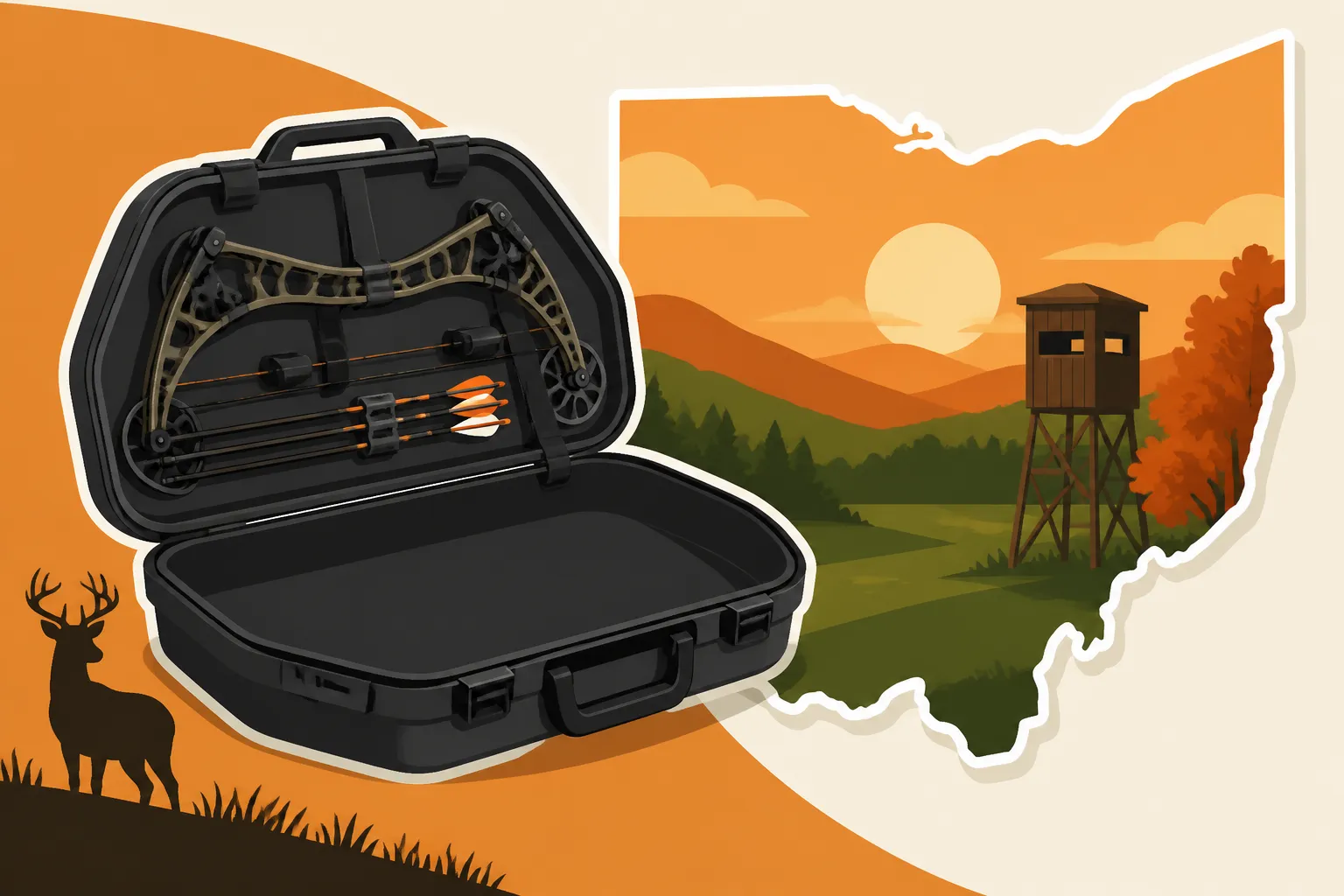
For any significant travel, particularly if you're crossing state lines or dealing with rough roads to reach your hunting destination, a hard case is truly the gold standard. These cases are constructed from rugged, impact-resistant materials such as high-density polyethylene, molded polypropylene, or sometimes aluminum. Their rigid shells provide superior protection against crushing, impacts, and punctures – precisely the kind of threats your bow might face in a crowded truck bed, a busy airport baggage claim, or bouncing down a rutted two-track to your favorite hunting area. Many hard cases are designed with a tight, sealed gasket that makes them dustproof and waterproof, which is an absolute blessing when Ohio weather decides to throw a curveball. You won't have to worry about dampness creeping in and affecting your string or electronics.
Beyond the shell, the interior of a quality hard case is just as important. Most feature layers of dense, customizable foam (often "pluck foam" or pre-cut inserts) that cradle your bow, preventing any movement during transit. This snug fit is crucial for maintaining your bow's tune and protecting delicate components like peep sights and arrow rests. Higher-end models might even feature wheels, making it much easier to maneuver a heavy case through airports or across parking lots, a feature many hunters appreciate after a long drive or flight. They also come with robust, often lockable, latches that secure the case tightly shut, adding a layer of security that soft cases simply cannot match. For instance, brands like Pelican and SKB are renowned for their durable, weatherproof hard cases that can withstand extreme conditions and rough handling, ensuring your Crossbow Versus Vertical Bow in Ohio or compound bow arrives ready to shoot. While they are heavier and generally more expensive, the peace of mind and protection they offer for your valuable hunting equipment is well worth the investment.
Key Features to Look for in an Ohio-Ready Bow Case
Choosing the right bow case isn't just about soft versus hard; it's about drilling down into the features that will truly protect your equipment against the specific challenges of traveling to and hunting in Ohio. Thinking proactively about potential issues will help you make an informed decision.
Durability and Weatherproofing
When you're dealing with Ohio's diverse environment, durability and weatherproofing aren't luxuries; they're necessities. Look for cases made from materials known for their resilience. Molded polypropylene and high-impact ABS plastic are excellent choices, offering impressive resistance to drops, blunt force, and extreme temperatures. These materials won't warp or crack easily, even after years of use. For maximum protection, especially if you plan on checking your bow on an airline or leaving it in a truck bed exposed to the elements, prioritize cases with a continuous O-ring seal or rubber gasket around the lid. This seal is what truly makes a case watertight and dustproof, safeguarding your bow from rain, snow, road grit, and even fine dust kicked up on dry gravel roads.
Consider how the case is constructed. Reinforced corners and stout hinges will stand up to repeated opening and closing, as well as the inevitable bumps and scrapes of transport. If the latches feel flimsy, or the material seems thin, it's likely not going to offer the long-term protection your expensive bow deserves. Remember, you're not just protecting the bow itself, but also the delicate Bow Sights for Timber Shots, arrow rests, and stabilizers that are crucial for accuracy. Brands that specialize in rugged outdoor gear, often carried by retailers like GoHunt, typically offer cases with these high-end durability and weatherproofing features, built to withstand real-world hunting conditions.
Security and Organization
A bow case is also a portable vault for your valuable gear, so security is paramount. Look for cases with strong, secure latches that can be locked. Many quality hard cases come with integrated locking mechanisms, or at least reinforced padlock points where you can attach your own heavy-duty locks. If you're flying, ensure any locks you use are TSA-approved. This not only deters theft but also prevents the case from accidentally opening during transit, which could lead to loss or damage.
Internal organization is another critical aspect. A well-designed interior prevents your bow and accessories from shifting around, which is often the cause of damage. Seek out cases that offer dense foam inserts that can be custom-cut to the exact shape of your bow and its accessories. Some cases feature adjustable strapping systems that cinch your bow down tight, preventing any movement whatsoever. Separate compartments or integrated pockets for smaller items like releases, rangefinders, extra broadheads (remember to check your state's laws on Fixed Versus Mechanical Broadheads if you cross state lines!), and tools can keep everything organized and prevent them from rattling around and scratching your bow. The goal is for every item to have its dedicated, secure spot, so when you open your case at your hunting camp, everything is exactly where you left it and ready to assemble without a fuss. A disorganized case is not just an annoyance; it’s a recipe for damaged gear.
Packing Your Bow Case for Optimal Protection
Once you've got that sturdy, weatherproof, and secure bow case, the next step is learning how to pack it correctly. It's not just about tossing your bow in and snapping it shut; proper packing ensures maximum protection and can save you a lot of headaches, especially when traveling long distances to your Ohio hunting spot.
Securing Your Bow and Accessories
The first rule of packing a bow case is to eliminate all movement. Your bow should fit snugly, almost as if it's molded into the case. If your case comes with pluck foam, take the time to customize the cutouts precisely for your bow's riser, limbs, and cams. If it uses a strapping system, ensure the straps are tightened securely without over-compressing any part of the bow. For compound bows, removing the stabilizer and quiver often allows for a more compact and secure fit. Many hunters also choose to remove their sights or at least use sight covers to protect the delicate pins and scope lenses from impacts. If you have a Crossbow Versus Vertical Bow in Ohio, ensure the scope is protected and properly secured, as it’s one of the most vulnerable components.
Any loose items in the case are potential projectiles that can damage your bow. Use interior pockets, small accessory cases, or even Ziploc bags to organize and contain small, fragile items like broadheads (with covers on!), your release, spare string wax, or small tools. Never just dump these items into the main compartment where they can bounce around. Laying a soft cloth or a layer of bubble wrap over your bow before closing the lid can provide an extra buffer against any unexpected pressure or minor impacts. The goal is to open your case and find your bow exactly as you packed it, perfectly tuned and ready for action.
Prepping for Ohio's Hunting Regulations and Inspections
Traveling with hunting equipment, especially across state lines, requires a bit of foresight regarding regulations. While bows generally face fewer restrictions than firearms, it's always wise to be aware. Ensure that any broadheads are sheathed or securely contained to prevent accidental injury during inspection or handling. Always have your Ohio Hunting Licenses and What They Cost readily accessible, not buried at the bottom of a pack. While Ohio doesn't typically inspect bow cases at state borders, if you're flying, TSA will absolutely inspect your case. They need clear access to everything, so don't tape it shut or make it difficult to open.
A good practice, especially if you also carry firearms (which have stricter rules), is to understand the legal requirements for transporting hunting gear. Most airlines require bows to be treated similarly to firearms for security purposes, meaning they must be in a hard-sided, lockable container. When you arrive in Ohio and start moving your gear from your vehicle to your camp or a Using a Ground Blind on Ohio Public Land spot, think about how your case handles. Does it have comfortable handles? Can it be easily loaded and unloaded from your vehicle? The effort you put into selecting and packing your bow case pays off not just in equipment protection, but in a smoother, less stressful journey to your Ohio hunting adventure. After all, the last thing you want is a damaged bow or a regulatory hiccup to derail your trip, especially if you're planning a multi-day outing and need your First Aid Kits for Remote Wayne Forest Ground and other essentials properly secured alongside your weapon. Brands like GoHunt often publish useful guides on travel logistics, covering everything from packing efficiency to compliance with various state hunting regulations, so it's always worth checking their resources.
Choosing the Right Bow Case: A Comparison
To help you make an informed decision for your Ohio hunting adventures, here's a quick comparison of soft and hard bow cases.
| Feature | Soft Bow Cases | Hard Bow Cases |
|---|---|---|
| Protection | Minimal, good for scratches/dust | Superior, guards against impacts, crushing, elements |
| Durability | Varies, prone to tears/punctures | Very high, rigid shell withstands rough handling |
| Weathering | Limited to none, not waterproof | Excellent, typically dustproof & waterproof with seals |
| Security | Low, often lacks robust locking points | High, features sturdy lockable latches |
| Transport | Ideal for short, careful car trips | Essential for air travel, long drives, rough roads |
| Weight | Lightweight, easy to carry | Heavier, bulkier, but some have wheels |
| Cost | Generally lower | Generally higher, but a worthwhile investment |
| Storage | More flexible, can be folded/compressed | Rigid, takes up more space |
| Ideal For | Local range trips, very short hunting drives | Long-distance travel, flights, rugged hunting trips in Ohio |
Final Thoughts on Your Ohio Bow Hunting Prep
Ultimately, the goal is to make sure that when you step into the woods, whether you're climbing into one of your Treestands and Saddles on Public Land in the Appalachian foothills or still-hunting through a thick fencerow in northern Ohio, your bow is in perfect shooting condition. A quality bow case isn't just an accessory; it's an essential part of your hunting kit, ensuring that the precision you’ve dialed in at the practice range translates directly to the field. Don’t skimp on this vital piece of gear, especially given how varied and sometimes challenging Ohio’s hunting conditions can be. Investing in the right case, packing it carefully, and being aware of travel regulations will give you one less thing to worry about, allowing you to focus on the thrill of the hunt. Just as you’d carefully select your Blaze Orange Jackets Versus Vests for visibility and safety, choose your bow case with the same level of attention to detail and protection.
Disclaimer
This article is for general informational purposes only and does not constitute professional advice. Laws, prices and regulations vary by location and change over time. Consult a qualified professional for guidance on your specific situation.