Meat Care Gear for Ohio Hunters
There's nothing quite like the immense satisfaction of tagging a deer in Ohio, whether it's an early-season archer's buck or a late-season muzzleloader doe. But that feeling can quickly turn to dread if you're not prepared to properly care for your hard-earned venison. Ohio's hunting seasons throw a real curveball with their wildly fluctuating temperatures, from sweltering September days to bitter January freezes. This guide is all about equipping you with the right gear and knowledge to ensure every ounce of your harvest makes it to your freezer in prime condition, honoring the animal and providing delicious meals for your family.
The Crucial First Steps: Field Dressing Essentials
The moment that animal hits the ground, the clock starts ticking. The quicker and cleaner you can begin the field dressing process, the better the quality of your meat will be. This isn't just about getting the job done; it's about making sure your venison is free from contamination and begins cooling down as rapidly as possible, no matter if you're deep in Wayne National Forest or on the edge of a standing cornfield in Northwest Ohio.
Field Dressing Knives and Bone Saws
Having the right tools for field dressing can make a world of difference between a frustrating, messy job and an efficient, clean one. A good knife is paramount, but a bone saw can also be incredibly useful, especially for larger animals or if you plan to split the pelvis for better cooling.
When we talk about field dressing knives, we're not just talking about any old blade from the kitchen drawer. You need something purpose-built. A fixed-blade knife with a comfortable, non-slip handle and a blade length of around 3-5 inches is often ideal. Look for stainless steel, which is easier to clean and resists rust, a common issue in Ohio's often damp conditions. Many hunters prefer a drop-point or gut-hook blade design. A gut-hook, for example, can be fantastic for opening the abdominal cavity cleanly without puncturing the intestines, which is crucial for hygiene. Keeping a sharp edge is non-negotiable; a dull knife is a dangerous knife and will only make a difficult job even harder, increasing the risk of accidents and contaminating the meat.
Beyond the primary knife, some hunters swear by a small, folding bone saw or even a specialized gutting tool. A bone saw can be incredibly helpful if you choose to split the pelvis to fully expose the body cavity for rapid cooling, particularly on a large buck or if you're hunting during the early Ohio Archery Season Opening Day when temperatures might still be unseasonably warm. It can also assist with removing the lower legs or severing the sternum if you're performing a full evisceration. While not strictly essential for every field dress, having one can certainly streamline the process and make certain tasks much easier and cleaner, reducing the chance of saw-dust getting into the meat.
Remember, whatever knife you choose, the key is keeping it razor sharp and having a system for cleaning it immediately after use. Many hunting knife kits come with a small sharpener, which is handy for touch-ups. For those extended hunts or if you’re doing multiple deer, investing in a good quality field sharpener or carrying a spare, equally sharp blade is a wise decision. The cleaner the cut, the less tearing and the less potential for introducing unwanted bacteria from the animal's hide or gut contents into the meat.
Gloves and Sanitation Supplies
This might seem like a small detail, but trust me, it's not. Hygiene during field dressing is absolutely critical, not just for the quality of your meat but for your own health and safety. You're dealing with blood, intestinal contents, and other biological materials.
Nitrile gloves are your best friend here. They're tougher than latex, less likely to tear, and provide an excellent barrier against bacteria and potential pathogens. Buy them in bulk and keep several pairs in your pack. There's nothing worse than being halfway through field dressing and having a glove tear, exposing your hand to a messy situation. Beyond the obvious cleanliness factor, gloves also protect you from animal-borne diseases and prevent your hands from getting too cold during a late Ohio Muzzleloader Season Dates field dress, which can quickly turn uncomfortable when dealing with wet, cold innards.
Along with gloves, a small kit of sanitation supplies is invaluable. This should include several heavy-duty wet wipes (the kind for camping or babies work great), a small bottle of hand sanitizer, and maybe even a few paper towels. After the initial field dressing, you'll want to clean your knife blade, wipe down your hands (even with gloves on, sometimes things get messy), and ensure any external meat surfaces are as clean as possible before transport. This simple step helps prevent cross-contamination and ensures you're not tracking biological material all over your gear or vehicle. You might also consider a small spray bottle of clean water to rinse off excess blood from the cavity, especially if you're in a warm environment and want to get the meat cooling down faster and cleaner. A clean cavity equals cleaner meat and a better final product.
The Gutless Method vs. Traditional Field Dressing
When it comes to removing the internal organs, hunters generally fall into one of two camps: the traditional full evisceration or the increasingly popular "gutless" method. Both have their place in Ohio, depending on your situation, the terrain, and the weather.
Traditional field dressing involves opening the animal's chest and abdominal cavity, severing the trachea and esophagus, and removing all the internal organs. This method has been used for generations and is excellent for rapid cooling of the entire carcass, especially if you plan to hang the animal whole. It's often the preferred method when you're hunting relatively close to your vehicle, have easy access to water for rinsing, and can get the animal to a cooler or processing facility fairly quickly. The main advantages are complete organ removal, which speeds cooling, and the ability to inspect all organs for signs of disease (though remember, for CWD testing, only the lymph nodes and brainstem are required). The downside is that it can be messy, and if you're far from your vehicle, you're left with a heavy, whole carcass to drag, potentially contaminating the meat with dirt or debris.
The "gutless" method, on the other hand, is a game-changer for solo hunters, those venturing deep into Wayne National Forest Hunting or Shawnee State Forest Hunting, or anyone facing a long, arduous pack-out. This technique involves quartering the animal and deboning the meat without opening the body cavity. You essentially skin one side, remove the front shoulder, hind quarter, backstrap, and tenderloins, then flip the animal and repeat. The advantages are significant: it keeps the gut pile intact, minimizing mess and contamination of the meat, and it immediately reduces the weight to be carried out, as you're only packing the lean meat. This method is particularly useful during warmer early season hunts because you can get the meat off the bone and into game bags to cool much faster. The challenge can be ensuring all edible meat is retrieved and being meticulous with cleanliness, as you're working around the outside of the intact gut. It also requires a bit more skill with a knife to separate the meat cleanly from the bone and hide.
Ultimately, the best method depends on your specific hunt. If you're 50 yards from your truck on a cold December afternoon, traditional field dressing might be perfectly fine. If you've just dropped a buck two miles back in the rugged Appalachian foothills of Southeast Ohio during a warm October archery hunt, the gutless method and a good frame pack will be your salvation. Being proficient in both techniques means you're prepared for whatever Ohio's diverse hunting landscape throws at you.
Getting Your Harvest Out: Transporting Game from the Field
Once your deer is field dressed and the cooling process has begun, the next challenge is getting it from where it fell to your vehicle or camp. This can be one of the most physically demanding parts of the hunt, especially if you're hunting remote public lands or dealing with Ohio's notoriously steep ravines and muddy creek bottoms. Having the right gear to aid in transport can save your back, your energy, and further protect the quality of your meat.
Deer Sleds and Game Carts
These are perhaps the most common aids for hunters who don't want to carry a whole deer out on their back, and for good reason. They can turn a grueling drag into a manageable haul, especially in certain types of terrain.
Deer sleds, essentially heavy-duty plastic tarps or molded plastic shells, are fantastic for moving deer over varied terrain, especially if there's snow, wet leaves, or even just relatively smooth ground. They protect the carcass from dirt and debris, which can be a huge issue when dragging a deer directly on the ground, potentially introducing bacteria to the meat. Sleds distribute the weight over a larger surface area, making it easier to pull, and they glide over obstacles better than a raw hide. They are particularly effective in Ohio's flatter, agricultural regions of the Northwest, where you might be pulling across cut cornfields or along mowed fencerows. They also work well in the rolling hills of Central Ohio, especially on logging roads or well-used trails. For solo hunters, a sled with a good pulling rope and handle system is a lifesaver, as it allows you to utilize your body weight more efficiently.
Game carts, on the other hand, are wheeled contraptions designed to carry the bulk of the animal's weight on an axle, with handles for pushing or pulling. These are excellent when you have to cover longer distances over relatively even terrain, like established trails, gravel roads, or farm lanes. They lift the animal entirely off the ground, eliminating any chance of contamination from dragging. Look for carts with large, pneumatic tires that can handle rough ground and don't get bogged down in mud or loose soil. Some carts are even designed to break down for easier transport in your vehicle. While a game cart might struggle in extremely rocky, steep, or heavily timbered sections of Hunting Southeast Ohio Appalachian Foothills, they are incredibly efficient for getting a deer out of a woodlot adjacent to a field or down a long, winding dirt road. The key is to match the cart to the terrain you expect to encounter most often.
Frame Packs for Boned-Out Meat
For the hunter who truly ventures deep into the backcountry, far from any ATV trail or even a clear path, a heavy-duty frame pack designed for packing out meat is an absolute necessity. This is where the "gutless" method really shines, as you're able to debone the animal and pack out the quarters, backstraps, and other prime cuts.
A good frame pack, sometimes called an external frame pack or a meat hauler, features a robust aluminum or carbon fiber frame that can handle extreme weight. It often has a dedicated shelf or compression system to secure game bags filled with meat close to your back, allowing for efficient weight distribution. The advantage here is that you're only carrying the pure meat, not bone or hide (unless you choose to take the hide). This significantly reduces the overall weight and makes the task of negotiating steep, uneven terrain much more feasible. Imagine trying to drag a whole deer up and over a ridge in Reading a Ridge for Southeast Ohio Deer – it's nearly impossible. With boned-out meat in a frame pack, while still a monumental effort, it becomes a realistic option.
When choosing a frame pack, pay close attention to the suspension system, the hip belt, and the shoulder straps. These components need to be heavily padded and adjustable to comfortably carry heavy loads without digging into your body. Look for packs with good ventilation to reduce sweating, and durable, quiet fabrics that won't snag on brush. Many top-tier packs also feature modular designs, allowing you to attach different sized dry bags or daypacks for your gear, then strip it down to just the frame for the pack-out. Investing in a high-quality frame pack is not just about convenience; it's about being prepared for success in challenging environments and ensuring you can ethically retrieve your animal no matter how far it runs. Many hunters use specialized hunting packs from companies like Kuiu or GoHunt that are designed for this exact purpose, offering incredible durability and thoughtful features for meat packing.
Drags, Ropes, and Other Hauling Aids
Sometimes, the simplest tools are the most effective, or at least the most versatile. Even if you have a sled or a cart, having some basic drags, ropes, or other improvised hauling aids in your pack can be incredibly useful for those unexpected situations or short distances.
A simple deer drag, which is essentially a sturdy strap or rope with a handle, is an absolute minimalist essential. It allows you to get a better grip on the deer's head or neck and pull with more leverage, making a short drag to a nearby trail or an easier spot for a sled significantly less taxing. They are lightweight, compact, and can easily be stuffed into any hunting pack. For solo hunters, a drag with a shoulder harness can be beneficial, allowing you to use your legs and core rather than just your arms and back, distributing the load and reducing strain.
Beyond dedicated drags, a good length of paracord or a strong rope can be a versatile tool. You can use it to create a makeshift drag, to tie a deer to a sled or cart, or even to assist in pulling a deer up a steep bank or out of a ditch. Some hunters carry a small block and tackle system, which, while bulkier, can literally multiply your pulling power, making it possible for one person to move a much heavier animal than they could normally. These aids are especially valuable when Dragging a Deer Off a Steep Ridge in places like the Hocking Hills or when navigating the dense cover found in some of Ohio's public wildlife areas. Don't underestimate the power of a simple rope; it can be the difference between a successful retrieval and an exhausting, even impossible, struggle.
Protecting Your Meat: Temperature Control and Cleanliness
You've done the hard work of field dressing and getting the animal out of the woods. Now, the next crucial phase begins: protecting that meat from spoilage and further contamination. Ohio's highly variable climate means you could be dealing with temperatures ranging from near 80 degrees Fahrenheit in early October to well below freezing in January. Proper temperature control and cleanliness are paramount to preserving the quality and safety of your venison.
Game Bags and Quarter Bags
These are arguably one of the most important pieces of gear for preserving meat quality, especially during warmer hunts or if you're quartering an animal in the field. Game bags are breathable fabric sacks designed to protect your meat while allowing it to cool.
Think of them as a breathable shield. After field dressing or quartering, your meat is exposed to the elements: insects, dirt, leaves, and other debris. A good quality game bag, typically made from a synthetic blend or cotton, acts as a barrier against all these nasties. Unlike plastic bags or tarps, game bags allow air to circulate around the meat, which is absolutely vital for the cooling process. If you encase warm meat in a non-breathable material, you trap heat and moisture, creating a perfect breeding ground for bacteria – exactly what you want to avoid. This is especially critical during How Ohio's Archery Season Runs Into February when early season temperatures can still reach summer-like highs.
Quarter bags are simply smaller game bags designed to hold individual quarters of a deboned animal. These are fantastic when using the gutless method, as they allow you to separate and protect each piece of meat as you pack it out. Look for bags that are sturdy, washable, and come with a drawstring or tie-closure. Some even have reflective strips for visibility if you're working in low light. Once the meat is bagged, you can hang it in a cool, shady spot if you have a short wait before transport, allowing the surface to "skin over" and form a protective layer, further deterring bacteria growth. Properly using game bags is a simple, effective step that dramatically improves the chances of getting pristine, high-quality venison from the field to your freezer.
Coolers and Ice Management
Once you have your game bags filled with meat, the next step is getting that precious cargo into a temperature-controlled environment as quickly as possible. This is where high-quality coolers and smart ice management come into play.
A good cooler isn't just a box; it's a mobile refrigeration unit. For deer hunting in Ohio, especially if you're targeting multiple animals or hunting during warmer periods, you'll want a rotomolded cooler that offers superior insulation and ice retention. Brands like Yeti, RTIC, or Engel are popular choices among hunters for their durability and ability to keep ice for days. The size of your cooler will depend on the size of the animal and how many quarters you expect to haul. For a whole boned-out deer, you might need a 100-quart or larger cooler. The goal is to get the meat temperature down to 40 degrees Fahrenheit or below as quickly as possible to halt bacterial growth.
Effective ice management is just as important as the cooler itself. Don't just dump a few bags of cubed ice on top of your meat. Block ice melts slower and provides more sustained cooling than cubed ice. A combination of block ice on the bottom and cubed ice (or even frozen jugs of water) nestled around the game-bagged meat works well. You can also freeze old milk jugs filled with water; they provide cold and, as they melt, you get potable water without a soggy mess in your cooler. Drain any melted water regularly, as standing water can compromise the meat, even if it's cold. If you're using ice directly on the meat (inside the game bag), make sure the ice is clean. For early season hunts, pre-chilling your cooler with ice the day before can also extend its effectiveness. Remember, a properly packed cooler can mean the difference between spoiled meat and delicious venison that you'll be proud to share.
Portable Cooling Solutions and Strategies
Sometimes, simply having a cooler isn't enough, especially if you're on an extended backcountry hunt or if you're caught in a heat wave during an early Bowhunting Ohio's Long Archery Season. In these scenarios, you need to employ more active cooling strategies.
One crucial strategy is to get the meat off the ground and into the shade immediately after field dressing. Hanging the game-bagged quarters from a tree branch allows air to circulate freely around them, aiding in cooling. If it's cool enough overnight, hanging it can bring the temperature down significantly. However, be mindful of predators and scavengers; hanging it high and away from trails is a good practice. In remote areas, some hunters will create a makeshift "meat cache" by piling cool rocks around bagged meat or even submerging sealed bags in a cold stream (ensuring no water contaminates the meat). This requires careful planning and knowledge of your hunting area.
For those truly adventurous or multi-day hunts, advancements in technology offer some solutions. Some specialized, insulated game bags can act like mini-coolers, providing a temporary insulated environment. While not a replacement for a cooler with ice, they can buy you precious hours. More importantly, understanding wind and thermals, especially in the Appalachian foothills, can help you find natural cool air drafts to hang meat in. The most effective "portable cooling solution" is often simply getting the meat out of the field and into a proper cooler with ice as quickly as humanly possible, leveraging your transportation gear and pre-planning for extraction routes. Every minute counts when the mercury is rising, making quick, clean work the best defense against spoilage.
Processing at Camp or Home: Tools for the Butcher
Once you've successfully retrieved your game and kept it cool, the next step is transforming that field-dressed animal into freezer-ready cuts. This can be a truly rewarding part of the hunting experience, saving you money and giving you complete control over how your meat is processed. However, it requires a dedicated set of tools and a clean workspace.
Processing Knives and Sharpeners
Just as you need specific knives for field dressing, a separate set of high-quality processing knives makes all the difference when breaking down a carcass. These are often thinner, more flexible, and designed for precise cuts.
A good home butchering kit should include several key knife types. A boning knife, with its thin, flexible blade, is essential for separating meat from bone and trimming silverskin. A larger breaking knife or cimeter can be useful for sectioning larger parts of the animal. A skinning knife with a curved blade aids in removing the hide efficiently, though many hunters use their field dressing knife for this if they didn't already skin in the field. And, of course, a sturdy butcher knife with a stiff blade is great for general trimming and cutting steaks. Blade materials like high-carbon stainless steel are favored for their edge retention and corrosion resistance. Having a variety allows you to tackle different tasks with the appropriate tool, leading to cleaner cuts and less wasted meat.
Maintaining razor sharpness on these knives is even more critical than with field dressing knives because you'll be making many more cuts. A good quality knife sharpener – whether it's a traditional sharpening stone, a guided sharpening system, or an electric sharpener – is an absolute must. You'll also want a honing steel to maintain the edge between sharpening sessions. Dull knives not only make the work harder and slower, but they are also more dangerous, as you're more likely to slip and cut yourself. Many experienced processors will frequently touch up their blades on a steel throughout the butchering process. Investing in quality processing knives and a reliable sharpening system will pay dividends in the quality of your cuts and the safety of your butchering experience.
Cutting Boards and Work Surfaces
A clean, stable, and appropriately sized work surface is non-negotiable for hygienic and efficient home processing. Trying to butcher a deer on a small, wobbly cutting board is a recipe for frustration and potential contamination.
For home processing, you'll want large, sturdy cutting boards. High-density polyethylene (HDPE) plastic boards are excellent because they are non-porous, easy to clean, and resistant to bacterial growth. Unlike wooden boards, they won't absorb blood or juices, which can harbor bacteria. A board that's at least 18×24 inches, or even larger if you have the space, will give you ample room to work on quarters or larger cuts without constantly having to shift the meat around. Many hunters will even use a dedicated stainless steel table or cover a sturdy workbench with a thick plastic sheet for an easily sanitized surface. The key is to have enough space to work comfortably and safely.
Beyond the main cutting surface, consider having several smaller cutting boards for different tasks – one for trimming, one for deboning, and one for cutting into final steaks or roasts. This helps prevent cross-contamination between different stages of processing and keeps your main work area cleaner. Ensure your work surface is at a comfortable height to reduce back strain during what can be several hours of intensive cutting. A non-slip mat under your cutting board or table is also a smart safety measure, preventing accidental shifts while you're wielding sharp knives. Proper work surfaces might not seem glamorous, but they are foundational to a clean, safe, and efficient home butchering operation.
Grinders and Vacuum Sealers
To truly maximize your harvest and preserve it for the long haul, a meat grinder and a vacuum sealer are invaluable tools for any Ohio hunter who processes their own game. They take your venison from cuts to culinary masterpieces.
A meat grinder allows you to turn trimmings, smaller pieces of meat, and less tender cuts into high-quality ground venison, sausage, or even burger blends. This is where you can truly appreciate the versatility of deer meat. Many hunters mix venison with pork or beef fat to improve moisture content and flavor. When choosing a grinder, consider the motor size (horsepower), the plate size (affecting grind coarseness), and the material (stainless steel is preferred for durability and hygiene). For occasional home processing, a smaller electric grinder might suffice, but for multiple deer or larger quantities, a heavy-duty, commercial-grade grinder will be faster and more reliable. Companies like LEM Products or Weston offer robust options that are popular among hunters and can make short work of large volumes of meat, allowing you to quickly process trimmings into delicious ground venison for chili, tacos, or shepherd's pie.
Once your meat is cut, ground, or otherwise prepared, a vacuum sealer is the absolute best way to protect it from freezer burn and extend its shelf life. Freezer burn occurs when air comes into contact with the meat, causing dehydration and a loss of flavor and texture. A vacuum sealer removes virtually all the air from around the meat before sealing it in a thick, durable bag. This creates an airtight barrier that can keep your venison fresh in the freezer for a year or even longer. While it's an upfront investment, the amount of money saved by not wasting meat to freezer burn, and the sheer quality difference, makes a vacuum sealer a worthwhile purchase for any serious home processor. Imagine having perfectly preserved steaks, roasts, or ground venison months after the season ends, tasting just as fresh as the day you processed them.
Long-Term Storage and Preservation
The hunt doesn't truly end until that venison is safely stored away, ready for future meals. Proper long-term storage is crucial to ensure your hard work in the field and at the processing table doesn't go to waste. You want that meat to taste as good in July as it did right after the Ohio Regular Gun Season First Weekend.
Freezer Management and Packaging
The freezer is the most common long-term storage solution for venison, but simply tossing packages in haphazardly won't cut it. Effective freezer management and proper packaging are key to preventing freezer burn and maximizing quality.
Once your meat is cut and vacuum-sealed, the next step is careful organization in your freezer. Label every package clearly with the type of cut (e.g., "venison steaks," "ground venison," "roast"), the date it was processed, and the year. This prevents the "mystery meat" syndrome and ensures you use older packages first. Stacking packages neatly not only saves space but also allows for better air circulation around them, which can aid in efficient freezing. For optimum results, get the meat into the freezer as quickly as possible after packaging; the faster it freezes, the less ice crystal damage to the cell structure. If you have a chest freezer, try to keep an inventory list so you know what you have and where it is, making meal planning much easier.
Proper packaging is the ultimate defense against freezer burn. While heavy-duty freezer bags can offer some protection, vacuum sealing is by far the superior method. The absence of air is what prevents the dehydration and oxidation that leads to freezer burn. If you don't have a vacuum sealer, wrap your meat tightly in plastic cling wrap, ensuring no air pockets, then follow up with a layer of heavy-duty freezer paper or aluminum foil, sealing the edges tightly. This multi-layer approach creates a stronger barrier. Always ensure your meat is fully thawed and pat dry before packaging to prevent excess moisture from turning into ice crystals inside the package, which can also contribute to freezer burn.
Dehydrators and Jerky Making Equipment
Beyond freezing, dehydrating venison to make jerky is a fantastic way to preserve meat, create a portable, high-protein snack, and use up some of those smaller, tougher cuts that might not be ideal for steaks.
A good food dehydrator is the core piece of equipment for making jerky. These machines use low heat and airflow to slowly remove moisture from thin strips of meat, inhibiting bacterial growth and creating a shelf-stable product. Look for a dehydrator with adjustable temperature settings and adequate fan power for even drying. A dehydrator with multiple trays allows you to process a decent batch of jerky at once. While oven drying is possible, a dedicated dehydrator offers much better control, more consistent results, and is generally more energy-efficient for the long drying times required.
The jerky-making process itself requires more than just a dehydrator. You'll need sharp knives for slicing thin, uniform strips of venison. A jerky gun, which allows you to extrude ground venison into uniform strips or sticks, is also a popular tool for consistent results and a different texture. Marinades and seasonings are crucial for flavor; you can buy pre-made jerky kits or experiment with your own blends of salt, pepper, garlic, onion powder, and various spices. Safety is paramount: always ensure your meat is properly cured (often with curing salts like Prague Powder #1) and dehydrated to the correct internal moisture level to prevent spoilage. Making your own venison jerky is a delicious and rewarding way to preserve and enjoy your harvest, perfect for snacks on future Scouting Ohio Public Land Before Season trips or just everyday enjoyment.
Curing and Smoking Supplies
For the more adventurous processor, curing and smoking venison offers an entirely different realm of flavor and preservation. This method, while more involved, can produce incredible results like smoked roasts, hams, or even summer sausage.
To get started with curing, you'll need specialized curing salts (often containing nitrates or nitrites, like pink curing salt) that inhibit bacterial growth and help preserve the meat's color and flavor. You'll also need containers for brining or rubbing, and a way to maintain consistent temperatures during the curing process. Different curing methods, such as dry curing or wet brining, will require specific salt-to-meat ratios and curing times. This is a process that demands precision and attention to detail for both safety and quality.
For smoking, a dedicated smoker is essential. This could range from a simple charcoal smoker with wood chips to an electric smoker or a more elaborate offset smoker. The key is to maintain a consistent, low temperature (typically between 180-225°F for hot smoking) while introducing wood smoke. Different woods impart different flavors – hickory, cherry, and apple are popular choices for venison. You'll also need a reliable meat thermometer to monitor the internal temperature of your venison, ensuring it reaches a safe cooking temperature (typically 160°F for ground or cured products, or 145°F for whole muscle cuts if you plan to eat it immediately). While an initial investment in equipment and a learning curve are involved, the unique flavors and extended shelf life of properly cured and smoked venison are well worth the effort for those who enjoy the craft.
Addressing Ohio-Specific Challenges
Ohio's diverse climate and specific wildlife management protocols present unique challenges for hunters when it comes to meat care. Being aware of these issues and having a plan in place is crucial for ensuring your venison remains safe and delicious.
Warm Weather Considerations (Early Archery Season)
Ohio's archery season opens in late September, and it's not uncommon for temperatures to be in the 70s or even 80s Fahrenheit. These warm conditions are the biggest enemy of fresh venison, as bacteria thrive in heat.
Rapid cooling is the absolute priority during warm weather. As soon as an animal is down, get to it immediately. Field dress it quickly and cleanly. Consider using the gutless method to get the meat off the bone and into game bags faster, maximizing surface area for cooling. If you have any significant wait before getting the meat into a cooler, hang the game-bagged quarters in the coolest, shadiest spot you can find, ideally where there's a breeze. Elevate them to allow air circulation all around. Some hunters will even pack ice into the body cavity of a whole-field-dressed animal if they're close to their vehicle and have extra ice. This proactive approach helps bring the core temperature down.
The goal is to get the meat on ice in a cooler as soon as humanly possible. Plan your hunts during warmer periods to be closer to your vehicle or have an extraction plan that allows for immediate cooling. Coolers and Game Bags for Early Archery are not optional; they are critical. If you harvest an animal late in the day, consider delaying skinning until the morning if temperatures drop significantly overnight, allowing the hide to insulate and slowly cool the meat, then process quickly at first light. Always err on the side of caution; if meat feels warm or smells off, it's best not to risk it.
Cold Weather Considerations (Late Muzzleloader/Gun Season)
While warm weather presents challenges, extreme cold during late Ohio seasons, such as the Ohio Early-January Muzzleloader Week, can also pose issues for meat care, albeit different ones.
The primary concern in bitter cold is preventing the meat from freezing solid too quickly, especially on the outside, which can trap heat in the interior. If the outside freezes, it forms an insulating layer that prevents the inner portions from cooling properly, similar to how an ice cream shell can be frozen while the center remains liquid. While it's less common for an entire deer to freeze solid immediately in Ohio's winter (unless temperatures are consistently in the single digits), localized freezing on exposed surfaces can happen. The ideal temperature for aging meat is just above freezing, around 34-40°F.
During cold-weather transport, protect the meat from freezing winds, which can cause excessive dehydration and windburn, similar to freezer burn. Keep game-bagged quarters covered in your truck bed or trailer. If you plan to hang and age your deer whole outside, ensure it's protected from precipitation and extreme temperature swings. A tarp can help, but ensure there's still airflow. If temperatures are consistently below freezing, your aging time will need to be shortened, or you'll need to move it to a controlled environment. The good news is that prolonged cold often gives you a little more leeway in getting the animal processed compared to warm weather, but mindful care is still essential for optimal quality.
Handling Meat from the Chronic Wasting Disease Surveillance Area
Ohio has a designated Chronic Wasting Disease (CWD) Surveillance Area (DSA) in certain counties, and if you harvest a deer within this area, there are specific regulations and recommendations for handling the carcass and meat. This is one of the most important Ohio-specific considerations for meat care.
If you harvest a deer in one of the counties within Ohio's CWD Surveillance Area, you must be aware of special carcass movement restrictions. You cannot remove certain parts of the deer (brain, spinal cord, lymph nodes, eyes, etc.) from the DSA until the carcass has been processed to bone-out meat or taxidermied. This means if you want to take your entire deer out of the DSA, you'll need to get it fully processed or head-and-hide removed within the DSA itself. These regulations are in place to prevent the spread of CWD. You are generally allowed to remove deboned meat, antlers (with no brain tissue attached), hides (without the head), and clean skulls or skull plates from the DSA. Always check the most current ODNR regulations for precise rules.
Beyond movement restrictions, mandatory CWD testing periods are often in place during opening weekends of certain seasons in the DSA. You may be required to submit a sample from your deer's head. How Long Ohio CWD Results Take can vary, but typically hunters can process their deer while waiting for results. If a deer tests positive for CWD, the Ohio Department of Natural Resources (ODNR) will contact you, and specific recommendations will be provided regarding the meat. While current scientific understanding suggests a low risk of transmission to humans, the general recommendation from public health organizations is to avoid consuming meat from CWD-positive animals. Always practice good hygiene (wearing gloves, sanitizing tools) when processing any deer, but be especially diligent with those harvested in the DSA. Being informed and compliant with these rules is vital for responsible hunting and disease management.
Essential Accessories and Best Practices
Beyond the primary tools, a few essential accessories and consistent best practices can significantly enhance your meat care efforts, making the entire process smoother, safer, and more successful. These are the little things that often get overlooked but make a big difference.
Headlamps and Lighting for Night Work
Hunting often involves early mornings and late evenings, and sometimes, the recovery or field dressing of an animal happens after dark. Adequate lighting is absolutely critical for safety and efficiency.
A reliable headlamp is an indispensable piece of gear for any Ohio hunter. It keeps your hands free for working with knives, ropes, or game bags. Look for a headlamp with multiple brightness settings, a red light option (to preserve night vision), and a long battery life. Being able to see clearly while field dressing in the dark is not just about convenience; it's a major safety factor, reducing the risk of accidental cuts and ensuring thorough work. You don't want to be fumbling around in the dim light, especially when you're tired and working with sharp objects.
Beyond a primary headlamp, carrying a small, powerful flashlight as a backup or for illuminating specific areas can be very helpful. Some hunters even bring a portable LED lantern or a battery-powered work light if they anticipate processing at camp after dark. Proper lighting ensures you can make clean cuts, fully eviscerate the animal, and avoid leaving behind edible meat. It's also crucial for safely navigating rough terrain back to your vehicle in the dark, especially when dragging a deer. Don't ever head into the woods without reliable lighting; it's a basic safety and efficiency requirement.
Cleaning Supplies and Sanitation
The work isn't truly done until all your gear is clean. Proper post-hunt sanitation is essential for preventing bacterial growth, eliminating odors, and ensuring your equipment is ready for the next adventure. This goes for all your meat care gear, from knives to coolers.
After field dressing and processing, thoroughly clean all knives, saws, game bags, gloves, cutting boards, and work surfaces. Use hot, soapy water and a stiff brush for knives and cutting boards. Game bags should be washed according to their instructions, often in a washing machine with a strong detergent. Allow everything to air dry completely before storing to prevent mildew and rust. Many hunters will even use a dilute bleach solution or specialized sanitizing spray on non-porous surfaces like coolers and cutting boards to ensure all bacteria are killed.
Your cooler, in particular, needs meticulous cleaning. After removing the meat and ice, rinse it thoroughly with a hose, then scrub the interior with hot, soapy water. Pay attention to corners and seals where blood or grime can accumulate. A baking soda paste can help eliminate persistent odors. Store your cooler with the lid slightly ajar to allow for air circulation and prevent musty smells. Cleaning your gear immediately after use not only maintains its condition and longevity but also prevents bacteria from spoiling your next harvest and ensures a hygienic processing environment every time.
Creating a Dedicated Meat Care Kit
One of the best ways to ensure you always have what you need is to assemble a dedicated meat care kit. This means gathering all your essentials into one easy-to-grab container, whether it's a small dry bag for your pack or a dedicated plastic tote for your truck.
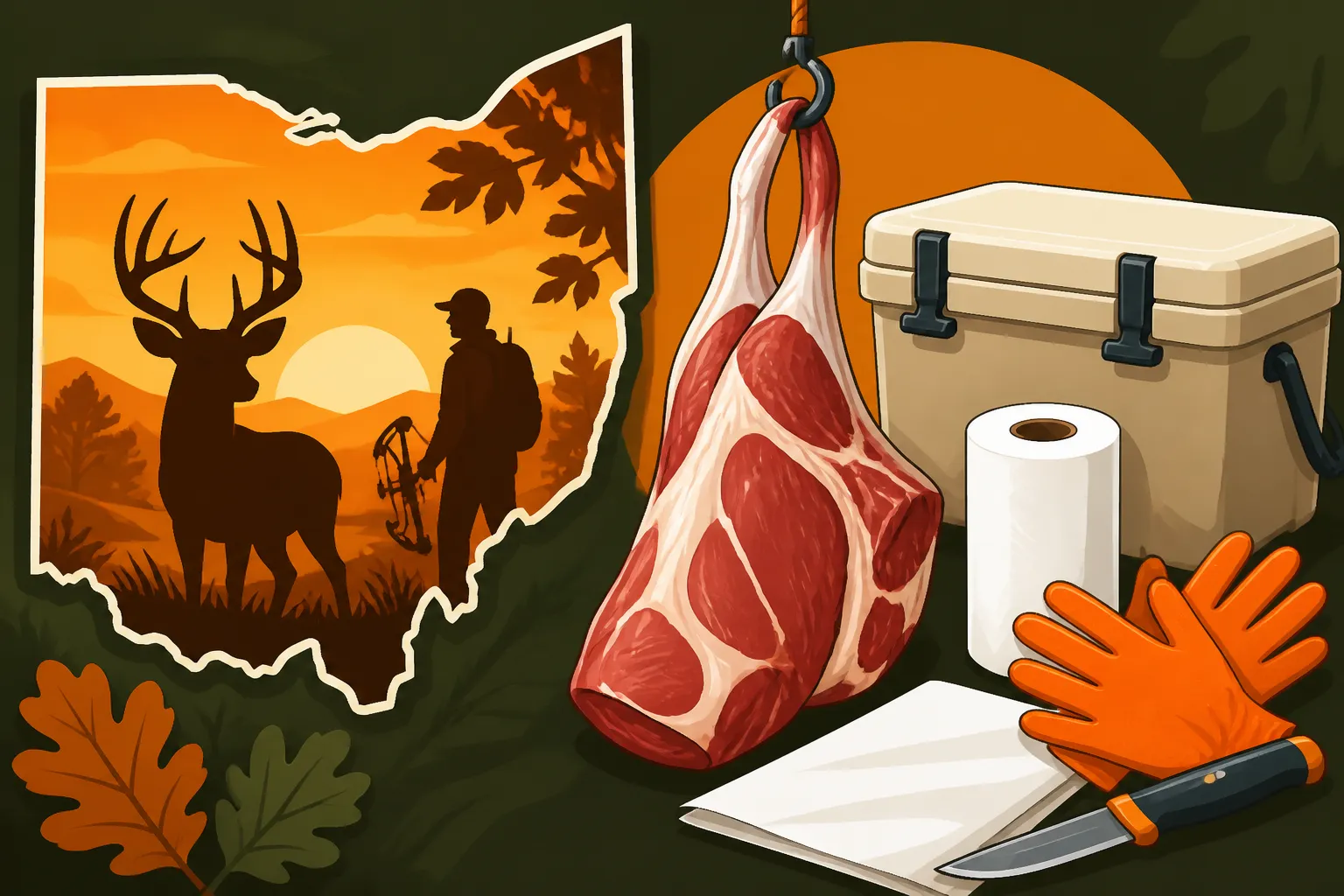
A comprehensive meat care kit for your pack might include: a sharp field dressing knife (or two), a small bone saw, several pairs of nitrile gloves, heavy-duty wet wipes, a small bottle of hand sanitizer, a game drag, and at least two game bags (more if you plan to quarter). For your vehicle or camp, a larger kit would include your main processing knives, sharpening tools, larger game bags, a roll of paper towels, a spray bottle with a sanitizing solution, and brushes for cleaning your cooler. Having these items organized and always ready eliminates the frantic searching and forgotten essentials that can derail a successful hunt.
Consider the various hunting scenarios you typically encounter in Ohio. If you hunt deep in Zaleski State Forest Hunting, your pack-out gear will be more critical. If you primarily hunt smaller woodlots near farmlands, your focus might be more on quick field dressing and cooler management. Tailor your kit to your typical hunting style and the specific challenges of Ohio's diverse landscape. A well-organized meat care kit is a testament to preparedness and respect for the animal, ensuring you're ready to handle your harvest efficiently and hygienically, every single time.
| Gear Category | Recommended Items | Primary Function | Best Use Case in Ohio |
|---|---|---|---|
| Field Dressing | Fixed-blade knife, Bone saw, Nitrile gloves | Quick, clean internal organ removal, hygiene | All seasons, immediate post-harvest |
| Transport | Deer sled, Game cart, Frame pack, Drag rope | Moving carcass from field to vehicle/camp | Sled: flat/snowy; Cart: trails; Pack: backcountry |
| Cooling/Protection | Breathable game bags, Quality cooler, Block ice | Preventing spoilage, protecting from elements | Warm archery, long drives, extended storage |
| Processing | Boning knife, Grinder, Vacuum sealer, Cutting board | Breaking down carcass, preparing for storage | Home processing, maximizing meat yield |
| Sanitation | Wet wipes, Hand sanitizer, Bleach spray, Brushes | Cleaning tools and surfaces, preventing contamination | Field, camp, home processing |
| Illumination | Headlamp, Backup flashlight | Safe operation in low-light conditions | Night recovery, early/late season processing |
Disclaimer
This article is for general informational purposes only and does not constitute professional advice. Laws, prices and regulations vary by location and change over time. Consult a qualified professional for guidance on your specific situation.