Wolf Creek Wildlife Area Deer Hunting
Hunting public land in Ohio can often feel like a puzzle, especially when you're looking for specific spots that hold deer but aren't overrun with pressure. Wolf Creek Wildlife Area, nestled right on the edge of the sprawling Wayne National Forest, offers a fantastic opportunity for deer hunters, but understanding its unique layout and how deer use the habitat is key to finding success and avoiding common frustrations. This guide is all about helping you decode Wolf Creek and put a solid plan together for your next deer hunt.
Understanding the Wolf Creek Landscape for Deer
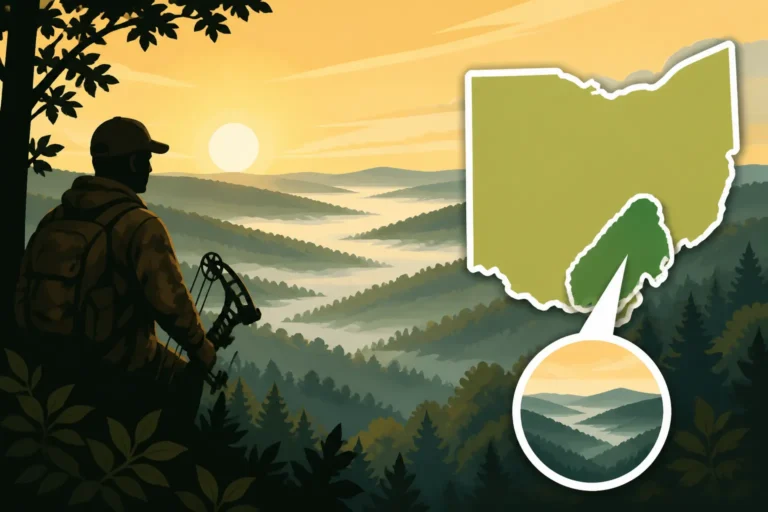
Wolf Creek Wildlife Area is a special place in southeastern Ohio, covering thousands of acres. What makes it unique is its close proximity and sometimes seamless transition into the Wayne National Forest. This creates a vast, relatively unfragmented block of timber that whitetails absolutely thrive in. But it's not all just big woods; you'll find a mix of successional habitat, old fields, and ridges carved by small streams, which means diverse options for deer hunting.
The terrain here can be steep and rugged, typical of the Appalachian foothills. This isn't flat, easy walking, and that's often a good thing for hunters willing to put in the work. The elevation changes create natural funnels and bedding areas that deer rely on. You might climb a significant ridge to overlook a deep hollow, or pick your way along a bench cut high on a hillside. This physical challenge naturally thins out the crowds, meaning the deeper you go, the better your chances of encountering less pressured deer. Knowing this landscape intimately, even from a map, is your first step to success here.
Distinguishing Wolf Creek from Wayne National Forest
While Wolf Creek Wildlife Area often borders or is very near sections of the Wayne National Forest's Athens Unit, it's crucial to understand that they are distinct entities. Both are public land, but they are managed by different agencies (Ohio Department of Natural Resources for Wolf Creek, U.S. Forest Service for Wayne National Forest) and can have slightly different rules or management objectives. Wolf Creek typically has more active habitat management, such as timber stand improvements or small food plots tucked into corners, whereas the Wayne National Forest is managed on a larger, more hands-off scale in many areas.
Deer, of course, don't read property lines. They move freely between these areas. A buck might bed on a steep, remote Wayne National Forest ridge during the day and feed in an old field or clear-cut within Wolf Creek at dusk. Hunters often use both areas in tandem, leveraging the strengths of each. For example, you might park on a Wayne National Forest access road and hike into a prime Wolf Creek hollow. It pays to carry a reliable mapping app, like onX Hunt, which clearly delineates these boundaries and can prevent accidental trespassing onto private property that might also be interspersed. Understanding these nuances can help you anticipate deer movement patterns and predict where they might be traveling between food, water, and bedding. Wayne National Forest Hunting is a great resource if you're looking to explore the larger forest further.
Key Habitat Types and Deer Activity
Wolf Creek offers a fantastic variety of habitat types, all of which influence deer activity throughout the seasons. Mature hardwoods, primarily oak and hickory, dominate the ridgetops and steeper slopes. During a good mast year, these areas become deer magnets, offering critical food sources like acorns. In contrast, you'll find dense thickets of young timber and brush in areas that have been clear-cut or allowed to regenerate, often on the side slopes or in hollows. These dense areas are prime bedding cover, especially in winter when thermal protection is key.
Along the creek bottoms and flatter areas, you might encounter old fields reverting to forest, or even some maintained openings with native grasses and forbs that provide excellent forage. Deer use these transition zones heavily, especially at dawn and dusk. Understanding where the food is, where the bedding cover lies, and how deer travel between the two is the essence of hunting Wolf Creek. Look for old logging roads and subtle bench cuts on hillsides; these often act as natural travel corridors. The deeper you delve into understanding these habitat preferences, the more successful you'll be. Finding Sign in Big Appalachian Timber can provide more detail on what to look for.
Strategic Approaches for Deer Hunting Wolf Creek
Hunting Wolf Creek requires a blend of physical stamina and sharp scouting skills. The expansive nature of the area, combined with its rugged topography, means that success often hinges on your willingness to go deeper and look harder than the average hunter. It's not uncommon to hike a mile or more from the nearest road to get into truly undisturbed territory.
Deer drives can be effective in this terrain, especially on larger, flatter benches or across steep hollows, but they require careful planning and communication. For a solo hunter or a small group, still-hunting or setting up in a well-chosen stand location are often the most productive methods. The key is finding areas that offer both food and security, or lie along a primary travel corridor between them.
Scouting for Success: Pre-Season and In-Season
Effective scouting is paramount for deer hunting at Wolf Creek. Start well before the season, utilizing online mapping tools like onX Hunt or GoHunt to identify potential bedding areas (dense cover on south-facing slopes in winter, or thick pockets in hollows year-round), food sources (oak flats, old fields, or recent clear-cuts), and likely travel corridors (ridge saddles, creek crossings, natural funnels). Pay close attention to subtle topography that might channel deer movement, even if it's not obvious from a satellite image. Identifying these key features on a map can save you countless miles of walking.
Once you're on the ground, look for fresh sign: rubs, scrapes, tracks, and droppings. During the season, focus on recent sign and adjust your strategy based on current conditions, like mast crop availability or recent weather changes. Scouting Ohio Public Land Before Season provides comprehensive tips for this crucial phase. Don't be afraid to put boots on the ground in the off-season to learn the land, especially if you're new to the area. A small, hidden bench with good browse and mature oak trees can be a gold mine that other hunters overlook.
Stand Placement and Still-Hunting Tactics
For treestand hunting at Wolf Creek, focus on transition zones. A classic setup might be on the edge of a mature oak flat overlooking a thick bedding area in a hollow, or a pinch point where two ridges meet. Consider prevailing winds and thermals, which are particularly important in hilly terrain, as air currents will often drop into hollows in the evening and rise out of them in the morning. A good understanding of Wind and Thermals on an Appalachian Ridge is critical. Hanging a stand can be physically demanding here, so lightweight climbing sticks and a portable stand or saddle setup are ideal. Treestand Setups in Appalachian Ohio Hardwoods offers detailed advice for this kind of environment.
Still-hunting is also incredibly effective in Wolf Creek's rugged terrain, especially when deer are on the move or when conditions (like a light rain or snow) allow for quiet movement. Move slowly, taking five minutes for every step, constantly scanning for deer. Utilize the terrain to your advantage, slipping silently along contours or downwind of likely bedding areas. The key is patience and meticulous observation. This method works well when hunting during the middle of the day, when deer might be moving between bedding and secondary feeding areas.
Navigating Regulations and Seasons at Wolf Creek
Understanding the specific hunting regulations for Wolf Creek Wildlife Area is vital. As an Ohio Wildlife Area, it falls under statewide Ohio deer hunting regulations, but it might have some unique local rules or recommendations you should always check with the ODNR district office responsible for the area. Generally, blaze orange is required during gun seasons, and specific legal hunting hours must be observed.
Wolf Creek is an excellent location for both archery and gun seasons, given its diverse habitat. The archery season allows hunters to get into the woods early and often provides opportunities for less pressured bucks before the statewide gun seasons. The gun seasons, including the always-popular first statewide weekend and the later second weekend, draw more hunters but also coincide with peak deer activity. Ohio Deer Season Structure Explained covers all the key dates.
Specific Considerations for Wolf Creek
During the gun seasons, expect more hunting pressure, especially on the first weekend. To counter this, many seasoned Wolf Creek hunters focus on going deeper into the woods, utilizing the rugged terrain to escape the crowds. Areas near parking lots or easily accessible trails will see the most traffic. If you're willing to hike an extra mile or navigate a steep incline, you'll likely find more solitude and less disturbed deer. Using a reliable mapping application like onX Hunt to see public land boundaries and estimate distances can be immensely helpful here.
For archery season, look for rub lines and scrape activity, especially during the pre-rut and rut. The diverse habitat means deer have plenty of options, so finding fresh sign is crucial. During the late archery season, after the leaves have fallen, visibility improves, but deer will be keenly aware of any movement. Focus on identifying late-season food sources like persistent acorns or browse in sheltered hollows. Don't forget to understand How Ohio's Archery Season Runs Into February for opportunities after the main gun seasons.
Here's a quick overview of seasonal considerations for deer hunting at Wolf Creek Wildlife Area:
| Season Phase | Key Deer Activity | Primary Hunting Strategy | Common Challenges |
|---|---|---|---|
| Early Archery (Sept-Oct) | Summer patterns, food-focused (soft mast/browse) | Ambush food sources, scout for fresh sign | Warm weather, dense foliage, bugs |
| Rut (Late Oct-Mid Nov) | Bucks cruising for does, increased daytime movement | Scrape lines, travel corridors, rattling | Increased hunter competition, unpredictable deer |
| Gun Season (Nov-Dec) | Post-rut recovery, seeking cover, driven by pressure | Deep woods, still-hunting, drives | High hunter pressure, cold weather |
| Late Archery/Muzzleloader (Dec-Jan) | Winter feeding areas, thermal cover, recovery | Isolated food sources, thick bedding, low pressure | Extreme cold, snow, limited deer movement |
Mandatory Deer Checking and CWD Testing
No matter when or where you hunt in Ohio, if you harvest a deer, you are required to check it in through the Ohio Game Check system. This can be done online or via a dedicated phone line. Ensure you complete this process promptly and accurately. While Wolf Creek Wildlife Area is not currently within Ohio's designated Chronic Wasting Disease (CWD) Surveillance Area (DSA), it is always wise to stay informed about CWD developments and testing requirements, especially if you also hunt in nearby counties or other parts of the state.
If CWD were to ever be detected closer to Wolf Creek, special rules, including mandatory testing windows, could be implemented. Staying current on the ODNR's official website is the best way to ensure you're in compliance. For more details on this important topic, check out Ohio's Chronic Wasting Disease Surveillance Area. Always remember that responsible hunting includes adhering to all regulations, which ultimately helps manage the herd and preserve hunting opportunities for everyone.
Wolf Creek Wildlife Area truly is a gem for Ohio deer hunters willing to put in the effort. Its rugged beauty and diverse habitat provide ample opportunity for those who understand the landscape and adapt their strategies to its unique challenges.
Disclaimer
This article is for general informational purposes only and does not constitute professional advice. Laws, prices and regulations vary by location and change over time. Consult a qualified professional for guidance on your specific situation.