Feral Swine Sightings in Southern Ohio
You're out enjoying a quiet morning in the woods, maybe scouting for deer or just stretching your legs, when you come across something truly unsettling: torn-up earth, rooted-up fields, and tracks that definitely don't belong to a whitetail. It’s a sign that Ohio’s southern counties are increasingly dealing with the unwelcome presence of feral swine, an invasive species that can wreak havoc on habitat, agriculture, and native wildlife. This guide will help you understand what feral swine are, where they're being sighted in Southern Ohio, and what steps you can take if you encounter them.
Understanding Feral Swine in Ohio
Feral swine, sometimes called wild hogs or wild pigs, aren't your typical farm animals. These are domestic pigs that have either escaped captivity and gone wild or are descendants of those escapees, quickly adapting to survive and thrive in the wild. They're incredibly resilient, intelligent, and reproduce at an astonishing rate, making them a significant concern for Ohio's ecosystems and agricultural communities. They're definitely not a game animal we welcome.
What Exactly Are Feral Swine?
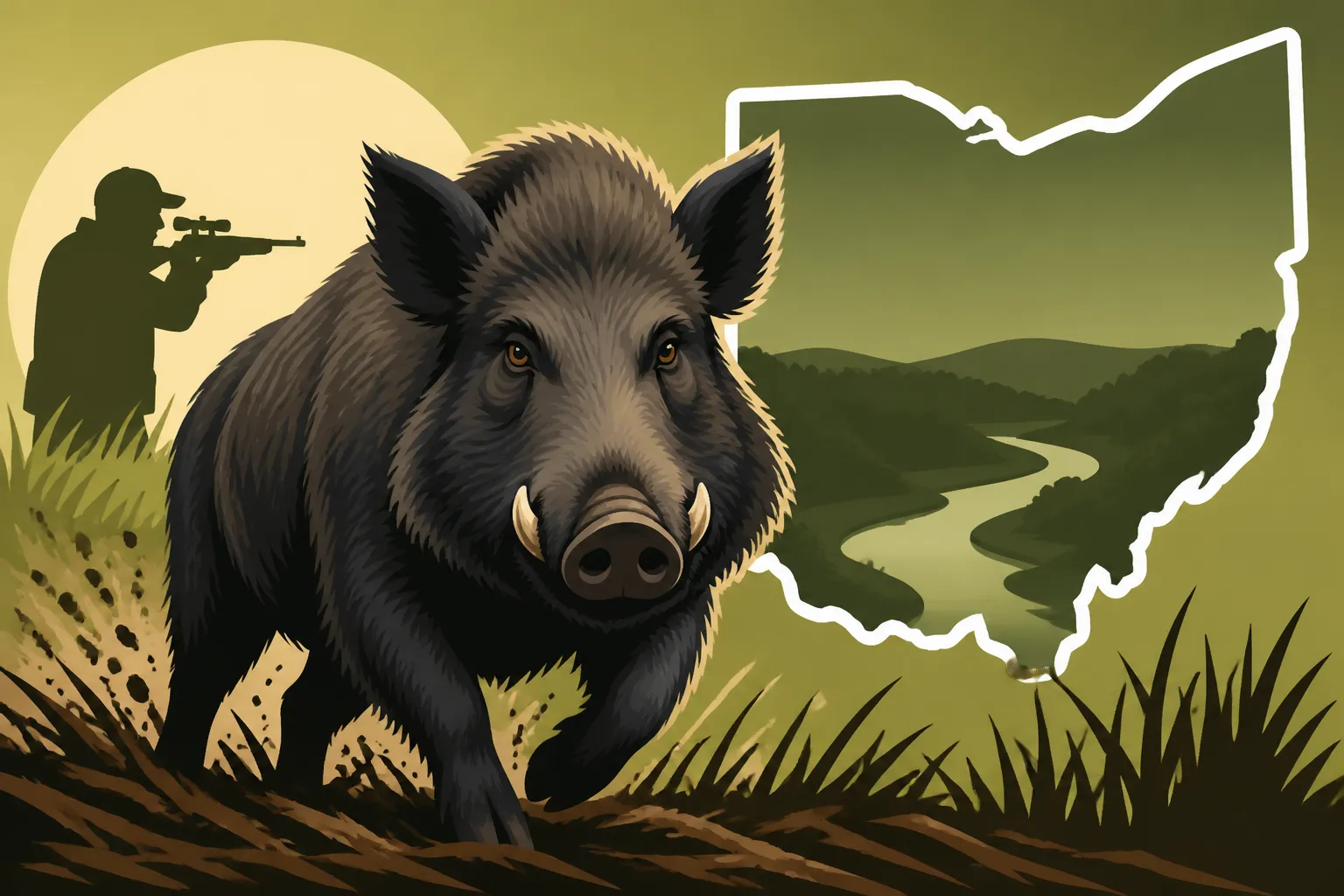
Picture a domestic pig, but tougher, leaner, often darker, and with impressive tusks on the males. That's essentially a feral hog. They are an invasive species, meaning they are not native to Ohio, and their presence causes considerable harm. Unlike deer or turkey, which are part of our natural system (even if deer numbers fluctuate), feral swine are destructive outsiders. They've been reported in various states across the country for decades, primarily in the South, but their range has been expanding, unfortunately reaching parts of Ohio.
They thrive in many different habitats, from dense forests to agricultural fields and swampy river bottoms, which means a significant portion of Ohio offers them suitable living conditions once they establish a foothold. Their diet is incredibly varied, consuming everything from acorns and roots to agricultural crops, small animals, and even fawns and turkey poults. This adaptability is precisely what makes them such a threat.
How Did Feral Swine Get Here?
The presence of feral swine in Ohio is almost entirely due to human actions, whether intentional or accidental. It's not like they migrated here naturally. Some pigs escape from domestic farms or hunting preserves, and once they're out, they can quickly revert to a wild state within a generation or two. Sadly, there have also been instances of illegal release for hunting purposes in other states, a practice that has contributed greatly to their spread.
Once a small group establishes itself, their prolific breeding makes control incredibly difficult. A sow can have two litters a year, with each litter containing four to ten piglets. Do the math, and you can see how quickly a handful of pigs can turn into a major problem, seemingly overnight. This exponential growth is why early detection and rapid response are absolutely critical to preventing widespread populations.
Where Feral Swine Are Being Sighted in Southern Ohio
When we talk about feral swine in Ohio, the focus is almost exclusively on the southern tier of the state. This region, characterized by its mix of rugged Appalachian foothills, dense timber, and agricultural valleys, provides ideal habitat for these adaptable animals. They appreciate the cover, the varied food sources, and the often remote nature of the terrain.
Hotspots and Habitat Preferences
While feral swine sightings can be sporadic, certain areas in southern Ohio have seen more consistent reports. Counties like Adams, Scioto, Gallia, Lawrence, and Meigs have historically had more activity due to their topography and land use. These areas feature extensive tracts of timber, like those found in Wayne National Forest Hunting and Shawnee State Forest Hunting, interspersed with creek bottoms and agricultural fields. This mosaic landscape is exactly what feral swine prefer: deep cover to bed down in and nearby food sources to raid under the cover of darkness.
They particularly love dense, brushy areas, thickets, and places with ample water, like river and creek drainages. These areas offer both protection from disturbance and a rich supply of food like roots, grubs, and mast crops. When you're Scouting Ohio Public Land Before Season, especially in these southern counties, keep an eye out for tell-tale signs of rooting, wallows, and fresh tracks near water sources or dense cover.
The Challenge of Confirmation and Tracking
One of the biggest frustrations with feral swine is their elusive nature. They are often most active at night, and they're incredibly adept at staying hidden in thick cover. This makes confirming their presence and tracking their movements a real challenge. A single sighting can sometimes indicate a transient animal, but repeated signs in an area usually point to a more established sounder (the term for a group of feral pigs).
Official agencies rely heavily on public reports to track these animals. Without vigilant landowners and hunters reporting what they see, it's very difficult to get an accurate picture of their spread. Even if you're using advanced mapping tools, like those you might use for Reading Aerial Photos for Southeast Ohio Deer, it's the on-the-ground observations that are truly invaluable for tracking these unwanted visitors. Remember, a single pig can do a lot of damage, but a breeding population is a long-term nightmare.
The Dangers and Impacts of Feral Swine
It's easy to dismiss a few pigs as a minor curiosity, but the reality is that feral swine pose a severe threat on multiple fronts. Their impact goes far beyond just being "another animal in the woods" and directly affects agriculture, wildlife, and even human health.
Agricultural and Property Damage
For farmers and landowners in Southern Ohio, feral swine can be an absolute nightmare. Their habit of rooting for food can completely destroy fields, especially corn and soybean crops. They literally plow up the ground with their powerful snouts, seeking out roots, insects, and anything else edible. This rooting also destabilizes soil, increases erosion, and makes fields incredibly difficult to plant and harvest.
Beyond crops, they damage pastures, fences, and even infrastructure like ponds and irrigation systems. Imagine a farmer's frustration after spending a season tending a field, only to have a sounder of hogs lay waste to it in a single night. The financial losses can be staggering, and unlike native wildlife damage, there's no real management system for compensation because these are an invasive species we're actively trying to eradicate.
Disease Transmission to Wildlife and Livestock
This is perhaps one of the most serious and insidious threats posed by feral swine. They are known carriers of a host of diseases that can easily spread to domestic livestock and native wildlife, including white-tailed deer. Diseases like swine brucellosis, pseudorabies, leptospirosis, and E. coli can be carried by these pigs, and they can transmit them through direct contact, shared water sources, or contaminated soil.
The thought of an outbreak of a serious livestock disease, or something like Chronic Wasting Disease in Ohio Deer spreading among our native White-Tailed Deer Across Ohio population, is terrifying for both agricultural producers and conservationists. This is why strict biosecurity measures are so important, and why any sighting of a sick animal, especially a hog, should be reported immediately. The risk to our healthy wildlife populations is immense and often unseen until it's too late.
Competition and Predation on Native Wildlife
Feral swine aren't just destructive grazers; they are also opportunistic predators and fierce competitors. They will directly compete with native wildlife like deer, turkeys, and squirrels for vital food sources such as acorns and other mast crops. This competition can put significant stress on local populations, especially during lean years.
What's worse, they are known to prey on vulnerable native species. They will actively seek out and consume turkey eggs and poults, fawns, and even small ground-nesting birds. This kind of predation can have a devastating effect on the reproductive success of our game animals. If you're a turkey hunter, thinking about how Nest Predation and Ohio Turkey Hatches are already a concern, adding feral hogs into the mix just compounds the problem.
Reporting Feral Swine Sightings and Management
If you encounter signs of feral swine or see the animals themselves, it's natural to feel a mix of alarm and frustration. But you are not powerless. Knowing how to report sightings and understanding the general management approach is crucial for controlling their spread.
Who to Contact and What Information to Provide
The Ohio Department of Natural Resources (ODNR) is the primary agency responsible for monitoring and managing feral swine populations in Ohio. It's absolutely vital that you report any sightings or signs of activity to them as quickly as possible. This isn't just a suggestion; it's a critical step in protecting Ohio's natural resources and agricultural interests.
When you make a report, try to gather as much detail as you can without putting yourself in harm's way. Important information includes:
- Date and Time of Sighting: Be as precise as possible.
- Exact Location: GPS coordinates are ideal, but a detailed description of roads, landmarks, and property lines is also very helpful. Using a mapping app like GoHunt to pinpoint the exact spot can be extremely useful here.
- Number of Animals: Estimate how many you saw.
- Description of Animals: Size, color, presence of piglets (indicating a sounder).
- Evidence of Activity: Describe rooting, tracks, wallows, or rubbed trees. Take photos if it's safe to do so.
- Your Contact Information: So ODNR can follow up for more details.
Remember, the ODNR aims for eradication, not management, of feral swine. Prompt and accurate reporting helps them deploy resources efficiently. You can typically report sightings through the ODNR Division of Wildlife's website or by contacting your local wildlife officer. This is an official concern, so treat it with the seriousness it deserves, just like you would for Reporting a Sick Animal in Ohio.
Current Management Strategies
Ohio's approach to feral swine is one of eradication. Unlike native game species that are managed for sustainable harvest, feral swine are treated as a pest that needs to be removed from the landscape entirely. This is because, left unchecked, they can cause irreversible damage.
Current strategies often involve a combination of trapping and targeted removal. Trapping, especially large corral traps that can capture an entire sounder, is considered one of the most effective methods. Once captured, the animals are humanely euthanized. Hunting, while sometimes providing incidental take, is generally not an effective standalone control method for feral swine populations. The reason is that hunting often scatters sounders, making them more wary and harder to trap, effectively worsening the problem by making them more elusive.
| Indicator | Feral Swine Signs | White-tailed Deer Signs | Other Wildlife Signs (e.g., raccoon, groundhog) |
|---|---|---|---|
| Ground Disturbance | Extensive "rooting" – ground plowed up, often large areas | Scrapes (antlers), rubs (antlers), pawing for food | Small holes (raccoons), mounds (groundhogs) |
| Tracks | Rounded, cloven hoof print; often wider than deer; dewclaws usually visible | Heart-shaped, cloven hoof print; dewclaws rarely visible unless running | Paws with distinct toes (raccoon), claw marks |
| Droppings | Irregular, pellet-like to cylindrical; variable size and consistency | Pellets, often in groups; darker color | Variable; often scat with fur/bones (coyote, fox) |
| Wallows | Muddy depressions where pigs roll; often near water | None (deer don't wallow like this) | Small, localized mud prints near water (raccoons) |
| Rub Marks | Often low on trees or posts; muddy, distinct hair | Higher on trees for antlers; often smoother bark | Small scratches on trees (squirrels, bears) |
The Role of Hunters and Landowners
As hunters and landowners, we are often the first line of defense against invasive species like feral swine. Our knowledge of the landscape, our time in the woods, and our connection to the land put us in a unique position to identify and report these animals. While the ODNR spearheads the eradication efforts, our eyes and ears on the ground are invaluable.
If you own land in Southern Ohio, consider setting up trail cameras in areas where you've seen suspicious activity. This can help confirm presence and estimate sounder size without direct confrontation. Tools like GoHunt can help you mark these locations on a map for easy reference and sharing with ODNR officials. For those Hunting Small Private Tracts in Ohio or vast public lands, staying informed about Ohio Wildlife Disease Monitoring and other conservation concerns is part of being a responsible steward of our natural resources.
Remember, the goal is to protect Ohio's agriculture, native wildlife, and beautiful outdoor spaces from this destructive invasive species. Your vigilance and prompt reporting are key to making that happen.
Disclaimer
This article is for general informational purposes only and does not constitute professional advice. Laws, prices and regulations vary by location and change over time. Consult a qualified professional for guidance on your specific situation.