Ohio Red Fox Versus Gray Fox Range
It's easy to assume all foxes are the same when you spot a flash of reddish-brown fur darting across a field or hear a yelp from the woods. But here in Ohio, we actually host two distinct species of fox, each with its own preferred haunts and ways of life. This guide will help you understand the differences between the red fox and the gray fox, where you're most likely to encounter them across our diverse landscapes, and why knowing their habits can make you a more observant outdoors person.
The Two Foxes of Ohio: An Introduction to Their Worlds
Ohio's woodlands, farmlands, and even suburban fringes are home to both the red fox and the gray fox. While they both belong to the canine family, they are quite different animals, adapted to thrive in distinct environments. Think of it like comparing a long-distance runner to a nimble climber – both athletes, but with entirely different skill sets and preferred terrains. For hunters and wildlife enthusiasts, understanding these subtle yet significant distinctions can greatly enhance your appreciation for our state's rich biodiversity. Knowing which fox you're seeing, or even hearing, can tell you a lot about the immediate habitat.
Distinguishing Features and General Behavior
At first glance, you might think a fox is a fox, but there are clear physical markers that set our red and gray foxes apart. The most obvious is often the color, but that can be deceiving, as red foxes aren't always bright red, and gray foxes can sometimes have reddish tinges.
Red Fox (Vulpes vulpes): The Classic Hunter
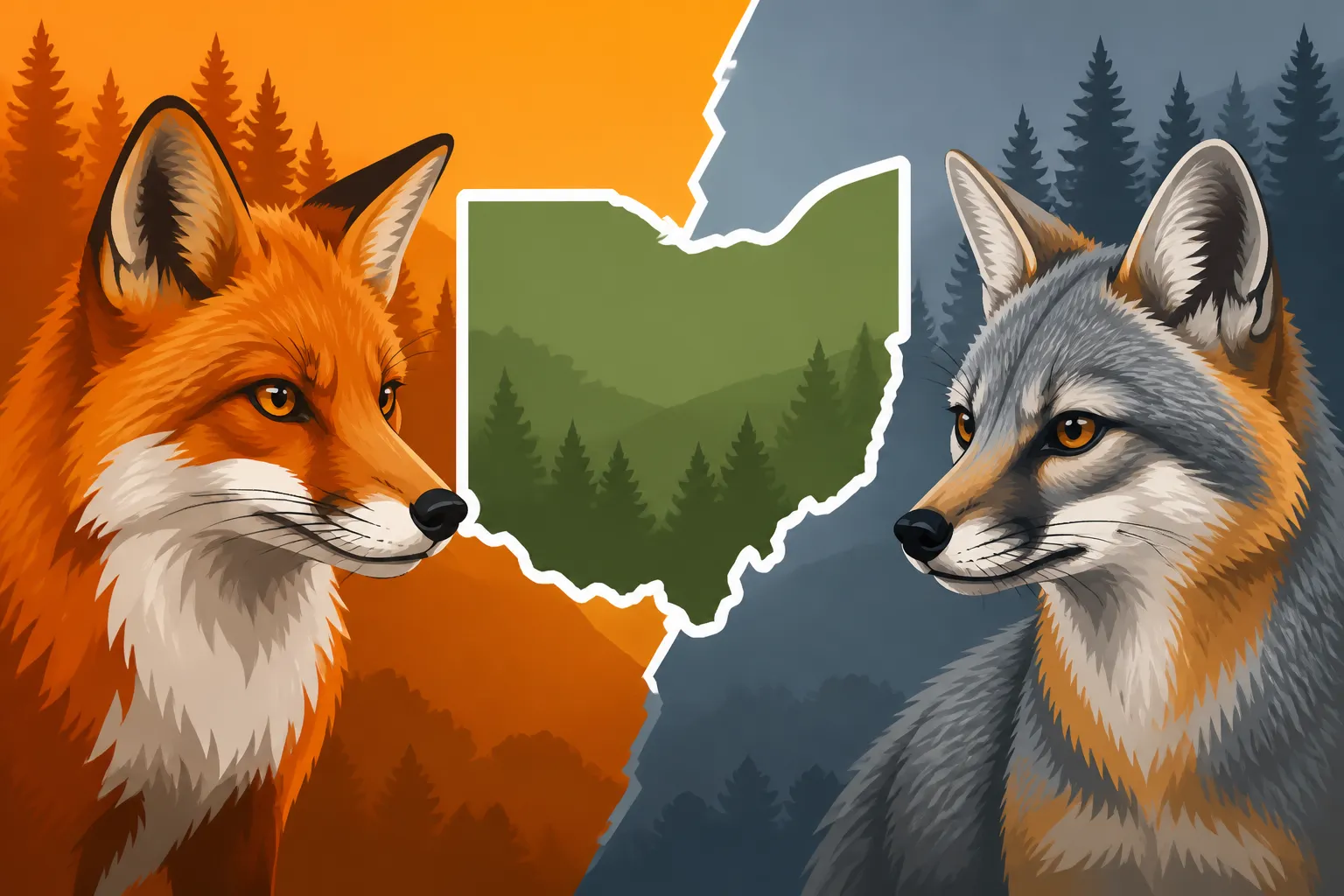
The red fox is what most people picture when they think of a fox. They typically sport a reddish-orange coat, a white chest and belly, and, critically, a long, bushy tail tipped with white. No matter how dark or light their reddish fur might be, that white tip is usually the giveaway. Their legs are often dark, almost black, giving them a sleek, socked appearance. They're generally a bit larger than their gray cousins, with a more slender build that's built for speed and traversing open ground. When you see a red fox, it's often moving with a confident, almost graceful trot across a field or along a fence line. They are known for their cunning and adaptability, often seen hunting rodents in open areas, stalking prey with a characteristic pounce.
Gray Fox (Urocyon cinereoargenteus): The Woodland Acrobat
The gray fox is a bit more compact and stocky than the red fox. Their fur is primarily salt-and-pepper gray on the back and sides, with reddish-brown patches on their neck, legs, and flanks, and a white throat and belly. The defining feature of the gray fox's tail is a black stripe running down the top and a black tip. Unlike the red fox, you won't see a white tail tip on a gray fox. These foxes have shorter legs and a more robust body. What truly sets them apart behaviorally, however, is their incredible ability to climb trees. They are the only canid in North America known to regularly climb trees, using their semi-retractable claws to ascend trunks and branches, often to escape predators or forage for food. This unique adaptation speaks volumes about their preferred habitat, as we'll explore shortly.
| Feature | Red Fox (Vulpes vulpes) | Gray Fox (Urocyon cinereoargenteus) |
|---|---|---|
| Primary Color | Reddish-orange, can vary | Salt-and-pepper gray |
| Tail Tip | White (distinctive) | Black |
| Legs | Dark/Black | Reddish-brown/Gray |
| Body Build | Slender, agile, built for speed | Stocky, more robust |
| Tree Climbing | Rarely, if ever | Excellent climber |
| Typical Habitat | Open fields, farmlands, mixed | Dense woodlands, brushy areas |
| Range in Ohio | Statewide, more common north/west | Statewide, more common south/east |
Red Fox: Preferring Open Country and Farm Edges
When you picture a fox trotting through a snowy field or darting into a corn stubble, you're likely imagining a red fox. These adaptable canids have truly mastered the art of living in Ohio's agricultural heartland and the fringes of human development. Their range is extensive, but their highest densities and most consistent presence are tied directly to the availability of open ground.
Habitat Preferences of the Red Fox
Red foxes are creatures of edge habitats. They thrive where woodlands meet open fields, where pastures border small woodlots, and along the fencerows and ditches that crisscross our farmland. If you've spent any time Hunting Northwest Ohio Farmland Deer, you've probably caught a glimpse of a red fox working a field edge. These areas provide the perfect blend of cover for denning and escape, combined with vast expanses for hunting their primary prey.
They're not afraid of human activity, often setting up dens near barns, abandoned farm equipment, or even in large culverts. Their adaptability is a key to their success across a broad swled of Ohio. You'll find them in almost every county, from the flat plains of the northwest to the more rolling terrain closer to the Appalachian foothills. However, their numbers tend to be higher in the more agricultural and less heavily forested regions. Think of the large expanses of corn and soybean fields, interspersed with small patches of woods – that's prime red fox country. They appreciate the ability to see long distances, which helps them spot prey and detect potential threats from afar. This also impacts their hunting style; they are more likely to patiently stalk or "mouse" through taller grass, listening intently before pouncing.
Diet and Behavior in Open Ohio Landscapes
The red fox's diet is incredibly varied, a testament to its adaptability. Small rodents like voles, mice, and rabbits make up a significant portion of their diet, especially in the agricultural regions. They are opportunistic hunters and scavengers, however, and won't turn down birds, insects, fruits, and even carrion. Farmers might occasionally see them preying on poultry if not secured, or raiding garden patches for berries and corn.
Their hunting strategy is typically one of stealth and quick pursuit. They'll often move slowly, nose to the ground, before freezing and then executing that characteristic high-arcing pounce onto unsuspecting prey hidden in grass or snow. This is a behavior well-suited to open fields where they can maneuver quickly and rely on bursts of speed. During the colder months, especially when hunting small game like Rabbit Hunting Ohio Fencerows, you might see them working along those very same fencerows, listening for movement. They are primarily nocturnal or crepuscular (active at dawn and dusk), though it's not uncommon to see them out and about during the day, particularly if food is scarce or they are raising young. Understanding these activity patterns is crucial for anyone trying to observe or hunt these clever animals. Tools like GoHunt can help you overlay habitat types with known activity patterns, giving you a better idea of when and where to focus your efforts.
Gray Fox: Masters of the Dense Woods
If the red fox is the quintessential open-country hunter, the gray fox is its woodland counterpart, a secretive and agile resident of Ohio's more rugged and densely vegetated areas. Their unique ability to climb trees truly sets them apart and dictates much of their habitat preference.
Habitat Preferences of the Gray Fox
Gray foxes are much more tied to dense, brushy woodlands and thickets. While they are present statewide, their populations tend to be more robust in the heavily forested regions, particularly the unglaciated Appalachian foothills of southeastern Ohio. If you're Hunting Southeast Ohio Appalachian Foothills, you're likely in prime gray fox territory. They prefer areas with a mix of deciduous and coniferous trees, thick undergrowth, and rocky outcrops, which provide ample cover and opportunities for tree climbing.
These foxes use trees not just for escape from coyotes or domestic dogs, but also as vantage points for hunting or as a place to rest during the day. They've been known to den in hollow logs, rock crevices, or even in abandoned squirrel nests high in trees. Their ability to scale a tree trunk with surprising speed gives them a unique advantage in forested environments where ground-based predators might struggle to follow. This adaptation allows them to access food sources like tree-roosting birds or nuts that are unavailable to their red fox cousins. When using mapping tools like GoHunt, look for areas with mature, contiguous forest cover and dense underbrush to identify potential gray fox hotspots.
Diet and Behavior in Forested Ohio Landscapes
The gray fox's diet is also quite diverse, but leans more towards forest-dwelling prey and plant matter. Small mammals like voles, mice, and rabbits are still on the menu, but they'll also consume a higher proportion of fruits, nuts, and insects found in woodland environments. Acorns, persimmons, and wild grapes are common seasonal foods. Birds and their eggs, snatched from low-lying nests or tree branches, also contribute to their diet. They are also known to hunt squirrels, which makes sense given their climbing prowess.
Their hunting style reflects their habitat. They are more likely to stalk through dense cover, using their climbing ability to gain an advantage. They are adept at navigating thick brush and rocky terrain, where a red fox might be less efficient. Like red foxes, gray foxes are primarily nocturnal or crepuscular, but their secretive nature makes them harder to spot during daylight hours unless disturbed. If you're in the woods, listening for the rustle of leaves or the sharp bark of a fox can sometimes indicate their presence. For those interested in Raccoons and Ohio Furbearers, gray foxes often share similar dense, wooded habitats, making it possible to encounter both while afield.
Overlap and Coexistence: Where Their Worlds Meet
While red and gray foxes exhibit clear preferences, their ranges do overlap significantly across Ohio. This overlap creates interesting dynamics and occasionally, competition, though their differing adaptations often allow them to coexist without direct conflict.
Shared Territories and Niche Partitioning
In many parts of Ohio, particularly in mixed landscapes with both open fields and patches of dense woodland, you can find both red and gray foxes. However, even in these shared territories, they tend to utilize different parts of the habitat. This is known as niche partitioning. The red fox will stick to the open fields, the edges, and the less dense woodlots, while the gray fox will gravitate towards the thicker, more tangled sections of the forest, using the canopy to its advantage.
Think of a large public hunting area like a state forest. The red fox might be found along the access roads, agricultural fields on the perimeter, or in younger clear-cuts, while the gray fox would be deeper in the mature timber, especially where the understory is dense and provides escape routes up trees. This spatial separation helps reduce direct competition for food and denning sites, allowing both species to thrive. However, competition can arise, particularly for prime denning locations or during periods of food scarcity. Knowing these distinctions can be incredibly helpful for anyone interested in Ohio Trapping and Furbearer Seasons, as successful trapping often relies on understanding the preferred habitat of your target species. GoHunt mapping tools can be invaluable here, allowing you to scrutinize aerial imagery for the specific habitat features that each fox species prefers.
Conservation Status and Management
Both red and gray foxes are common furbearers in Ohio and are generally considered stable populations. They play an important role in the ecosystem as predators, helping to control rodent populations and acting as opportunistic scavengers. Ohio has established Ohio Trapping License Requirements and Ohio Furbearer Trapping Tag Requirements to ensure responsible management of these and other furbearers. While they are not typically targeted for food, they are a valuable part of the state's wildlife heritage, and their pelts are sometimes sought after during designated seasons.
Ongoing monitoring by the Ohio Department of Natural Resources helps track their populations and ensure sustainable practices. Factors like habitat loss, disease (such as mange, which can impact coyote and fox populations alike), and competition with coyotes can all influence local fox numbers. Coyotes, in particular, are larger and more dominant predators, and their expanding range and density in Ohio can sometimes displace foxes from certain areas. For a deeper dive into another of Ohio's prevalent predators, you might explore Ohio Coyote Range and Density. Ultimately, the continued presence of both red and gray foxes across Ohio's diverse landscapes is a positive indicator of a healthy, functioning ecosystem.
Disclaimer
This article is for general informational purposes only and does not constitute professional advice. Laws, prices and regulations vary by location and change over time. Consult a qualified professional for guidance on your specific situation.