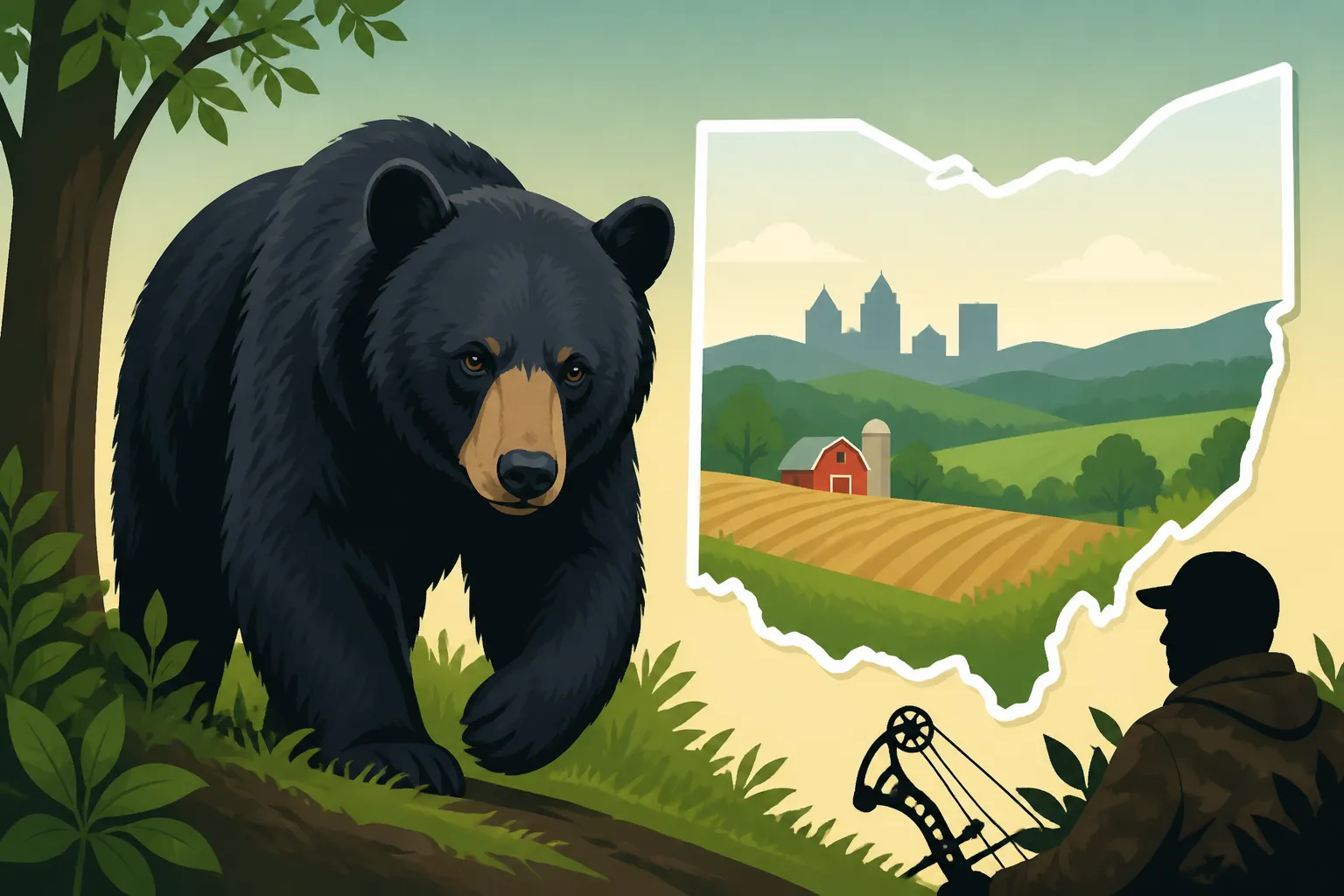
Why Black Bears Are Wandering Into Ohio
It feels like not so long ago, spotting a black bear in Ohio was a rarity, almost a once-in-a-lifetime event for most folks outside of a zoo. Now, though, the chatter around campfires and coffee shops is all about increasing bear sightings across the state, leaving many of us wondering, "What's going on? Why are black bears wandering into Ohio with such frequency?" This guide will dive deep into the fascinating story behind Ohio's burgeoning black bear presence, exploring their history, where they come from, and what these wanderings mean for us as Ohioans.
A Historical Look at Ohio's Black Bears
To truly understand why black bears are once again becoming a more common sight, we need to rewind a bit and look at their past in our beautiful state. It's a story of both loss and impressive recovery, echoing the journeys of many other wildlife species across the Midwest.
The Extirpation of Ohio's Native Bears
Believe it or not, black bears were once a natural and integral part of Ohio's ecosystem. Our ancestors certainly encountered them regularly, particularly in the dense, unbroken forests that once covered much of the state. However, as European settlers moved in, bringing with them widespread deforestation for agriculture and timber, coupled with unregulated hunting, the black bear population plummeted.
By the mid-1800s, the species was effectively extirpated from Ohio. That's a fancy word for saying they were locally extinct – gone from our state, though still existing elsewhere. Imagine that: a creature so iconic, completely vanished from our wild lands. It was a stark reminder of the impact human activity could have on even the most resilient wildlife. For over a century, the only bears most Ohioans would ever see were in captivity.
Early Sightings and the Road to Recovery
Fast forward to the latter half of the 20th century, and things started to change. A few sporadic sightings began to trickle in, mostly in the eastern and southern parts of the state, bordering states like Pennsylvania and West Virginia. These weren't established Ohio bears; they were pioneers, individual animals venturing across state lines. These early sightings, though infrequent, sparked a quiet hope that perhaps, just perhaps, Ohio's wilderness was once again becoming hospitable enough for these magnificent animals.
Over time, these trickle sightings have grown into a steady stream, leading to what we now call Ohio's Recovering Black Bear Sightings. Wildlife biologists and keen observers started noticing a pattern. These weren't just random events; they were signs of a larger ecological shift, driven by factors outside of Ohio's immediate borders, but certainly influencing our natural landscape. The habitat was slowly improving, and the bears, ever the opportunists, were taking notice.
The Appalachian Connection: Where Our Bears Come From
When we talk about black bears wandering into Ohio, we're not talking about some isolated, spontaneous event. There's a clear geographical pattern, and it points directly to our neighbors to the east and south. Ohio's growing bear population is largely an overflow from thriving populations in the Appalachian states.
Migration Routes from Neighboring States
Ohio sits right on the western edge of the Appalachian mountain range, a region that boasts robust and healthy black bear populations. States like Pennsylvania, West Virginia, and Kentucky have done remarkable work in conservation, allowing their bear numbers to rebound significantly over the past few decades. As these populations have grown, young bears, particularly males, are forced to seek out new territories. They are driven by an instinct to find their own space, their own food sources, and their own mates, pushing them beyond their natal ranges.
These bears don't just magically appear in Ohio. They follow natural corridors: river valleys, unbroken tracts of timber, and even old logging roads. Southeastern Ohio, with its rugged terrain and extensive woodlands like Wayne National Forest Hunting and Shawnee State Forest Hunting, offers a natural extension of this Appalachian habitat. They move through these landscapes, often undetected, until they bump up against more populated areas or agricultural lands, leading to those exciting, sometimes surprising, sightings we hear about. This migration is a testament to the resilience of the species and the success of broader conservation efforts in the region.
The Allure of Ohio's Southeastern Habitat
While Ohio might not have the vast, pristine wilderness of some Western states, our southeastern region provides surprisingly good bear habitat. The unglaciated Appalachian foothills, characterized by steep ridges, deep hollows, and mixed hardwood forests, offer ample cover and diverse food sources. Bears are omnivores, meaning they eat a wide variety of things, and these forests provide a buffet. Think about the mast crops: acorns, hickory nuts, beechnuts – these are crucial for bears to fatten up before winter. Our rivers and creeks provide essential water sources, and the dense undergrowth offers perfect bedding areas.
Even fragmented woodlots and fencerows, particularly when combined with agricultural fields, can provide enough resources for a transient bear. They're incredibly adaptable animals. A bear might travel miles through what we perceive as marginal habitat, finding enough sustenance along the way to keep moving. The sheer availability of diverse food sources, from berries in summer to hard mast in fall, makes Ohio's landscape attractive, especially to a young bear looking to establish a new home range. This is why you often hear of Hunting Southeast Ohio Appalachian Foothills as a prime area for deer, but increasingly, it's becoming relevant for bear activity too.
Why Bears Are Leaving Their Home Ranges
It's not just that Ohio can support bears; there are specific reasons why bears are feeling the push to expand their horizons and journey into our state. It's a combination of natural population dynamics and the ever-present influence of human activity.
Population Growth and Resource Pressure
The primary driver behind bears wandering into Ohio is the healthy, growing black bear populations in our neighboring states. When a population reaches a certain density, competition for resources – food, water, and suitable territory – naturally increases. Imagine a crowded dinner table; eventually, some folks will have to get up and find another place to eat. It’s the same for bears.
As their numbers swell, particularly in Pennsylvania and West Virginia, the prime habitats become saturated. Older, larger, and more dominant bears hold the best territories. This leaves the younger, less experienced bears, often subadult males, with a choice: try to eke out a living in marginal territory within their home state, or embark on a journey to find new, unoccupied lands. Many choose the latter, and Ohio, with its adjacent and increasingly suitable habitats, becomes a logical destination. This natural expansion is a sign of a successful wildlife recovery, even if it brings new challenges for Ohio residents.
Young Bears Striking Out on Their Own
Black bear cubs typically stay with their mother for about 1.5 to 2 years. Once they're independent, usually in their second spring, they are forced to disperse and find their own home range. This is a critical and often challenging period in a young bear's life. These dispersing bears are essentially teenagers leaving home, often traveling great distances – sometimes hundreds of miles – in search of suitable habitat that isn't already claimed by another dominant bear.
These young, nomadic bears are precisely the ones most often sighted in Ohio. They are bold, curious, and sometimes a little naive, making them more likely to venture into areas closer to human habitation or cross roads, leading to public sightings. Their wanderings are a natural part of their life cycle and a key mechanism for the species to expand its range. While they might not be actively looking for a fight, their inexperience can sometimes lead them into tricky situations, especially when food is involved. This is where tools like GoHunt apps, which can help visualize potential travel corridors and habitat types, can sometimes provide insight into where these adventurous youngsters might be heading.
Habitat Fragmentation and Development
While much of Ohio's bear country is wild, human development is an ongoing process, even in rural areas. New roads, housing developments, and industrial expansion can fragment existing bear habitat in neighboring states, creating pressures that push bears further afield. Imagine a continuous forest as a bear's highway; a new development is like a roadblock. While bears are incredibly adaptable and can navigate around these obstacles, it adds another layer of stress and can funnel them into unexpected areas.
Furthermore, changes in land use practices, such as intensive agriculture or shifts in timber harvesting, can alter the availability of crucial food sources and cover. If a bear's accustomed acorn grove is harvested or a favorite berry patch is developed, it needs to move to find new sources. This constant push and pull between natural expansion and human impact is a complex dance, and it's one of the reasons we see Ohio Black Bear Sighting Reports by Year steadily increasing. It highlights the importance of understanding not just where bears are, but why they're moving.
What a Transient Bear's Life Looks Like in Ohio
When a black bear crosses into Ohio, it's often on an exploratory mission. These aren't necessarily bears looking to settle down permanently the moment they step foot over the border. Their initial journey is one of survival, driven by instinct, and their path can be quite challenging.
The Search for Food, Water, and Shelter
For a transient bear in Ohio, life revolves around the fundamentals: finding enough to eat, drink, and a safe place to rest. They will travel extensively, utilizing vast areas as they seek out suitable resources. In our state, this means moving through a patchwork of woodlands, agricultural fields, and sometimes even suburban edges. They're looking for natural foods like berries, nuts, insects, and roots, but they're also highly opportunistic.
This opportunism often leads them to human-related food sources: bird feeders, pet food left outdoors, unsecured garbage cans, and even fruit trees or gardens. These easily accessible, calorie-rich foods can be incredibly tempting for a bear that's just traveled a long distance and might be a bit lean. They also need reliable water sources, which Ohio generally has in abundance with its numerous creeks, rivers, and ponds. For shelter, they'll seek out thick brush, dense stands of timber, rocky outcrops, or even hollow logs – any place that offers concealment and security. Understanding these basic needs is key to recognizing why and where a bear might appear.
Interactions with Humans and Property
The more bears move into Ohio, the more likely they are to encounter people and human-built structures. Most of these interactions are brief and harmless; a bear might cross a road, be seen from a distance, or quickly retreat when it detects human presence. However, as bears become habituated to human-associated food sources, interactions can become more problematic. A bear that learns bird feeders are easy pickings will likely return. A bear that finds pet food on the porch will keep looking for it.
These situations rarely escalate to aggression, but they can be startling and destructive. Bears are incredibly powerful animals, and a simple scratch to get at a bird feeder can look like significant damage to a homeowner. This is why education is so crucial: understanding What to Do If You Spot an Ohio Black Bear and, more importantly, how to prevent negative interactions in the first place, is vital for both human and bear safety. It's about recognizing that our actions, even seemingly small ones like leaving out pet food, can significantly influence a bear's behavior and their likelihood of staying in an area.
The Likelihood of Establishing a Permanent Population
While more bears are wandering into Ohio, the question remains: are they settling down and forming a permanent, breeding population? For a species to truly establish itself, you need a healthy mix of males and females, and successful reproduction. While we have seen some indications of sows with cubs, particularly in the most remote southeastern counties, a widespread, self-sustaining population across large swaths of Ohio is still not a given.
Ohio is still considered a "source-sink" state for bears – we're primarily a sink, receiving individuals from source populations in other states. The individuals we see are often transient, passing through, or young males just exploring. A truly stable population requires extensive, connected habitat and a consistent presence of breeding females, which are less prone to long-distance dispersal than males. While the trends are certainly pointing towards an increasing presence, Why Black Bears Are Not Yet a Stable Ohio Species is a complex issue involving habitat connectivity, reproductive success, and the specific pressures bears face once they are here. The future will depend on continued habitat protection and how effectively humans and bears can coexist.
Coexisting with Black Bears in Ohio
As black bear sightings become more common in Ohio, particularly in the eastern and southeastern counties, it's increasingly important for us to learn how to live alongside these magnificent creatures safely and responsibly. Most negative encounters with bears are a result of habituation to human food sources, which we can largely prevent.
Reducing Attractants Around Your Home
The golden rule of living with bears is "a fed bear is a dead bear." While that sounds harsh, it highlights the danger of bears becoming reliant on human food. Once a bear associates people with easy meals, it loses its natural fear and can become a nuisance, sometimes leading to its removal or, in extreme cases, euthanasia for public safety. The best defense is to remove anything that might attract a bear to your property.
| Attractant Type | Examples | Mitigation Strategy |
|---|---|---|
| Food Sources | Bird feeders, pet food, garbage, grills, compost, fruit trees, berry bushes | Bring bird feeders in at night, store pet food indoors, secure garbage in bear-proof containers/sheds, clean grills after use, manage compost, pick ripe fruit |
| Scents | Perfumes, deodorants, unwashed food containers in cars, open garage doors | Store scented items in sealed containers, clean out vehicles, keep garage doors closed |
| Shelter/Denning | Unused sheds, thick brush close to homes, crawl spaces | Clear dense brush around the house, secure outbuildings, block off crawl space access |
| Other | Beehives, livestock feed | Use electric fencing or secure storage |
This table provides a quick guide, but the general principle is: if it smells like food or offers easy calories, secure it. This includes things you might not immediately think of, like outdoor pet food bowls, unattended coolers, or even dirty barbecue grills. Be extra vigilant if you know there have been Ohio Black Bear Sighting Reports by Year in your area.
What to Do If You Encounter a Bear
Even with the best precautions, you might still have a surprise encounter. If you find yourself face-to-face with a black bear, remember that they are generally shy and will avoid confrontation. The most important thing is to remain calm and follow a few simple guidelines:
- Do Not Run: Running can trigger a chase response in the bear.
- Make Yourself Big and Loud: Wave your arms, make noise, and speak in a firm voice. The goal is to make the bear realize you are human and not an easy prey item.
- Back Away Slowly: Give the bear space to escape. Never block its escape route.
- Avoid Eye Contact: Direct eye contact can be perceived as a challenge.
- If the Bear Charges: A bluff charge is common. Most bears will stop short. Stand your ground, continue to make noise. If contact is made, fight back aggressively with anything you have. Black bear attacks are incredibly rare, and usually involve a bear trying to get at food.
These situations are almost always about surprising a bear or a bear protecting cubs, not predatory behavior. Understanding What to Do If You Spot an Ohio Black Bear can alleviate a lot of anxiety and ensure a safe outcome for both you and the animal.
Reporting Bear Sightings to Wildlife Authorities
If you see a black bear in Ohio, especially if it's exhibiting unusual behavior or is repeatedly visiting a developed area, it's important to report it to the Ohio Department of Natural Resources (ODNR). They track sightings to monitor population trends, understand movement patterns, and manage potential conflicts.
The ODNR wants to know when and where bears are seen. You can usually find information on their website about how to submit a report, often through an online form or a dedicated phone line. This data is crucial for wildlife management and helps them understand Why Black Bears Are Not Yet a Stable Ohio Species and how close they might be to achieving that status. Don't assume someone else has reported it; every piece of information helps paint a clearer picture of Ohio's recovering black bear population. By being informed and proactive, we can all contribute to the safe and responsible return of these magnificent animals to Ohio's diverse landscape.
Disclaimer
This article is for general informational purposes only and does not constitute professional advice. Laws, prices and regulations vary by location and change over time. Consult a qualified professional for guidance on your specific situation.