Hunting Ohio River Valley Ridges
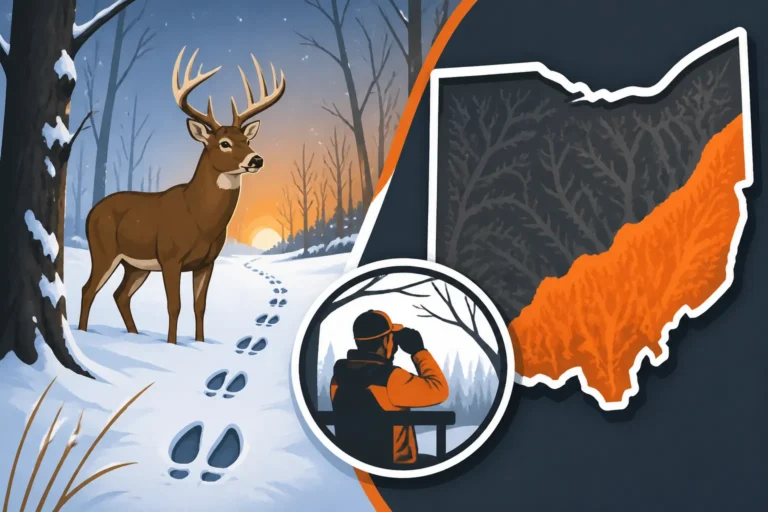
Hunting the steep, broken terrain of Ohio's River Valley ridges can feel like an entirely different ballgame than chasing deer in the flat farmlands of the northwest or even the gentler hills elsewhere. The extreme elevation changes, dense cover, and often remote nature of these areas present unique challenges. This guide is designed to equip you with the strategies and insights needed to confidently navigate and successfully hunt the rugged beauty of the Ohio River Valley.
Understanding the Unique Terrain of Ohio River Valley Ridges
When you set foot in the Ohio River Valley, especially in the southern and southeastern counties, you're entering a landscape carved by millennia of water and time. It's a place where the phrase "up and down" takes on a whole new meaning, and understanding its unique character is the first step to success.
The Lay of the Land: Steep Hills and Deep Hollers
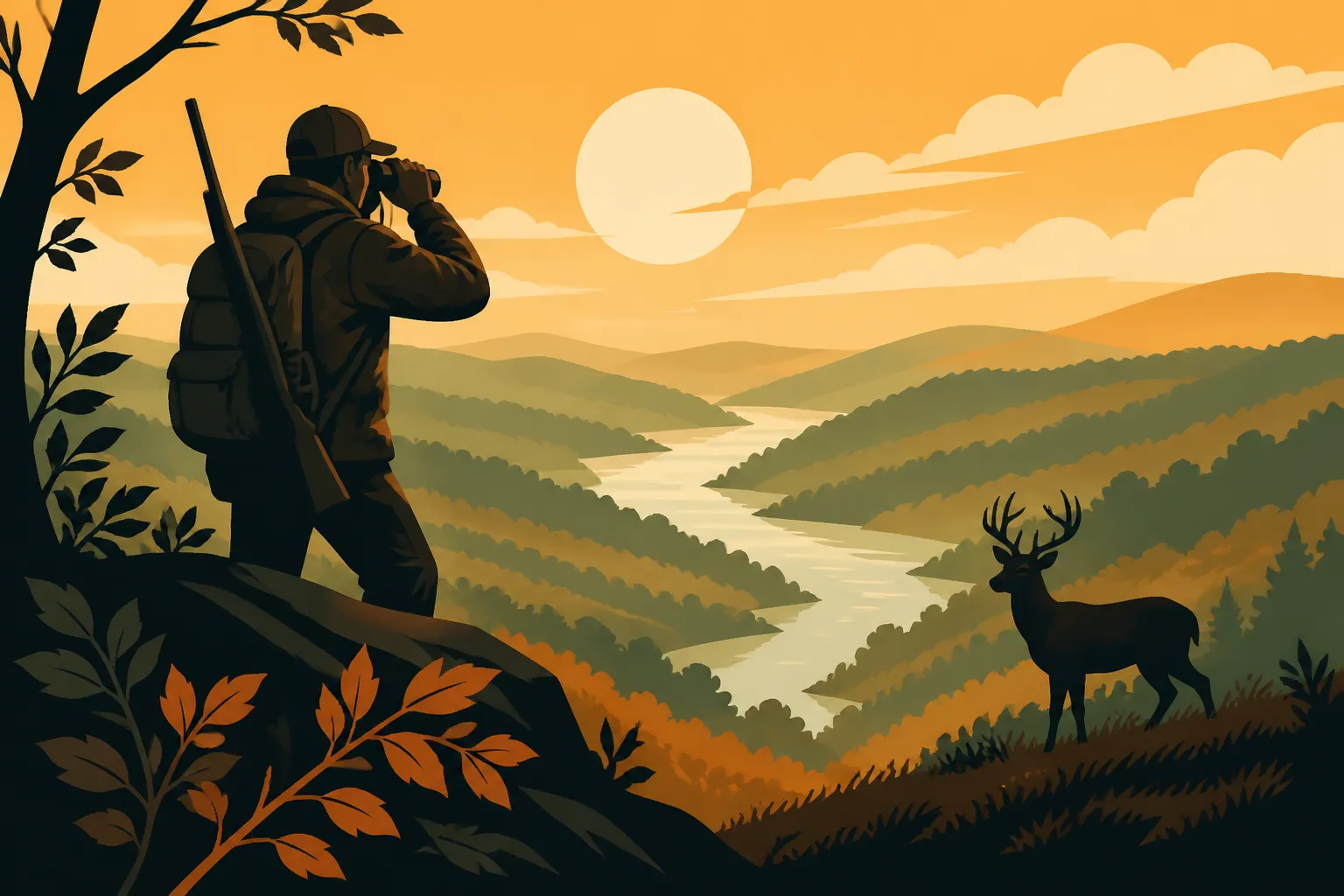
Forget gentle rolls; we're talking about sharp, dramatic elevation changes here. The Ohio River, along with its countless tributaries, has sculpted a truly rugged environment. You'll encounter long, winding ridges that stretch for miles, punctuated by deep, often narrow hollows (or "hollers," as the locals call them) that plunge hundreds of feet to a creek bottom. These hollows act like natural corridors, but also create bewildering labyrinths of terrain.
Imagine standing on a ridge top, looking across at another equally steep ridge, with a dark, timber-filled hollow separating you. It's not uncommon to gain and lose several hundred feet of elevation multiple times in a single day's hunt. This relentless up and down movement profoundly impacts deer travel patterns. Bucks, in particular, will often choose to travel along benches – flatter, shelf-like areas that interrupt the steep slope – rather than constantly climbing and descending. Identifying these subtle benches, sometimes only a few yards wide, can be critical. They're often overlooked by less experienced hunters, making them prime spots for a mature buck to sneak through.
Vegetation and Cover: A Mix of Hardwoods and Thick Undergrowth
The forests of the Ohio River Valley are predominantly mature hardwoods – towering oaks, hickories, maples, and poplars that provide a rich mast crop. This abundance of acorn-producing trees is a huge draw for deer, especially during the fall. However, it's not all open timber. Interspersed within these mature stands, you'll find areas of extremely thick regenerating timber, often in places that have been logged decades ago or hit by severe storms. These areas are veritable fortresses of briars, grapevines, multiflora rose, and dense saplings.
This thick cover, while challenging for human navigation, provides excellent bedding and security for whitetails. Deer will bed down in these tangles, using the dense vegetation to shield them from predators and hunters alike. Finding the subtle trails that lead into and out of these thickets can be gold. Sometimes, a deer will choose to bed just inside the edge of a thicket, catching the sun on a south-facing slope, knowing it has a quick escape route into the denser interior. Learning to identify these bedding areas and understanding how deer use the cover to their advantage is crucial. It feels like pushing through a green wall one moment, only to step into an open oak flat the next. This mix of open timber and dense sanctuary dictates deer movement and, consequently, our hunting strategies.
Scouting Strategies for River Valley Success
You wouldn't try to navigate a labyrinth blindfolded, and you shouldn't try to hunt the Ohio River Valley without thorough scouting. This terrain demands a meticulous approach, both from above and with your boots on the ground.
Aerial Reconnaissance and Topo Maps
Before you ever step foot in the woods, the best scouting starts at home. Modern mapping tools are an absolute game-changer for this kind of country. Services like the Ohio HuntFish app, Google Earth, or dedicated hunting apps like GoHunt allow you to dissect the landscape from your couch. Focus on identifying key terrain features that whitetails will naturally utilize. Look for saddles – those dips or low points along a ridge line where deer can easily cross from one side to another. These are natural funnels, especially during the rut.
Next, trace the contours for benches. These flat spots on a steep slope are often invisible from the ground until you're right on them, but they jump out on a topographic map. Deer use benches to feed, travel, and even bed, as they offer easier movement than traversing a straight-up hillside. Identify creek bottoms and drainages; these serve as natural travel corridors, particularly during dry spells or as escape routes. Logging roads, even old ones, can also be invaluable for access and as clear travel paths for deer. Pay close attention to points and spurs – areas where a ridge branches off or juts out, offering elevated vantage points for deer. By Reading Aerial Photos for Southeast Ohio Deer, you can pinpoint potential bedding areas, often on leeward (downwind) sides of ridges or in thick cedar groves, and then look for trails leading to known food sources like oak flats or agricultural fields in the valley below.
Boots on the Ground: Finding Fresh Sign and Funnels
Once you've done your homework from above, it's time to put boots on the ground. There's simply no substitute for walking the terrain, especially in the pre-season or during the off-season. Your goal is to confirm what you saw on the map and find fresh, undeniable evidence of deer activity. Start by walking those identified saddles and benches. Look for well-worn trails, fresh tracks, and droppings. During the early fall, keep an eye out for rubs – places where bucks have scraped their antlers on trees. These can indicate a buck's travel path and often reveal their size. Scrapes, patches of ground pawed clear by bucks and often urinated in, are also key indicators of buck activity, especially as the rut approaches.
Pay particular attention to natural funnels created by the terrain. A narrow neck of timber between two steep hollows, a hard bend in a creek, or a small saddle where multiple trails converge are all high-potential areas. Check around water sources, especially during dry periods. While the Ohio River Valley generally has ample water, a reliable, accessible spring or seepy area can concentrate deer movement. When Scouting Ohio Public Land Before Season, don't just focus on the obvious trails. Often, the biggest bucks will use slightly less conspicuous routes that offer more cover and security. Following these subtle trails, often marked only by a faint indentation in the leaves, can lead you to a buck's secret hideaway.
Effective Hunting Tactics for River Valley Whitetails
Hunting the Ohio River Valley is not about simply sitting in a spot and hoping a deer walks by. It requires thoughtful strategy, adaptability, and an understanding of how deer use this demanding landscape.
Treestand and Ground Blind Placement for Elevation
Placing a treestand in the Ohio River Valley comes with its own set of challenges. Finding a tree that offers both good cover and a level perch on a steep hillside can be tricky. You need to think about your shooting lanes not just horizontally, but also considering steep uphill and downhill shots. When placing a stand, prioritize areas that offer a commanding view of a bench or a saddle. Deer often travel along these contour lines rather than directly up or down the steepest slopes. A well-placed stand on a bench overlooking a hollow can give you an advantage, allowing you to intercept deer moving between bedding and feeding areas. Consider how the deer will approach the area and position your stand to catch them broadside. Remember that sometimes the best tree isn't necessarily the tallest, but the one that allows you to blend into the canopy and break up your outline effectively. For more specific advice, check out our guide on Treestand Setups in Appalachian Ohio Hardwoods.
Ground blinds can be incredibly effective in this terrain, especially in areas with thick cover or near the edge of an old logging clear-cut. The key is to make them blend in seamlessly. Use natural materials like fallen branches, logs, and dense brush to brush in your blind. Pay attention to shooting windows and lanes. A strategically placed blind can give you an edge when hunting a subtle trail on a ridge point or nestled into a thicket that deer use for bedding. If you're going the ground blind route, consider a low-profile blind that helps you vanish into the undergrowth. For tips on deployment, consider Using a Ground Blind on Ohio Public Land. Remember that on these steep slopes, you often want to be slightly above or at eye level with the deer's expected travel path for ethical shot angles.
Still-Hunting and Stalking the Ridges
Still-hunting is perhaps one of the most rewarding, yet challenging, tactics for the Ohio River Valley. It demands immense patience, keen observation, and a silent, deliberate approach. The idea is to move slowly through the woods, taking a few steps, then pausing for several minutes to scan for deer. Use your binoculars constantly to pick apart cover, looking for horizontal lines that don't belong (a deer's back), flicking ears, or the subtle swish of a tail.
When still-hunting, always try to move into the wind or with a quartering wind to keep your scent from blowing directly into deer bedding or feeding areas. Utilize the terrain to your advantage: use the ridge lines for visibility, allowing you to peer into hollows, and use the hollows themselves for concealment as you move from one ridge to another. The secret to success in this method is to move so slowly that you're essentially hunting pockets of terrain. Check out our detailed guide on Still-Hunting Shawnee State Forest Ridges for a deeper dive into this technique. Pay attention to the subtle sounds of the forest – a distant rustle, a falling acorn, or the faint crunch of leaves can all indicate deer movement. The goal is to see the deer before it sees you, giving you time to evaluate the situation and prepare for a shot.
Understanding Wind and Thermals in Hilly Country
One of the most critical, yet often misunderstood, aspects of hunting steep terrain is the interplay of wind and thermals. The actual wind direction you feel might not be the direction your scent is traveling, especially at different elevations. Thermals are air currents driven by temperature changes, and they are highly predictable in hilly country.
In the morning, as the sun begins to warm the earth, cold, heavy air that has settled into the hollows overnight begins to rise. This means that if you're hunting in a hollow, your scent will be carried up the hillside. Conversely, on a cool evening, as the sun sets and the air cools, warm air on the ridges begins to sink into the hollows. This means your scent will be carried down the hillside.
Your strategy must adapt to these thermal shifts. For a morning hunt, it's often best to set up on a ridge top or high on a hillside, allowing the rising thermals to carry your scent up and away from deer in the hollows below. For an evening hunt, you might want to position yourself lower on the hillside or near the bottom of a hollow, letting the falling thermals carry your scent down. However, always remember that a strong prevailing wind can override thermals to some extent. The trick is to combine your knowledge of the wind direction with the predictable thermal currents. Consult our piece on Wind and Thermals on an Appalachian Ridge for a full breakdown. Overlooking thermals is a common mistake that can spoil a hunt before it even begins.
Gear and Preparation for the Demanding Landscape
Hunting the Ohio River Valley is physically taxing. You're going to be climbing, descending, and potentially dragging a deer out of some serious terrain. Having the right gear and being physically prepared isn't just a convenience; it's a necessity for safety and success.
Essential Gear for Steep Terrain
Your footwear is paramount. Forget flimsy boots; you need sturdy, waterproof boots with excellent ankle support and aggressive tread. Brands like Kenetrek or Schnee's are popular among serious backcountry hunters, but even a good quality pair of Danner or Merrell boots can make a huge difference. You'll be traversing uneven ground, slippery leaves, mud, and possibly snow, so traction is critical. Nobody wants to be halfway up a ravine in flimsy sneakers, feeling every sharp rock.
A good pack is also indispensable. You'll need to carry water – often more than you think, especially during early season hunts. Snacks, extra layers, a first-aid kit, a headlamp (even for daytime hunts, just in case), and game processing tools need a home. A pack with a comfortable hip belt will help distribute the weight and save your shoulders on those long climbs. If you're interested in options, check out our guide on Packs for a Day on Wayne National Forest. For navigation, a reliable GPS unit or a hunting app on your smartphone (like GoHunt, which lets you download maps for offline use) is non-negotiable. Cell service can be spotty to non-existent in many hollows, so offline map capabilities are key to staying oriented and safe. Always carry a compass and a physical map as a backup, too.
Physical Fitness and Safety Considerations
The physical demands of hunting the Ohio River Valley cannot be overstated. Consistent cardio and leg strength training in the off-season will pay dividends when you're repeatedly climbing hills or dragging a deer up a steep incline. Don't underestimate the effort required to get into and out of these areas, let alone the added challenge of recovering game.
Safety should always be your top priority. Tell someone exactly where you're going and when you expect to return. Carry a fully charged cell phone (though be aware of service limitations) and a personal locator beacon (PLB) or satellite messenger for emergencies, especially if you're hunting alone in remote areas. A well-stocked first-aid kit with items for cuts, scrapes, blisters, and sprains is a must. If you're using a treestand, a full-body harness and a lifeline are non-negotiable safety items.
When it comes to game recovery, be realistic about your capabilities. Dragging a mature deer out of a deep hollow by yourself can be incredibly difficult, if not impossible, on some slopes. Consider using a deer cart on gentler slopes or logging roads, but be prepared for the possibility of having to quarter or bone out an animal on site. Knowing how to field dress efficiently is crucial, particularly if you have a long drag or if temperatures are mild; our guide on Field Dressing a Deer in Cold Weather offers useful advice, even if you're not in frigid conditions. Always carry a bright headlamp or flashlight for walking out after dark, as trails can disappear quickly in the dense timber of the Ohio River Valley.
Challenge in Ohio River Valley Ridges Solution/Strategy Key Benefit
Multi-level terrain, varied deer behavior You know where to focus your effort.
Key Challenges Effective Hunting Strategies My strategy emphasizes knowing the deer's primary movements and adapting my setup to them, rather than trying to force deer to me in less predictable locations. It's about letting the terrain dictate where they will move, and then being there.
**Steep, broken terrain Prioritize terrain scouting: Use satellite imagery (like GoHunt) to identify saddles, benches, creek bottoms, and logging roads. Validate these on foot, looking for heavily used deer trails. Think vertical movement: Deer will travel along benches to avoid steep climbs/descents, or utilize creek bottoms as natural highways. Maximizes efficiency, focuses effort on high-potential areas, minimizes wasted time/energy in unfavorable terrain.
Dense, varied cover Identify bedding areas: Look for thick briar patches, regenerating timber, or cedar thickets on leeward slopes. Locate transition zones: Hunt the edges where thick cover meets more open timber, as deer will often stage here. Increases chances of encountering deer moving between bedding and feeding.
Wind and thermal shifts Hunt according to thermals: In mornings, hunt high as thermals rise. In evenings, hunt low as thermals fall. Always prioritize the prevailing wind. Use apps for real-time data: Many mapping apps (like GoHunt) provide wind direction and speed data. Prevents your scent from alarming deer, crucial in hilly country where air currents are complex.
Physically demanding Train in the off-season: Focus on cardio and leg strength. Pack smart: Carry sufficient water, light but warm layers, and a reliable navigation system. Ensures you can effectively cover ground and endure long hunts, improving safety and stamina.
Difficult game recovery Hunt closer to access points: If possible, consider stand locations that offer a slightly easier retrieve. Carry appropriate tools: A sharp knife, game bags, and a deer drag or sled (if terrain allows) are essential. Know your limits: Don't hesitate to quarter an animal if the retrieve is too difficult. Facilitates ethical and efficient game recovery, especially important in rugged, remote areas.
Limited visibility Patience and observation: Utilize still-hunting tactics, taking a few steps then pausing to scan. Binoculars are key: Don't just scan with your eyes; use binoculars to pick apart cover. Helps you spot deer before they spot you, turning low-visibility into a hunting advantage.
Remote, rugged areas Safety first: Always inform someone of your hunting plans. Carry a first-aid kit, fully charged phone, and a backup navigation system (compass/map). Consider a PLB or satellite messenger. Mitigates risks associated with remote hunting, ensuring help can be found if needed.
Disclaimer
Hunting is an inherently dangerous activity. Always prioritize safety, follow all local and state regulations, and obtain proper licenses and permits before heading into the field. The information provided here is for educational and informational purposes only and should not replace professional guidance or personal judgment. Be aware of your surroundings, understand firearm safety, and respect wildlife and private property. Check the current Ohio hunting regulations (Ohio Department of Natural Resources) before any hunt, as rules and seasons can change.