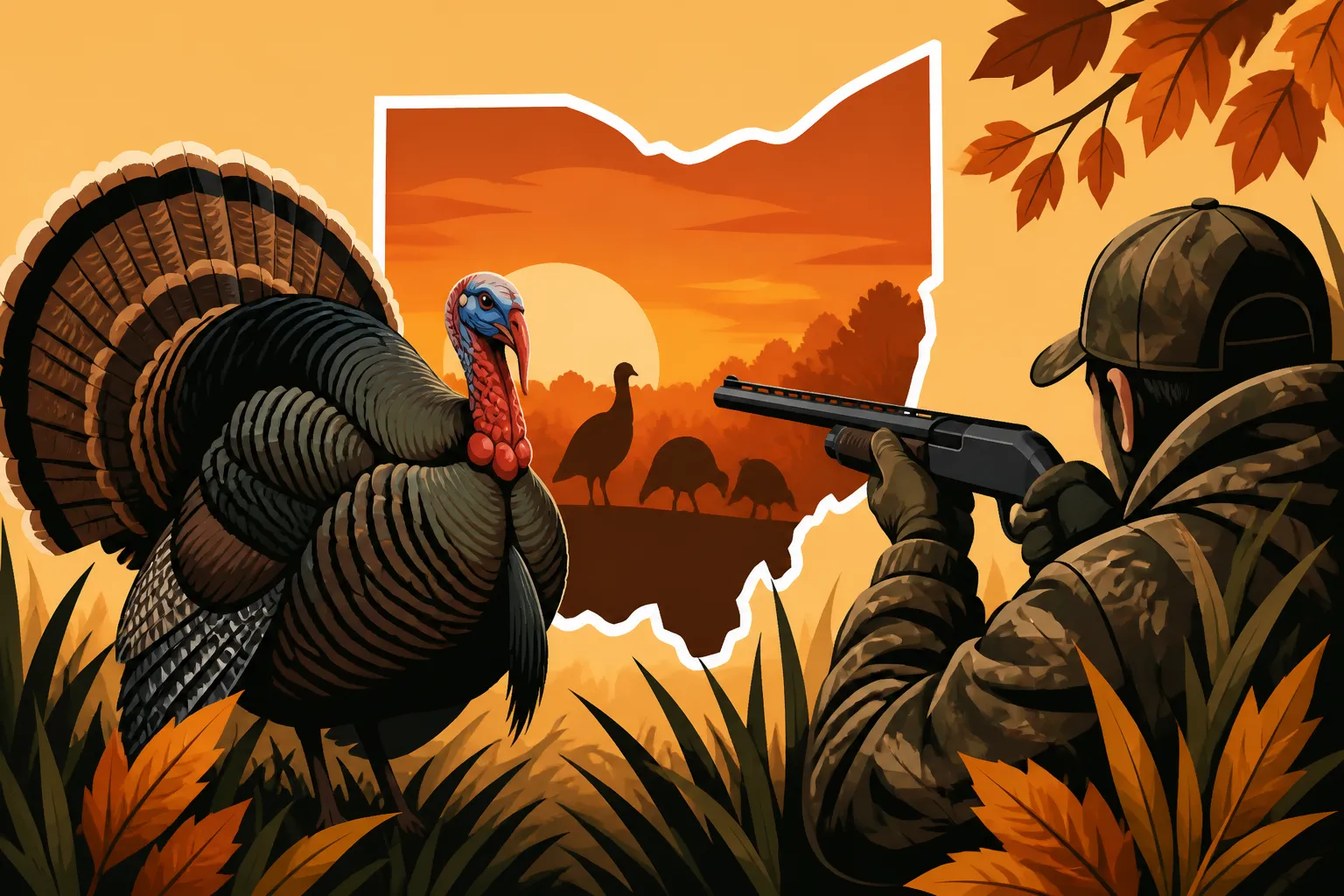
Fall Turkey Tactics With a Shotgun Only
Hunting fall turkeys in Ohio with a shotgun can feel like a completely different ball game compared to the vocal, strutting world of spring gobblers. Instead of booming calls and visible displays, you're often met with silence, dispersed flocks, and birds that seem to vanish into the timber or across vast farm fields. This lack of predictable vocalizations leaves many hunters scratching their heads, wondering how to locate and approach these wily birds effectively. This comprehensive guide is designed to cut through that confusion, offering detailed, proven shotgun-only tactics to help you successfully fill your fall turkey tag in the Buckeye State.
Understanding Fall Turkey Behavior in Ohio
To effectively hunt fall turkeys with a shotgun, you first need to shed the spring mindset. Autumn birds operate on a different rhythm, driven by food, safety, and flock cohesion rather than breeding. Understanding these fundamental shifts is the cornerstone of any successful fall strategy in Ohio.
The Autumn Flock Dynamics
Once the breeding season winds down, Ohio's wild turkeys transition into larger, more stable social units. You'll typically encounter two main types of flocks: the hen and poult groups and the bachelor groups of mature gobblers. Hen and poult flocks consist of a dominant hen, her offspring from the spring, and often other hens who may or may not have successfully raised their own broods. These groups can range from a handful of birds to dozens, moving together, feeding, and roosting in tight formation. Bachelor groups, on the other hand, are smaller, usually consisting of two to five mature gobblers. These older birds are often warier and tend to stick to thicker cover.
Their daily routine is primarily dictated by food availability and security. They'll leave their roosts shortly after dawn, heading straight to feeding areas. They'll spend most of the morning foraging, then typically find a secluded, often brushy or timbered area to "loaf" during the midday hours – dusting, preening, and generally relaxing. As the afternoon progresses, they'll often feed again before heading back to a communal roost site, usually in tall, mature trees over water or in deep ravines, just before dark. Recognizing these patterns across Ohio's diverse landscapes, from the Appalachian foothills to the flat farmlands, is crucial.
Fall Foraging and Food Sources
Unlike spring, when turkeys are often focused on insects and greens, fall turkeys are absolute mast magnets. Ohio's hardwood forests, particularly those dominated by oak, become prime real estate. Acorns are high-energy food sources, and turkeys will scratch furiously through leaf litter to find them. Identifying stands of white oak, red oak, and chestnut oak (where available) can be like finding a gold mine. Hunters who pay attention to areas Hunting After a Poor Acorn Year will know that birds might shift their focus dramatically, making scouting for alternative food sources even more critical.
Beyond acorns, turkeys will key in on other soft mast like wild grapes, dogwood berries, and black gum fruit. In Ohio's agricultural regions, waste grain in cut cornfields or standing soybean fields becomes an irresistible draw. Birds will spend hours meticulously gleaning every last kernel or bean. Finding these active feeding areas is your primary goal. Utilizing tools like GoHunt can help you overlay public land boundaries with satellite imagery, identifying potential oak ridges or agricultural fields adjacent to cover, giving you a head start on scouting potential feeding zones.
Vocalizations and Communication Shifts
One of the biggest mental adjustments for a spring hunter trying fall turkeys is the drastic change in vocalizations. Forget the booming gobble; it's practically nonexistent in the fall outside of rare, territorial outbursts. Fall turkeys communicate primarily through soft clucks, purrs, yelps, and the distinctive "kee-kee" or "kee-kee run" of young birds calling for their scattered flock. These are calls of cohesion and reassurance, not challenge or breeding.
Hens will use soft clucks and purrs to keep their flock together while feeding. Lost or scattered birds, especially poults, will emit the high-pitched kee-kee run, which is essentially a plea to be reunited with the flock. Gobblers, particularly older ones, are often the quietest, relying more on their keen eyesight and hearing. The key is to understand that when you hear vocalizations in the fall, they're almost always flock-oriented. Your calling strategy will revolve around mimicking these reunion calls, rather than aggressive breeding behaviors. This is why knowing When Ohio Gobblers Go Quiet in Late May can help you prepare for the entirely different acoustic world of the fall woods.
Key Shotgun-Only Tactics for Fall Turkeys
Since you're committed to a shotgun-only approach for fall turkeys in Ohio, your tactics need to leverage the close-range effectiveness of this firearm. Forget trying to lure a gobbler from a half-mile away; fall hunting is all about getting into the birds' comfort zone.
The "Break Up and Call Back" Method
This is the quintessential fall turkey tactic, especially effective with a shotgun, as it brings birds into close range. The premise is simple: locate a flock, intentionally scatter them, and then set up to call them back together. Here’s how it works:
- Locate the Flock: Spend time scouting, looking for fresh sign, or using locator calls (like an owl hoot or crow call) to get turkeys to reveal their location. Once you hear them, observe their general direction of travel or feeding.
- Break Them Up: This is the most critical and often most exhilarating part. You need to rush the flock, yelling, waving your arms, and making as much noise as possible to scatter them in every direction. The goal is to separate individual birds from the main group. Don't worry about being stealthy here; the more commotion, the better. Ensure you know Breaking Up a Fall Turkey Flock effectively and safely.
- Set Up and Call: Immediately after scattering, move quickly and quietly to a strategic setup location. This should be an area with good cover, a clear shooting lane, and a view of the likely return paths. Position yourself near where the birds were scattered, or along a known travel corridor. Wait about 15-30 minutes for things to settle down before making your first call. Start with soft clucks and purrs, mimicking a lost bird trying to re-establish contact. If you don't get a response, slowly increase the intensity to some yelps and, if you're targeting poults or lost young hens, a kee-kee run. The shotgun's effective range means you want birds coming into 20-40 yards, so patience and quiet setup are paramount.
Roost Hunting for Morning Ambushes
Another highly effective shotgun tactic for fall is pinpointing turkey roosts and ambushing birds as they fly down at first light. This requires thorough pre-season or in-season scouting.
- Locate Roosts: In the evenings, listen for the tell-tale clucks, yelps, and wing beats as turkeys fly up to their roost trees. Look for large, mature trees, often near water sources, ridge lines, or in deep ravines. Scouting with binoculars at last light can confirm active roosts. Many areas in Ohio, particularly in the larger state forests like Shawnee or Wayne National Forest, have consistent roosting habitat. This is a great way to Roost Hunting Ohio Gobblers.
- Silent Approach: Before dawn, make a silent approach to the roost area. Give yourself plenty of time to get into position without disturbing the birds. This often means being in place at least an hour before fly-down time, which in some parts of Ohio's fall turkey county list can mean a very early start.
- Position for the Shot: Set up with good cover directly between you and the roost trees, facing the direction you expect birds to fly down or walk after hitting the ground. Turkeys rarely fly directly into open fields; they often land on a limb or an elevated spot before dropping to the ground, then immediately start feeding or moving into cover. Your shotgun allows you to take advantage of these close-range fly-down opportunities. Remember, you're not calling them in as much as you are intercepting them, so concealment is key.
Still-Hunting and Ambush Points
Still-hunting involves moving extremely slowly and deliberately through known turkey habitat, pausing frequently to observe and listen. This is not a "run and gun" tactic like chasing spring gobblers, but rather a methodical approach suited for quiet fall conditions and the close range of a shotgun.
- Identify High-Probability Areas: Focus on areas with abundant food sources (oak flats, cut fields, food plots), travel corridors (logging roads, creek bottoms, saddles), and traditional loafing areas. Use topographic maps and aerial photos, perhaps through a GoHunt membership, to identify these natural funnels and features.
- Move Like a Predator: Take a few steps, then stop and scan intently for several minutes. Use your binoculars to pick apart the woods. Listen for subtle sounds: scratching in the leaves, soft clucks, wing beats, or even the distinctive sound of turkeys feeding. The wind should be in your favor, carrying your scent away from where you expect birds to be.
- Ambush Points: If you spot a flock or fresh sign, don't chase them. Instead, try to get ahead of their likely travel path and set up an ambush. Key locations include pinch points where cover narrows, creek crossings, or Turkey Tactics for Farmland Field Edges where birds move between fields and woodlots. Position yourself with solid back cover and clear shotgun shooting lanes. This strategy works particularly well when navigating the thicker cover of southeast Ohio hills, where line of sight is often limited, making long-range shots with other firearms challenging.
Gear and Setup for Fall Shotgun Hunting
Your gear choices for fall turkey hunting with a shotgun are critical for success, focusing on concealment, close-range effectiveness, and comfort in potentially cooler Ohio autumn weather.
Shotgun and Ammunition Choices
For fall turkeys, a 12-gauge or 20-gauge shotgun remains the standard, offering a potent combination of range and pattern density suitable for turkey hunting. Many hunters prefer a 3-inch or even 3.5-inch shell for the added pellet count, especially with a 12-gauge.
- Shot Size: Numbers 4, 5, or 6 lead shot are typically excellent choices. Some hunters might experiment with blended loads or heavier-than-lead options like Tungsten Super Shot (TSS), but traditional lead shot remains highly effective at typical shotgun ranges.
- Choke: A full or extra-full choke is almost universally recommended for turkey hunting to ensure a tight, dense pattern.
- Patterning: This cannot be stressed enough: pattern your shotgun with your chosen ammunition and choke tube at various ranges (20, 30, 40 yards) before hunting season. Knowing your gun's effective range and pattern density is crucial for ethical and successful shots. Many new hunters are surprised to learn how their specific gun and ammo combination performs, and it's always better to find out at the range than in the field.
Camouflage, Blinds, and Decoys
Visual concealment is paramount in fall turkey hunting. Unlike spring gobblers, which can sometimes be distracted by calling, fall flocks are inherently wary and will pick you off in a heartbeat if you're not fully concealed.
- Camouflage: Wear full camouflage, including a head net and gloves. Break up your outline as much as possible. A leafy suit can be particularly effective in dense timber or brush.
- Ground Blinds: A portable ground blind can be an absolute game-changer, especially for still-hunting or setting up after a scatter. It provides excellent concealment, allows for some movement, and protects you from the elements. Just make sure you understand Ground Blind Rules on Ohio Wildlife Areas if you're hunting public land.
- Decoys: Decoys in fall turkey hunting are generally used differently than in spring. Instead of trying to attract a tom with a strutting jake, you're often trying to reassure scattered birds that it's safe to return to the flock. A single hen or a pair of hen and jake decoys can be effective, especially if you're calling in younger birds after a scatter. Place them where returning birds can see them but slightly off to the side, allowing you to focus your shot on the real bird. Be sure to check rules and best practices for Decoy Placement for Pressured Birds. Remember, Why Ohio Bans Archery for Fall Turkey reinforces the focus on shotgun-specific tactics and gear without the additional considerations of broadhead safety with decoys.
Essential Calls and Accessories
Your calling repertoire for fall is different. You'll still need locator calls, but your primary vocalizations will shift to flock-reunion sounds.
- Locator Calls: An owl hoot tube, crow call, or coyote howler can still be effective for getting a shock gobble or a responsive cluck from a flock.
- Vocal Calls:
- Slate/Pot Calls: Excellent for realistic clucks, purrs, and yelps. Their versatility makes them a staple.
- Box Calls: Can produce loud, attention-grabbing yelps for long-range communication or softer clucks.
- Mouth Diaphragm Calls: Offer hands-free calling, which is invaluable when a wary turkey is approaching. These are fantastic for the subtle clucks and purrs you'll want to make as birds get closer.
- Kee-kee Call: This is an often-overlooked but highly effective fall call, mimicking the lost call of a young turkey. It's particularly useful after scattering a flock.
- Accessories: A comfortable, supportive turkey vest with a built-in seat cushion is invaluable for long waits. Binoculars are essential for spotting subtle movement, and a small, lightweight pair (8x or 10x magnification) is perfect. A rangefinder can confirm yardage, especially if you're unsure of your shotgun's maximum effective range. Don't forget a sharp knife, game bags, and enough water and snacks for a long day in the field, as Ohio Fall Turkey Bag Limit allows for multiple birds if the season permits, making a full day's harvest possible.
Scouting and Execution for Success
Even with the best gear and knowledge of turkey behavior, success in Ohio's fall turkey woods comes down to diligent scouting and flawless execution. These steps ensure you're in the right place at the right time.
Pre-Season Scouting and In-Season Locating
Scouting for fall turkeys should begin well before the season opens, and continue even after you've bagged your first bird. This ongoing intelligence gathering is what separates consistent success from mere luck.
- Pre-Season Homework: Use online tools like GoHunt or the Ohio Department of Natural Resources (ODNR) maps to identify public lands or private areas with potential. Look for topo maps showing large timber blocks, especially those with oak ridges, and aerial imagery revealing agriculture fields, creek bottoms, and clear-cuts. Identifying potential food sources and travel corridors is paramount.
- Boots on the Ground: Walk these areas, looking for definitive turkey sign:
- Tracks: Look for distinct three-toed tracks, especially in soft soil along logging roads or creek banks.
- Droppings: Turkey droppings are unique. Males typically leave J-shaped droppings, while females leave spiral-shaped droppings. Fresh droppings indicate recent activity.
- Dusting Bowls: These are shallow depressions in soft dirt where turkeys "bathe" to remove parasites. Finding active dusting bowls means birds are using the area.
- Scratchings: In areas with leaf litter, look for freshly scratched-up spots where turkeys have been foraging for acorns and insects. The size and depth of the scratchings can give you an idea of flock size.
- In-Season Locating: Once the season starts, leverage both your pre-season knowledge and active listening. Use locator calls early in the morning or late in the evening to try and get a response. Drive quiet back roads at dawn, listening for fly-down cackles. Look for turkeys feeding in fields from a distance. Being a good detective during the season is just as important as the pre-season legwork, allowing you to adapt to changing food sources or flock movements. This dynamic approach is similar to the Run-and-Gun Turkey Tactics on Public Land often employed for spring birds but adapted for the quieter, more dispersed fall flocks.
Reading the Landscape and Turkey Sign
The landscape itself will tell you a story if you know how to read it. Turkeys are creatures of habit, often using the same travel routes, feeding areas, and roost sites year after year, especially if habitat remains consistent.
- Follow the Food: As discussed, fall turkeys are food-driven. If you find a productive oak flat with fresh cuttings (acorn shells) and droppings, you've found a honey hole. Similarly, if a farmer has just harvested corn or soybeans, that field edge becomes incredibly attractive.
- Identify Travel Corridors: Turkeys don't just appear out of thin air. They use distinct travel lanes – old logging roads, ridgetops, creek beds, fencelines, and saddles in terrain. Look for concentrated sign along these natural funnels. If you're hunting in the Appalachian foothills of Ohio, understanding Wind and Thermals on an Appalachian Ridge can further help predict how birds will move through these corridors.
- Interpret Freshness: Learning to distinguish fresh sign from old is critical. Bright, shiny droppings and vigorously dug-up leaf litter indicate birds were there very recently. Faded tracks or dusty, undisturbed scratchings mean they've moved on. Don't waste time hunting old sign.
Patience and Persistence
Fall turkey hunting with a shotgun requires a special kind of patience, often more so than spring. When you scatter a flock, it can take anywhere from 30 minutes to two hours for them to start filtering back to your calls. They won't come running in; they'll often circle, approach cautiously, and try to pinpoint the source of the calls visually.
- Extended Waits: Once you're set up, whether after a scatter or in an ambush spot, commit to a long sit. Don't be tempted to move too soon. Many hunters give up just before a bird commits.
- Subtle Calling: Resist the urge to overcall. Once you've established communication or feel birds are heading your way, scale back your calling to soft clucks and purrs. Let them come the rest of the way. If they hang up, a soft tree yelp or kee-kee can sometimes be the perfect trigger.
- Stay Ready: Keep your shotgun shouldered or at least in a ready position, especially your barrel pointed in the most likely direction of approach. Turkeys can appear silently and quickly, and you need to be able to shoulder your gun and get on target without unnecessary movement. Always remain still and quiet, using your eyes and ears to scan for approaching birds. Success in Ohio's fall season isn't always about aggressive tactics; often, it's about out-waiting the birds.
Fall Turkey Hunting Comparison: Spring vs. Fall
To truly grasp fall turkey hunting, it's helpful to highlight the key differences between the two seasons. This table provides a quick overview.
| Feature | Spring Turkey Hunting | Fall Turkey Hunting (Shotgun Only) |
|---|---|---|
| Primary Goal | Attract breeding gobblers | Reconnect scattered flocks, locate feeding birds |
| Key Vocalization | Gobbles (strutting, challenging) | Clucks, purrs, yelps, kee-kees (reunion calls) |
| Bird Behavior | Toms focused on breeding, often responsive to calls | Flocks focused on food & security, often quiet and wary |
| Main Tactic | Calling in gobblers, setting up on strut zones | Breaking up flocks & calling back, still-hunting, roosting |
| Calling Intensity | Can be aggressive to challenge gobblers | Generally softer, more subtle, focused on reassurance |
| Decoy Use | Strutting gobblers, breeding hens | Single hen, jake & hen (reunion, security) |
| Shotgun Range | Typically 20-40 yards | Still 20-40 yards, but opportunities often closer after a scatter |
| Patience Level | Moderate, birds can come in quickly | High; long waits common after a scatter or in ambush |
Ohio's fall turkey season offers a rewarding and challenging experience for those willing to adapt their methods. By understanding the unique behaviors of fall flocks, employing shotgun-specific tactics like the "break up and call back" and careful still-hunting, and preparing with the right gear, you'll significantly increase your chances of success in the woods.
Disclaimer
Hunting is an inherently dangerous activity. Always prioritize safety, adhere to all Ohio hunting regulations, and follow ethical hunting practices. Verify all season dates, bag limits, and licensing requirements with the Ohio Department of Natural Resources (ODNR) before heading into the field. This guide is for informational purposes only and does not substitute for proper hunter education and personal responsibility.