Hunting a Funnel Between Two Woodlots
Few things are as frustrating as heading into the woods, knowing deer are in the area, but never seeing them during legal shooting hours. You scout, you hang stands, you put in the time, only for the deer to seemingly vanish into thin air. If this sounds familiar, it's often because you're missing the invisible highways deer use daily – and one of the most reliable of these is a natural funnel between two woodlots. This comprehensive guide will break down exactly what these funnels are, how to pinpoint them on Ohio's varied landscape, and crucially, how to set up for success to intercept those elusive whitetails.
Understanding the "Why" Behind Woodlot Funnels
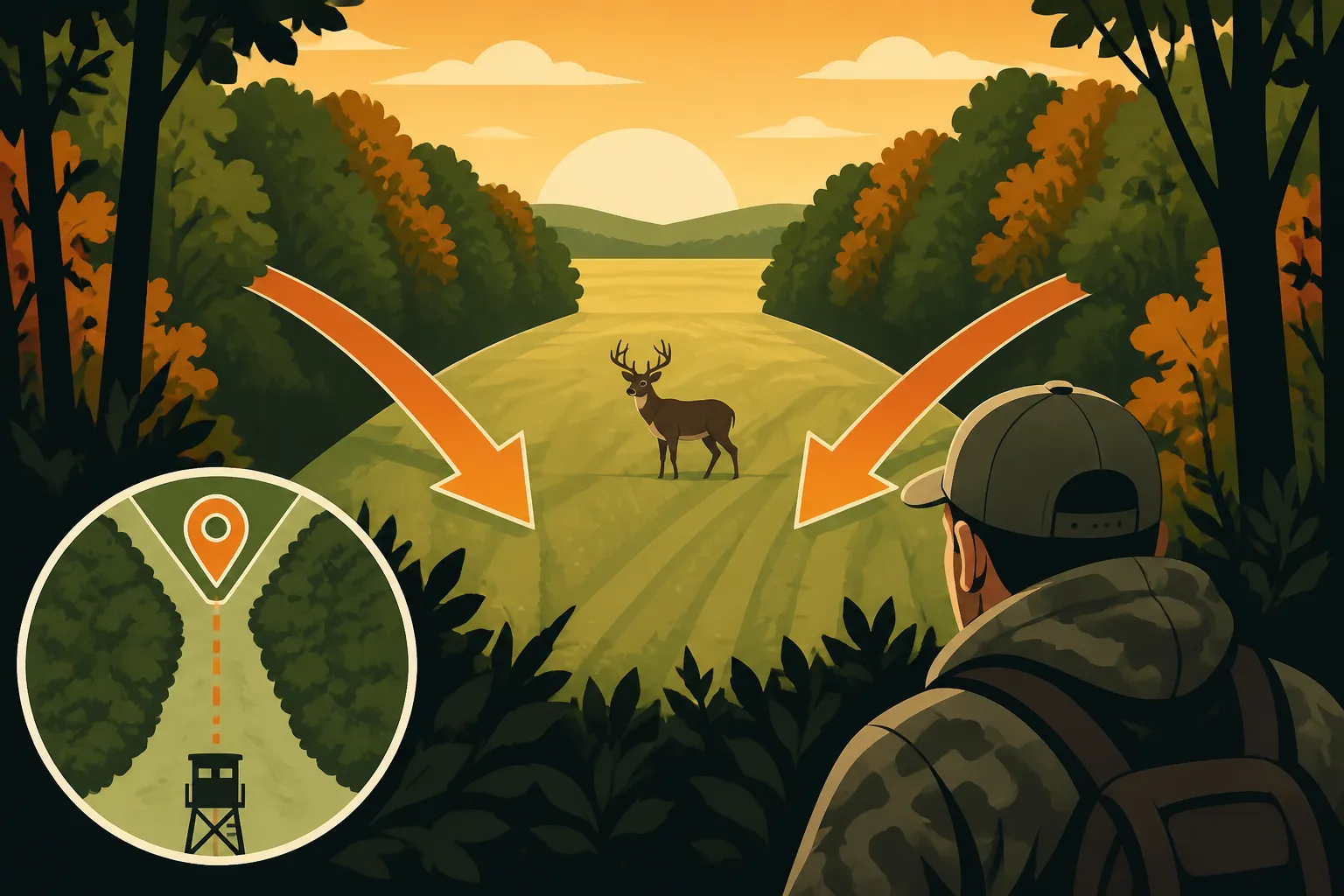
Deer are creatures of habit and efficiency. They want to move from point A to point B with the least amount of effort and the most amount of cover. This simple truth is the foundation for why funnels are so incredibly productive, especially in Ohio's diverse terrain, from the sprawling farmlands of the northwest to the rolling hills of Appalachia. A funnel, in essence, is any geographical feature that constricts deer movement into a narrower path. When two woodlots are separated by a field, a narrow strip of timber connecting them becomes a superhighway for deer.
What Makes a Funnel a Hotspot?
A funnel between woodlots becomes a hotspot because it simplifies deer travel. Imagine you're a deer trying to get from a bedding area in one woodlot to a feeding area in another, with a wide-open corn or soybean field in between. Would you rather walk across the exposed field, risking predation, or stick to the relative safety and cover of a narrow strip of trees, brush, or even a creek bottom that links the two? The answer is always the latter. These pinch points, whether natural or man-made, force deer into predictable patterns.
Topography plays a huge role. Even subtle dips or rises, a change in vegetation density, or the presence of water can create these critical pathways. For instance, a low-lying, swampy area between two higher patches of timber might channel deer along its edges. Or perhaps a small creek, flanked by thicker brush, provides the only truly concealed route across an otherwise open landscape. In Ohio, where many woodlots are fragmented by agricultural land, these funnels are often obvious. They are the timbered fingers extending into fields, the overgrown fencerows, or the narrow creek lines that offer consistent cover. They're also often overlooked by hunters who focus too much on large timber blocks or wide-open fields, missing the subtle transitions where deer feel most comfortable moving.
Identifying Key Funnel Characteristics in Ohio's Landscape
Ohio's landscape presents a fantastic variety of funnel opportunities. In areas like Northwest Ohio, where agriculture dominates, you'll often find small woodlots or timber strips nestled between vast fields. These small islands of cover, connected by a slender band of trees or a brushy ditch line, are prime examples of funnels. Deer living in these areas absolutely rely on these narrow corridors to move between bedding cover and food sources, especially during daylight hours. A good example might be a 5-acre woodlot on one side of a 100-acre cornfield, connected to a larger 20-acre woodlot on the other side by a thin line of mature maples and honeysuckle along a creek. This creek line is your funnel.
Another common scenario involves terrain features. In the hillier regions of Southeast Ohio, two separate timber blocks might be divided by a small valley or a steep ravine. If there's a gentler saddle or a slight bench along the ridge connecting them, that becomes a funnel. Deer will naturally gravitate to the easiest path, especially if it provides a consistent wind current or cover. To truly pinpoint these, you need to be a student of the land. Using aerial and topographic maps, like those available on the GoHunt app, is incredibly helpful. Look for those narrow connections, the strips of darker green (timber) that bridge larger blocks. Then, confirm them with boots on the ground. Think about how a deer would move, seeking safety and efficiency.
Scouting and Interpreting Deer Sign in Funnel Areas
Once you've identified potential funnel locations on a map, the real work begins: boots-on-the-ground scouting. This is where you confirm your theories, understand the precise travel routes deer are using, and look for specific indicators that will tell you where to hang a stand or place a blind. Ignoring this step is like trying to navigate a new city without a map – you might get lucky, but you're probably going to get lost.
Reading the Rutting and Feeding Sign
Deer are constantly leaving messages for those who know how to read them. In a funnel, these messages become amplified. You're looking for consistent, heavy sign that indicates regular travel. Start by identifying the most heavily used trails. These aren't just faint paths; they're often beaten down, with exposed soil, especially where they enter and exit the funnel. Look for "highway" trails, often with multiple deer traveling side-by-side, indicating high traffic.
Beyond just trails, pay close attention to fresh rubs and scrapes. Rubs are where bucks have scraped their antlers on small trees, marking their territory. Fresh rubs will show moist wood and bark that's recently been peeled back. Scrapes are pawed-out areas of bare earth, usually under a low-hanging branch, where bucks urinate and deposit scent. In a funnel, you'll often find a "scrape line" – a series of scrapes along a well-used trail. This tells you bucks are actively using this corridor, especially during the pre-rut and rut. If you find a funnel with multiple fresh rubs and scrapes, you've hit the jackpot. This indicates not just does and fawns moving through, but mature bucks actively patrolling and leaving their calling cards. Remember, the fresher the sign, the more current the deer activity. Old, gray rubs or leaf-covered scrapes are less valuable than fresh ones.
Using Technology and Boots-on-the-Ground Scouting
Modern technology, when combined with traditional scouting, creates an unbeatable combination. The GoHunt app, for instance, allows you to drop pins on specific features, measure distances, and track your movements. This is invaluable when you're trying to figure out the exact boundaries of a private property line or mark where you found that killer scrape line. Overlaying satellite imagery with topographic maps can reveal subtle changes in elevation or vegetation that might not be obvious on the ground.
However, technology is only a tool. Nothing replaces physically walking the terrain. When scouting a funnel, try to do so during the off-season or midday during the season when deer activity is minimal. Minimize your scent and disturbance. Walk the length of the funnel, looking for entry and exit points into adjacent fields or other woodlots. Pay attention to how the wind flows through the area at different times of the day, which will be crucial for stand placement. Also, consider setting up trail cameras on these trails. A quality trail camera, strategically placed, can confirm deer movement patterns, identify specific bucks, and tell you when they are using the funnel. Are they moving primarily at night, or are there daylight movements? This information is gold for planning your hunt. For more detailed advice on getting your boots on the ground, check out our guide on Scouting Ohio Public Land Before Season.
Strategic Setup: Positioning Your Stand or Blind for Success
Finding a productive funnel is only half the battle. The next, and arguably most critical, step is setting up your ambush point strategically. A poorly placed stand, even in the hottest funnel, can lead to busted hunts and frustrated evenings. You need to consider everything from wind direction to your entry and exit routes.
Optimal Stand Placement for Wind and Approach
When it comes to stand placement in a funnel, wind is king. Deer rely heavily on their sense of smell, so you must position yourself downwind of where you expect the deer to come from. This often means having multiple stand locations for different wind directions, or at least a primary and secondary option. If the wind is wrong, don't hunt that spot. It's that simple. In Ohio's fluctuating weather, having options is critical.
Consider the prevailing winds for your area, but also how topography might alter them. A small ridge or valley can create swirling winds or thermal drafts, especially in the morning and evening. Always double-check the wind on the day of your hunt.
Choosing Your Stand Type:
- Treestands: These offer excellent elevation, getting your scent above the primary deer travel lanes and providing a better view. They're often ideal for open funnels with good tree cover. Make sure you adhere to safety protocols; serious injuries can occur. If you're hunting steep ground, our guide on Treestand Safety Gear for Steep Ground has invaluable tips.
- Saddle Hunting: A fantastic, mobile option for funnels, especially if the deer are changing patterns or if you're on public land where fixed stands are prohibited. A saddle allows for stealthy, quick setups and adjustments.
- Ground Blinds: Perfect for areas with limited suitable trees or in thick cover like overgrown fencerows or brushy creek beds. A well-brushed-in ground blind can offer fantastic concealment. They also keep you out of the elements. For tips on effective concealment, our guide on Using a Ground Blind on Ohio Public Land offers some great insights.
Your approach and exit routes are just as crucial as your stand placement. Always plan a route that minimizes noise and scent. Avoid walking through bedding areas or directly across major travel routes. Try to use natural features like creek beds, ditches, or dense vegetation to conceal your movement. The goal is to get in and out undetected.
Considerations for Hunting Pressure and Deer Movement
Unfortunately, if you've found a great funnel, chances are other hunters might have, too. Ohio's public lands, in particular, can see significant hunting pressure, especially during opening weekends. This pressure can dramatically alter deer movement patterns. Deer are incredibly adaptable; if they feel pressured in one area, they'll find another, or they'll become largely nocturnal.
To mitigate this, try to find funnels in less accessible areas. This might mean walking a little further, getting off the beaten path, or targeting smaller, overlooked pockets of timber. The GoHunt app can sometimes help identify areas with less obvious access points, leading you to spots that others might overlook.
Adjusting to Pressure:
- Daylight Movement: During high-pressure periods, deer might only use funnels during the low-light hours of dawn and dusk, or even become completely nocturnal. Your trail camera data will be key here.
- Midday Movement: Paradoxically, sometimes during gun season, when everyone is pushing deer, midday can be productive in funnels as deer are displaced and looking for new cover. This is especially true on the Ohio's Two-Weekend Gun Deer Season opener.
- Patience: If deer are pressured, it pays to be patient. Stay on stand longer, especially during the rut when bucks are actively seeking does and might make a mistake.
- Timing Your Hunts: Try to hunt these funnels during periods of lower pressure, if possible, or right after a significant weather change, like a cold front, which can get deer on their feet.
In-Hunt Tactics for Maximizing Your Opportunity
You've done the scouting, found the funnel, and set up your stand perfectly. Now it's time to put those plans into action. The hours spent on stand can be long, but employing the right tactics at the right time can turn a slow sit into an unforgettable encounter.
Calling and Decoying Strategies in Funnels
Funnel locations are absolutely prime spots for using calling and decoying strategies because deer are already channeled into a specific area. They're expecting to see other deer, and a well-executed call or decoy setup can be the difference-maker.
Calling:
- Grunt Calls: A simple grunt can pique a buck's curiosity. During the rut, an aggressive series of grunts can challenge a buck, drawing him into the funnel to investigate.
- Doe Bleats: These are particularly effective during the pre-rut and rut, mimicking a receptive doe. A can call is easy to use and can often bring in a curious buck looking for love.
- Rattling: If you're confident there are mature bucks in the area, rattling antlers can simulate a buck fight and draw them in to investigate or challenge. Start with light rattling, and if no response, escalate to a more aggressive sequence. Remember, in thick cover, rattling volume in thick cover should be adjusted. Our guide on Rattling and Grunting in Ohio goes into much more detail on these techniques.
Decoying:
- Single Buck or Doe Decoy: In a funnel, less is often more. A single, small doe decoy can make a buck feel more comfortable approaching. During the rut, a small buck decoy, especially a younger, submissive one, can draw in a dominant buck looking to assert himself.
- Placement: Position your decoy where it's visible to approaching deer but also allows for a clear shot. Facing it slightly away from your expected approach path can make a real deer feel more comfortable coming in to investigate. Always consider the wind for your decoy setup as well, ensuring your scent isn't blowing directly towards the decoy.
Hunting During Key Times: Rut, Early Season, and Late Season
The effectiveness of hunting a funnel can shift throughout the Ohio deer season, depending on the deer's primary motivators.
Early Archery Season (September-October):
During the early season, deer are still largely in their summer patterns, focused on food and security. Funnels connecting bedding areas to early season food sources like standing soybeans or acorns can be incredibly productive. Focus on morning and evening movements. The opening day of Ohio Archery Season Opening Day is a great time to be in a funnel. Bucks are often still somewhat predictable.
The Rut (Late October – Mid-November):
This is prime time for funnels. During the peak of the rut, bucks are constantly on the move, chasing does. These narrow corridors become superhighways for cruising bucks covering ground, seeking out does, or pushing them through. This is when your calling and decoying tactics will be most effective. Bucks are simply more willing to make a mistake when their minds are on breeding. For deep dives into this period, check out Hunting the Ohio Rut in Early November.
Late Season (December – January):
As the season progresses, food becomes the primary driver for deer. Funnels leading to late-season food sources like standing corn, winter wheat, or brassicas can be excellent, especially during cold snaps. Deer will often try to conserve energy, so they'll stick to the most efficient travel routes. Focus on midday movements as deer might be less active during the coldest parts of the morning and evening, saving their energy for feeding.
Here's a quick reference for stand types in funnel situations:
| Stand Type | Ideal Funnel Scenario | Advantages | Disadvantages |
|---|---|---|---|
| Fixed Treestand | Established, consistent funnel with mature trees | Excellent visibility, height for scent control | Limited mobility, takes time to set up, requires suitable trees |
| Climbing Treestand | Funnel with straight, limbless trees | Quick setup, good mobility (if trees are right) | Requires specific tree types, noisy if not careful |
| Saddle Hunting | Highly dynamic funnels, varied tree cover, public land | Ultimate mobility, lightweight, adaptable to almost any tree | Steeper learning curve, less comfortable for long sits for some hunters |
| Ground Blind | Thick, brushy funnels, low cover, no suitable trees | Great concealment, protection from elements, comfortable | Limited visibility, scent closer to ground, requires brushing in for stealth |
Disclaimer
Hunting involves inherent risks, including but not limited to injuries from falls, firearms, and encounters with wildlife. Always prioritize safety, follow all local and state hunting regulations, and ensure you have the necessary licenses and permits. The information provided in this guide is for informational purposes only and should not replace professional instruction or personal judgment. The author and publisher are not responsible for any accidents, injuries, or legal infractions incurred while hunting.