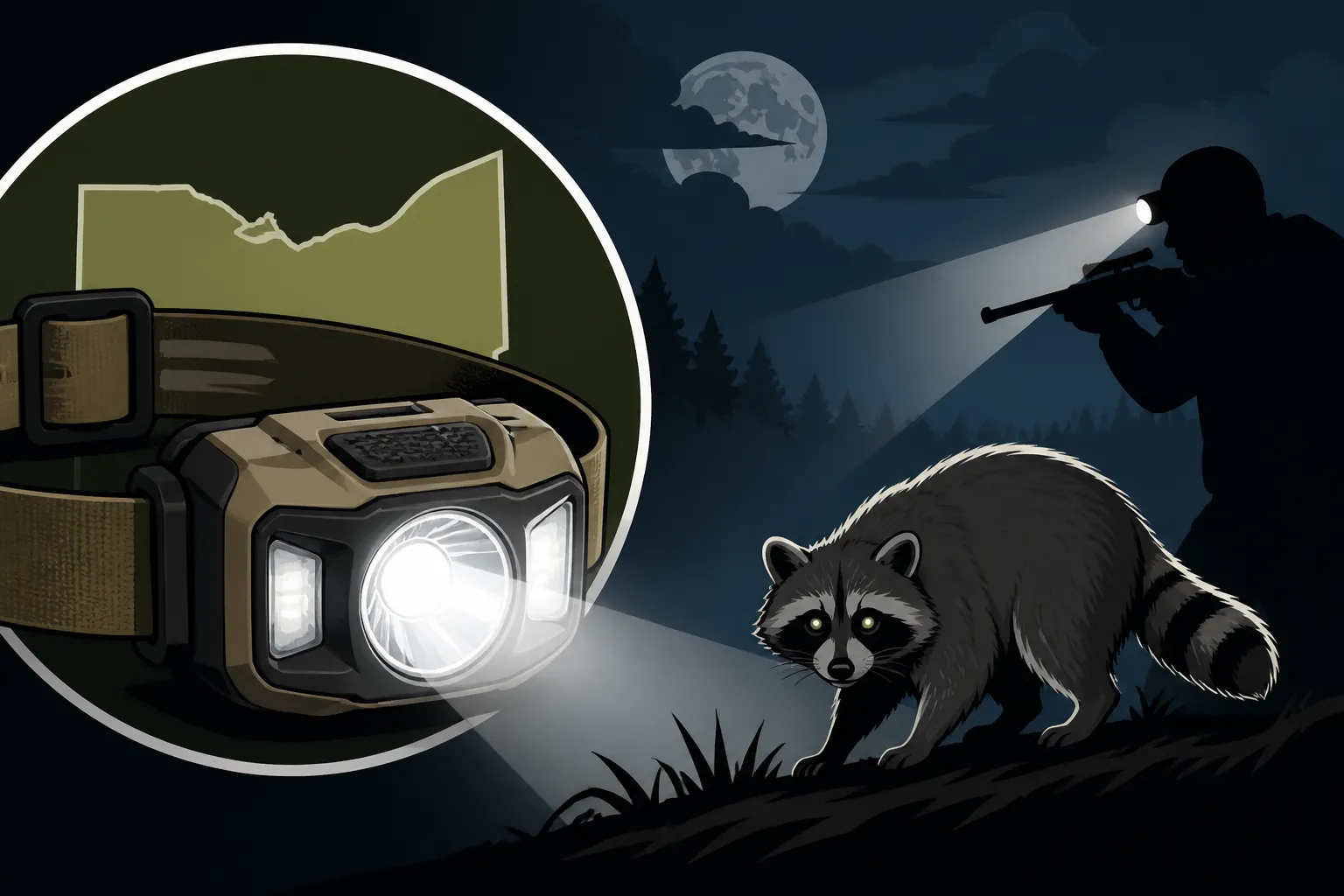
Headlamps Built for Night Raccoon Hunts
Navigating the inky blackness of the Ohio woods at night, whether you're following a bawling hound or trying to pick out a coon's glowing eyes in a treetop, presents a unique set of challenges. It's not just about having some light; it's about having the right light. This guide will shine a spotlight on why a specialized headlamp isn't just a convenience for night raccoon hunts, but an absolute necessity for safety, efficiency, and a successful outing.
Why a Specialized Headlamp is Crucial for Night Raccoon Hunting
Let's be real, when you're out in the deep woods of Ohio chasing raccoons after dark, a dinky little flashlight from the junk drawer just isn't going to cut it. This isn't a stroll through your backyard garden. You're often deep in thick cover, climbing hills, crossing creeks, and trying to keep tabs on eager hounds. A dedicated headlamp isn't a luxury; it's a fundamental piece of gear that dictates your safety, your effectiveness, and ultimately, how much you enjoy the hunt. It’s about transforming chaos into manageable navigation.
Beyond Just "More Light": Understanding Specific Needs
Many folks think "light is light," but when it comes to night hunting, that couldn't be further from the truth. A generic, handheld flashlight might offer a burst of lumens, but it ties up one of your hands—a hand you desperately need for steadying yourself on uneven terrain, pushing through briars, or holding onto your dog's lead. Imagine trying to reload your shotgun or untangle a dog from a brush pile while fumbling with a light. It’s a recipe for frustration, if not outright disaster.
What you need is hands-free illumination, allowing you to react quickly to your surroundings. You need different light modes that serve distinct purposes, not just an on/off switch. This might include a focused beam to scan distant treetops and locate a treed coon, or a wide, softer floodlight to illuminate your immediate path without blinding you or your hunting partners. These aren't just fancy features; they're essential tools designed to enhance every aspect of your nocturnal pursuit, especially when you're Running Hounds for Ohio Raccoon.
Safety and Navigation in the Dark Ohio Woods
Safety is paramount when you're out in the pitch black. The terrain in many parts of Ohio, from the rolling hills of the Appalachian foothills to the broken creek bottoms of farmland, can be treacherous even in daylight. At night, every root, rock, and ditch becomes a potential ankle-twister or face-plant waiting to happen. A good headlamp casts a consistent beam right where your eyes are looking, allowing you to anticipate obstacles and maintain your footing. This isn't just about avoiding a twisted ankle, but preventing a more serious fall that could leave you stranded or injured miles from your truck.
Furthermore, a powerful headlamp helps you keep track of your dogs. Imagine calling your hounds back from a hot trail only to lose sight of them in the darkness. Being able to quickly scan the woods and spot their reflections from their eyes or collars can save you hours of searching. When you're following the distinctive baying of a coonhound, a reliable light source is your lifeline, keeping you connected to your canine companions as you traverse the dark landscape. Always consider your First Aid Kits for Remote Wayne Forest Ground when planning to be deep in the woods.
Efficiency in Treeing and Field Dressing
The moment your hounds strike and eventually tree a raccoon is exhilarating, but the work isn't over. Now, you need to spot that coon high up in the canopy. This is where a headlamp with a strong, focused beam truly shines. You'll be scanning branches, looking for those tell-tale glowing eyes or a dark silhouette against the leaves. A weak or scattered light makes this task incredibly difficult, prolonging the process and potentially letting the coon slip away unnoticed. The ability to quickly identify and confirm the animal's location is critical to Treeing a Raccoon With a GPS Collar or not.
Once the animal is on the ground, the headlamp continues to be indispensable. Field dressing a raccoon in the dark requires precision and good visibility. Trying to hold a flashlight in your mouth or under your arm while trying to skin or gut an animal is awkward, inefficient, and frankly, unsanitary. A headlamp keeps both hands free, allowing you to work cleanly and safely. This ensures proper game care, so your hard-earned harvest doesn't go to waste, and you can focus on the task at hand rather than wrestling with a light source.
Key Features to Look for in a Night Raccoon Hunting Headlamp
Choosing the right headlamp for your Ohio night raccoon hunts isn't just about grabbing the brightest one on the shelf. There's a symphony of features that work together to create an effective and reliable tool. Think about the conditions you'll face: damp leaves, muddy trails, biting cold, and hours of continuous use. Your headlamp needs to stand up to all of it, and then some. It's a critical piece of gear, much like your Raccoon Hunting Lights and Locators.
Brightness, Beam Type, and Color Options
When we talk about brightness, lumens are the number you'll often see, but it's not the only factor. For spotting raccoons high in a tree, a strong, focused spot beam is essential, often requiring 300-500 lumens or more on its highest setting for those quick scans. However, for walking through the woods, a wider flood beam with less intensity is more suitable, helping you see your immediate surroundings and avoid tripping hazards. Many quality headlamps offer both, allowing you to switch between them as needed.
Beyond white light, colored light options are incredibly valuable. Red light is a game-changer for preserving your natural night vision. When you switch off your headlamp to listen or look for movement, your eyes are already adjusted to the dark, rather than having to readjust after a blast of white light. Red light is also less likely to spook game, especially for those initial approaches. Green light can be beneficial too, particularly if you need to follow a blood trail or see details without completely sacrificing your night vision. Some hunters find green light enhances contrast in certain environments, making it a versatile option for specific tasks during the hunt.
Battery Life and Power Management
There's nothing worse than having your headlamp die on you when you're miles deep in the woods, with a treed coon and an excited pack of hounds. Battery life is critical, and it's important to understand that the advertised runtimes are usually for the lowest power setting. For night hunting, you'll likely be cycling through higher settings, which drastically reduces battery life. Look for models that clearly state runtimes for various brightness levels.
Consider whether you prefer rechargeable batteries (often integrated lithium-ion packs) or replaceable batteries (like AA or AAA). Rechargeable units are convenient if you have access to power every night, but if you're on a multi-night trip or don't have a reliable charging source, replaceable batteries offer the flexibility of carrying spares. Many modern headlamps also feature power indicators, which are crucial for knowing how much juice you have left. In cold Ohio weather, batteries drain faster, so always factor that into your planning and perhaps carry a compact power bank as a backup, especially if you also rely on GPS Collars for Ohio Coon Hounds.
Durability, Waterproofing, and Comfort
The Ohio woods are not a sterile environment. Your headlamp will get bumped, dropped, rained on, and covered in mud, leaves, and dog hair. Durability is non-negotiable. Look for rugged construction, often with impact-resistant casings that can withstand a fall. Waterproofing is also essential. An IP (Ingress Protection) rating of IPX4 or higher means it can handle splashes and light rain, while IPX7 or IPX8 indicates it can be submerged for a short period, which is great for unexpected dunkings in a creek.
Comfort might seem secondary, but after hours of wearing a headlamp, it becomes paramount. Look for an adjustable, wide, and preferably washable strap that distributes the weight evenly. A well-balanced headlamp won't bounce around as you walk or cause pressure points on your forehead. Some models have the battery pack at the back, which can improve balance. Trying one on before you buy, if possible, is always a good idea to ensure it feels secure and comfortable for those long nights in pursuit of Raccoon Hunting at Night in Ohio.
User Interface and Controls
When your hands are cold, wet, or gloved, and your adrenaline is pumping, fiddly controls are the last thing you want. A good headlamp for night hunting should have an intuitive user interface. This means large, easy-to-press buttons that you can operate without taking off your gloves. A single button that cycles through modes (low, medium, high, red, off) is often preferred over multiple tiny buttons.
Some headlamps offer lock-out features to prevent accidental activation in your pack, which can save precious battery life. Consider how easily you can switch between a wide floodlight for walking and a focused spot beam for scanning treetops. The best headlamps make these transitions seamless, allowing you to react quickly to changing situations without fumbling. Simplicity and reliability are key when you're relying on your gear in challenging conditions.
Recommended Headlamp Features and Considerations for Ohio Raccoon Hunters
Navigating the dark canopies and underbrush of Ohio requires a headlamp that's more than just a light source; it's an extension of your senses. When it comes to chasing those masked critters after sundown, you want gear that performs flawlessly, night after night. You'll be glad you invested wisely when you're working a fencerow or Hunting Small Private Tracts in Ohio long after the sun has set.
Core Features Checklist for Success
When you’re gearing up for a night of calling hounds through the Ohio landscape, your headlamp should meet a few non-negotiable criteria. Here’s a quick rundown of the must-haves:
| Feature | Why It Matters for Raccoon Hunting |
|---|---|
| High Lumens (300-600+) | For spotting coons high in trees or scanning distant areas quickly. |
| Multiple Beam Types | Spot for distant viewing, flood for close-range navigation. |
| Red Light Mode | Preserves night vision, less likely to spook game, subtle approach. |
| Long Battery Life | Ensures consistent light for multi-hour hunts; check runtimes at all settings. |
| Waterproof/Durable | Withstands rain, mud, and accidental drops common in the Ohio woods. |
| Comfortable Strap | Allows for hours of wear without discomfort, keeps the light stable. |
| Easy-to-Use Controls | Gloved-hand friendly, intuitive button layout, quick mode changes. |
These core features form the backbone of a reliable coon hunting headlamp. Prioritizing these will ensure you have a tool that supports, rather than hinders, your night time endeavors.
Exploring Options on the Market
While I can't name specific models or guarantee features, many reputable outdoor gear brands offer headlamps designed for hunting and rigorous outdoor use. When you're looking, think about visiting a specialized outdoor retailer or checking trusted online resources that cater to hunters. For example, a resource like GoHunt often features reviews and comparisons of various headlamps, detailing their performance in real-world hunting scenarios, which can be incredibly helpful for making an informed decision. Look for brands known for their robust construction, reliable electronics, and customer support.
Consider options that boast advanced optics for clearer, more defined beams, or those with innovative power-saving features that automatically dim the light when you're looking at something close. Some headlamps even have sensors that adjust brightness based on ambient light, though some hunters prefer manual control for specific tasks. Regardless of the brand, always read reviews from other hunters who use headlamps in similar conditions to Ohio's, as their experiences can provide invaluable insight into a product's true performance.
Real-World Scenarios and Practical Tips
Let's put these features into action. Imagine you're walking into the woods from your truck, your hounds sniffing around the edge of a cornfield. You'd likely use your headlamp on a low, wide flood setting, perhaps with a red light, to navigate quietly and preserve your night vision. This is where Reading Ohio Snow for Fresh Deer Movement or game sign is crucial. You don't need blinding light, just enough to see the path in front of you without creating a glaring beacon.
Suddenly, the dogs open up on a track. You speed up, pushing through thick brush. You'll want that comfortable, stable strap to keep the light steady on your head. When the dogs finally tree, you switch to the high-lumen, focused spot beam to search the branches. You might then switch to a lower white or green light to get a clearer view of the coon once it's located, allowing you to make a clean shot. After the shot, for field dressing, you'll appreciate the full white light in a flood pattern, keeping both hands free for the task. This tactical use of your headlamp's different settings makes a world of difference in the field. When you're Running a Raccoon Hound After Dark, every minute counts, and quick adjustments to your light are key.
Maintenance and Best Practices for Your Headlamp
Your headlamp is a workhorse, enduring bumps, drops, and the unpredictable Ohio weather. Just like any other piece of critical hunting gear, it needs a little TLC to ensure it’s ready when you are. Don't let a forgotten battery or a mud-caked lens ruin your next Raccoon and Ohio Furbearers pursuit.
Keeping Your Gear Ready for the Next Hunt
After a long night out, especially one that involved rain, mud, or snow, it's tempting to just toss your headlamp back into your hunting pack. Resist the urge! Take a few minutes to wipe it down with a damp cloth, removing any dirt, grim, or sap. Pay special attention to the lens; a dirty lens will significantly reduce your light output, making it harder to spot a coon or navigate safely. If your headlamp is waterproof, a gentle rinse under the tap can work wonders, but always check the manufacturer's instructions first.
Battery care is paramount. If your headlamp uses replaceable batteries, remove them after each hunt, especially if you won't be using the light for a while. This prevents corrosion from leaky batteries, which can permanently damage the unit. For rechargeable units, aim to charge them fully before storing, and top them off periodically if they sit for extended periods, or before any significant trip. Proper storage in a dry, temperate place, away from extreme heat or cold, will prolong its lifespan. Think about using a small gear bag or dedicated compartment in your pack to protect it from other items. This is also important for other critical items like GPS Units Versus Phone Apps.
Essential Accessories and Backup Plans
Even the best headlamps can fail. Batteries die, switches break, or you might simply drop it in a deep, dark puddle. That's why having a backup plan is not just smart, it's essential for safety in the remote Ohio woods. Always carry spare batteries, fully charged, in a small, waterproof container. If you use a rechargeable headlamp, a fully charged power bank that can provide a couple of full recharges is a lifesaver.
Beyond batteries, consider a small, robust secondary light source. This could be a compact, bright handheld flashlight that fits in your pocket, or even a second, less powerful headlamp. The idea is to have redundancy. Losing all light when you're miles from your truck in unfamiliar terrain is not just an inconvenience; it can be a serious safety hazard. A good backup ensures that you can always find your way back, tend to your dogs, or handle a treed coon, even if your primary light decides to call it a night.
Disclaimer
This article is for general informational purposes only and does not constitute professional advice. Laws, prices and regulations vary by location and change over time. Consult a qualified professional for guidance on your specific situation.