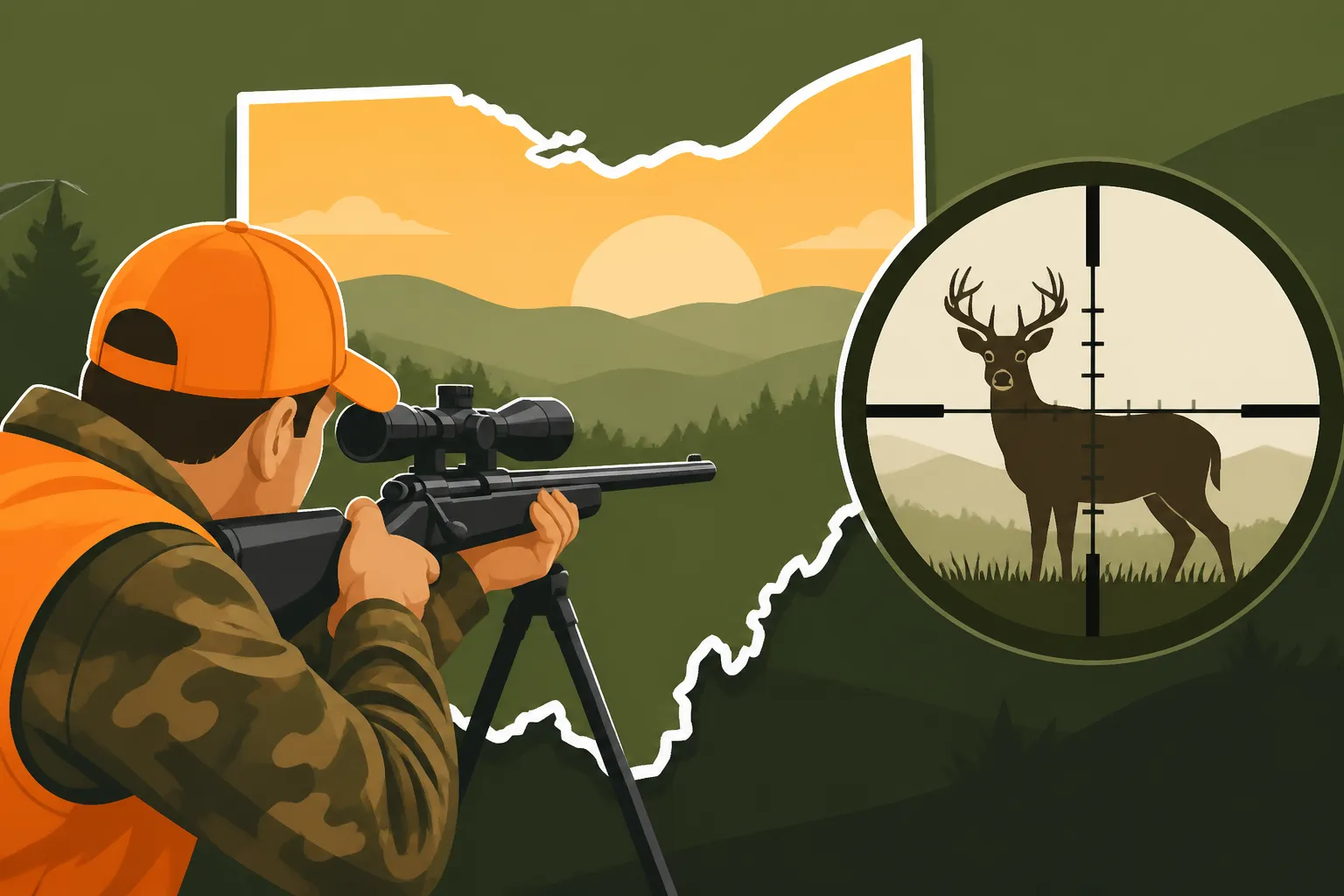
Practical Range for an Ohio Straight-Wall Rifle
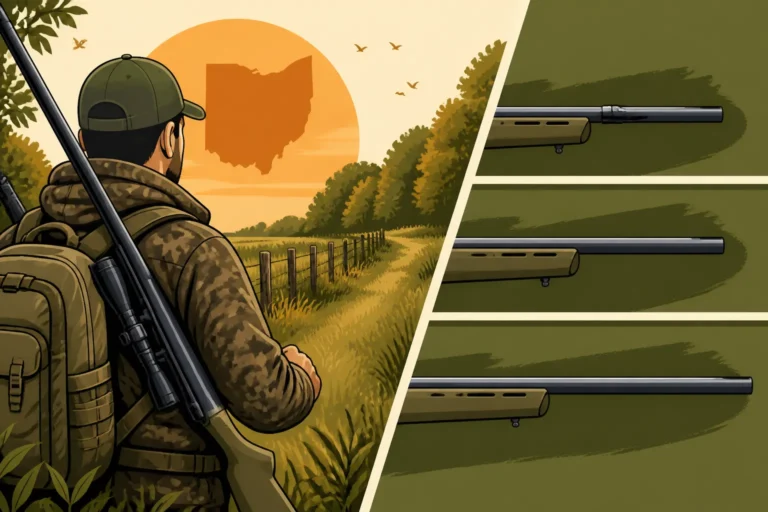
One of the biggest questions that popped up when Ohio opened up deer hunting to straight-wall cartridge rifles was, "Just how far can I really shoot with one of these?" It's a fair question, especially for those of us who grew up with the limitations of slug guns. Hunters are often left scratching their heads, wondering if the ballistic charts truly reflect their experience in the diverse terrain of our home state. This guide aims to clear up that confusion, helping you understand the practical, ethical, and effective range of your straight-wall rifle in real-world Ohio hunting scenarios.
Understanding Ohio's Straight-Wall Revolution
For decades, Ohio was largely a "shotgun-only" state for deer hunting, a rule that many of us remember well. The limitations of slug guns, especially beyond 75-100 yards, often dictated our hunting strategies. But then came the straight-wall revolution, a game-changer for many Ohio hunters, bringing new possibilities and, naturally, new questions about performance.
Why Straight-Wall Cartridges Became Legal
The shift to allowing straight-wall cartridge rifles was a direct response to hunter demand and evolving ballistics technology. The idea was to give hunters a more effective and accurate tool for deer, particularly those hunting in open country where longer shots might present themselves, without allowing traditional bottleneck rifle cartridges that could carry a bullet miles. Our state's wildlife managers balanced the need for effective harvesting tools with public safety, especially in our often-densely populated rural areas. It was a big deal for hunters who felt limited by their slug guns, and it opened up a whole new world of gear to explore.
For years, many of us in Ohio envied hunters in other states who could use more accurate and longer-ranging firearms. The advancements in straight-wall cartridge design meant that these rounds could offer rifle-like performance in terms of accuracy and velocity, yet still adhere to a safety profile deemed acceptable for our landscapes. It was a well-thought-out compromise that brought the best of both worlds to the Ohio deer woods. This change not only improved the hunting experience but also arguably contributed to more ethical harvests by allowing for greater precision at varying ranges.
What Defines a "Straight-Wall" Cartridge in Ohio
So, what exactly is a straight-wall cartridge in the eyes of Ohio law? Essentially, it's a cartridge where the bullet casing is roughly the same diameter from the base to the mouth, without the "shoulder" that tapers down to a smaller neck for the bullet, which you'd see on a bottleneck rifle cartridge like a .30-06 or .270. These cartridges are designed to perform well in firearms originally built for pistol calibers or in lever-action rifles, and their internal ballistics keep bullet velocities and energies within parameters considered safer for general hunting use in areas with higher population densities.
The legal definition is pretty clear, but it often trips people up who are new to these calibers. It's crucial to understand that it's about the case design, not just the bullet diameter. This distinction is important for hunters to ensure they're using legal firearms during deer season. If you're ever in doubt about a specific caliber, it's always best to check the current Ohio hunting regulations. This attention to detail ensures that everyone stays within the bounds of the law, keeping our hunting traditions safe and accessible for all. You can usually find a comprehensive list of approved calibers in the annual hunting digest, or on the Ohio Department of Natural Resources (ODNR) website.
Popular Straight-Wall Calibers for Ohio Deer
When straight-walls got the green light, a few calibers quickly rose to prominence among Ohio deer hunters. The .450 Bushmaster was one of the first big hits, known for its significant knockdown power and relatively flat trajectory out to reasonable distances. Then came the .350 Legend, which quickly gained a huge following due to its lighter recoil, more affordable ammunition, and still-excellent deer-stopping capability. Many hunters also found success with traditional pistol calibers adapted for rifles, like the .44 Magnum, .45 Colt, and .357 Magnum, especially in lever-action platforms. Each has its own characteristics, but all fall under that straight-wall umbrella.
Choosing the right caliber often comes down to personal preference, recoil tolerance, and the specific terrain you'll be hunting. Some prefer the heavier punch of a .450 Bushmaster for quickly anchoring deer, particularly in dense cover where a deer might not travel far. Others appreciate the .350 Legend for its comfort, making it a great choice for younger hunters or those sensitive to recoil, while still being highly effective. The key is to select a caliber you can shoot accurately and confidently, as shot placement is always king, regardless of the cartridge. Many hunters, myself included, have spent countless hours at the range testing different loads and calibers to find the perfect match for their style of hunting.
Factors Influencing Practical Range in Ohio
The "practical range" of a straight-wall rifle isn't just about what the ballistics chart says on a box of ammo. It's a complex equation involving the environment, your personal abilities, and the specific setup of your rifle. Ohio's diverse landscape means that a "practical shot" in the deep woods of Wayne National Forest is vastly different from one on an open field edge in northwest Ohio.
Terrain and Visibility
Ohio's hunting terrain is incredibly varied, from the rolling, timbered hills of Appalachian Ohio to the flat, open farmlands of the northwest. In the dense woods of southern and eastern Ohio, like parts of Shawnee State Forest or Zaleski, a 100-yard shot can feel like a long bomb. Thick underbrush, mature hardwoods, and steep ravines limit visibility, making clear, unobstructed shooting lanes a rarity. Here, the practical range is often determined more by how far you can see a deer clearly enough for an ethical shot, rather than the rifle's maximum capability. A lot of our hunting in these areas involves navigating complex contours and getting close. Reading a Ridge for Southeast Ohio Deer can be key to success.
Contrast that with the sprawling agricultural fields in counties like Mercer or Wyandot. Here, you might spot a deer across a cut cornfield at 200 yards, or even a bit further. The challenge shifts from finding a clear lane to accurately judging distance and compensating for bullet drop in open conditions. While your straight-wall rifle might be capable of reaching out, the practical range is still dictated by your ability to make a clean, ethical shot given potential wind, distance, and the size of your target. Hunters often use tools like rangefinders to help with this, ensuring they have the precise distance before taking the shot. Hunting Northwest Ohio Farmland Deer presents its own unique set of challenges and opportunities.
Hunter Skill and Confidence
Let's be real: the biggest variable in "practical range" isn't the rifle; it's the person behind it. A straight-wall rifle might be technically accurate out to 200 yards or more, but if you can only consistently group shots within a 6-inch circle at 150 yards, then your practical range for hunting should probably be closer to that 150-yard mark. Confidence comes from practice, and practice reveals your true limitations. Nobody wants to wound a deer because they pushed their personal limits.
Being honest with yourself about your shooting abilities is an essential part of ethical hunting. Have you spent enough time at the range, practicing from various field positions – standing, kneeling, using a bipod or tree rest – to truly know what you're capable of? The adrenaline of a live hunting scenario can magnify any uncertainties you have about your shooting skill. It's always better to pass on a shot that's at the edge of your personal comfort zone than to take one you're not confident in. Remember, the goal is always a quick, humane harvest, and that starts with knowing your capabilities.
Ammunition Performance and Bullet Drop
While straight-wall cartridges have significantly improved ballistics compared to traditional shotgun slugs, they still exhibit more bullet drop than many bottleneck rifle cartridges, especially beyond 150 yards. Different bullet weights and designs within the same caliber will also perform differently. A heavier, slower bullet will drop more quickly than a lighter, faster one. Understanding your specific ammunition's trajectory is crucial.
Many ammunition manufacturers provide ballistic data, but nothing beats shooting your chosen load at various distances at the range. Knowing your rifle's zero and how much to hold over (or under) at 100, 150, and 200 yards will empower you to make informed decisions in the field. This isn't about memorizing complex charts; it's about understanding the general arc of your bullet so you can make a quick, accurate adjustment when that buck steps out a bit further than you anticipated. This knowledge is vital for any ethical hunter.
Ethical Considerations
Ultimately, the practical range is also an ethical range. It's about ensuring a clean, humane kill. This means making sure your shot is not only accurate but also that the bullet carries enough energy to effectively dispatch the animal. Modern straight-wall cartridges deliver excellent energy transfer within their effective range, but as distance increases, velocity and energy decrease.
Before taking any shot, consider not only your accuracy but also the animal's angle, any potential obstructions, and what's beyond your target. Ethical hunting is about respect for the animal and the responsibility that comes with carrying a firearm. If there's any doubt about making a clean kill, the most ethical choice is to wait for a better opportunity, move closer, or pass on the shot entirely. A Field Dressing a Deer in Cold Weather or Butchering a Deer at Camp becomes a much more satisfying experience when you know you made a clean, ethical harvest.
Defining the "Practical" Range for Different Scenarios
When we talk about "practical range" for an Ohio straight-wall rifle, it's not a single number. It shifts and changes depending on where you're hunting and the specific conditions of the moment. Let's break down what that might look like in our diverse Ohio landscapes.
Thick Woods and Appalachian Ridges
In the dense, broken country of southeastern Ohio, whether you're still-hunting the ridges of Shawnee State Forest Hunting or navigating the thickets of Wayne National Forest Hunting, your practical range will likely be much shorter. Here, shots often come quickly and at close quarters, sometimes within 50 yards. Visibility is limited by trees, thick brush, and undulating terrain. Your target might only be visible for a fleeting moment, and a clear lane through the timber is gold.
For these situations, the practical range for many hunters might realistically fall in the 50-125 yard bracket. While the rifle can shoot further, the environment rarely allows for it. Focus here should be on quick target acquisition, a steady rest (even if it's just leaning against a tree), and confident shooting at shorter distances. The fast-handling nature of many straight-wall rifles, especially compact models, makes them excellent for these close-in encounters. Remember that Wind and Thermals on an Appalachian Ridge can also affect how deer move through these areas, potentially influencing your shot opportunities.
Open Farmland and Field Edges
Now, picture yourself overlooking a vast agricultural field in, say, Hardin or Allen County, during the late season. Deer are moving from a distant woodlot out to a standing soybean field, and you might have a shot that stretches across 150 or even 200 yards. This is where the extended range capabilities of a straight-wall rifle really shine compared to traditional slug guns. With proper zeroing and understanding of your bullet's trajectory, a well-placed shot at 150-200 yards is absolutely achievable for a proficient shooter.
However, "achievable" doesn't mean "easy." At these distances, factors like wind drift, exact range estimation, and minute variations in your hold become much more critical. Using a good rangefinder is almost essential, and a solid rest – whether it's a bipod, shooting sticks, or a sturdy fence post – is non-negotiable. While the rifle itself might technically be capable of even longer shots, many Ohio hunters would consider 200 yards to be the practical maximum for an ethical deer shot in these open conditions, especially without extensive practice at extended ranges. Setting Up on a Northwest Ohio Field Edge requires careful consideration of these longer distances.
Personal Comfort and Practice
I truly can't stress this enough: your personal comfort level and the amount of practice you put in are the ultimate determinants of your practical range. I've seen hunters who are deadly accurate with their .350 Legend out to 200 yards because they've spent hundreds of rounds at the range, practicing from various positions and knowing their gun inside and out. Then I've seen others who, despite having the same rifle, are only confident out to 125 yards, and that's perfectly okay!
There's no shame in knowing your limits. In fact, it's a mark of a truly ethical hunter. Before you head to the woods, take your rifle and the ammunition you plan to hunt with, and spend a few sessions at the range. Shoot at 50, 100, 150, and 200 yards. See what kind of groups you can consistently produce from field positions. This personal benchmark is far more valuable than any ballistic chart. It builds confidence, ensuring that when the moment of truth arrives, you're prepared to make an ethical shot or pass if the distance is beyond your demonstrated capability.
Maximizing Your Straight-Wall Rifle's Performance
Getting the most out of your straight-wall rifle in Ohio's diverse hunting environments goes beyond just buying the right gun and ammo. It's about preparation, smart gear choices, and consistent skill development.
Zeroing Your Rifle for Ohio Hunting
Properly zeroing your rifle is foundational to maximizing its practical range. Most hunters choose to zero their straight-wall rifles at either 100 or 150 yards. A 100-yard zero is a great baseline, especially if you anticipate most of your shots being under that mark, common in heavily wooded areas. However, for those hunting more open terrain, a 150-yard zero can give you a slightly flatter trajectory out to 200 yards, requiring less holdover guesswork for those mid-range shots. Zeroing at 100 Yards for Ridge Hunting is a solid strategy for many, but adjusting for longer distances is also crucial.
The key is to know your rifle's point of impact at multiple distances, regardless of your chosen zero. Once you've established your primary zero, take the time to shoot groups at other common hunting distances, like 50, 150, and 200 yards. Make a small cheat sheet for yourself, noting how many inches high or low your bullet will impact at each distance. This simple step eliminates much of the guesswork in the field and allows for quick, confident shot placement. Always use the same ammunition you'll be hunting with, as different loads can have vastly different points of impact.
Optics Selection for Straight-Walls
The right optic can significantly extend your practical range by improving your ability to see your target clearly and place your shot precisely. For straight-wall rifles, a variable power scope in the 3-9×40 or 2-7×32 range is often ideal. Lower magnification settings are great for quick target acquisition in thick cover, while higher magnifications provide the precision needed for longer shots across open fields. Rifle Scope Magnification for Ohio Deer is an important consideration.
Consider factors like low-light performance, especially if you hunt during the critical dawn and dusk hours. A quality scope with good light transmission can make a huge difference in distinguishing antler from branch in fading light. An illuminated reticle can also be a significant advantage in these conditions. Durability and fog-proof performance are also key, as Ohio weather can be notoriously unpredictable. Investing in good glass is like investing in more confident and ethical shots, directly influencing your practical range.
Practice, Practice, Practice
This isn't just a suggestion; it's the absolute most critical factor in determining your practical range. You could have the most accurate straight-wall rifle and the best scope money can buy, but without consistent practice, your performance in the field will suffer. Range time builds muscle memory, familiarizes you with your rifle's recoil and trigger pull, and, most importantly, reveals your true capabilities.
Don't just shoot from a bench rest. Practice shooting from positions you'd actually use in the field: kneeling, standing, using a backpack or tree stand rail as a rest. Simulate hunting scenarios. This kind of practical practice will dramatically increase your confidence and, by extension, your ethical practical range in the deer woods. Consider it an investment in both your success and the humane treatment of the game you pursue.
Considering a Rangefinder
In today's hunting world, a rangefinder is almost as essential as your binoculars, especially when you're pushing the upper limits of your straight-wall rifle's practical range. Judging distances accurately in the field can be incredibly difficult, and even being off by 20-30 yards at 150+ yards can mean the difference between a clean kill and a miss or, worse, a wounded animal. Rangefinders Under 100 Yards are helpful, but their real value shines at longer distances.
A good rangefinder provides instant, precise distance measurements, taking all the guesswork out of the equation. This allows you to focus on your shot placement, confidently knowing the exact yardage. Many rangefinders also offer angle compensation, which is particularly useful when hunting in hilly terrain, giving you a "shoot-to" distance rather than the line-of-sight distance. This tool empowers you to make more informed decisions, further extending your ethical practical range by ensuring greater accuracy.
| Factor | Practical Range Impact (Relative) | Ohio Terrain Example | Key Takeaway |
|---|---|---|---|
| Thick Timber/Brush | Shorter | Shawnee State Forest, Wayne NF | Limited visibility, quick shots, focus on close-range accuracy. |
| Open Farmland | Longer | Northwest Ohio, Central Ohio fields | Clearer sightlines, need for accurate range estimation & bullet drop knowledge. |
| Hunter Skill | Most Significant | All areas | Consistent practice is paramount; personal limits are more important than ballistic charts. |
| Ammunition Ballistics | Moderate | All areas | Know your specific load's trajectory; different bullets drop differently. |
| Optics Quality | Moderate | All areas, especially low light | Good glass improves clarity and aiming, extending effective range. |
| Rangefinder Use | Significant | Open fields, hilly terrain | Eliminates guesswork, crucial for accurate long-range shooting. |
| Ethical Standards | Overarching | All areas | Only take shots you're confident in for a humane kill; pass if in doubt. |
Disclaimer
This article is for general informational purposes only and does not constitute professional advice. Laws, prices and regulations vary by location and change over time. Consult a qualified professional for guidance on your specific situation.