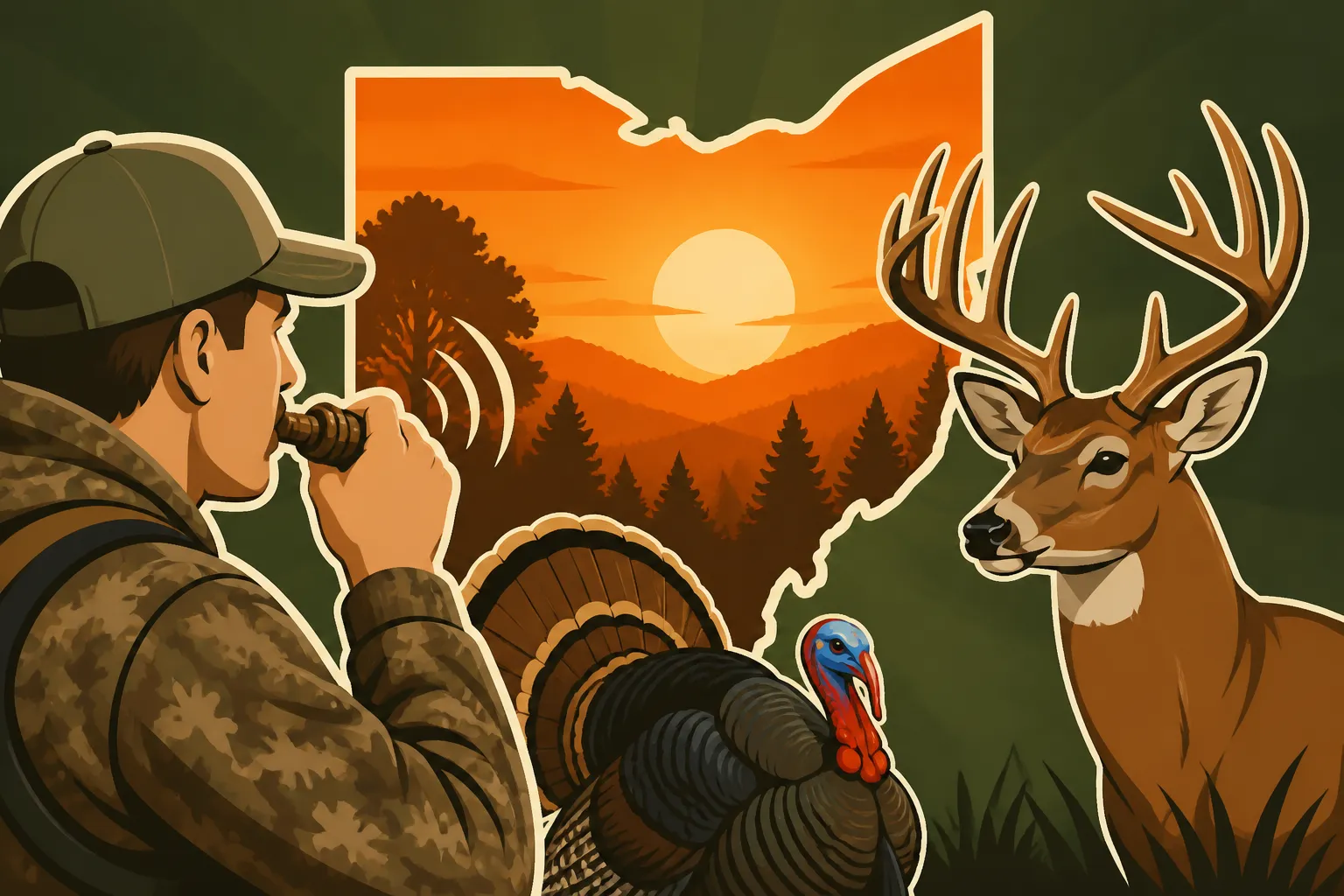
Rattling and Grunting in Ohio
It’s a common frustration for many Ohio deer hunters: you haul out your rattling antlers or your grunt tube, give it your best shot, and… nothing. Or worse, you spook deer that were never even interested. It can feel like a complete waste of time, making you wonder if all that calling is just a gimmick. This comprehensive guide will pull back the curtain on the often-misunderstood world of rattling and grunting, helping you master these powerful communication tools to bring Ohio whitetails right into your lap.
Understanding Deer Vocalizations and Behavior
Before you start blowing into a tube or clanging antlers together, it’s crucial to understand why deer make these sounds in the first place. These aren't just random noises; they're integral parts of a complex communication system that tells us a lot about their social structure and intentions, especially during the breeding season. Many hunters overlook the "why" and jump straight to the "how," leading to less effective calling and more frustration.
Why Deer Vocalize
Deer vocalize for a myriad of reasons, from expressing contentment to warning of danger, and most importantly for us hunters, to communicate during the rut. Fawns bleat to their mothers, does grunt to gather their young or signal estrus, and bucks grunt and rattle to establish dominance or challenge rivals. These sounds are deeply ingrained in their survival and reproductive strategies. During the crucial weeks of November, especially when the bucks are on the prowl and looking for receptive does, understanding these sounds becomes your biggest asset. It’s not just about making noise; it’s about speaking their language at the right time.
Think about it like this: a fawn bleat is a plea for attention, a short, urgent sound that can sometimes calm nervous does or even attract curious bucks who mistake it for a lost fawn. On the other hand, a deep, guttural buck grunt signifies presence and often intent, whether it's checking on a doe or challenging another buck in the area. Learning to differentiate these nuances will dramatically improve your calling success. Ignoring the biological context is like trying to speak a foreign language by only knowing a few words without understanding grammar or culture.
Reading Deer Body Language
Calling is only half the battle; the other half is being able to read the deer's response. A buck that hears your rattle might stop dead in its tracks, raise its head, and stare intensely in your direction, trying to pinpoint the source. Another might simply flick an ear and continue browsing. Understanding these subtle cues is paramount to knowing if your call is working, and when to follow up or back off. If a buck starts walking directly towards you, head low, bristled hair on its neck, and ears laid back, that’s an aggressive response, and you’ve successfully challenged him.
Conversely, if a deer jumps, flags its tail, and bolts, you've likely overdone it, spooked them, or called when they were already agitated. Pay close attention to how they hold their head, the movement of their ears, and their tail. A nervous deer might stomp a foot, blow, or slowly sneak away. A curious deer might circle downwind to get a better scent. Many hunters make the mistake of repeatedly calling without observing the reaction, which can educate deer to human-made sounds. Remember, deer are constantly communicating not just through sound, but through their posture and movements.
Ohio Deer Rut Phases and Calling Relevance
Ohio's whitetail rut is a dynamic period, evolving from the early pre-rut stages to the peak breeding and then the post-rut. Each phase dictates different deer behaviors and, consequently, different calling strategies. Knowing when the bucks are really starting to cruise or when they are locked down with a doe is key. For a deep dive into the specific timing, be sure to check out our guide on Hunting the Rut in Early November.
During the pre-rut, typically late October into early November, bucks are establishing dominance and often eager to fight or challenge rivals. This is prime time for aggressive rattling and deep grunts. As the peak rut hits, usually the second week of November, bucks might be "locked down" with does, making them less responsive to calls, as their focus is singular. However, a well-placed estrus bleat or a subtle grunt might still pull a satellite buck in looking for a chance. Then, in the post-rut, as the primary breeding winds down, bucks are often exhausted but still looking for any remaining receptive does, making them susceptible to a variety of calls, including some mournful grunts or bleats. Understanding these shifts, often visible on public lands like Wayne National Forest, allows you to tailor your approach for maximum impact.
The Art of Rattling: Mimicking a Fight
Rattling is one of the most exciting forms of deer calling because it can bring a buck running in on a string, full of aggression and curiosity. But it's also one of the easiest to do wrong. It's not just about smashing antlers together; it's about painting a picture of a real, intense fight.
Choosing Your Rattling Equipment
The market offers a range of rattling equipment, from real shed antlers to synthetic rattling bags and blocks. Each has its pros and cons. Real antlers, especially matched sets from a decent-sized buck, produce the most authentic sound. The density of bone against bone creates a rich, realistic clatter that synthetic options often struggle to replicate. However, they can be bulky and noisy to carry through the woods. Many Ohio hunters, particularly those venturing into thick Appalachian hardwoods, might find them cumbersome.
Synthetic rattling bags or blocks, like those from Primos or Rattling Forks, offer convenience. They're lighter, quieter to transport, and can be operated with one hand, which is a huge advantage when you're perched in a treestand or still-hunting through cover. While they might not have the exact tonal quality of real bone, modern designs have come a long way in mimicking the sounds of sparring bucks. Ultimately, the best choice is what you're comfortable with and what you can use effectively and discreetly in your hunting setup. Consider the environment: in open fields of Northwest Ohio farmland, the sound might carry further, requiring a more subtle approach than in dense timber.
Techniques for Realistic Rattling Sequences
A deer fight isn't one continuous clang. It's a series of crashes, grunts, pauses, and pushes. To be effective, your rattling sequence needs to mimic this ebb and flow. Start with a light clashing of antlers, like two bucks testing each other. Then, escalate into a more aggressive, drawn-out fight, incorporating pushing, raking the ground, and even some grunts and snort-wheezes. This aggressive phase should last for about 30-60 seconds, painting a vivid sound picture of a full-blown brawl.
Crucially, follow this intense period with a quiet pause. This "listening" phase is where a curious buck will often make its move, trying to sneak in and see who won. Remain absolutely still and scan the woods for any movement. Many bucks will approach silently, trying to circle downwind. After a few minutes of silence (2-5 minutes is a good starting point), you can repeat the sequence, perhaps with less intensity if no deer showed, or more if you heard a distant response. Varying the intensity and duration of your rattling, just as bucks would in a real fight, makes your calls much more convincing. Imagine a scenario from Hunting Ohio Farmland Deer where you’re on a field edge – a full-on brawl might be too much, but subtle sparring could be perfect.
Situational Rattling: Aggressive vs. Subtle
The type of rattling you employ should always be dictated by the situation and the phase of the rut. Early in the pre-rut, when bucks are full of vigor and establishing their pecking order, aggressive, loud rattling can be highly effective. This is particularly true in areas with a good deer density, like many parts of Southeast Ohio, where competition for does is higher. Think about bucks cruising ridges in Shawnee State Forest; a loud, drawn-out fight might carry well and pique their interest.
However, once the peak rut hits and bucks are often more focused on does than fighting, or if you're hunting highly pressured public land, a more subtle approach might be better. Light tickling of the antlers, or short, less intense clashes, can imitate two smaller bucks sparring, which might attract a dominant buck without being overly aggressive. This is often called "tickle rattling." It’s also wise to scale back your volume when hunting small private tracts, where deer may be more familiar with human intrusion. A great rule of thumb from GoHunt experts is to start soft and only escalate if you get no response or observe distant curiosity. The goal is to draw them in, not scare them off.
Grunting and Snort-Wheezes: Communicating Intent
While rattling mimics a fight, grunting and snort-wheezes are more about direct communication, signaling presence, dominance, or even distress. These vocalizations are often the easiest to replicate and can be incredibly effective when used correctly.
Types of Grunt Calls and Their Meanings
Grunt calls are incredibly versatile, mimicking a variety of deer vocalizations depending on tone, duration, and volume. The most common is the contact grunt, a short, relatively soft "urrpp" sound that bucks and does use to communicate their presence, often when searching for other deer or checking on a group. This can be used almost anytime during the season to pique curiosity. A slightly longer, deeper tending grunt is emitted by a buck trailing a hot doe and signifies a buck's intent to breed. This call can be a powerful attractant for other bucks hoping to cut in.
Then there's the challenge grunt, a much more aggressive, guttural, and prolonged "uurrrrrrp!" often accompanied by neck stretching or head bobbing. This is a direct challenge to another buck and is best used during the rut to draw in dominant males. Finally, the doe estrus bleat is a high-pitched, drawn-out "Maaaaah!" that signals a doe is ready to breed. This is an incredibly potent call during the peak rut, designed to attract love-struck bucks. Learning to produce these different sounds accurately with your grunt tube is critical. Many modern grunt tubes from brands like Flextone or HS Strut allow for easy manipulation of tone and pitch, making it simpler to mimic various deer vocalizations.
Mastering the Snort-Wheeze
The snort-wheeze is arguably one of the most powerful and aggressive calls in a buck's vocabulary. It's a short, sharp expulsion of air through the nose, often sounding like "Pffft-Pffft-Pffft!" It's a clear signal of dominance and a direct challenge, typically used by a mature buck right before or during a confrontation with another male. It screams, "I'm bigger and tougher than you, and I'm ready to fight!" Because of its aggressive nature, it should be used sparingly and primarily during the peak of the rut when dominant bucks are highly territorial and looking for a fight.
When you deploy a snort-wheeze, be ready for action. A buck that responds to this call is likely a mature animal that believes it can win the ensuing confrontation. It will often approach quickly and aggressively, sometimes with its hackles raised, ready for a fight. It's not a call for the faint of heart or for every situation. Use it when you’ve already located a buck or heard some distant grunting and want to escalate the situation, or if you believe there’s a dominant buck in the area that needs a direct challenge. This can be particularly effective when trying to pull a cautious buck out of thick cover where he might be bedded during the day, as discussed in our Finding Sign in Big Appalachian Timber article.
Fawn Bleats and Doe Estrus Calls
While buck grunts and snort-wheezes grab the headlines, don't underestimate the power of fawn bleats and doe estrus calls. A fawn bleat is a universal sound of distress or separation. It's a high-pitched, urgent call that can attract any deer—does rushing to protect a perceived lost fawn, or even curious bucks investigating the commotion. It can be particularly effective early in the season, or if you're trying to draw out a nervous doe for an antlerless permit. This type of call can sometimes calm down deer that have been bumped or are hesitant to move.
The doe estrus bleat, as mentioned before, is an absolute game-changer during the rut. It mimics the sound of a doe that is ready to breed. When a buck hears this, especially if he's been cruising and hasn't found a hot doe, it can trigger an immediate and aggressive response. The key to successful estrus bleating is timing—it's most effective when does are actually entering estrus. Using it too early or too late can sound unnatural and might not yield results. Pair it with tending grunts for a truly irresistible scenario for rutting bucks. These calls, especially when using a manual call like the "Can" from Primos, are relatively easy to master and can be extremely effective.
Timing and Location: When and Where to Call in Ohio
Using calls effectively isn't just about making the right sounds; it's also about knowing when and where to deploy them. The best call in the world won't work if it's used in the wrong place at the wrong time. This requires careful observation of deer activity and an understanding of the local environment.
Key Periods for Effective Calling in Ohio
The effectiveness of deer calling in Ohio is highly seasonal, peaking during the rut. As we touched on earlier, the pre-rut (late October to early November) is excellent for aggressive rattling and challenge grunts as bucks establish dominance. This is when bucks are actively seeking out other bucks to spar with and are still relatively easy to pull away from their normal routines. However, as the rut progresses into its peak breeding phase (mid-November), bucks might become "locked down" with does, making them less responsive to rattling, but highly susceptible to estrus bleats and tending grunts. Understanding Ohio Deer Season Structure Explained is important here.
During the post-rut (late November into December), bucks are often tired but still cruising for any remaining unbred does. A softer, more subtle approach with contact grunts or even a few light rattles can still be effective. Beyond the rut, in the early archery season, light social grunts can sometimes draw in curious deer, but aggressive rattling is generally ineffective outside of the pre-rut and early rut. Consulting a detailed rut calendar for Ohio and paying attention to local reports will help you fine-tune your calling windows.
Terrain and Habitat Considerations
The terrain and habitat you're hunting in Ohio play a massive role in how and when you should call. In open country, like the vast farmlands of Northwest Ohio, sounds travel much further. This means you might need to use less volume to avoid over-calling or sounding unnatural. In these settings, bucks might come from a long distance, often circling downwind to catch your scent before committing. It's critical to position yourself with the wind in mind, anticipating their approach. Learning about Hunting Northwest Ohio Farmland Deer can provide more insight into these environments.
Conversely, in the dense, broken terrain of the Appalachian foothills in Southeast Ohio, sounds don't travel as far. Here, you can often be more aggressive with your calling volume without spooking distant deer. The thick cover also means bucks might not commit to a visual until they are very close, so be prepared for a close-range encounter. Positioning your stand or blind near natural funnels, ridge-top saddles, or thick bedding areas can put you in prime position when using calls, as deer are already moving through these areas. Our guide on Reading a Ridge for Southeast Ohio Deer offers excellent advice on these locations. Always consider the acoustics of your chosen spot; calling from a high ridge might carry further than from a deep hollow.
Wind, Thermals, and Approach
No matter how perfectly you mimic a deer sound, if the wind is wrong, your efforts will be futile. Whitetails rely heavily on their sense of smell, and a hunter's scent is the ultimate alarm signal. Always position yourself downwind of where you expect a deer to approach. If you're rattling aggressively, anticipate that a buck will try to circle around to get your scent. Have shooting lanes cleared for downwind approaches.
In hilly terrain, understanding Wind and Thermals on an Appalachian Ridge is critical. Thermals typically rise in the morning as the air warms and fall in the evening as the air cools. This means your scent cone will shift throughout the day. Plan your calling sessions around these thermal shifts. For instance, in a morning hunt, ascending thermals might carry your scent upwards, making a lower stand position preferable, or vice-versa in the evening. As for your approach to your calling location, be as stealthy as possible. Never crash through the woods to get to your spot. A quiet entry and exit ensures you don't educate deer to your presence before you even make a sound.
Advanced Calling Strategies and Common Mistakes
Moving beyond the basics of individual calls, integrating different sounds and understanding the common pitfalls can elevate your calling game significantly. It’s about creating a believable narrative that draws deer in, rather than just random noise.
Combining Rattling and Grunting
The most effective calling strategies often involve combining different vocalizations to create a more realistic and compelling scenario. When you hear a real buck fight, it's rarely just clashing antlers. There are grunts, snorts, and heavy breathing involved. Mimicking this reality makes your calling far more convincing. Start a rattling sequence with light clashes, then escalate to aggressive clanging, and intersperse deep challenge grunts throughout. If you're using a grunt tube and rattling antlers, you can even simulate two bucks pushing and grunting simultaneously.
Another powerful combination is to use a doe estrus bleat followed by a tending grunt from a buck. This creates the illusion of a hot doe being pursued by a buck, which can be irresistible to other bucks hoping to cut in on the action. This combo is exceptionally powerful during the peak rut. Don't be afraid to experiment, but always listen to what a real deer sounds like. A GoHunt app or other reputable hunting resource can provide actual deer vocalization recordings to help you hone your ear. By painting a more complete picture of deer activity, you increase your chances of attracting a curious or aggressive buck.
The Importance of Observation and Patience
Patience is a virtue in deer hunting, and it’s especially true when calling. After a calling sequence, whether it’s rattling or grunting, resist the urge to immediately make another sound or shift positions. Many bucks, especially mature ones, will approach cautiously and silently, often circling downwind to scent-check the area. This is why absolute stillness and keen observation are paramount. You might have a buck within easy shooting distance, but if you're fidgeting or grabbing for your call, you'll blow your chance.
Spend a minimum of 5-10 minutes (and sometimes longer, especially after an aggressive rattling sequence) silently scanning the woods in all directions after each calling series. Use your binoculars to pick apart the cover, looking for flicking ears, a patch of brown hide, or the subtle swing of a tail. It’s amazing how well deer can materialize out of seemingly nowhere. Often, the best time to see a deer respond is during the silence after your calls. Sometimes, no amount of calling will work. In these cases, scouting specific areas before season, using tools like the Scouting Ohio Public Land Before Season guide, can help you identify high-traffic areas where deer are more likely to respond to a call.
Avoiding Over-Calling and Spooking Deer
One of the most common mistakes beginners (and even seasoned hunters) make is over-calling. The temptation to keep making noise when you don't get an immediate response is strong, but it can be detrimental. Too much calling, or calling too loudly for the situation, can make your sounds seem unnatural or even alert deer to your human presence. Imagine two hunters on a deer drive, as described in Deer Drives With Three or Four Hunters; if both are constantly yelling or making too much noise, it just creates chaos rather than driving deer naturally.
If a buck doesn't respond after a few sequences, it's often better to change locations, adjust your strategy, or simply rely on still-hunting or stand hunting. Sometimes, a deer might be close but not in the mood to respond to calls, or they might simply be locked down with a doe. In these cases, constant calling will only educate them to human sounds, making them warier in the future. Remember the "less is more" principle, especially on pressured public land, where deer are already sensitive to unnatural noises. Focus on quality over quantity in your calling, and you'll find your success rates climb.
| Call Type | Primary Purpose | Optimal Rut Phase | Ideal Usage Scenario |
|---|---|---|---|
| Contact Grunt | Announce presence, locate deer | All phases | Light, short grunts when searching or trying to draw curiosity. |
| Tending Grunt | Buck pursuing hot doe | Peak Rut | Repeated, slightly longer grunts to attract other bucks. |
| Challenge Grunt | Assert dominance, challenge buck | Pre-Rut, Peak Rut | Aggressive, deep, prolonged grunts to draw dominant bucks. |
| Snort-Wheeze | Ultimate aggression, challenge | Pre-Rut, Peak Rut | Sharp, loud wheezes only for aggressive, mature bucks. |
| Fawn Bleat | Distress, lost fawn | Early season, All phases | Urgent, high-pitched bleats to attract protective does or curious bucks. |
| Doe Estrus Bleat | Doe ready to breed | Peak Rut | High-pitched, drawn-out bleats; very effective on rutting bucks. |
| Rattling (Aggressive) | Simulate buck fight | Pre-Rut, Early Peak Rut | Loud, long sequences with grunts, targeting competitive bucks. |
| Rattling (Subtle) | Simulate light sparring | All phases | Soft, short tickles for cautious or pressured deer. |
Disclaimer
Hunting is an inherently dangerous activity. Always prioritize safety, follow all Ohio hunting regulations, and never take unnecessary risks. This guide provides information for educational purposes only and does not substitute for hands-on experience or professional instruction. Be sure to understand and adhere to all local, state, and federal laws regarding hunting and firearm safety.