Wyandot County Public Land for Deer
Finding good public land for deer hunting in Ohio's heavily agricultural counties can feel like searching for a needle in a haystack, especially when you're used to the sprawling forests of southeastern Ohio. It's easy to get frustrated thinking all the good spots are locked up on private property. But don't give up hope just yet! This guide is going to walk you through the surprising opportunities for deer hunting on public land in Wyandot County, helping you understand where to go and how to adapt your tactics for success in this unique landscape.
Understanding Wyandot County's Hunting Landscape
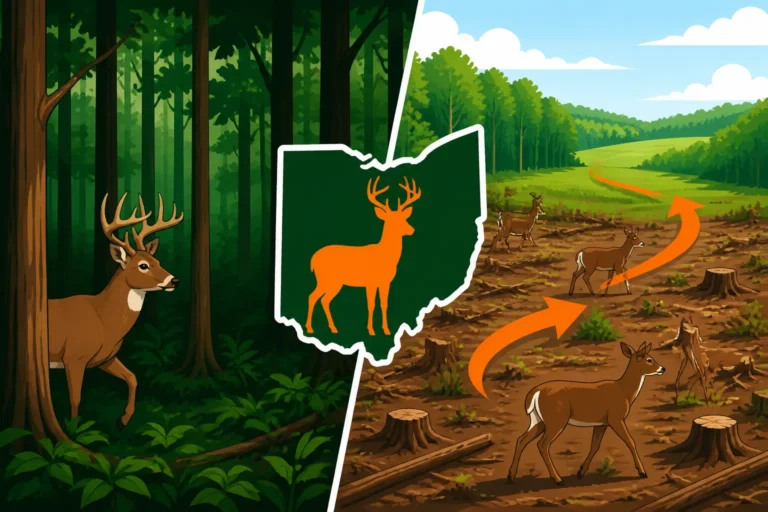
Wyandot County, nestled in the heart of north-central Ohio, isn't exactly famous for its vast public forests. When most hunters think of public land in Ohio, their minds drift to places like Wayne National Forest or Shawnee State Forest, where hardwoods stretch for miles. Wyandot County, by contrast, is a tapestry of productive farmland, small woodlots, and winding creek bottoms. This agricultural dominance means that public hunting opportunities for deer are more concentrated and require a different approach than what you might be used to in the hill country.
The sheer amount of private land in Wyandot County means that deer often have ample cover and food on lands inaccessible to the average public hunter. This can be a real headache, making you feel like you're always on the outside looking in. However, the deer here are just as abundant, often thriving in the mosaic of fields and woodlots. The challenge isn't necessarily a lack of deer, but rather understanding how they use the limited public parcels and adjusting your strategy accordingly. Plus, Wyandot County has been a focal point for chronic wasting disease (CWD) surveillance, which means understanding specific regulations and Ohio's Chronic Wasting Disease Surveillance Area protocols is paramount.
Key Public Land Opportunities
While not extensive, Wyandot County does offer some significant public hunting areas that can be incredibly productive if you put in the time and effort. The crown jewel, without a doubt, is Killdeer Plains Wildlife Area. This expansive area, managed by the Ohio Department of Natural Resources (ODNR), covers thousands of acres and provides a diverse range of habitats.
Killdeer Plains is a stark contrast to the big woods. Here, you'll find a mix of wetlands, grasslands, old fields, and scattered woodlots that break up the open landscape. It's a haven for waterfowl and upland birds, but don't let that fool you; it also holds a healthy population of deer. These deer adapt exceptionally well to the unique cover provided by the marshy areas and dense grasslands, often using them as bedding and travel corridors between agricultural fields. Other smaller, sometimes overlooked, public hunting opportunities might exist along river corridors or smaller state-owned tracts, though Killdeer Plains remains the primary focus for most deer hunters.
Challenges of Hunting Agricultural Areas
Hunting deer in an agricultural landscape presents a distinct set of challenges compared to forested regions. For starters, the deer patterns are heavily influenced by crop cycles. A standing cornfield in September provides impenetrable cover and an endless buffet, only to become a wide-open landscape after harvest. This constant change means scouting is an ongoing process, not just a pre-season activity.
Furthermore, the limited, fragmented nature of public land in these areas can lead to increased hunter pressure. Everyone knows where the public land is, and during popular seasons like Ohio's Two-Weekend Gun Deer Season, you can expect company. The deer, in turn, become warier and often adopt nocturnal habits or retreat to the thickest, most overlooked pockets of cover. This makes long-range observation and strategic entry/exit routes absolutely critical. The presence of CWD in the county also adds another layer of responsibility, with mandatory testing windows and carcass movement restrictions that hunters need to be fully aware of. Why Wyandot County Drives Ohio's CWD Numbers is a resource you should definitely check out to understand the background and implications.
Navigating Killdeer Plains Wildlife Area for Deer
Killdeer Plains Wildlife Area is truly unique among Ohio's public hunting grounds. It's a place where adaptability is your greatest asset. Forget what you think you know about traditional timber hunting; this is a different beast entirely. It demands patience, keen observation, and a willingness to explore varied habitats.
Many hunters drive by Killdeer Plains and see vast open fields, assuming it's only good for pheasants or ducks. But those scattered woodlots, the dense marsh edges, and the CRP fields are absolute magnets for deer, especially during the rut and in the late season. It's all about understanding how the deer use these pockets of cover in relation to the surrounding private farmland.
Habitat and Deer Behavior at Killdeer Plains
The habitat at Killdeer Plains is a patchwork. You've got wetlands, which provide dense, often thorny cover that deer can dive into and disappear. Then there are expansive grasslands and old fields, sometimes interspersed with small stands of timber or brushy fencerows. These areas offer surprising amounts of food and bedding. Deer will often bed deep in the thickest cattails or switchgrass, especially when pressure is high, only emerging at dusk to feed in the surrounding agricultural fields.
The deer here are incredibly conditioned to human presence, especially during the archery and gun seasons. They've learned to use the available cover with surgical precision. During the early season, they might be found near the edges of standing crops on adjacent private land, using the public area for travel or quick escapes. As the season progresses and crops are harvested, they'll spend more time within the denser cover of the wildlife area itself, venturing out to browse winter food sources like leftover gleanings or specific browse plants within the public boundaries. Understanding these movements is key to intercepting them. Hunting Northwest Ohio Farmland Deer covers some of these dynamics in detail.
Tactics for Success on Killdeer Plains
Success on Killdeer Plains requires a blend of traditional hunting skills and adaptive strategies tailored to the unique environment. Still-hunting the small, isolated woodlots and brushy fingers that protrude into the open fields can be incredibly effective, especially if you move slowly and deliberately, paying close attention to wind direction. Deer often use these corridors as safe travel routes.
Ground blinds are your friend here. Unlike big timber where an elevated stand might be the default, a well-brushed-in ground blind can offer excellent concealment along a field edge, a marsh transition, or a fencerow that deer frequently use. Just remember to set it up well in advance if possible to allow deer to get used to its presence, or to brush it in meticulously if you're deploying it on short notice. Using a Ground Blind on Ohio Public Land offers some great advice.
Patience is paramount. You might not see deer constantly moving, especially after opening day pressure. Sitting patiently in a strategic location, perhaps overlooking a pinch point between two cover types or a natural funnel, can pay off big. Consider Cold-Weather Sitting Strategy in Ohio for those late-season hunts when deer activity can be more predictable around available food sources. Also, don't be afraid to put on some miles and explore the less obvious corners of the property. Many hunters stick to easy-access points, but the deer often retreat to the spots that require a little more effort to reach.
Essential Tools and Considerations for Wyandot Public Land
Hunting public land in Wyandot County demands a thoughtful approach, not just in terms of tactics but also in the gear you carry and the mindset you adopt. You're operating in a landscape that differs significantly from dense timber, and having the right information and tools at your fingertips can make all the difference between a frustrating day and a successful hunt.
The fragmented nature of the land and the influence of neighboring private parcels mean you need to be constantly aware of your surroundings and land boundaries. This is where modern technology really shines, making the process of scouting and navigation much more efficient and less stressful.
Mapping and Scouting for Success
In a county like Wyandot, precise mapping and diligent scouting are not just helpful; they are absolutely crucial. This isn't the kind of place where you can just wander into the woods and hope for the best. You need to know exactly where the public land ends and private property begins. This is where tools like onX Hunt and GoHunt become invaluable. These apps provide detailed property ownership maps layered over aerial imagery, showing you boundaries, access points, and even topography.
Before you ever set foot in the field, use these apps to virtually scout Killdeer Plains or any other smaller public parcel. Look for isolated woodlots, fingers of cover extending into fields, brushy creek beds, and natural funnels that deer might use to travel between bedding and feeding areas. Identify potential entry and exit routes that minimize disturbance. Scouting With the Ohio HuntFish App is another excellent resource, offering official ODNR maps and regulations right on your phone. Even in flat country, understanding subtle elevation changes, drainage ditches, and thickets can reveal key deer movement patterns. Reading Aerial Photos for Southeast Ohio Deer offers principles that can be adapted to flatter terrain by focusing on cover transitions and water features.
A good pair of binoculars is also non-negotiable. In the more open landscapes of Wyandot County, you'll often be glassing distant field edges or discerning movement in dense cover that's a few hundred yards away. Being able to spot deer without pushing into their sanctuary is a huge advantage.
Hunter Pressure and Ethical Considerations
It's no secret that public land, especially smaller parcels in highly agricultural regions, can experience significant hunter pressure. Killdeer Plains, being one of the larger public areas in a deer-rich agricultural county, will draw a crowd, particularly during opening weekends of popular seasons. This reality can be a source of frustration, leading hunters to feel like they're always competing for space.
However, understanding this pressure can also be your advantage. Many hunters stick to the most accessible areas, close to parking lots and main trails. This means that if you're willing to walk a little further, or to push into thicker, nastier cover that others avoid, you can often find unpressured pockets of deer. Finding Ground Others Walk Past is a principle that applies perfectly here. These deer, having been pushed, will often seek refuge in the deepest, most uncomfortable cover on the property.
Being a good steward of the land and a considerate hunter is also more important than ever. Always be aware of other hunters, respect their space, and never trespass onto private property. Double-check all regulations, especially those pertaining to CWD, which can include mandatory testing or specific carcass handling rules. Being prepared with multiple deer permits, knowing How Many Deer Permits an Ohio Hunter Can Buy, and understanding antlerless-only opportunities can also extend your time in the field. Leave no trace, and take pride in demonstrating ethical hunting practices, which helps maintain a positive image for all hunters.
Beyond Killdeer Plains – Maximizing Your Wyandot County Deer Hunt
While Killdeer Plains is undoubtedly the centerpiece for public land deer hunting in Wyandot County, it's not the only option, nor should it be the end of your planning. A truly successful hunter in this region understands that diversification and persistence are key. Thinking outside the box and expanding your horizons, even slightly, can open up new opportunities.
The nature of Wyandot County's landscape means that scattered, smaller tracts of public land might exist, often requiring more diligent research to locate. Furthermore, in an area dominated by private agriculture, gaining permission to hunt private land becomes an incredibly valuable skill.
Smaller Public Parcels and State Forests
Beyond Killdeer Plains, other public hunting opportunities in or around Wyandot County may be limited, but they're worth investigating. These could include smaller ODNR Wildlife Areas that might be tucked away, or perhaps segments of state forest land if you're willing to venture into neighboring counties. It's often these smaller, less-advertised spots that hold big surprises because they receive less hunting pressure.
Check the ODNR's official website and mapping tools (like the Ohio HuntFish App) thoroughly. Look for any state-owned lands, even those primarily managed for other purposes, that allow hunting. Sometimes, a narrow strip of public land along a river or an old railroad grade can serve as an excellent travel corridor for deer moving between larger private tracts. These require meticulous scouting and often a "boots on the ground" approach to truly understand their potential.
The Importance of Private Land Access
Let's be realistic: in a county as agriculturally dominated as Wyandot, the vast majority of prime deer habitat is on private land. While public land offers valuable access, limiting yourself solely to it means you're missing out on significant opportunities. This is where developing your skills in gaining private land access becomes crucial.
Approaching landowners respectfully, in person, well before hunting season begins, can make all the difference. Offer to help with chores, pick up trash, or simply strike up a friendly conversation. Landowners often deal with deer damage to crops and can be receptive to responsible hunters who offer to help manage their deer population. Explain your ethical hunting practices, offer to share venison, and leave a positive impression. Knocking on Doors in Ohio Farm Country isn't just an old-school tactic; it's a vital part of hunting in many parts of Ohio today. Building relationships with landowners can unlock access to properties that see far less pressure and hold consistently larger, older deer. It’s about being a good neighbor and showing respect, and it can truly transform your hunting experience in Wyandot County.
| Public Land Area | Primary Habitat Type | Key Deer Features | Hunting Challenges |
|---|---|---|---|
| Killdeer Plains WA | Wetlands, Grasslands, Scattered Woodlots | Dense bedding cover, travel corridors between fields | High pressure, deer are wary, changing crop cycles |
| Smaller ODNR Parcels | Varies: Creek bottoms, brushy edges, small woods | Isolated pockets of cover, lesser known travel routes | Hard to locate, limited size, often overlooked |
| Neighboring State Parks | Forests, open fields, recreation zones | Buffer zones, consistent food sources, some no-hunt zones | Regulations vary, check specific park rules |
Disclaimer
This article is for general informational purposes only and does not constitute professional advice. Laws, prices and regulations vary by location and change over time. Consult a qualified professional for guidance on your specific situation.