Habitat Work on Ohio Wildlife Areas
We all love heading out to our favorite Ohio Wildlife Areas, expecting a pristine, wild experience, but sometimes, the hunting can feel a little "off." What many folks don't realize is that behind the scenes, there's a ton of intentional, hard work going on to shape these landscapes, and understanding that habitat work can completely change how you approach your hunt and your success. This guide will pull back the curtain on the various habitat management efforts happening on Ohio's public lands, helping you understand why they do what they do, what to look for, and how to use that knowledge to your advantage during your next hunt.
Why Habitat Work is So Critical on Ohio Wildlife Areas
When you picture public hunting land, you might envision untouched wilderness, but the reality is far from it, especially in a state like Ohio where so much of our land has been altered by human activity over centuries. Our wildlife areas are active management zones, meticulously cared for to support healthy game populations and provide recreational opportunities for hunters, anglers, and outdoor enthusiasts. Without this constant intervention, many of these areas would slowly lose their diverse ecosystems, becoming less hospitable for the very animals we pursue.
The Ever-Changing Landscape of Ohio
Ohio’s landscape has undergone dramatic transformations, from vast forests to widespread agriculture, and then back to a mosaic of woodlands and fields. These changes haven't always been beneficial for every species. Take the ruffed grouse, for example; once common in many parts of Ohio, its numbers have significantly declined, largely due to the maturation of forests and the lack of early successional habitat. Conversely, white-tailed deer have thrived in these fragmented landscapes. Habitat work seeks to balance these dynamics, creating a diverse range of conditions to support a wider array of wildlife. It's about being proactive, not just letting nature take its course in an already heavily influenced environment.
It’s a constant battle against invasive species, natural succession, and the sheer pressure of human development that borders so many of our public tracts. When you pull up your onX Hunt app and see the patchwork of public and private land, it's a stark reminder that these wildlife areas aren't isolated islands. They're part of a larger, interconnected system, and what happens on one piece of ground can affect another. This makes strategic habitat management an absolute necessity to ensure there are still places for robust wildlife populations and accessible hunting opportunities.
Benefits Beyond the Harvest
While hunters often focus on the direct impact on deer, turkey, or small game, the benefits of habitat work extend much further. Healthy habitat means a healthier ecosystem overall. Think about the variety of birds that rely on specific types of cover for nesting, or the small mammals that form the base of the food chain. When you create diverse conditions — a mix of open fields, dense young forest, and mature hardwoods — you’re essentially building a stronger, more resilient home for countless species.
This ecological resilience is crucial. It helps wildlife populations withstand disease, harsh weather, and even the pressures of hunting season. A balanced ecosystem is less prone to boom-and-bust cycles that can devastate animal numbers. So, when you're walking through a newly thinned timber stand or passing a managed warm-season grass field, remember that it's not just about creating a better spot for you to hunt; it's about fostering a thriving natural environment that benefits everything living within it, from the tiniest insect to the biggest buck.
Common Types of Habitat Work You'll Encounter
Ohio's wildlife managers use a variety of tools and techniques to sculpt the landscape. Knowing what these are, and more importantly, why they’re being done, can give you a significant edge when Scouting Ohio Public Land Before Season. Each method aims to achieve specific goals, whether it’s increasing forage, providing nesting cover, or improving travel corridors for game.
Timber Stand Improvement and Logging
You've probably stumbled upon areas in a state forest or wildlife area that look like they've been recently logged. It can be jarring at first, but this "mess" is often intentional and incredibly beneficial. Timber Stand Improvement (TSI) involves selectively cutting trees to reduce competition, improve the health of remaining trees, and create early successional habitat. This means sunlight can finally reach the forest floor, spurring the growth of dense shrubs, briars, and young saplings that are vital browse and cover for deer, rabbits, and many bird species.
Sometimes, it's more extensive logging, harvesting mature timber to generate revenue for habitat projects, but also to reset the forest succession. These areas, particularly clear-cuts, become incredibly thick and impenetrable for a few years, offering unparalleled bedding cover for deer and fantastic escape cover for rabbits and grouse (where they still exist). Hunters who learn to adapt to these changes, rather than avoid them, often find hidden gems. It takes a different approach than hunting mature timber, but the rewards can be significant if you know Timber Cuts and Where Deer Move After.
Prescribed Burns
If you’ve ever seen a section of a wildlife area that looks charred and black, you’ve witnessed the aftermath of a prescribed burn. This is one of the most powerful and natural tools in a habitat manager's arsenal. Fire, when controlled and applied under specific conditions, helps remove accumulated leaf litter and duff, returning nutrients to the soil. It also stimulates the growth of native grasses, forbs, and legumes, creating lush, nutritious forage that wildlife absolutely loves.
Prescribed burns are especially common in areas managed for warm-season grasses or prairie restoration, which are vital for pheasants, quail, and nesting turkeys. The fresh growth after a burn provides a burst of highly palatable food sources, attracting deer and other animals. These burns also reduce invasive species and prevent larger, more destructive wildfires by removing fuel. Keep an eye out for signs of recent burns on your hunting property; these fresh green-ups can be magnets for game. You might even find information about Prescribed Burns and Ohio Hunting Closures that could tell you when and where these have occurred.
Food Plots and Agricultural Leases
While food plots are often associated with private land hunting, many Ohio Wildlife Areas also strategically plant them. These aren’t just corn and soybeans; they can include clover, brassicas, winter wheat, and a variety of other crops designed to provide supplemental forage during critical times of the year, especially in the late season when natural food sources become scarce. These plots are typically placed in accessible areas within a larger block of public land, often near edges or within fields.
Beyond dedicated food plots, some wildlife areas lease out agricultural land to local farmers. These agreements often stipulate that a certain percentage of the crop must be left standing or disked under after harvest, providing waste grain for waterfowl, deer, and upland birds. These standing strips of corn or soybeans, even after the main harvest, can be incredible late-season food sources and provide excellent cover. Knowing which wildlife areas have these programs, or simply noticing standing crops, can point you to high-activity zones, particularly for Late-Season Food Sources for Ohio Whitetails.
Water Management and Wetland Creation
For waterfowl hunters, understanding water management on Ohio Wildlife Areas is paramount. Many areas, particularly in the northern part of the state near Lake Erie, feature extensive dike systems, pumps, and water control structures to create and maintain ideal wetland habitats. This allows managers to manipulate water levels to promote the growth of specific aquatic vegetation that ducks and geese feed on, or to create shallow feeding areas.
From the managed marshes of Magee Marsh to the smaller impoundments on inland wildlife areas, these efforts create crucial stopover and wintering grounds for migratory birds. Hunters often gravitate towards these well-known waterfowl hot spots, but paying attention to smaller, less obvious water management projects can sometimes lead to less pressured opportunities. When you're using a mapping app, look for features like impoundments, levees, and small ponds that might indicate active water management.
Here's a quick overview of some common habitat work and their primary benefits:
| Type of Habitat Work | Purpose | Primary Game Species Benefited | Hunter Takeaway |
|---|---|---|---|
| Timber Stand Improvement | Creates young forest, increases browse & cover | Deer, Rabbit, Turkey, Grouse | Look for dense cover, fresh browse, new bedding areas |
| Prescribed Burns | Stimulates new growth, improves forage, reduces invasives | Deer, Turkey, Pheasant, Rabbit, Quail | Target green-ups for fresh food, focus on edges |
| Food Plots/Ag Leases | Supplemental food, late-season forage | Deer, Turkey, Waterfowl, Pheasant | Key late-season food source, often near cover |
| Water Management | Creates wetland habitat, controls aquatic vegetation | Waterfowl (Ducks, Geese), Frogs, Fish | Critical for duck/goose hunting, look for feeding areas |
| Warm Season Grass Planting | Nesting/brood cover, escape cover, insect production | Pheasant, Quail, Turkey, Rabbit, Deer | Great for upland birds, dense bedding for deer |
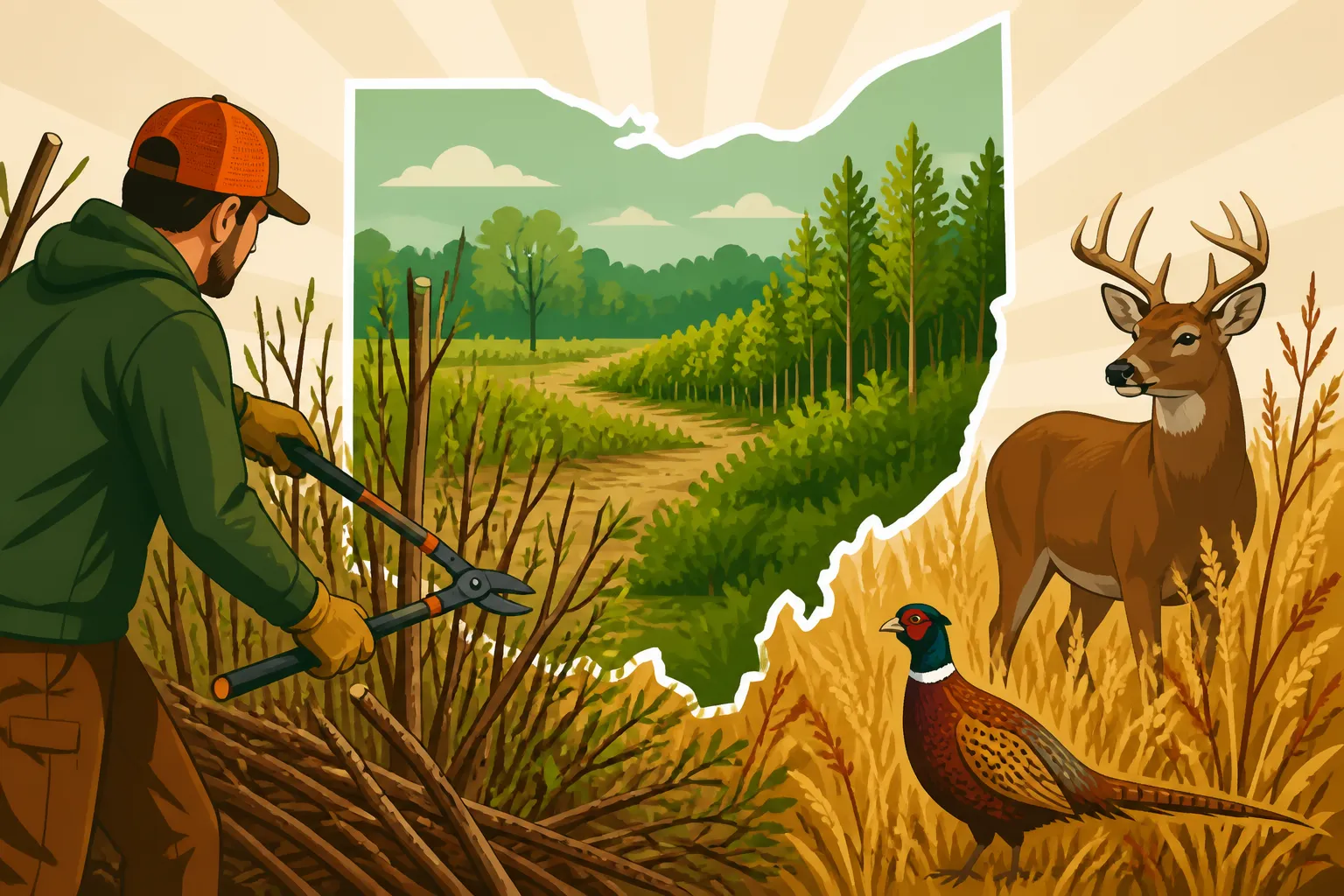
| Brush Pile Creation | Small game cover, escape routes | Rabbit, Squirrel, Turkey, Songbirds | Excellent rabbit spots, low-pressure cover |
How to Use Habitat Work to Your Advantage as a Hunter
Knowing what habitat work is happening is only half the battle; the real trick is understanding how to integrate that knowledge into your hunting strategy. This is where a little extra scouting and some thoughtful observation can make all the difference, especially on heavily pressured public land where Hunting Pressure on Ohio Public Land can be a real factor.
Scouting for Management Activity
The first step is always good scouting. Before you even set foot in the woods, use aerial maps like those found on onX Hunt or GoHunt to look for visual cues. Fresh clear-cuts, the distinct patterns of managed fields, or newly created impoundments often show up clearly. Pay attention to satellite images from different times of the year, if available, as they might reveal areas of recent timber harvest or the green-up after a burn.
Once you’re on the ground, look for physical evidence. Are there stumps from recent logging? Charred earth from a burn? New gates, signs, or planting efforts? Often, the wildlife area managers will post information about ongoing projects at kiosks or trailheads. These are goldmines of information that many hunters simply walk past. Understanding How Ohio Wildlife Areas Are Managed can give you a deeper appreciation and practical insight into where to focus your efforts. Don't be afraid to look for clues others ignore.
Hunting the Edges of Change
Wildlife, especially deer and turkey, are creatures of habit but also opportunistic. They will naturally gravitate towards areas that offer the best food, cover, and water. When habitat work creates a sudden abundance of any of these, animals will respond. The edges of a new clear-cut, where dense cover meets older timber, become prime travel corridors. The tender shoots emerging after a prescribed burn become irresistible browse.
These "edges of change" are often where you’ll find the most consistent activity. A deer might bed in the thick, regenerating growth of a recent clear-cut and then step out into an adjacent mature oak stand to feed on acorns. Or, turkeys might roost in tall trees and then pitch down into a warm-season grass field that’s been recently burned, foraging for insects and seeds. Learning to read these transitions and how game uses them is key to consistently Finding Ground Others Walk Past.
Adapting Your Tactics to Managed Areas
The type of habitat work you find should influence your hunting tactics. If you’re hunting a newly thinned forest with abundant ground cover, still-hunting slowly and meticulously might be more effective than sitting in a stand, as deer might be moving through at any time, browsing. In areas with extensive warm-season grass plantings, a small game hunter might focus on pushing fencerows or ditch lines that border these fields, as rabbits and pheasants will utilize the dense cover for escape.
For deer drives, especially on larger tracts of public land, areas with recent logging or dense new growth can be perfect for pushing game towards standers. Conversely, if you're trying to hunt solo, you might target the periphery of these thickets, catching deer as they transition in and out. Understanding these nuances will allow you to be more flexible and successful, rather than relying on a one-size-fits-all approach. For example, Hunting Small Private Tracts in Ohio might involve different tactics than a sprawling wildlife area with active habitat work.
Challenges and The Future of Ohio's Habitat Management
While habitat work is crucial, it's not without its challenges. Managing thousands of acres of diverse landscapes, with limited resources and often conflicting goals, is a monumental task. As hunters and conservationists, understanding these difficulties can help us appreciate the efforts and even find ways to contribute.
Balancing Competing Needs
One of the biggest hurdles is balancing the needs of different species and different user groups. A management decision that benefits deer might not be ideal for nesting birds. Creating open fields for pheasants reduces forest cover for squirrels. Wildlife managers are constantly performing a delicate balancing act, trying to create a mosaic of habitats that supports a diverse range of animals while also providing opportunities for hunting, hiking, birdwatching, and other outdoor pursuits.
Furthermore, public perception can sometimes complicate efforts. A clear-cut might look "ugly" to a casual hiker, even if it's biologically beneficial. Prescribed burns can cause temporary smoke and closures. Communicating the long-term ecological benefits of these seemingly destructive actions is an ongoing challenge for agencies managing public land. This balancing act means that the habitat you find today might look different five or ten years down the road, making continuous scouting and learning essential.
Funding and Resources
Habitat management is expensive. From the equipment needed for logging and mowing to the labor required for planting and maintaining food plots, every project carries a cost. Funding often comes from a variety of sources, including hunting license sales, federal grants, and conservation organizations. This is one of the many reasons why buying an Ohio Resident Hunting License Cost or purchasing a Ohio Deer Management Permits is so vital; a portion of those funds directly supports the habitat you enjoy.
The future of habitat management in Ohio will likely continue to focus on adaptive strategies, responding to climate change, invasive species, and shifting wildlife populations. Expect to see more targeted efforts to restore specific declining habitats, such as efforts to bring back early successional forests for grouse or prairie habitats for pollinators and upland birds. As hunters, staying informed about these initiatives, perhaps through resources like the Ohio Department of Natural Resources' website or local conservation groups, will not only make us better hunters but also better stewards of the land.
Disclaimer
This article is for general informational purposes only and does not constitute professional advice. Laws, prices and regulations vary by location and change over time. Consult a qualified professional for guidance on your specific situation.