Timber Cuts and Where Deer Move After
It’s a scenario many Ohio deer hunters have experienced: you scout a promising stand of timber, mark your trees, and then show up a year later only to find it’s been clear-cut. The frustration is real – suddenly, your meticulously planned spot is a barren wasteland, and the deer patterns you knew are completely gone. But don’t despair! This guide will walk you through how timber cuts, from selective harvests to large clearings, drastically alter deer movement and how you can adapt your hunting strategies to find success in these dynamic landscapes across Ohio.
Understanding the Immediate Impact of Timber Cuts
When the chainsaws start humming and the logging trucks roll in, the deer in an area don't just vanish into thin air. Their patterns, however, are absolutely thrown into chaos. It's like someone suddenly rearranged their entire neighborhood. Knowing what kind of cut took place helps you understand the initial disruption and how deer might react in the short term.
Different Types of Timber Operations in Ohio
Not all logging is created equal, and the type of cut has a huge bearing on how deer respond. You’ll see a few primary methods employed across Ohio, especially on our state forests and private timberland.
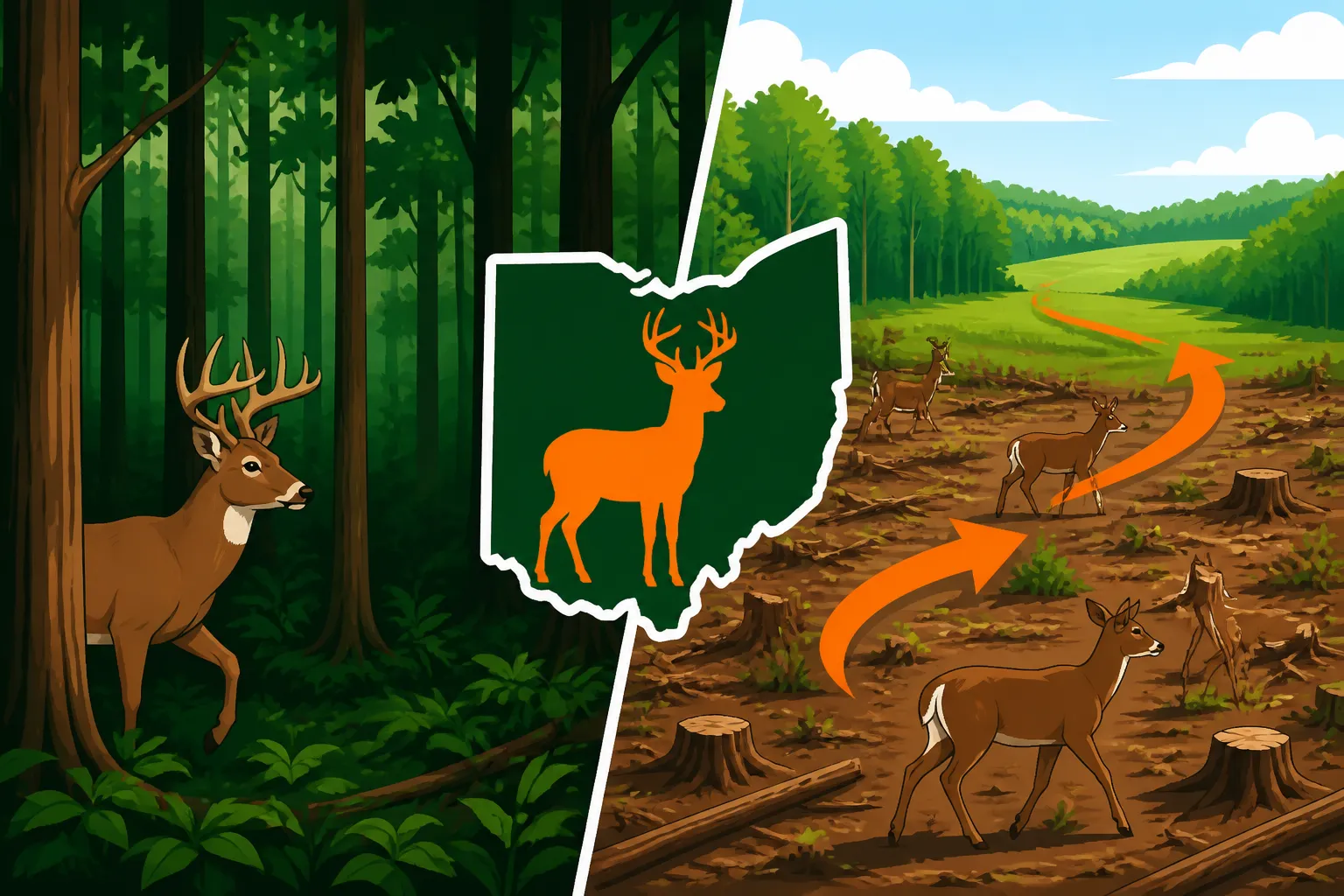
- Clear-Cutting: This is perhaps the most dramatic, where almost all trees in a given area are harvested. Think of it as a complete reset button for the forest. When a clear-cut happens, the immediate impact is a loss of mature timber cover and established food sources like acorns or beech nuts. Deer accustomed to this area will often vacate immediately, seeking refuge in adjacent intact timber. However, it’s not always a permanent departure. While the mature trees are gone, the underlying vegetation is exposed to sunlight, kicking off a rapid growth cycle that can be incredibly beneficial for deer browse within a year or two.
- Selective Harvesting: This method involves removing only certain trees, often those of a specific age, species, or size, while leaving others to grow. It's a more nuanced approach aimed at improving the overall health and future timber value of the stand. For deer, selective cuts can be less disruptive. They might cause temporary displacement, but often enough cover remains that deer feel relatively secure. The new light reaching the forest floor stimulates undergrowth, creating new food sources and denser bedding cover without completely eliminating the existing canopy. This can actually enhance the habitat rather quickly, providing both food and cover.
- Thinning: Similar to selective harvesting but often focused on removing smaller, less desirable trees to reduce competition and promote the growth of remaining, higher-value trees. Think of it as pruning the forest. Deer might not even notice a significant change beyond the initial noise. Thinnings open up the canopy slightly, allowing more sunlight to hit the forest floor, which again encourages new growth. This subtle change can create new pockets of browse and improved visibility for deer, potentially making the area more attractive over time, especially for bedding.
When you're out Scouting Ohio Public Land Before Season, it's vital to identify not just if a cut has occurred, but what kind of cut it was. A clear-cut will demand a complete rethinking of the area, while a selective harvest might just require minor adjustments to your stand placement or approach.
Initial Deer Displacement and Where They Go
The immediate aftermath of a significant timber cut, especially a clear-cut, sends deer scrambling. Their primary instinct is survival, and that means finding secure cover and familiar food sources.
- Seeking Adjacent Cover: Deer will typically move to the nearest undisturbed timber. If a clear-cut happens on one side of a ridge, expect deer to move to the other side or deeper into a ravine that wasn't touched. These adjacent areas, especially those with thick understory, become temporary refuges. They'll use these spots for bedding and feel safe from immediate threats, only venturing out for food during low-light hours. You might find increased deer density in these neighboring parcels of timber for a while.
- Temporary Food Shortages: If the cut area was a prime acorn flat or a beech grove, that food source is suddenly gone. Deer will have to search for alternatives. This might mean shifting their feeding patterns to other mast-producing trees nearby, agricultural fields, or early successional growth in unlogged areas. The immediate loss of a major food source often pushes them further afield.
- Increased Vulnerability: During active logging, the constant noise and human presence make deer extremely wary. Even after the loggers leave, the drastically altered landscape can make deer feel exposed. They'll be on high alert, often moving more nocturnally until new cover begins to grow in the cut area. This initial phase is often tough to hunt, as deer movement becomes unpredictable and heavily influenced by human disturbance. This is where you might find Hunting Pressure on Ohio Public Land to be intense in the unlogged pockets, as other hunters also seek out these "safe" zones.
Knowing these initial reactions can help you quickly adjust your strategy. Instead of focusing on the newly logged area itself, shift your attention to the undisturbed fringes and bottlenecks that connect them to other secure habitats.
The Regeneration Game: How Timber Cuts Create New Habitat
While the initial shock of a timber cut can be disheartening for a hunter, the long-term ecological benefits for deer are undeniable. It's all about the forest's ability to regenerate and offer a new buffet of food and incredibly dense cover.
New Browse and Forage Opportunities
Once sunlight floods the forest floor after a timber harvest, it awakens a dormant seed bank. This explosion of new plant growth is a goldmine for deer.
- Early Successional Growth: Within a year or two of a cut, especially a clear-cut, the area will be thick with brambles, saplings, and herbaceous plants. Think of species like blackberry, sumac, wild grape, aspen, and various forbs. These aren't just weeds; they're highly nutritious browse that deer absolutely love. Unlike mature timber where food is often limited to mast crops or sparse undergrowth, a regenerating clear-cut becomes a massive salad bar. Deer will actively seek out these areas, sometimes returning quite quickly once the initial logging activity ceases and enough palatable vegetation sprouts up. This is a critical Late-Season Food Sources for Ohio Whitetails when other options might be scarce.
- Increased Nutritional Value: The young, tender shoots and leaves that emerge in these regenerating areas are often more digestible and nutrient-dense than the browse found in mature forests. This boost in nutrition is vital for deer, contributing to better antler growth in bucks and healthier fawn production in does. A study from the ODNR might show how habitat management through controlled timber harvests leads to a healthier overall herd.
- Seasonal Changes and Browse Availability: The availability of this browse will change throughout the year. In spring and summer, it's lush and abundant. Come fall, some of the herbaceous growth dies back, but woody browse from saplings and brambles remains a critical food source through winter. Understanding this seasonal shift helps you predict when deer will be using these areas most intensely.
Table: Types of Timber Cuts and Deer Habitat Impact
| Timber Cut Type | Immediate Impact (1-2 years) | Mid-Term Impact (3-10 years) | Long-Term Impact (10+ years) | Primary Deer Use |
|---|---|---|---|---|
| Clear-Cut | Displacement, loss of canopy, new browse sprouts | Dense cover, abundant browse, thermal protection | Maturing forest, less browse, more timber food | Bedding, feeding, security |
| Selective Harvest | Minimal displacement, increased ground growth | Improved browse, varied cover, travel corridors | Enhanced timber stands, consistent food/cover | Feeding, bedding (less dense), travel |
| Thinning | Little change, more light reaches forest floor | Moderate browse, improved visibility, open travel | Healthy timber, sustained moderate browse | Travel, feeding, light bedding |
Dense Bedding and Security Cover
Beyond food, regenerating timber cuts create some of the densest security and thermal cover available to deer in Ohio.
- Impenetrable Thickets: After a few years, a clear-cut transforms into an almost impenetrable thicket of saplings, briars, and brush. This dense, young growth provides incredible security cover where deer feel safe from predators and hunters alike. They can bed down and feel completely hidden, making it very difficult for humans to push through without making significant noise. You’ll often find deer tucked into the leeward side of these thickets on windy days, or soaking up the sun in them during cold snaps.
- Thermal Protection: The tightly packed vegetation also offers excellent thermal protection during harsh Ohio winters. It acts as a windbreak and can even trap ground-level heat, allowing deer to conserve energy. This is particularly important during periods of heavy snow or extreme cold. Deer will often bed in these areas, especially if there's an adjacent south-facing slope that gets direct sunlight.
- Strategic Bedding Locations: As the new growth matures, deer will establish predictable bedding patterns within these cuts. They'll often seek out slightly elevated spots within the thickets, giving them a vantage point to smell and hear approaching danger. Look for small knolls or benches within the cut that offer just a bit more elevation or a clearer escape route. Where Shawnee State Forest Bucks Bed often includes these regenerating clearings or thick understory created by past logging.
The key takeaway here is that while the initial cut may look like a devastation, it’s actually the start of a new, highly productive phase for deer habitat. Understanding this cycle is crucial for hunting success.
Scouting and Hunting Strategies for Timber Cut Areas
Okay, so we know timber cuts are initially disruptive but ultimately beneficial. The real question for hunters is: how do you find and effectively hunt these areas? It requires a shift in mindset and some dedicated boots-on-the-ground work.
Identifying Recent and Regenerating Cuts
The first step is locating where timber management has taken place. This isn't always obvious from the road, especially if the cut is older or deep within public land.
- Aerial Imagery is Your Best Friend: This is where modern tools shine. Services like onX Hunt or GoHunt provide satellite imagery that is regularly updated. You can literally see the changes in the canopy. Look for distinct patches of light-colored earth or areas with very short, uniform growth that contrast with surrounding mature timber. The older the cut, the darker and denser the regenerating canopy will appear. Reading Aerial Photos for Southeast Ohio Deer is an absolute must. Zoom in and out, compare historical imagery if available, and try to identify clear boundaries between cut and uncut areas.
- Public Land Management Plans: On state forests and some wildlife areas, timber management is a continuous process. Ohio's state forests, like Zaleski or Tar Hollow, will often have published management plans or harvest schedules. While these might not give you exact dates, they can point you to general regions where logging is planned or has recently occurred. A quick call or email to the district forester can sometimes provide invaluable insights.
- Boots on the Ground Scouting: There's no substitute for walking the woods. Even if you identify potential cuts on a map, you need to see them in person. Look for old logging roads, stumps, and fresh regrowth. Pay attention to transition zones – where the cut meets the mature timber. These edges are often deer superhighways. When Finding Sign in Big Appalachian Timber, you'll quickly learn that those rubs and scrapes often lead directly into or out of a thick, regenerating clear-cut.
Keep a keen eye out during your off-season scouting trips. What looks like a mess in March might be prime bedding by October.
Locating Deer Movement within the New Landscape
Once you've found a timber cut, the next challenge is deciphering how deer are using it. Their patterns will be different from what you'd expect in unbroken timber.
- Focus on the Edges and Transition Zones: Deer rarely spend all their time within the deepest, densest part of a large clear-cut. They'll use those areas for bedding, but they often feed along the edges, where new browse meets the older timber, or travel through slightly more open sections. Look for trails leading into and out of the thick stuff. These can be faint at first, but with repeated use, they become obvious.
- Funnels and Pinch Points: Even within a regenerating cut, deer will take the path of least resistance. Look for natural funnels where two thick areas narrow, or where a slight opening creates a defined travel corridor. These could be old logging roads that have started to grow over but are still easier to walk, or natural benches along a hillside that cut through the thickest cover. A saddle on a ridge connecting two thick clear-cuts is a prime example of a natural funnel where Hunting a Ridge-Top Saddle for Rutting Bucks can be incredibly effective.
- Bedding Areas within the Thickets: Deer will bed deep inside the densest parts of the cut, especially on the downwind side, giving them the advantage of wind and sight. Look for small "rooms" or slightly more open pockets within the thicket where deer can lie down. Pay attention to prevailing winds and thermal currents, particularly on hilly terrain. Deer will often bed in spots that allow them to smell danger from one direction and see or hear it from another.
Effective Hunting Tactics in Logged Areas
Hunting timber cuts requires patience, stealth, and often a willingness to get a little uncomfortable. The visibility might be limited, and the cover is thick.
- Stand Placement for Transitions: Instead of trying to hunt directly in the middle of a dense cut, set up your stand or ground blind on the edges. Focus on where deer are transitioning from the security of the thicket to a feeding area, or from one thick bedding area to another. A stand overlooking a clear-cut that borders a mature oak flat can be deadly, especially during the rut. Treestand Setups in Appalachian Ohio Hardwoods often take advantage of these edge situations.
- Ground Blinds and Still-Hunting: In areas with extremely dense regrowth, a ground blind can be an excellent option. It provides concealment and allows you to set up directly within the cover, rather than trying to get an elevated angle over it. Brushing in a blind on the edge of a cut or even within a slightly more open lane can be very effective. Alternatively, if you're comfortable with it, still-hunting or even slow-moving pushes can work. Moving very slowly, stopping, and scanning constantly, especially with the wind in your face, can help you pick off deer that are tucked into the thick stuff. This is a tactic that rewards patience and keen observation.
- Understanding Wind and Thermals: In clear-cut areas, especially on hillsides, wind currents and thermals can be tricky. Without a dense canopy to filter it, wind can swirl more. On steep terrain, thermals will rise in the morning and fall in the evening. Always consider how your scent will carry, and try to position yourself so that your scent blows away from known bedding or travel areas. Wind and Thermals on an Appalachian Ridge is a crucial concept to master, and it's even more critical in these broken habitats.
- Access Routes: Getting into and out of these areas undetected is paramount. Old logging roads, even if overgrown, can provide quieter access than busting through dense briars. However, be aware that deer might also use these as travel corridors. Always approach from a direction that keeps you out of the primary wind flow and away from known bedding areas.
Hunting timber cuts can be challenging, but also incredibly rewarding. These dynamic landscapes often hold some of the biggest, smartest deer because they offer exactly what a wary whitetail needs: abundant food and impenetrable cover.
Disclaimer
This article is for general informational purposes only and does not constitute professional advice. Laws, prices and regulations vary by location and change over time. Consult a qualified professional for guidance on your specific situation.