Tar Hollow State Forest Hunting
Finding dependable public hunting land in Ohio that offers a true sense of wildness can be a real challenge sometimes, especially when you're looking to get away from the immediate pressure of major population centers. Many hunters feel like they're constantly looking for that sweet spot, a place where they can escape the crowds and immerse themselves in the hunt without driving for hours. This guide is all about Tar Hollow State Forest, a fantastic option nestled in the south-central part of our great state, and why it might just be the diverse, less-pressured hunting ground you've been searching for.
Tar Hollow State Forest At a Glance: What Makes It Unique?
When you first look at a map of Ohio's public lands, Tar Hollow State Forest might not jump out at you as immediately as, say, Wayne National Forest or some of the larger wildlife areas. But trust me, this place is a hidden gem that offers a unique hunting experience. It's not just a block of trees; it's a tapestry of natural features that make it stand out.
A Blend of Forested Hills and Hollows
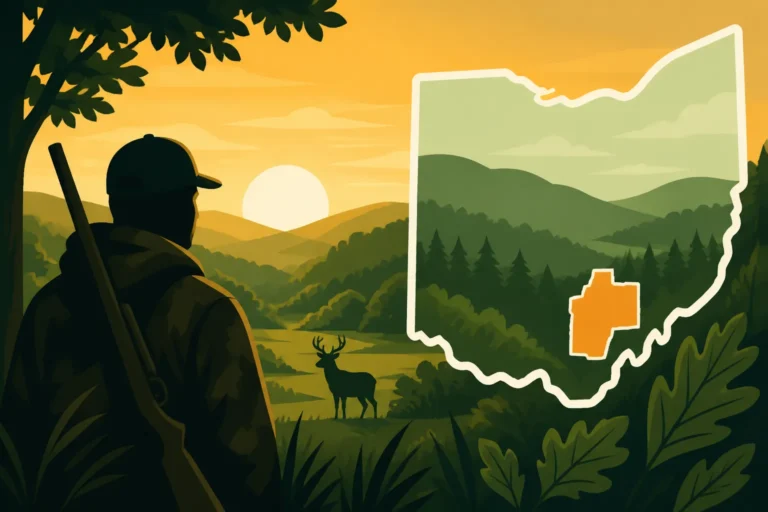
Tar Hollow State Forest, spanning thousands of acres across Ross, Hocking, and Vinton counties, truly lives up to its name with its deeply cut hollows and steep, forested ridges. This isn't flat farmland hunting; this is classic Appalachian Ohio foothills terrain, just on a slightly smaller scale than some of its southern neighbors. You'll find mature hardwood stands dominated by oaks and hickories on the ridge tops and slopes, which transition into areas with more beech and maple down in the cooler, moister hollows. There are also younger timber cuts in various stages of regrowth, creating thick, dense cover that deer and other wildlife absolutely adore. These clear-cuts, often a result of responsible forest management, provide vital browse and bedding areas, making them prime locations for deer sign. The constant elevation changes mean you'll be working for your game, but the rewards are often worth the effort – think about the satisfaction of spotting a buck making his way up a steep draw, or hearing a gobbler sound off from a distant ridge. The network of small streams and seasonal drainages carves the landscape, creating natural funnels and travel corridors that are crucial to understanding animal movement.
Diverse Game Species and Healthy Populations
One of the biggest draws to Tar Hollow is the sheer diversity of game animals it supports, all thriving within its varied habitats. White-tailed deer are undoubtedly the main attraction, and the forest's mix of mature mast-producing trees, thick regrowth, and scattered agricultural fields (on adjacent private lands, influencing deer movement within the forest) means there's ample food and cover for a healthy herd. Hunters often report seeing good numbers of deer, and the terrain offers enough challenge to grow some mature bucks. Turkeys are another prominent species here, with good populations roaming the ridges and roosting in the tall oaks and pines. Hearing a gobbler thunder through the hollows on a crisp spring morning is an experience that keeps many hunters coming back. Ohio Spring Turkey Zones and Dates are definitely something to pay attention to if you plan a trip. Small game, too, abounds. Squirrels, particularly fox and gray squirrels, are everywhere, especially during good mast years. You'll find them chattering in the oak and hickory groves, making for fantastic early-season hunting opportunities. Rabbits, while perhaps not as numerous as in wide-open farm country, can be found in the thicker brush and briar patches, especially along the edges of clearings or near old logging roads. While perhaps not the primary focus for many, keep an eye out for furbearers like raccoons and coyotes as well; they're certainly part of the ecosystem here.
Planning Your Hunt in Tar Hollow State Forest
A successful hunt is always built on solid planning, and Tar Hollow State Forest is no exception. Knowing how to get around, what rules apply, and how the seasons run will make your experience much smoother and more enjoyable.
Access Points and Navigation
Tar Hollow is crisscrossed by a network of public roads and, importantly for hunters, numerous old logging trails and fire lanes. These aren't always marked like major highways, so having a good map is absolutely essential. The main arteries, like Tar Hollow Road and nearby county routes, provide good access to the forest's perimeter and some interior sections. You'll find designated parking areas at various points, often near trailheads or major access roads. However, many of the best spots might require a bit of a walk in from these main points. This is where tools like onX Hunt truly shine. You can download maps for offline use, pinpoint your location with GPS even without cell service, mark potential stand locations or game sign, and clearly see the forest boundaries, which is critical when hunting near private property lines. Similarly, other mapping platforms like GoHunt can provide detailed satellite imagery and topographic maps that help you understand the lay of the land before you even set foot in the woods. Pay close attention to gates and signage; some roads may be seasonal or restricted to administrative use only. Knowing your access points, where you can park, and how far you're willing to hike can dramatically reduce pressure from other hunters and increase your chances of finding unmolested game. Checking the Public Hunting Land in Ohio resources and specifically for Ohio State Forest Hunting regulations will always be a good first step.
Understanding Regulations and Seasonal Considerations
Hunting in Tar Hollow State Forest means adhering to all statewide Ohio hunting regulations, as well as specific rules that apply to state forests. It’s always smart to double-check the current hunting digest, as regulations can sometimes see minor tweaks year to year. For deer, you'll need the appropriate licenses and permits, and you'll want to be familiar with the Ohio Deer Season Structure Explained, including archery, gun, and muzzleloader seasons. For state forests, there are often specific rules regarding things like treestand placement (e.g., often requiring stands to be removed daily or clearly marked with your name and address), camping regulations, and vehicle access. You generally can't just drive off-road wherever you please. Blaze orange requirements during gun seasons are strictly enforced for safety. Turkey hunters need to understand the spring and fall season dates and bag limits. Small game hunters will want to check the Ohio Small Game and Upland Bird Seasons for squirrels, rabbits, and other species that call Tar Hollow home. Be mindful of hunting hours, which are typically half an hour before sunrise to half an hour after sunset for most species, though some furbearer seasons allow night hunting. Being prepared with this knowledge not only keeps you legal but also helps ensure a safe and respectful experience for everyone enjoying the forest.
Strategies for Deer Hunting in Tar Hollow
Deer hunting in Tar Hollow State Forest is a rewarding challenge that requires a good understanding of the terrain and deer behavior. It's not a place for lazy hunting; you'll earn your venison here.
Locating Whitetails in Varied Terrain
The varied topography of Tar Hollow, with its steep ridges and deep hollows, profoundly influences how deer move and where they spend their time. Whitetails are creatures of efficiency, and they'll often utilize the easiest routes up and down these hills, which means looking for old logging roads, subtle benches, and saddles along the ridge tops. These saddles, natural dips in a ridge, act as funnels, concentrating deer movement between different drainage systems or bedding areas. When scouting, focus on finding pinch points where the terrain naturally constricts travel. Look for fresh rubs and scrapes, especially along ridge lines and the edges of thick cover, as these indicate active deer travel routes during the rut. Bedding areas will often be found on south-facing slopes, which get more sun exposure and offer thermal cover, or in the densest thickets created by young regrowth timber. Water sources are also key; during dry spells, deer will predictably visit springs and creek bottoms. Don't be afraid to put some miles on your boots. Scouting Ohio Public Land Before Season is absolutely critical here. Use your mapping app, like onX Hunt, to identify these topographical features and then go in to find the physical evidence on the ground. The more you understand the flow of the land, the better you'll predict deer movement.
Archery and Gun Season Tactics
Whether you prefer the silent approach of archery or the definitive reach of a firearm, Tar Hollow offers opportunities for both, but your tactics will need to adapt to the forest's character. For archery season, which includes vertical bows and crossbows, stealth is paramount. Treestands are popular, and finding good trees with adequate cover on a well-used deer trail or near a food source can be productive. Consider Treestand Setups in Appalachian Ohio Hardwoods which often means looking for trees on benches or along ridges overlooking transition areas. During the early season, focusing on food sources like acorn flats or soft mast trees can be effective. As the rut approaches, bucks become more mobile, cruising ridge tops and hollows looking for does. This is when rattling and grunting can be very effective, especially if you're positioned in a funnel. For gun season, which sees heavier hunting pressure, adapting a still-hunting or slow-stalking approach can work wonders. Think about Still-Hunting Shawnee State Forest Ridges and apply those principles here: moving quietly into the wind, pausing frequently to scan for movement, and utilizing the topography to your advantage. Deer drives, with small groups of hunters, can also be effective on the smaller, isolated woodlots or ridge systems within the forest, especially if you know how deer are likely to escape. Early morning and late afternoon are prime times, but don't discount midday movement, especially during the peak of Hunting the Rut in Early November or during the gun season when deer might be bumped by other hunters.
Turkey and Small Game Opportunities
Tar Hollow isn't just for deer; it's a fantastic place to pursue Ohio's wild turkeys and enjoy the timeless tradition of small game hunting.
Chasing Gobblers in Spring and Fall
If the thunder of a gobbler gets your heart racing, Tar Hollow State Forest is a prime destination during both the spring and fall turkey seasons. Spring hunting here can be absolutely magical. The rolling hills allow for strategic setups, and the dense oak and hickory stands provide excellent roosting habitat. Early morning, focus on getting as close as possible to a roosting gobbler without spooking him, then set up against a large tree with good visibility. Using locator calls (owl hoots, crow calls) to get a gobbler to sound off before fly-down can help you pinpoint his location. Once he's on the ground, soft tree yelps and clucks can draw him in. Don't be afraid of the Run-and-Gun Turkey Tactics on Public Land approach, especially if birds are henned up or playing hard to get. Sometimes, covering ground and trying to strike a lonely gobbler is your best bet. For fall turkey hunting, which is shotgun-only in Ohio, the strategy shifts. Instead of calling them in with breeding calls, fall hunting often involves breaking up a flock and then calling the scattered birds back together with assembly yelps. Find a flock, get into them to make them scatter, then set up and start calling about 15-20 minutes later. The forest's varied terrain means turkeys have plenty of places to hide and roam, so persistence and a good ear are your best tools.
Small Game Pursuits: Squirrels, Rabbits, and More
For those who appreciate the simpler pleasures of a small game hunt, Tar Hollow State Forest delivers. Squirrel hunting is perhaps the most accessible and consistently rewarding here. The abundance of mature oaks and hickories ensures a good mast crop in most years, attracting healthy populations of both fox and gray squirrels. Early in the season, you can often spot them cutting nuts from the treetops or chasing each other playfully. Sitting quietly in a prime nut-bearing grove during the early morning or late afternoon can be incredibly productive. Listen for the tell-tale rustle of leaves, the bark of a squirrel, or the sound of nut cuttings raining down. Still-hunting slowly through the woods, stopping frequently to scan the tree trunks and branches, is another effective method. Squirrel Hunting Ohio Oak Ridges provides excellent detail on how to approach this. For rabbits, focus on the thicker cover found along the edges of clearings, fencerows (where forest meets private land), and brushy creek bottoms. These areas provide the dense cover that cottontails need for escape and bedding. Hunting with a good beagle can be incredibly fun and effective for rabbits, but slow-walking and flushing can also yield results. While not as common, you might also find opportunities for ruffed grouse in the deeper, older forest sections with dense understory, though their numbers are in decline across Ohio.
Essential Gear and Safety for Tar Hollow Hunts
Heading into a rugged state forest like Tar Hollow demands the right gear and a commitment to safety. Being prepared makes all the difference between a frustrating trip and a successful, enjoyable one.
Recommended Gear for Diverse Conditions
The diverse terrain and unpredictable Ohio weather mean your gear choices are critical for a Tar Hollow hunt. Layering is non-negotiable. Begin with a good moisture-wicking base layer, add insulating mid-layers like fleece or wool, and top it off with a durable, waterproof and windproof outer shell. Wool is particularly excellent because it retains warmth even when wet, which is a huge plus if you encounter rain or wet snow. Layering for an Ohio Deer Stand in December will be quite different from an October archery hunt, but the principle remains the same. Footwear is also crucial; invest in comfortable, waterproof, and supportive boots with good ankle support, as you'll be navigating steep and uneven terrain. Navigation tools are paramount. While your phone with an app like onX Hunt is incredibly powerful, a traditional GPS unit or a physical compass and map serve as reliable backups, especially if your phone battery dies or you lose signal in a deep hollow. Don't forget a headlamp for walking in before dawn or out after dusk, and a small first-aid kit is always a smart addition to your pack. If you're using a treestand, a full-body harness and a lifeline are non-negotiable safety items. For firearm hunters, a good sling on your rifle or shotgun will make those long treks into the woods much more comfortable.
Staying Safe and Responsible
Safety in the woods, especially on public land, should always be your top priority. Always let someone know where you're going and when you expect to return, especially if you're hunting alone. Carry a fully charged cell phone (though be aware service can be spotty) and a personal locator beacon (PLB) for truly remote areas. Blaze orange or blaze pink during gun seasons isn't just a legal requirement; it's a vital safety measure that makes you visible to other hunters. Be aware of your surroundings, especially during peak seasons when there might be more people in the woods. Know your target and what's beyond it, always. Remember that Tar Hollow is shared by hikers, birdwatchers, and other outdoor enthusiasts, so practice respectful coexistence. Leave no trace; pack out everything you pack in, and perhaps a little more. Responsible land stewardship means keeping the forest clean for everyone. Understanding and following all Ohio hunting laws, including those for Ohio State Forest Hunting, helps ensure a sustainable future for hunting in places like Tar Hollow.
Here's a quick comparison of popular game in Tar Hollow and where to typically find them:
| Game Species | Preferred Habitat | Key Hunting Strategy Considerations |
|---|---|---|
| White-tailed Deer | Oak/Hickory ridges, dense clear-cuts, creek bottoms, saddles | Scouting for natural funnels, focusing on mast crops, quiet movement |
| Wild Turkey | Mature timbered ridges (roosting), open hardwoods (feeding) | Locator calls, understanding fly-down patterns, fall flock scattering |
| Gray & Fox Squirrels | Oak and Hickory groves, mast-producing hardwoods | Still-hunting, listening for cuttings, early morning/late afternoon |
| Cottontail Rabbit | Thick brush, briar patches, edges of clearings | Slow-walking and flushing, hunting with beagles, focusing on dense cover |
| Coyote | Throughout, often along ridges or field edges (adjoining) | Calling during winter, night hunting (with proper permits/rules) |
Disclaimer
This article is for general informational purposes only and does not constitute professional advice. Laws, prices and regulations vary by location and change over time. Consult a qualified professional for guidance on your specific situation.