Hunting the Lake Erie Marsh Region
The Lake Erie marsh region presents a unique and incredibly rewarding challenge for Ohio hunters, yet it can also feel like an impenetrable fortress of dense cattails, hidden sloughs, and ever-changing water levels. Many hunters feel overwhelmed by the sheer scale of the marshes, unsure where to even begin in pursuit of waterfowl, or how to navigate the complex public access rules. This guide is designed to cut through that confusion, offering a comprehensive look at what it takes to successfully hunt this iconic Ohio landscape, from understanding its unique ecosystem to mastering the specific tactics and gear needed to thrive in its watery domain.
Understanding the Lake Erie Marsh Region
The Lake Erie marsh region isn't just another hunting spot; it's an entire ecosystem, a vibrant tapestry of wetlands, open water, and diverse wildlife that makes it a true gem for Ohio hunters. For those unfamiliar with its vastness and intricate nature, it can be intimidating, but understanding its fundamental characteristics is the first step toward a successful hunt. This area represents one of the most significant wetland complexes in the entire Great Lakes basin, acting as a critical stopover for millions of migratory birds each year.
Geography and Unique Habitat
Stretching along Ohio's northern coastline, particularly in the western basin of Lake Erie, lies a sprawling network of marshes, mudflats, and shallow bays. This unique geography, influenced by the lake's fluctuating water levels and the fertile plains of Northwest Ohio, creates an incredibly rich habitat. Imagine endless acres of cattails, phragmites, and sedges interspersed with pockets of open water, known as "ponds" or "units," and bordered by agricultural fields. These marshes are often protected from the full force of Lake Erie by natural barrier beaches and dikes, creating a calmer, nutrient-rich environment ideal for aquatic vegetation and the invertebrates that feed waterfowl. The sheer scale can be daunting, but within this vastness are specific micro-habitats that attract different species. Shallow, muddy areas might hold dabbling ducks like mallards and teal, while deeper, more open water could be home to diving ducks. The proximity to expansive agricultural land, particularly corn and soybean fields, further enhances its allure, providing critical food sources for geese and late-season ducks.
The constant interaction between Lake Erie's vastness and the sheltered marshes creates a dynamic environment. Water levels can shift with strong winds, known as seiches, making navigation tricky and sometimes altering traditional hunting spots overnight. This means hunters need to be adaptable and possess a keen understanding of how water moves within these complex systems. The vegetation itself is also a key player; dense stands of cattails offer incredible concealment and shelter, but they can also make retrieving downed birds a serious challenge. Understanding these unique geographical and habitat features is paramount for anyone venturing into this special part of Ohio.
Key Wildlife Areas and Access Points
Ohio’s Lake Erie marsh region boasts several premier public hunting areas, managed primarily by the Ohio Department of Natural Resources (ODNR), that offer incredible opportunities, albeit often requiring careful planning and sometimes a permit application process. Locations like Magee Marsh Wildlife Area and Ottawa National Wildlife Refuge are legendary among waterfowl hunters. These areas are specifically managed to optimize waterfowl habitat, with controlled water levels, strategic food plots, and designated public access points. However, due to their popularity and the sensitive nature of the habitat, access is often regulated through lottery systems or daily drawings, particularly during peak migration.
Beyond these well-known giants, numerous other state wildlife areas pepper the landscape, offering a mix of direct lake access, managed marsh units, and rivermouth hunting opportunities. Examples include Metzger Marsh Wildlife Area, Crane Creek Wildlife Area, and Toussaint Wildlife Area. Each of these areas has its own character and access rules, which hunters need to research meticulously before planning a trip. Some areas might allow walk-in access to certain units, while others require specific boat launches or only offer controlled hunts. Information on specific boundaries, water access points, and current regulations is typically available on the ODNR's website. Using mapping tools like onX Hunt can be invaluable for identifying property lines, access roads, and potential hunting spots within these expansive public lands. These tools provide detailed aerial imagery and land ownership overlays, allowing hunters to scout remotely and pinpoint key features like water breaks, open water pockets, or hidden sloughs.
Waterfowl Migration Patterns Through the Marshes
The Lake Erie marsh region is strategically positioned along a major migratory pathway, often referred to as a segment of the Mississippi Flyway. This makes it a critical staging area and stopover for a vast array of waterfowl heading south for the winter or returning north in the spring. Understanding these migration patterns is crucial for timing your hunts. Early in the season, typically in September and October, you’ll see strong numbers of resident Canada geese, wood ducks, and blue-winged teal. These birds are often locally raised or are the first migrants to arrive, offering fast-paced action.
As colder weather descends from the north in late October and November, the marsh region truly comes alive. This is when the main push of mallards, pintails, gadwall, and various diving ducks like canvasbacks, redheads, and scaup begin to pour into the area. The peak of this migration can vary year to year, influenced by weather patterns, cold fronts, and food availability further north. Ohio Waterfowl Hunting on Lake Erie and Inland is an excellent resource for deeper insights into these regional patterns. These birds will often spend days or weeks feeding and resting in the protected marshes and adjacent fields before continuing their journey. Later in the season, particularly in December and January, many of the smaller, earlier migrants have moved on, but hardy mallards and black ducks, along with large numbers of Canada geese, often remain, utilizing open water and readily available food sources. This late-season window, especially when ice begins to form, can concentrate birds in remaining open water, providing intense hunting opportunities. Monitoring weather forecasts for strong northern winds and significant temperature drops can help predict when large influxes of new birds might arrive.
Essential Waterfowl Species and Hunting Strategies
Hunting the Lake Erie marsh region means you’ll encounter a diverse cast of waterfowl characters, each with its own preferred habitat, feeding habits, and flight patterns. Understanding these nuances is key to developing effective hunting strategies. It's not a one-size-fits-all approach; what works for a flock of wary mallards might not even get a second glance from a group of fast-flying divers.
Ducks of the Lake Erie Marshes (Mallards, Wood Ducks, Divers)
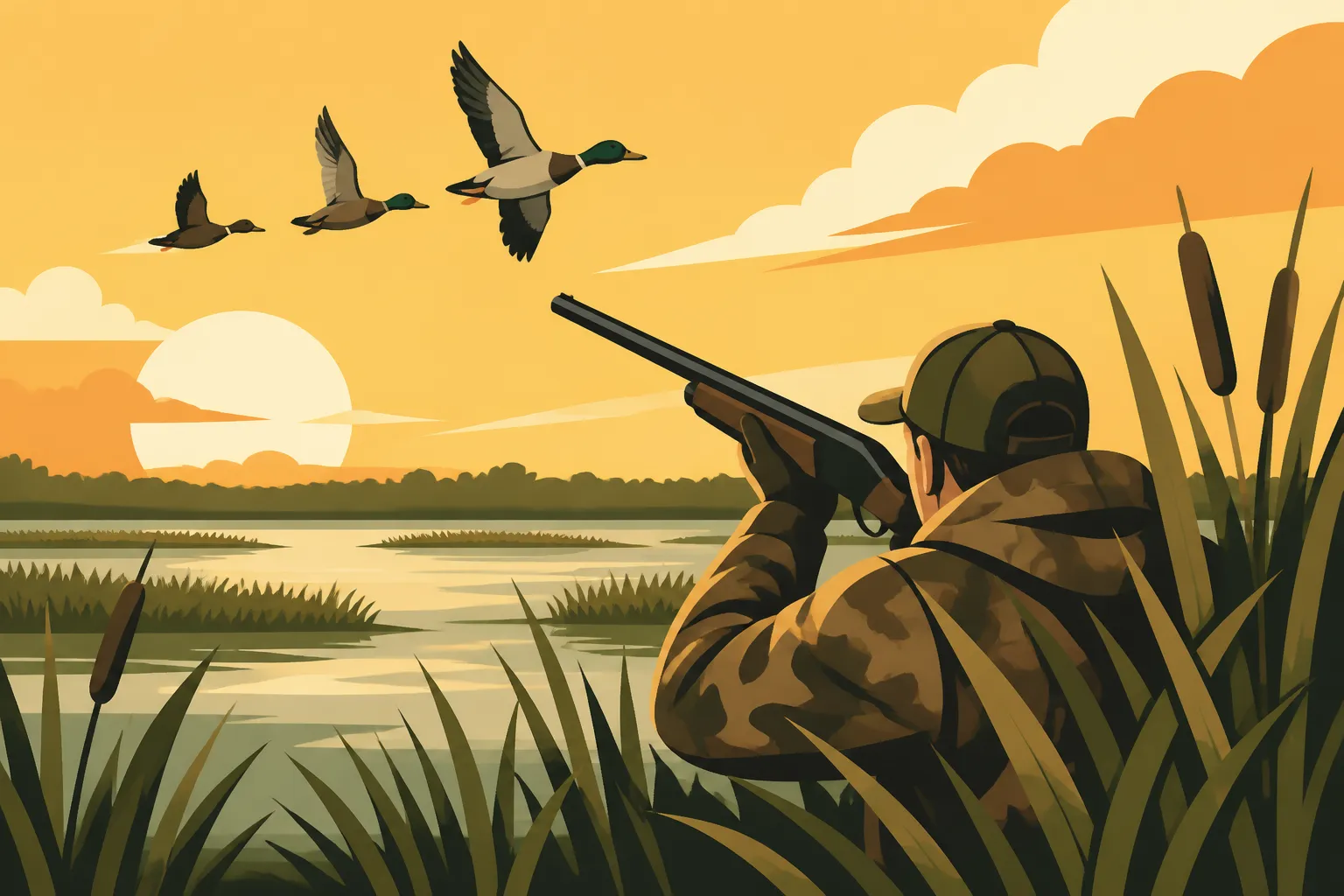
The duck hunting in the Lake Erie marsh region is truly diverse. Dabbling ducks, which feed by tipping up in shallow water, are a cornerstone of the marsh experience. Mallards are arguably the most sought-after, offering classic greenhead action. They love shallow water, flooded timber edges (where available), and especially fields adjacent to the marsh where they can feed on waste grain. Mallards and Wood Ducks in Ohio Marshes notes that wood ducks are another early-season favorite, beautiful and fast-flying, often found in more secluded, brushy sloughs and timbered areas within the marsh or along creek edges. Gadwall and wigeon are common too, often mixing with mallards. Hunting these dabblers often involves setting up in shallow water, using realistic decoys, and employing soft calling to lure them in. Setting up with the wind at your back, forcing birds to land into the breeze directly over your spread, is a classic and effective tactic.
Diving ducks present a different challenge. Species like canvasbacks, redheads, bluebills (scaup), and ruddy ducks prefer deeper, more open water, often feeding on submerged vegetation or invertebrates. They typically require larger decoy spreads, often in open water pockets or closer to the main lake. Diver Hunting on Open Lake Erie Water highlights the distinct strategies needed for these birds. Diver hunting frequently involves robust boat blinds or layout blinds in open water, designed to blend seamlessly with the aquatic environment. Unlike dabblers, divers often respond less to calling and more to the sheer visibility of a large spread, which signals a safe resting and feeding area. Their flights are typically fast and low over the water, making quick, decisive shooting essential.
Here's a quick look at some common ducks you'll encounter:
| Species | Preferred Habitat | Feeding Style | Typical Behavior | Call Response |
|---|---|---|---|---|
| Mallard | Shallow marsh, flooded fields | Dabbler (tip-up) | Decoys well, circles, responds to quacks | Strong |
| Wood Duck | Secluded, brushy sloughs | Dabbler (tip-up) | Fast, erratic flight, often flies low, shy | Limited |
| Gadwall | Shallow marsh, open ponds | Dabbler (tip-up) | Decoys well, often in mixed flocks | Moderate |
| Redhead | Deeper open water | Diver | Fast, strong flight, often in large rafts | Very limited |
| Canvasback | Open water, large bays | Diver | Powerful, direct flight, high altitude, wary | Very limited |
| Bluebill (Scaup) | Open water | Diver | Fast, often in large flocks, tolerates pressure | Limited |
Geese in the Marsh and Surrounding Fields
Canada geese are an omnipresent feature of the Lake Erie marsh region, providing fantastic hunting opportunities from early season through the late winter. Early in the season, local resident geese dominate, often found in family groups or smaller flocks. They utilize the marshes for roosting and loafing, but frequently fly out to feed in nearby agricultural fields. Later, as migration progresses, massive flocks of northern migrants join them, adding to the challenge and excitement. These larger, more wary birds are truly impressive to behold.
Hunting geese in this region often involves a two-pronged approach. You can target them in the marshes themselves, especially if you know their preferred roosting or loafing areas. This usually means setting up large, visible spreads of full-body goose decoys on islands, points, or mudflats within the marsh. Layout blinds, strategically brushed in, are essential for concealment. The other popular and often highly successful method is field hunting. This involves scouting active feeding fields, gaining permission from landowners, and deploying large spreads of full-body or shell decoys in an accurate representation of a feeding flock. Effective field hunting requires excellent concealment in layout blinds or pits, and meticulous attention to detail in your decoy spread and calling. Early Goose Season Tactics in Ohio offers more detailed advice on these early-season pursuits. It's not uncommon to see several hundred, if not thousands, of geese in the larger fields during the peak of migration, making for an unforgettable experience if you can get them to commit.
General Waterfowl Hunting Tactics for Marsh Environments
Regardless of the specific species you're targeting, successful marsh hunting relies on a set of core principles that address the unique environment. First and foremost is scouting. You must know where the birds are resting, feeding, and flying. This means spending time observing before the hunt, identifying key flight corridors, preferred feeding areas, and safe roosting spots. Mapping tools like GoHunt can provide topographic and satellite imagery that helps identify potential ambush points and bird concentrations. These insights can make all the difference, transforming a slow day into a memorable hunt.
Concealment is absolutely paramount in the open, often flat, marsh landscape. Birds have an incredible aerial view, and any unnatural shapes or movements will send them flaring. Whether you're using a permanent blind, a portable boat blind, or a layout blind, it must be meticulously brushed in with natural vegetation from the immediate area. Don't be afraid to overdo it; it's better to be too concealed than not concealed enough. Decoy placement is another critical factor. Mimicking natural feeding and loafing patterns is essential. Leave a landing zone in front of your blind, and arrange your decoys to look like contented birds. Calling, while sometimes overdone, can be highly effective, especially for mallards and geese. A few well-timed, realistic calls are far better than constant, erratic honking or quacking. Learn to read the birds and adjust your calling intensity and frequency based on their response.
Finally, wind and sun position are often overlooked but incredibly important. Always try to set up with the wind at your back, which forces incoming birds to land into the wind, presenting easier shots. Positioning yourself with the sun at your back also blinds approaching birds and hides your hide, giving you a distinct advantage. Adaptability is the marsh hunter's best friend; be prepared to move your spread or adjust your blind if the birds aren't cooperating.
Gear and Equipment for Marsh Hunting
Hunting the Lake Erie marsh region demands a specific set of gear, often more specialized and robust than what you might use for upland or timber hunting. The combination of water, mud, cold, and often unpredictable weather means your equipment needs to be up to the task. Skimping on quality here can quickly lead to a miserable and potentially unsafe experience.
Decoys and Spreads for Varying Conditions
Decoys are your primary tool for attracting waterfowl, and the marsh environment often calls for a substantial and varied spread. For dabbling ducks like mallards and wood ducks, a dozen to two dozen realistic mallard and pintail decoys are a good starting point. Adding a few teal or gadwall can enhance realism, especially early in the season. Consider motion decoys, like spinning wing decoys, which can add invaluable movement and attract birds from a distance, though check local regulations regarding their use. Setting these in shallow water, often on jerk strings or with permanent anchors, can simulate feeding birds.
When targeting diving ducks, larger spreads are typically more effective. Divers respond to numbers, so spreads of 3-5 dozen decoys, predominantly diver species like canvasbacks, redheads, and bluebills, are common. These are often set in long lines or large rafts in more open water, mimicking big flocks resting. Keep in mind that decoy lines for divers are often longer, requiring heavier weights to prevent drifting in wind or current. For geese, especially in fields, a large spread of full-body goose decoys (2-4 dozen or more) is often necessary to convince wary birds. Shells and silhouettes can supplement full-bodies to add bulk and save on carrying weight. The key is to create a dynamic, lifelike spread that looks inviting and safe to passing waterfowl. Don't forget heavy-duty decoy bags and an efficient way to deploy and retrieve them, as marsh mud can be a real challenge.
Boats, Blinds, and Concealment
Accessing many prime marsh hunting spots almost invariably requires a boat. Shallow-draft Jon boats, duck boats, or even canoes or kayaks are commonly used, depending on the water depth and distance to your desired location. A reliable shallow-water outboard motor, or even an air-motor for truly shallow, vegetated areas, is often a necessity. Ensure your boat is equipped with all required safety gear, including life jackets, navigation lights if hunting at dawn or dusk, and a sturdy anchor. For longer distances or rougher water, a more substantial boat might be needed.
Once you reach your spot, effective concealment is paramount. Permanent blinds are common in some managed areas, but many hunters rely on portable boat blinds or layout blinds. A boat blind is essentially a camouflaged structure built into or onto your boat, allowing you to hunt from the watercraft itself. These need to be robust enough to withstand wind and brushed in heavily with local vegetation. Layout blinds are excellent for field hunting or for setting up on small islands or mudflats within the marsh. Layout Blind Hunting Ohio Farm Fields discusses how to effectively brush in these low-profile blinds to disappear into the landscape. No matter the type, the goal is to break up your outline, blend with the natural surroundings, and remain absolutely still when birds are working. Camouflage patterns should match the predominant vegetation of the area you are hunting, whether it's cattails, corn stubble, or darker marsh grasses.
Appropriate Clothing and Waders
The Lake Erie marsh region can be brutal on clothing. You're constantly exposed to the elements: cold winds off the lake, driving rain, and often snow. Layering is critical. Start with a moisture-wicking base layer, add insulating layers like fleece or wool, and top it off with a waterproof and windproof outer shell. Wool is an excellent choice for insulation, as it retains warmth even when wet. Wool Versus Synthetics in Wet Cold highlights its advantages. Camouflage patterns should be appropriate for the marsh environment, with natural greens, browns, and tans.
Waders are perhaps the single most important piece of clothing for marsh hunters. Chest waders, preferably made of durable neoprene or breathable Gore-Tex-type material, are a must. They need to be insulated for cold weather hunting and stout enough to withstand punctures from sharp reeds or submerged branches. Make sure they fit well, allowing for comfortable movement and layering underneath. Boots integrated into the waders should offer good traction for navigating muddy, slippery bottoms. A good pair of waders will keep you dry, warm, and comfortable, allowing you to focus on the hunt. Waders for Ohio Marsh Hunting goes into more detail about choosing the right pair. Don't forget waterproof gloves, a warm hat, and a facemask or headnet to complete your concealment and protect against the elements. A dry bag for electronics and extra clothing is also highly recommended.
Navigating Regulations and Public Access
Hunting the Lake Erie marsh region isn't just about understanding the birds; it's also about understanding the rules. Ohio's waterfowl regulations can be complex, especially with varying zone dates and special permit requirements for popular public lands. Ignoring these regulations can lead to fines, loss of hunting privileges, and a generally frustrating experience.
Ohio's Waterfowl Zones and Season Dates
Ohio is divided into waterfowl hunting zones, and the Lake Erie marsh region typically falls within the Lake Erie Marsh Zone, or potentially Zone B under Ohio's new waterfowl map, depending on the specific location. These zones have distinct opening and closing dates for duck and goose seasons, as well as different bag limits for various species. It's absolutely crucial to consult the current Ohio Hunting and Trapping Regulations booklet or the ODNR website each year, as dates and bag limits can change. Ohio's New Waterfowl Zone Map provides an overview of these zonal changes. A day that is legal in one zone might be illegal in another just a few miles away.
The bag limits specify how many birds of each species you can harvest per day, and often include possession limits, which are the maximum number of birds you can have in your possession at any given time (often twice the daily bag limit). For example, there might be a daily bag limit of six ducks, but only two of those can be mallards and only one can be a canvasback. Understanding these specific limits for different species, particularly those with restricted harvests, is paramount. Hunters must also possess a valid Ohio hunting license, an Ohio Wetlands Habitat Stamp, and a Federal Migratory Bird Hunting and Conservation Stamp (Federal Duck Stamp). Additionally, all migratory bird hunters must register with the Harvest Information Program (HIP). Ensure all these licenses and stamps are current and properly signed before heading into the marsh.
Permit and Application Processes for Popular Areas
Many of the prime public hunting areas within the Lake Erie marsh region, such as Magee Marsh Wildlife Area and Ottawa National Wildlife Refuge, utilize a controlled hunt or lottery system due to extremely high demand and the need to manage hunting pressure. This means you can't simply show up and expect to hunt; you must apply for a permit, often months in advance, or participate in a daily drawing. The application windows are usually well-publicized by the ODNR.
For example, Magee Marsh Area Waterfowl Access details how the lottery system works there, often involving online applications for specific dates or units. Successful applicants receive a permit that specifies their hunting area and date. Other areas might use a daily drawing, where hunters show up before dawn and are selected for available blinds or hunting units. These drawings can be highly competitive, especially on weekends and during peak migration. It's wise to arrive early and be prepared for a wait. Always check the specific rules for the wildlife area you intend to hunt, as they can vary significantly. Some areas may have restrictions on boat types, motor sizes, or the number of hunters per party. Planning ahead and submitting applications on time are essential for increasing your chances of hunting these highly productive locations. Ottawa National Wildlife Refuge Hunting Rules provides more specific details on the requirements for that area.
Legal Shooting Hours and Safety Considerations
Legal shooting hours for waterfowl in Ohio generally begin 30 minutes before sunrise and extend until sunset. This window is critical for identifying species and ensuring safe shooting. Hunting outside of these hours is illegal and dangerous. Always have a reliable timekeeping device and know the official sunrise and sunset times for your specific hunting date and location.
Safety in the marsh environment cannot be overstated. Waterfowl hunting, especially in a marsh, carries inherent risks. Always wear a U.S. Coast Guard-approved personal flotation device (PFD) when in a boat, regardless of water depth. Even shallow water can pose a drowning risk if you fall in while wearing heavy waders and clothing. Be acutely aware of your surroundings, especially if hunting near other parties. Know your zone of fire and never swing on a bird if another hunter or dog is in the line of fire. Shotguns should only be loaded when actively hunting and pointed in a safe direction. The unstable footing in many marsh areas also presents a tripping hazard, so move slowly and deliberately. Hypothermia is a serious concern in cold, wet conditions; carry extra dry clothing and know the signs of hypothermia. Tell someone where you are going and when you expect to return. A hunting partner is always a good idea in the marsh; not only is it more fun, but it provides an extra layer of safety.
Challenges and Rewards of Marsh Hunting
Hunting the Lake Erie marsh region is undeniably challenging, pushing hunters to their limits with its unique environmental demands and the wary nature of its inhabitants. Yet, it's precisely these challenges that make the rewards so much sweeter, creating indelible memories and a deep connection to this wild landscape.
Dealing with Weather and Water Conditions
The weather around Lake Erie is famously fickle, and the marshes bear the brunt of it. Hunters must be prepared for everything from calm, sunny days to fierce winds, driving rain, and even white-out snow conditions, sometimes all within a single hunt. Strong winds off the lake can rapidly turn calm water into a choppy, dangerous expanse, making boat travel treacherous and decoy deployment difficult. These winds also bring significant "seiche" effects, causing water levels in the marsh to fluctuate dramatically and quickly. What was a navigable channel in the morning might be a mudflat by afternoon, or vice versa. This requires constant vigilance and an understanding of how these forces impact your hunting spot.
Cold weather, especially in late season, is another formidable challenge. Ice can form quickly, limiting boat access and concentrating birds in increasingly smaller pockets of open water. Breaking ice with a boat or wading through slushy conditions is physically demanding and poses a risk of slips and falls. Hunters must dress in layers, with high-quality waterproof and windproof outerwear, and be prepared for sustained exposure to cold. Keeping gear dry, especially ammunition and calls, is also crucial. A sturdy dry bag is not a luxury; it's a necessity. The marsh environment is constantly changing, demanding flexibility and resilience from the hunter.
Overcoming Hunting Pressure and Finding Seclusion
The Lake Erie marsh region is renowned for its waterfowl hunting, and with that reputation comes hunting pressure, especially on public lands during peak migration. Popular wildlife areas can see significant crowds, and birds quickly become educated and wary. They learn to avoid common blind locations and shy away from excessive or unrealistic calling. This pressure means hunters often have to work harder and smarter to find success.
One strategy to overcome pressure is to seek out less obvious spots. While the main managed units are excellent, don't overlook smaller, lesser-known public access points or areas on the fringes of the larger marshes. These might require more scouting on your part to locate productive pockets that other hunters overlook. Using detailed mapping apps, as mentioned with onX Hunt and GoHunt, can help identify isolated sloughs or hard-to-reach areas that see less traffic. Another tactic is to hunt mid-week if your schedule allows, as weekend pressure is typically the highest. Adjusting your timing to target birds during specific feeding or loafing patterns, rather than just waiting for them to fly by, can also yield results. Sometimes, moving a short distance or trying a different setup can be the difference between seeing a few distant birds and having flocks commit to your spread. Finding seclusion, even if it means a longer walk or a more challenging boat ride, often leads to a more rewarding experience with less wary birds.
The Unique Experience of Hunting Lake Erie's Wetlands
Despite the numerous challenges, hunting the Lake Erie marsh region offers an incredibly unique and deeply rewarding experience that draws hunters back year after year. There's a certain magic to being in the heart of a vast wetland, surrounded by the sounds of the marsh coming alive at dawn. The cacophony of waterfowl waking up, the rustle of reeds in the wind, and the distant call of a heron create an immersive natural symphony. The sheer number of birds you'll witness during peak migration is astounding, with flocks stretching across the horizon, painting the sky with their ancient journeys.
Successfully calling in a wary flock of mallards, watching them cup their wings and commit to your spread, or seeing a majestic canvasback rocket into your decoys, are moments that stick with you long after the season ends. There's a profound sense of accomplishment in outwitting birds that have seen countless spreads and heard myriad calls. Beyond the harvest, it's the connection to the ecosystem, the camaraderie with hunting partners, and the sheer beauty of the wild landscapes that truly define marsh hunting. It’s a place where you truly feel a part of the migratory spectacle, experiencing a raw and visceral outdoor adventure that is uniquely Ohio. Hunting Lake Erie Marsh Zone Waterfowl encapsulates this extraordinary feeling.
Beyond Waterfowl: Other Opportunities
While waterfowl are undoubtedly the main attraction in the Lake Erie marsh region, the rich and diverse ecosystem offers other hunting and outdoor opportunities that complement the primary pursuit. Exploring these can add depth to your experience and provide additional reasons to visit this incredible part of Ohio.
Small Game and Upland Birds in Adjacent Habitats
The areas immediately surrounding the vast marshes, particularly where agricultural fields meet woodlots and dense fencerows, often hold excellent populations of small game and some upland birds. Rabbits and pheasants are two species that thrive in these transitional habitats. Dense brushy fencerows and tangled briar patches, common along the edges of farm fields and marsh boundaries, are prime rabbit habitat. Running beagles or simply jump-shooting these areas can provide fast-paced action and a delicious meal. Rabbit Hunting Ohio Fencerows offers further insights into these pursuits.
Pheasants, while not as abundant as in decades past, are still found in pockets, especially in areas with good cover like tall grass fields, ditch lines, and brushy coverts. Ohio also has stocking programs in some areas that supplement wild populations. While you might not target pheasants specifically in the heart of the marsh, exploring the adjacent upland fields, especially those near wetlands, can yield exciting flushes. Carrying a shotgun loaded with appropriate small game loads during a waterfowl hunt can sometimes lead to a bonus pheasant or rabbit if the opportunity arises. It’s always worth scouting the fringes of the marsh for these additional opportunities.
Predator Hunting on Marsh Edges
The abundance of waterfowl, small game, and even deer in and around the Lake Erie marsh region naturally attracts predators. Coyotes and various furbearers are present, and hunting them can be an exciting way to extend your time in the outdoors, particularly in the off-season or when waterfowl hunting is slow. Coyote hunting on the edges of the marsh and in adjacent agricultural lands can be very productive, especially in winter when natural cover is reduced and their movements are more visible.
Calling coyotes, using distress calls or howls, can draw them out of the dense marsh cover or from nearby woodlots. Night hunting for coyotes is also legal in Ohio with certain restrictions and permits, offering a completely different challenge. Raccoons are also prolific in the marsh environment, feeding on aquatic creatures and nesting birds. While not typically targeted during daylight hours, night hunting with hounds for raccoons is a traditional and exciting pursuit in many of these areas. These activities provide a chance to engage with a different aspect of the marsh ecosystem and contribute to wildlife management by helping to control predator populations.
Fishing and Off-Season Scouting
When the hunting seasons close, the Lake Erie marsh region still offers ample opportunities for the outdoor enthusiast, with fishing being a prime example. The numerous channels, bays, and open water areas are excellent for various species, including largemouth bass, northern pike, and panfish. Many of the same boats used for duck hunting can be repurposed for fishing. Ice fishing in sheltered bays during winter can also be a popular activity, targeting perch or northern pike.
Beyond fishing, the off-season is the absolute best time for scouting. Without the pressure of hunting season, you can move freely through areas, identify key features that are obscured by dense vegetation during the season, and observe bird movements without disturbing them. You can locate old flyways, potential blind locations, and evaluate food sources. Use mapping tools to mark these spots for future hunts. Walking trails and dikes in the off-season also allows you to appreciate the sheer beauty and biodiversity of the marsh ecosystem, observing non-game birds, amphibians, and other wildlife. This pre-season reconnaissance is invaluable for planning successful waterfowl hunts and truly understanding the intricate workings of this remarkable Ohio landscape.
Disclaimer
This article is for general informational purposes only and does not constitute professional advice. Laws, prices and regulations vary by location and change over time. Consult a qualified professional for guidance on your specific situation.