Ohio Elk History and Extirpation
Have you ever driven through the rolling hills of southeastern Ohio and wondered what it must have been like centuries ago, when vast tracts of untouched forest stretched as far as the eye could see? It’s easy to imagine white-tailed deer, turkeys, and even black bears roaming, but what many folks don’t realize is that another magnificent creature, the elk, once called this state home. Today, Ohio boasts a thriving and diverse wildlife population, but one notable absence from its native fauna is the majestic elk. This guide delves into the fascinating yet somber history of elk in Ohio, exploring their original presence, the factors that led to their disappearance, and why, despite occasional whispers and sightings, they aren't part of our wild landscape today.
Ohio's Native Elk – A Forgotten Giant of the Forest
Imagine a creature far larger than any whitetail, with towering antlers and a booming bugle that echoed through the deep woods. That was the Eastern Elk, a distinct subspecies that once roamed Ohio, shaping its ecosystems and captivating anyone lucky enough to witness them. These weren't just visitors; they were a foundational part of the state's natural heritage, long before European settlement.
Tracing the Eastern Elk's Range in Pre-Settlement Ohio
The Eastern Elk (Cervus canadensis canadensis) was a magnificent animal, known for its impressive size – mature bulls could weigh over 800 pounds and stand five feet tall at the shoulder, with antlers spanning six feet or more. Before the arrival of European settlers, these giants were widespread across much of eastern North America, and Ohio was no exception. Their preferred habitat was a mosaic of dense deciduous forests, open woodlands, and grassy clearings, which provided both cover and ample forage. You would have found them most abundantly in the heavily forested regions, particularly throughout the Appalachian foothills of southeastern Ohio, areas that are now home to expansive public lands like the Wayne National Forest and Shawnee State Forest.
Evidence of their presence comes not only from historical accounts but also from archaeological findings. Bones found in ancient Native American middens and early settler diaries confirm that elk were a common sight. They were crucial herbivores, browsing on leaves, twigs, and bark, and grazing on grasses and forbs, contributing significantly to the health and structure of the forest understory. Their movements created trails that other animals used, and their sheer size influenced vegetation patterns, leaving an indelible mark on the landscape. Unlike our modern White-Tailed Deer Across Ohio, which thrive even in suburban settings, elk required vast, unfragmented wilderness to sustain their herds.
The Elk's Importance to Indigenous Peoples and Early Settlers
For the various Indigenous peoples who lived in Ohio for thousands of years, the Eastern Elk was a vital resource and held deep cultural significance. Every part of the elk was utilized: the meat provided sustenance, hides were crafted into clothing, shelters, and tools, and antlers and bones were shaped into weapons, utensils, and ceremonial objects. The elk's imposing presence and majestic antlers often featured in their stories, art, and spiritual practices, representing strength, resilience, and the bounty of the land. Hunting elk was a communal effort, often requiring sophisticated knowledge of their behavior and the landscape.
When European settlers began moving into Ohio in the late 1700s and early 1800s, they too quickly recognized the value of elk. A single elk could provide a tremendous amount of meat, far more than a deer, which was essential for feeding growing families and communities. Their large hides were prized for making sturdy leather goods, and their antlers became sought-after trophies. This burgeoning demand, coupled with the rapid expansion of settlements, would unfortunately prove to be a recipe for disaster for Ohio's wild elk population. The very qualities that made elk so valuable—their size and the resources they provided—also made them highly vulnerable.
The Rapid Decline – Factors Leading to Extirpation
The disappearance of elk from Ohio was not a singular event but rather a cascade of interconnected pressures that gradually eroded their populations until they vanished entirely. It’s a somber tale that illustrates the immense impact of human activity on wildlife when driven by necessity, and later, by greed, without a thought for conservation.
Unregulated Hunting Pressure and Market Hunting
One of the primary drivers of the Eastern Elk's decline was intense and completely unregulated hunting pressure. As the human population in Ohio grew, so did the number of hunters. There were no seasons, no bag limits, and no real concept of sustainable harvest. Hunters could kill as many elk as they wished, at any time of year. This was particularly devastating for a large, slow-reproducing animal like the elk, which takes several years to reach maturity and typically produces only one calf per year.
Beyond subsistence hunting, the rise of "market hunting" delivered the final blow. Market hunters saw elk not just as food for their families, but as a commodity to be exploited for profit. Elk meat, hides, and antlers were sold in burgeoning urban centers, shipped by river and burgeoning rail networks. A single elk hide could fetch a good price, and the demand for wild game meat was insatiable. Hunters would target elk wherever they could find them, often driving entire herds into unsustainable situations. The magnificent antlers, once a sign of health and dominance, became a target themselves, often leading to the wasteful killing of animals simply for their rack. Without any governing body like today's Ohio Department of Natural Resources (ODNR) to set limits and enforce conservation, the elk simply couldn't withstand this relentless commercial exploitation.
Widespread Habitat Loss and Fragmentation
Concurrent with the hunting pressure, massive changes were sweeping across Ohio's landscape. The rich, fertile soils that had sustained vast forests and thriving elk herds were seen as prime agricultural land. Settlers rapidly cleared forests for farming, timber, and the development of towns and infrastructure. What had once been continuous, unbroken wilderness became a patchwork of farms, fields, and scattered woodlots. This widespread deforestation obliterated critical elk habitat and, just as importantly, fragmented what remained.
Elk are wide-ranging animals that require large, contiguous areas to thrive. They need diverse habitats for feeding, breeding, and finding refuge. When their forests were cut down and divided by farms, roads, and settlements, their ability to move freely, find mates, and access seasonal food sources was severely hampered. Isolated pockets of elk often faced inbreeding, reduced genetic diversity, and an inability to escape pressure. Think of an area like the Hunting Southeast Ohio Appalachian Foothills today – while still rugged and forested, much of it is now crisscrossed by roads and has far more human presence than it did two centuries ago. The sheer scale of habitat conversion was simply too much for these large mammals to overcome.
Disease and Other Contributing Factors
While market hunting and habitat loss were the primary culprits, other factors likely contributed to the Eastern Elk's ultimate disappearance. As settlements expanded, domestic livestock became more prevalent. These animals often carried diseases that elk had no natural immunity to, potentially leading to outbreaks that further decimated stressed populations. Additionally, competition for forage between elk and domestic animals, particularly cattle and hogs that were often allowed to range freely in woodlands, added another layer of pressure.
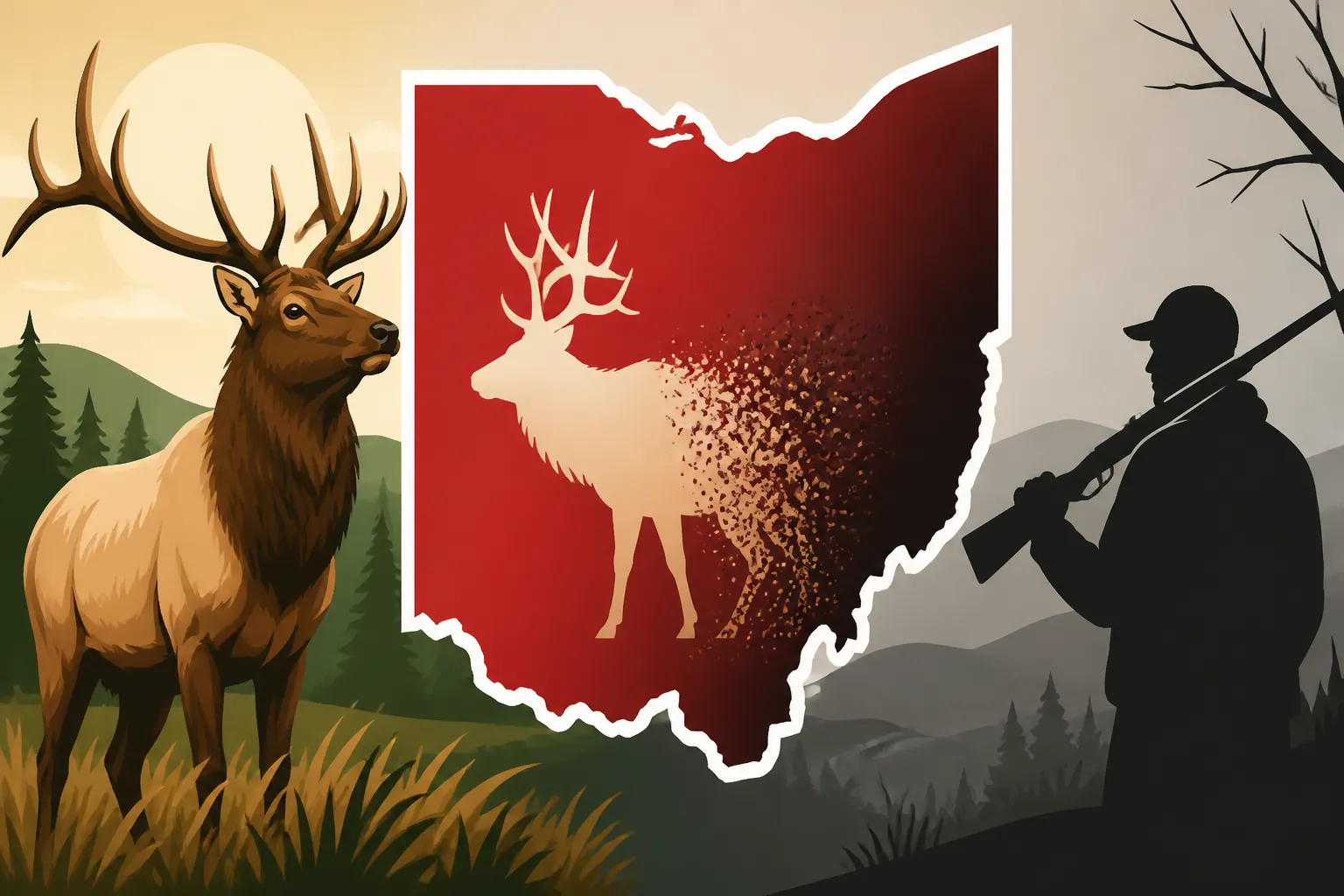
The cumulative effect of these challenges was overwhelming. Elk, already under siege from relentless hunting and losing their homes at an alarming rate, became more susceptible to environmental stressors and disease. As their numbers dwindled, their ability to reproduce and recover was severely compromised. By the mid-1800s, reports of wild elk in Ohio became exceedingly rare. The once-thriving herds that had roamed the state for millennia were gone, a stark reminder of unchecked exploitation and environmental change. The combination of these factors created a "perfect storm" that ultimately led to the extirpation of Ohio's native elk.
The Last Stand and Lingering Hope for Ohio Elk
The story of Ohio's elk is a poignant reminder of loss, but also of the potential for nature to heal and for dedicated efforts to bring back what was once lost. While our native elk are gone forever, their legacy, and the occasional modern sighting, continue to stir curiosity and hope.
Documenting the Final Ohio Elk Sightings
It’s difficult to pinpoint the exact date when the last Eastern Elk was killed or vanished from Ohio, as records from that era weren't always meticulously kept. However, historical accounts suggest that by the 1830s, wild elk were already extremely rare, confined to the most remote and rugged areas of the state, primarily in the unpopulated sections of southeastern Ohio. By the 1840s, most naturalists and chroniclers agreed that the Eastern Elk was effectively extirpated from Ohio. Some anecdotal reports mention isolated individuals surviving a bit longer, but by the 1850s, the species was considered entirely gone from the state.
The last official recorded kill of a wild elk in Ohio is often cited as happening around 1838 in the eastern part of the state, though some sources push that date into the very early 1840s. Regardless of the precise year, the mid-19th century marked the end of an era – a time when Ohio's wilderness was truly wild, and the bugle of a bull elk no longer echoed across the ridges and through the river valleys. The Eastern Elk subspecies itself was declared extinct in 1880, its fate sealed by the same pressures that drove it from Ohio. It's a melancholy thought to consider that a creature of such majesty, which had thrived here for thousands of years, could be gone in less than a century of intensive human settlement.
Modern Elk Sightings and Restoration Speculation
Despite the extirpation of Ohio's native elk, occasional reports of elk sightings still surface from time to time. These modern sightings, however, almost universally involve elk that have either escaped from private elk farms (which exist in Ohio for agricultural purposes, such as meat or antler velvet production) or individuals that have wandered into Ohio from neighboring states with reintroduced wild populations, such as Kentucky, Pennsylvania, or West Virginia. These are isolated occurrences and do not represent a wild, self-sustaining population taking hold within Ohio's borders. These wanderers rarely stay long and haven't established breeding herds.
There's a natural public interest in seeing elk return to Ohio, similar to the excitement around Ohio's Recovering Black Bear Sightings. However, official large-scale elk reintroduction efforts by the Ohio Department of Natural Resources (ODNR) have not been undertaken, nor are they currently planned. There are several complex reasons for this. First and foremost, suitable, extensive, and unfragmented habitat is a major concern. While areas like Wayne National Forest and other large state forests offer some potential, they are often bordered by private land, agriculture, and increasing development. Elk require vast spaces and can cause significant damage to crops or fences, leading to human-wildlife conflicts.
Furthermore, disease concerns, particularly with the ongoing management of Ohio's Chronic Wasting Disease Surveillance Area in our deer herd, present a considerable challenge. Introducing a new cervid species could complicate disease management efforts. The success of elk reintroduction in other states has often depended on carefully selected remote areas with minimal human disturbance and robust habitat. While some may use tools like GoHunt to scout for potential future habitat, the current reality of Ohio's landscape and the potential challenges mean that, for now, the wild elk remains a creature of Ohio's past. We can admire the amazing work done to restore species like wild turkeys, but elk face a different, more challenging set of circumstances in our modern landscape.
Here's a look at the key factors that led to the disappearance of elk in Ohio:
| Factor | Description | Primary Impact on Elk | Timeline (Approximate) |
|---|---|---|---|
| Unregulated Hunting | No laws or limits on how many elk could be killed or when. | Direct reduction of population, unsustainable harvest. | Late 1700s – 1840s |
| Market Hunting | Killing elk for commercial sale of meat, hides, and antlers. | Accelerated population decline due to economic incentive. | Early 1800s – 1840s |
| Habitat Loss | Widespread clearing of forests for agriculture, timber, and settlements. | Destruction of primary feeding, breeding, and cover areas. | Early 1800s – 1850s |
| Habitat Fragmentation | Remaining forests broken into smaller, isolated patches by human development. | Limited movement, increased stress, genetic isolation. | Early 1800s – 1850s |
| Disease/Competition | Exposure to diseases from domestic livestock; competition for forage. | Weakened herds, additional mortality, reduced recovery. | Mid-1800s |
Disclaimer
This article is for general informational purposes only and does not constitute professional advice. Laws, prices and regulations vary by location and change over time. Consult a qualified professional for guidance on your specific situation.