Why Ohio Rabbit Numbers Declined
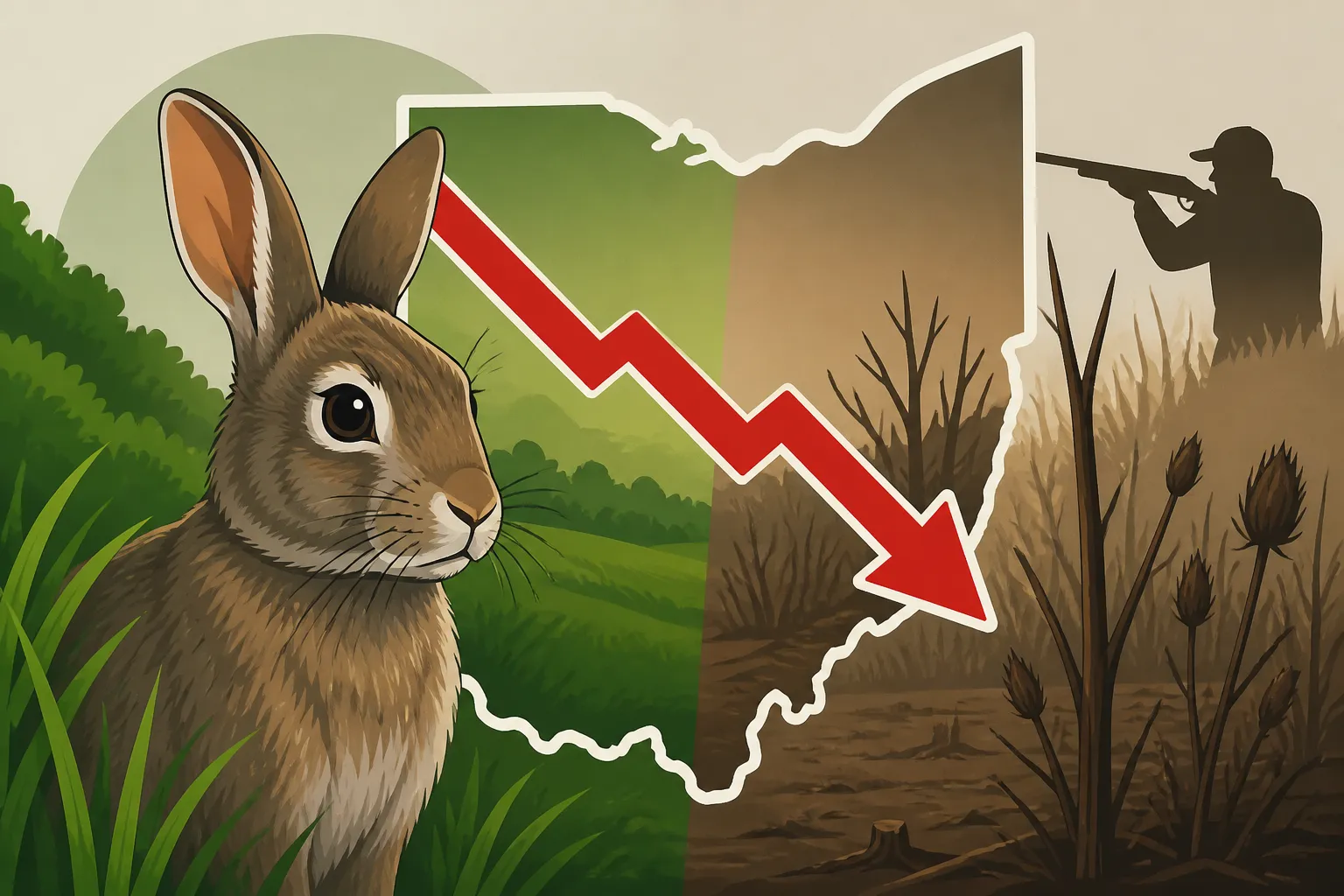
It's a conversation I hear far too often around the cracker barrel or at the local diner: "Remember when you couldn't walk twenty feet without flushing a cottontail?" Many of us who grew up hunting small game in Ohio have noticed a distinct shift, a real decline in those bouncy, quick-footed little rabbits that used to be everywhere. It's frustrating to remember those days and see what's out there now. This guide is going to dig into the heart of that issue, exploring the complex reasons why Ohio's rabbit numbers have seen such a noticeable decline over the years and what it means for our cherished small game hunting traditions.
The Disappearing Act: Habitat Loss and Fragmentation
When we talk about why Ohio's rabbit numbers have dwindled, the biggest culprit by far is habitat loss. Rabbits aren't particular fancy; they need dense cover to hide from predators, briar patches to nest, and close access to food. Unfortunately, much of the landscape they once thrived in has been slowly but surely altered, often without us even realizing the full impact until it's too late. It’s like watching your favorite old barn slowly fall apart, piece by piece.
Vanishing Brush Piles, Hedgerows, and Fencerows
Think back to the old Ohio farms. You'd see these tangled, gnarly fencerows crisscrossing fields, often dotted with wild plum, multiflora rose, and grapevines. Farmers used to pile up brush at the edges of fields, creating natural barriers and windbreaks. These weren't just messy eyesores; they were five-star hotels for rabbits. They offered incredible protection from hawks, owls, foxes, and coyotes, plus a steady supply of browse and nesting material.
Nowadays, those fencerows are often ripped out to make way for larger fields and more efficient machinery. Brush piles are burned or chipped away, seen as impediments to progress. The result is a much "cleaner" landscape, but one that's utterly hostile to a rabbit. Without that instant, impenetrable escape cover, a cottontail is far more exposed and vulnerable to predators. It’s a sad reality that the very features that made Ohio prime rabbit country are often the first to go in the name of modern efficiency. This change alone has removed countless safe havens.
Suburban Sprawl and Agricultural Intensification
Ohio's population has grown, and with it, the expansion of towns and cities. What were once rolling farm fields and woodlots on the outskirts of Columbus, Cincinnati, or Cleveland are now subdivisions, strip malls, and industrial parks. Each new development paves over acres of potential rabbit habitat, replacing diverse ecosystems with concrete and manicured lawns that offer nothing to wildlife. Even when small patches of woods remain, they become isolated islands, cut off from larger tracts of habitat.
Beyond urban sprawl, the intensification of agriculture has also played a massive role. Farms are getting bigger, and the focus is on maximizing crop yields. This means more acres under cultivation, often from fence row to fence row, leaving minimal room for the "edge habitat" that rabbits absolutely depend on. The push for efficiency often means fewer unkempt corners, fewer fallow fields, and less diversity in the landscape. This continuous pressure from both development and large-scale farming simply leaves less space for rabbits to live and thrive.
The Critical Role of Early Successional Habitat
Rabbits aren't creatures of mature forests; they absolutely love what wildlife biologists call "early successional habitat." This refers to young, regenerating areas—think old fields transitioning into brush, clear-cuts that are growing back thick, or disturbed areas with a mix of grasses, forbs, and young woody growth. This type of habitat provides the perfect combination of dense cover for hiding and nesting, along with an abundance of diverse food plants.
The problem is, this type of habitat is often fleeting or actively suppressed. If an old field isn't mowed or disturbed, it quickly grows into a mature forest, which isn't ideal for rabbits. On the other hand, if it's constantly mowed or developed, it also disappears. There's a delicate balance needed, and unfortunately, across much of Ohio, the pendulum has swung away from creating and maintaining these prime rabbit nurseries. Programs aimed at habitat improvement, like those found through the USDA or local conservation districts, can help encourage landowners to create these vital areas. Organizations like the Ohio Division of Wildlife also work on public lands to create and maintain habitat, but it's an uphill battle against broader land use trends. Ohio Rabbit Habitat Restoration Efforts discusses specific actions being taken to address this.
Increased Predation and Disease Pressures
While habitat loss is the primary driver, it's not the only factor. A decline in habitat often goes hand-in-hand with an increase in predation pressure, and disease can sweep through populations, especially when they are already stressed. It's a compounding effect, where a rabbit that's already struggling to find cover is then more susceptible to other threats.
The Rise of Mesopredators
Ohio has seen shifts in its predator populations. While large predators like wolves are long gone, "mesopredators"—medium-sized predators like coyotes, foxes (both red and gray), raccoons, and even house cats—have often thrived in human-altered landscapes. Coyotes, in particular, have expanded their range and numbers across Ohio, becoming a significant predator of deer fawns and small game like rabbits. Coyote and Predator Hunting in Ohio outlines how widespread these animals have become.
When prime rabbit cover disappears, rabbits are forced into more exposed areas. This makes them easy targets for a hungry coyote making its rounds along a field edge or a red fox patrolling a sparse fencerow. Domestic cats, both pets and feral populations, also take a substantial toll on rabbit populations, especially young kits. The unfortunate reality is that as rabbit habitat shrinks, their interactions with these efficient predators increase, leading to higher mortality rates.
Rabbit-Specific Diseases and Parasites
Like all wildlife, rabbits are susceptible to various diseases and parasites that can impact their populations. Tularemia, for example, is a bacterial disease that can be fatal to rabbits and can also be transmitted to humans. Myxomatosis, while more common in European rabbits, has been known to affect cottontails as well. Parasites like fleas, ticks, and mites can weaken rabbits, making them more vulnerable to other stresses or diseases.
While disease outbreaks tend to be localized and cyclical rather than a constant, widespread issue, they can hit already struggling populations hard. If a rabbit population is small and fragmented due to habitat loss, a disease outbreak can have a more devastating impact, potentially wiping out an entire local colony. Healthy, robust populations with ample habitat are generally more resilient to these natural pressures, making habitat even more crucial.
Avian Predators and Increased Vulnerability
It's not just mammalian predators that are taking a toll. Birds of prey, particularly various species of hawks and owls, are incredibly efficient hunters. Red-tailed hawks are a common sight across Ohio, often perched on utility poles or soaring over fields, keenly scanning for movement. Great horned owls are equally formidable nocturnal hunters.
Again, the link to habitat is key. A rabbit sprinting across an open field, or even trying to forage near a very thin fencerow, is a prime target for a hawk diving from above. Without the overhead cover of thick brush or the immediate refuge of a dense briar patch, a rabbit's natural defenses are severely compromised. While avian predators have always been part of the ecosystem, their impact becomes disproportionately higher when rabbits lack adequate protection from the air.
Shifting Agricultural Practices and Their Impact
Ohio is largely an agricultural state, and the ways we farm have changed dramatically over the last several decades. These changes, driven by technology and economic pressures, have had profound, often negative, effects on small game like rabbits.
"Clean Farming" and the Loss of Unused Areas
The term "clean farming" refers to practices that aim to maximize every square foot of arable land. This means tilling right up to the property line, removing any stray rocks or stumps, and eradicating any "waste" areas. What farmers consider waste—old equipment piles, rocky outcrops, small wet spots, or unplanted field corners—rabbits see as valuable refuge.
These small, unmanaged pockets used to provide vital cover and food sources. They were micro-habitats within the larger agricultural landscape. Now, with larger equipment and a focus on maximizing acreage, these areas are often cultivated or simply eliminated. The result is a monotonous landscape of row crops with very little diversity or cover for wildlife. Rabbits might venture out into corn or soybean fields to feed, but without secure cover nearby, they are at constant risk. The phrase "rabbit hunting Ohio fencerows" used to conjure up images of prime rabbit spots, but many of those fencerows are now gone.
Large-Scale Monoculture and Pesticide Use
Modern agriculture often favors large fields planted with a single crop, known as monoculture. While efficient for food production, this practice reduces biodiversity significantly. A diverse mix of crops, hayfields, and small grains, along with weedy borders, provides a much broader and more consistent food supply for rabbits throughout the year. Monoculture, especially when it's just corn or soybeans, offers a feast only during specific growth stages and then becomes barren once harvested.
Furthermore, the widespread use of pesticides and herbicides directly impacts rabbit populations. Herbicides eliminate the broadleaf plants and weeds that rabbits feed on, reducing their food supply. Insecticides can reduce insect populations, which, while not a direct food source for adult rabbits, are crucial for the ecosystem and can impact the food chain for other species that rabbits rely on (e.g., predator populations could shift their focus). While direct poisoning of rabbits from pesticides is rare, the indirect effects on their habitat and food are undeniable. It's a complex web, and when one part is affected, others often feel the ripple.
Early and Intensive Mowing Practices
Many agricultural fields, especially hayfields, alfalfa plots, and even some cover crops, are mowed multiple times throughout the growing season. Modern equipment allows farmers to mow large areas very quickly and efficiently. The timing of these mowings can be devastating for rabbit populations, particularly in spring and early summer when rabbit kits are still in their nests.
Rabbit nests are often shallow depressions in the ground, well-camouflaged but incredibly vulnerable to mowing equipment. If a field is mowed before the kits are old enough to escape, entire litters can be destroyed. Even older rabbits can be caught unawares by fast-moving machinery in fields that previously provided safe cover. Staggered mowing schedules or leaving unmowed strips could help, but the economic pressures on farmers often make such practices difficult to implement on a broad scale.
Environmental Shifts and Climate Challenges
Beyond direct human alterations to the landscape, broader environmental shifts, including changing weather patterns, also play a role in the ongoing decline of Ohio's rabbit populations. While rabbits are adaptable, extreme conditions can push them past their limits.
Severe Winters and Early Springs
While Ohio is known for its variable weather, extended periods of severe winter weather can be tough on rabbits. Deep snow and prolonged cold can limit access to food, forcing rabbits to expend more energy to stay warm and find sustenance. If their fat reserves are depleted, they become more susceptible to disease and predation.
Conversely, unusually early or mild springs can also present challenges. If rabbits breed early due to warm weather, but then a late-season cold snap or heavy snow hits, early litters can perish. These unpredictable swings make survival a gamble, particularly for young, vulnerable kits. The delicate balance of life stages and seasonal changes is easily disrupted, impacting overall population health.
Habitat Degradation from Extreme Weather Events
Beyond direct impacts on the rabbits themselves, increasingly frequent or severe weather events can degrade what little habitat remains. Intense rainfall can lead to flooding in low-lying areas, drowning nests or forcing rabbits into less secure high ground. Prolonged droughts can reduce the quality and quantity of forage, making it harder for rabbits to find food and stay healthy.
High winds and severe storms can flatten existing cover, like brush piles or thickets, removing essential protection just when rabbits need it most. While rabbits are resilient and have always faced environmental challenges, the combination of already reduced habitat and more extreme weather patterns creates a double whammy, making it harder for populations to recover or even maintain their numbers. This is a subtle but persistent pressure that chips away at their ability to thrive.
Impact on Food Sources and Forage Quality
Rabbits are herbivores, and their diet consists of a wide variety of grasses, forbs, and the tender shoots of woody plants. The availability and quality of these food sources are directly tied to environmental conditions. Droughts can dry up succulent plants, making food scarce. Prolonged cold can make dormant vegetation less nutritious or simply inaccessible under layers of ice and snow.
When rabbits are forced to rely on lower-quality forage or struggle to find enough to eat, their overall health and reproductive success can suffer. Does may have smaller litters, or kits may have lower survival rates if the mother is not well-nourished. This cascade effect means that environmental stressors on food sources can have a profound impact on the long-term viability of rabbit populations. It's not just about surviving; it's about having enough to pass on healthy genes to the next generation. Ohio Cottontail Population Trend further illustrates the challenges these small game animals face year after year.
The Path Forward: Conservation and Hunter Action
It's easy to get discouraged when looking at the reasons behind declining rabbit numbers, but it's important to remember that these are not insurmountable problems. There are things we, as hunters and conservationists, can do to help reverse these trends and bring back the cottontails we remember. It requires a conscious effort, a shift in perspective, and often, a willingness to get our hands dirty.
Advocating for Small Game Habitat
One of the most impactful things we can do is to advocate for policies and programs that prioritize small game habitat. This means supporting conservation initiatives at both state and federal levels that provide incentives for landowners to create and maintain early successional habitat, plant diverse cover crops, and protect fencerows and riparian buffers. Engaging with local conservation groups and even reaching out to your elected officials can make a difference.
Education is also key. Many landowners simply aren't aware of the tremendous value that "messy" areas like brush piles and thickets hold for wildlife. Sharing information, offering to help with habitat projects, or even simply setting an example on your own property can encourage others to think differently about land management. We need to shift the narrative from "clean = good" to "diverse habitat = healthy ecosystem."
Hands-On Habitat Improvement
For those with land, or access to private land, hands-on habitat work can make a huge difference. Consider leaving sections of fields fallow, planting native warm-season grasses, or creating brush piles from downed trees and limbs. Establishing briar patches of multiflora rose (where legal and non-invasive concern) or planting hedgerows with native shrubs like elderberry or wild plum can provide invaluable cover and food. Even small actions, replicated across many properties, can create a network of habitat corridors.
On public lands, supporting organizations that conduct habitat work is vital. Many wildlife areas managed by the Ohio Division of Wildlife actively manage for early successional habitat through controlled burns, timber harvests, and plantings. When you buy your hunting license or conservation stamp, you're directly contributing to these efforts. You can even volunteer for habitat improvement days if you want to get more directly involved. Checking the Ohio HuntFish map tool, or even an app like GoHunt, can help identify areas with suitable habitat that might benefit from these types of improvements.
Thoughtful Hunting Practices
While hunting pressure isn't a primary cause of rabbit decline, responsible hunting practices are always important for sustainable populations. Observing bag limits and season dates, and being mindful of the overall health of the local rabbit population you're hunting, are good practices. For those of us who grew up chasing cottontails with beagles, the thrill of the chase is often as important as the harvest itself.
Furthermore, advocating for ethical hunting and wildlife management helps ensure the longevity of our traditions. Understanding the life cycle of rabbits, their breeding habits, and the environmental factors that affect them, helps us all be better stewards of the resource. By being informed, we can contribute positively to rabbit conservation, ensuring that future generations of Ohio hunters will still have the opportunity to experience the joy of Rabbit Hunting Ohio Fencerows. It’s about more than just numbers; it’s about maintaining a vibrant ecosystem for everyone.
Conclusion: A Future for Ohio's Cottontails
The decline in Ohio's rabbit numbers is a complex issue, intertwined with changes in land use, agricultural practices, predator populations, and even our climate. It’s not one single factor, but rather a perfect storm of challenges that have steadily chipped away at the robust populations we once took for granted. The memories of abundant cottontails are not just nostalgia; they're a call to action.
However, recognizing the problem is the first step toward finding solutions. Through dedicated habitat restoration, thoughtful land management, and continued conservation efforts, we can work to restore the diverse landscapes that Ohio's rabbits need to thrive. It won't happen overnight, but with persistence, we can help bring back those quick-witted, bushy-tailed bundles of joy to our fields and fencerows, ensuring that the rich tradition of Ohio Small Game and Upland Bird Seasons continues for years to come.
Disclaimer
This article is for general informational purposes only and does not constitute professional advice. Laws, prices and regulations vary by location and change over time. Consult a qualified professional for guidance on your specific situation.