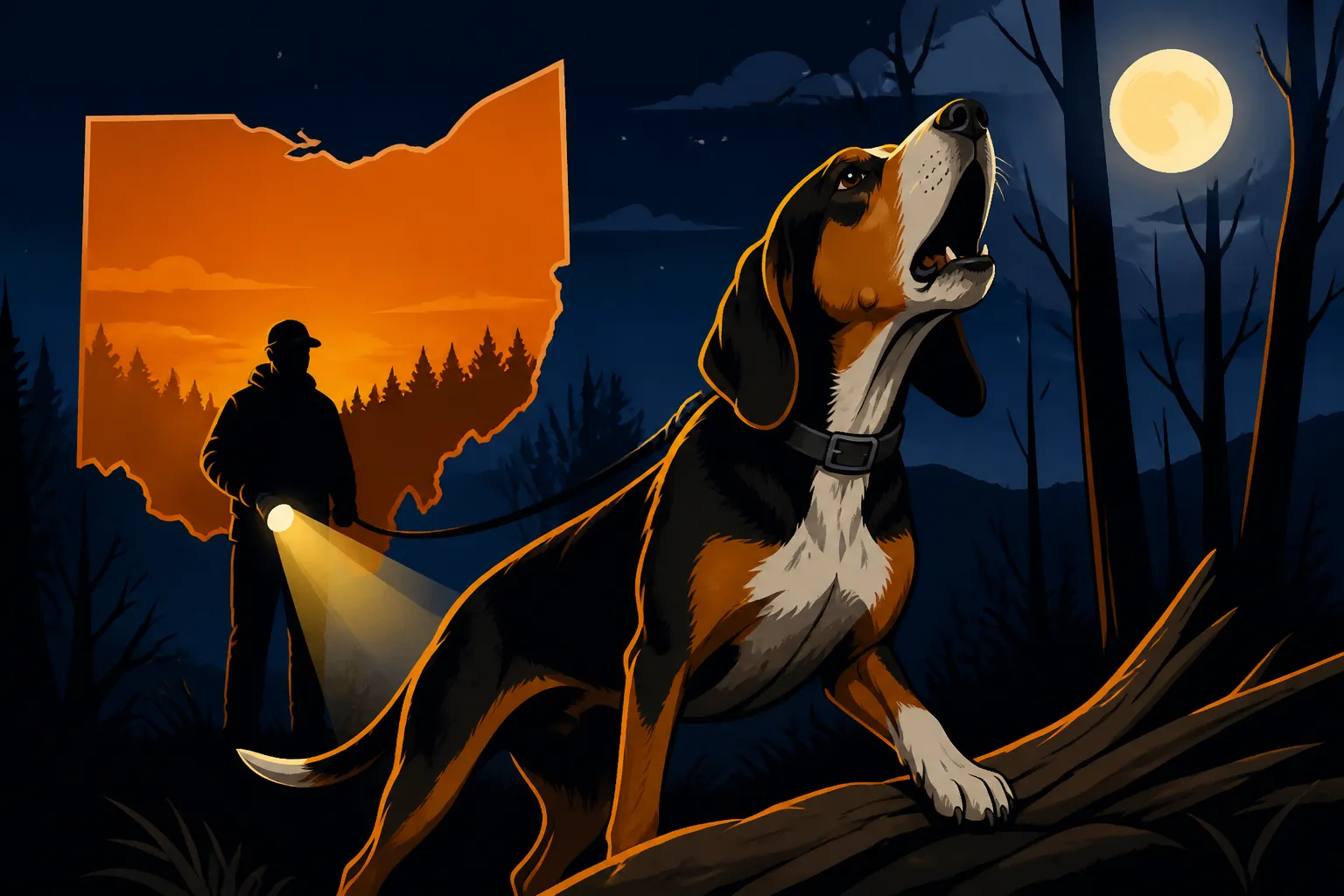
Running a Raccoon Hound After Dark
There's a special kind of magic that settles over the Ohio woods once the sun dips below the horizon, and for many, that magic is amplified by the distant baying of a coonhound on the trail. Trying to follow your dogs through pitch-black timber, over tangled briars, and across creeks, all while listening to the symphony of the chase, can be incredibly challenging, but the reward of a treed raccoon is absolutely incomparable. This guide is here to unravel the mysteries of running a raccoon hound after dark in Ohio, helping you navigate the unique thrills and trials of this time-honored tradition.
The Unique Thrill of Night Coon Hunting in Ohio
Night hunting for raccoons isn't just about bagging a furbearer; it's an immersive experience that engages all your senses in a profound way. It’s a dance between human and hound, an ancient ritual that connects us to the wild world in a truly unique manner.
Why the Night Calls: The Allure of the Chase
There's nothing quite like the sound of a good hound striking a track in the deep woods on a crisp Ohio night. The anticipation builds with every bark, transforming from a tentative sniff into a full-blown "race" as they push the coon through the timber. It's a primal experience, stripped of the visual distractions of daylight, forcing you to rely almost entirely on sound and instinct. You learn to interpret every chop, every wail, every long, drawn-out bawl, understanding what your dog is telling you about the animal they're pursuing and the progress of the chase. This auditory connection creates an intense bond between hunter and dog, a shared quest into the darkness.
This tradition runs deep in Ohio, with generations of hunters passing down the knowledge of good hound stock and how to read the nuances of the hunt. It’s a heritage sport, one that fosters incredible camaraderie among hunters who share this passion. Many families have stories passed down about legendary hounds and memorable nights in the timber, all under the soft glow of the moon or the beam of a trusty headlamp. It’s this blend of history, sensory immersion, and shared experience that makes the night call so irresistible to coon hunters across the state.
Unlike deer hunting or turkey hunting, where the focus is often on stealth and visual detection, coon hunting is a dynamic, audible pursuit. Your dogs do the heavy lifting of tracking and locating, and your job is to keep up, listen, and eventually, find them at the tree. This shift in focus is incredibly liberating for many, allowing them to truly appreciate the incredible abilities of their canine partners. The thrill isn't just in the harvest; it's in the journey, the chase itself, and the raw, untamed energy of hounds working a track.
Understanding Ohio's Raccoon Hunting Seasons
Before you even think about releasing your hounds, you absolutely have to know the rules of the game. Ohio has specific seasons for furbearers, and raccoons fall squarely into that category. Generally, the season for raccoons in Ohio opens in early November and extends well into January, providing ample opportunity for night hunting. The exact date for the start of the season, often referred to as Ohio Raccoon Season Opening Night, is a highly anticipated event for hound hunters. It’s when many will get their first taste of the season’s action, and the woods often come alive with the sound of eager hounds.
It's crucial to always double-check the current Ohio Department of Natural Resources (ODNR) hunting regulations each year, as dates can shift slightly. These regulations cover not just raccoons but also other furbearers like fox, opossum, skunk, and weasel. Understanding the full scope of Ohio Raccoon and Fox Season Dates is important, especially if your dogs might inadvertently strike the track of another species. You need to be aware of what's legal to pursue and harvest when, and what methods are permitted. This due diligence ensures you're always hunting legally and responsibly.
The length of Ohio's raccoon season is quite generous, allowing for diverse hunting conditions from the mild nights of early fall to the frigid, snow-covered evenings of mid-winter. These varying conditions present different challenges and opportunities for hounds and hunters alike. For instance, a light dusting of snow can make tracking easier for the dogs, while frozen ground can make scenting more difficult. Knowing the general framework of the furbearer seasons helps you plan your hunts, train your dogs effectively, and make the most of the available time in the field.
Essential Gear for Hound and Hunter
Night hunting in Ohio's varied terrain demands specialized equipment for both you and your canine companions. Being prepared isn't just about comfort; it's about safety and ensuring a successful and ethical hunt.
Equipping Your Four-Legged Partner
The most critical piece of equipment for any modern coonhound is a reliable GPS tracking collar. Gone are the days of solely relying on the faint sound of a bell or the dog's distant bay. These collars, like those from Garmin's Alpha or Tri-Tronics lines, are absolute game-changers, allowing you to pinpoint your dog's exact location, whether they're racing across a vast field or treed deep in a ravine. This technology is invaluable, especially when you consider Treeing a Raccoon With a GPS Collar in thick cover or on unfamiliar ground. When researching these systems, resources like GoHunt can offer reviews and comparisons, helping you choose the right collar for your specific needs and budget.
Beyond tracking, consider equipping your hound with protective gear. In Ohio's dense briar patches, thorny thickets, and rough terrain, a protective vest can prevent nasty cuts and scrapes. These vests are typically made of durable materials like Cordura or aramid fiber and cover the dog's chest and belly. Some hunters also use bells on their dogs, even with GPS, as an additional auditory cue, especially when the dog is working closer to you or in areas with limited GPS signal penetration. Remember, keeping your dog safe is paramount, as a healthy hound is a happy and effective hound.
Don't forget the basics: water and sometimes a high-energy snack for your dogs, especially on longer hunts or in warmer weather. A long night of running can dehydrate and exhaust a dog quickly. A portable water bowl and a bottle of water, or even a camelback for yourself, can make a huge difference in your dog's performance and well-being. Keeping them hydrated and fueled ensures they can maintain their drive and endurance throughout the entire chase, reducing the risk of exhaustion or injury.
Hunter's Kit: Lights, Navigation, and Safety
For the human element of the hunt, lighting is king. You'll need a powerful headlamp that leaves your hands free, ideally with multiple brightness settings and a red light option to preserve night vision. Brands like Petzl, Fenix, or Coast offer excellent options that are rugged and reliable. In addition to your headlamp, a powerful handheld spotlight is indispensable for "shining" a treed coon. This beam needs to penetrate thick canopy to locate the animal. Consider battery life carefully; always carry spare batteries or a portable power bank. As we've covered in Headlamps for Walking Out After Dark, reliable illumination isn't just for seeing; it's for safety and efficiency.
Navigation through the Ohio darkness is another critical aspect. While your dogs have their GPS collars, you need a reliable way to follow them and find your way back. Many hunters now use robust GPS units like Garmin handhelds, while others rely on hunting apps on their smartphones. Each has its pros and cons, which we explored in GPS Units Versus Phone Apps. Apps like the GoHunt app or the Ohio HuntFish app (link to Scouting With the Ohio HuntFish App) can be incredibly useful for digital mapping, marking your truck, tracking your path, and even identifying public and private land boundaries in real-time. Make sure your phone is fully charged and consider a portable charger.
Beyond lights and navigation, your personal safety kit is paramount. A small first-aid kit, a whistle, a fully charged cell phone (even if for emergencies only, as signal can be spotty), and a knife are absolute must-haves. Dress in layers, as night temperatures can drop significantly, and choose durable, briar-resistant clothing. Waterproof boots are non-negotiable for navigating Ohio’s often-wet woods and creek bottoms. Consider a blaze orange vest if you're out during any overlapping deer gun seasons, though for dedicated night coon hunting, it's typically not a requirement outside of certain specific circumstances or locations.
| Gear Item | Purpose | Key Considerations |
|---|---|---|
| Dog GPS Collar | Track hound location, monitor progress | Range, battery life, durability, mapping integration |
| Hunter Headlamp | Hands-free illumination | Brightness (lumens), beam type, battery life, red light mode |
| Hunter Spotlight | Locating treed raccoon | Beam distance, power, handheld vs. mounted |
| Protective Vest | Shield hound from briars and sharp objects | Material, fit, visibility |
| GPS Device/App | Navigation, property lines, marking locations | Reliability, offline maps, battery drain |
| First-Aid Kit | Addressing minor injuries | Compact, waterproof, tailored for outdoor use |
| Water/Snacks | Hydration and energy for dog and hunter | Portability, quantity for duration of hunt |
Mastering Night Hunting Tactics in Ohio
Successful night coon hunting isn't just about having the best dogs or the fanciest gear; it’s about understanding the subtle cues of the hunt, knowing the terrain, and making smart decisions under pressure.
Reading the Race and the Tree
The language of a coonhound is a symphony of barks, howls, and chops, and learning to interpret this language is key to a successful hunt. When a dog first picks up a fresh track, it typically lets out a "strike" bark – a distinct, often excited bark that signals they're on to something. As the chase intensifies, and the dog is actively pursuing the raccoon, you'll hear the "race" bark or "bawl" – a more frequent, often longer-drawn-out vocalization that indicates they're hot on the trail. The speed and intensity of these barks can tell you how fast the coon is moving and how close the dog is. With experience, you can even discern if a dog is working a cold trail versus a hot one.
The real magic happens when the dogs finally "tree" the raccoon. This is marked by a distinctive change in vocalization: intense, rapid "chops" or "treed" barks, often focused upwards. A good tree dog will stand right at the base of the tree, looking up and barking with fervent determination. Your job then is to follow the sound, using your GPS to navigate directly to them. As you approach, move stealthily to avoid spooking the coon out of the tree before you can get a clear visual. Observing your dogs' behavior can also tell you if the coon has perhaps slipped out or if they've found another tree.
Once you reach the treed dogs, the next challenge is locating the raccoon. This is where your powerful spotlight comes in. Systematically scan the canopy, looking for glowing eyes or the tell-tale silhouette of a coon. They often try to hide in crotches, dense foliage, or behind branches. Take your time; a hidden coon can be incredibly hard to spot. Once located, assess the situation for a safe, ethical shot. Always ensure you have a clear backstop and that your dogs are out of the line of fire. An ethical harvest involves a quick, clean dispatch, minimizing suffering.
Navigating Ohio's Diverse Raccoon Habitats
Raccoons are incredibly adaptable creatures, found across almost every corner of Ohio, from the rolling Appalachian foothills to the flat farmlands of the northwest. However, they consistently gravitate towards certain types of habitat. Creek bottoms, with their abundant water, den trees, and diverse food sources, are absolute magnets for raccoons. You’ll often find high Raccoon Density in Ohio Farm Country where woodlots meet agricultural fields, providing both cover and easy access to corn, soybeans, and other crops. Knowing these preferred habitats helps you focus your efforts and predict where your dogs are most likely to strike a track.
Hunting in Ohio means dealing with a variety of terrain types, and this significantly impacts your night hunting strategy. In the steep, rugged hills of Southeast Ohio, your dogs might be out of sight quickly, and you'll be relying heavily on your GPS to track their progress up and down ravines. Navigation can be physically demanding, requiring sturdy boots and good stamina. In contrast, hunting the flatter, more open landscapes of Northwest Ohio might mean longer chases across open fields, where your dogs are often more visible, but you still need to be mindful of property lines.
Speaking of property lines, this is an absolutely critical consideration for night hunting in Ohio. While public lands like Wayne National Forest or various Ohio Wildlife Areas offer opportunities, much of the prime raccoon habitat is on private land. It is paramount that you Getting Private Land Permission in Ohio before you ever set foot on someone else's property, especially at night. Knocking on doors during daylight hours, explaining your intentions, and building a good relationship with landowners is essential. Always respect their property, close gates, and leave no trace. Furthermore, use your GPS or mapping apps to actively monitor Finding Ohio Property Lines to avoid accidental trespassing, which can quickly lead to legal trouble and damage the reputation of all hunters.
Ohio Regulations and Responsible Night Hunting
Being a responsible night hunter means more than just knowing how to follow a dog. It also involves a deep understanding of Ohio's hunting regulations and a commitment to ethical conduct in the field.
Key Night Hunting Rules to Know
Ohio has specific regulations governing night hunting for furbearers like raccoons. Generally, hunting hours for raccoons extend from sunset to sunrise during the open season. When it comes to permissible weapons, you can use a variety of methods, including shotguns, rifles (rimfire, centerfire straight-wall cartridges, or even traditional centerfire rifles if hunting private land outside specific restrictions), and handguns. However, the use of a light to take furbearers at night is explicitly permitted, which is why your spotlight is so crucial. It’s always a good idea to refresh yourself on Night Hunting Rules for Ohio Coyotes as well, as some regulations might overlap or have subtle differences, providing a broader understanding of night hunting legality.
One common question among new hunters is about blaze orange. For night hunting raccoons, you are generally not required to wear blaze orange, unlike during Ohio's deer gun seasons. However, during any overlapping gun seasons (like the early gun weekend in a Disease Surveillance Area or the statewide gun seasons), it's always wise to err on the side of caution. Even if not legally mandated for your specific activity, a highly visible hat or vest can increase your safety, especially if other hunters are in the vicinity, or if you are hunting on public land where other activities might be taking place.
It’s also important to understand how raccoon hunting fits into the broader context of furbearer management in Ohio. While we're focused on hunting with hounds, trapping is another common method for furbearer harvest. Regulations regarding Running a Trapline in Rural Ohio or specific furbearer trapping seasons are distinct from hunting with hounds, but understanding them can give you a more complete picture of furbearer management and the activities of other outdoor enthusiasts. Always check current ODNR guidelines for any changes or specific county regulations that might apply to your hunting area.
Respecting Landowners and Wildlife
The future of hunting, particularly on private land, hinges on the respectful conduct of hunters. When Getting Private Land Permission in Ohio, remember that it’s a privilege, not a right. Always arrive and depart quietly, especially late at night or early in the morning, to avoid disturbing the landowner or their neighbors. Close any gates you open, stay away from livestock, and leave the property in the same or better condition than you found it. A simple thank you note or offering to share some venison can go a long way in building goodwill and ensuring future access.
Ethical considerations extend to the wildlife itself. Aim for a quick, clean kill to minimize the animal's suffering. Avoid taking shots that are unsafe or have a high probability of wounding the animal without retrieving it. The goal is a respectful harvest. After the retrieve, make sure to properly dispatch, handle, and process your raccoon. While often pursued for sport and the thrill of the chase, raccoons provide valuable fur and can be consumed, adhering to responsible utilization of the resource.
Finally, remember that you are an ambassador for all hunters. How you conduct yourself, especially during night hunting activities, reflects on the entire hunting community. By adhering to regulations, respecting landowners, practicing ethical harvest, and prioritizing safety, you contribute positively to the perception of hunting and help preserve this rich tradition for future generations in Ohio.
Disclaimer
Please note that hunting regulations, seasons, and licensing requirements can change. Always consult the most current Ohio Department of Natural Resources (ODNR) hunting regulations guide before heading afield. This content is for informational purposes only and should not be considered legal advice.