Hunting the Second Gun Weekend Before Christmas
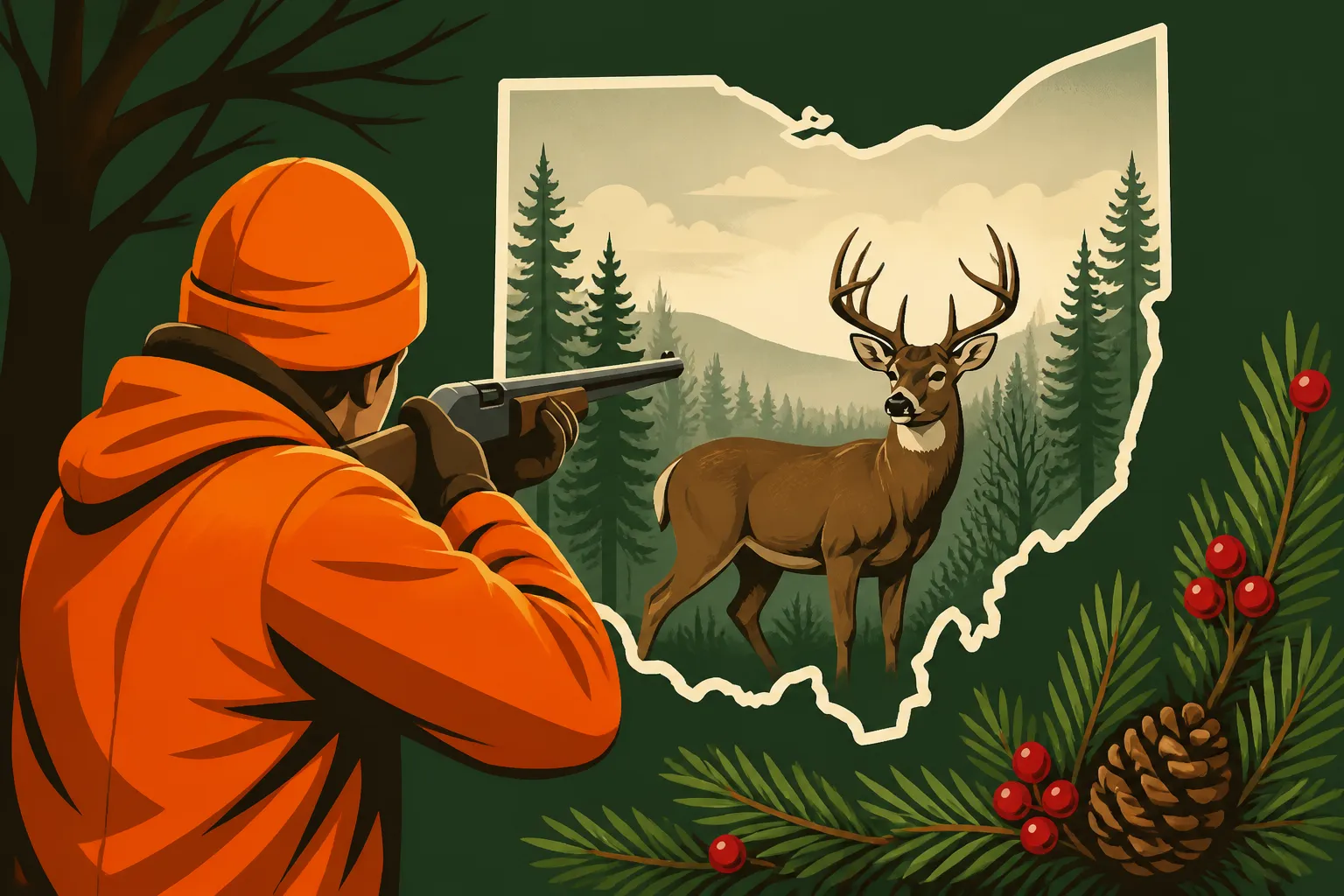
The second gun weekend in Ohio, typically falling in mid-December, presents a unique set of challenges and opportunities for deer hunters. Many of us find ourselves juggling holiday preparations with the last major push for a whitetail, often facing colder temperatures, potential snow, and deer that have been heavily pressured. This guide is designed to help you navigate these late-season conditions, offering practical strategies and insights to make your time in the woods more successful and enjoyable before Christmas truly takes over.
Understanding Late-Season Deer Behavior in December
By the time Ohio's second gun weekend rolls around, deer behavior has shifted significantly from the frenetic pace of the rut. The primary focus for whitetails now revolves around survival: finding consistent food sources, conserving energy, and seeking secure cover from both the elements and persistent hunter pressure. Ignoring these changes can lead to frustration and empty tags.
The Dominance of Food Sources
After the intensity of the breeding season, bucks are often depleted, and does need to replenish their fat reserves for the coming winter and spring fawning. This means food becomes the absolute king. Forget about rattling and grunting; deer aren't interested in romance right now. Instead, they're intensely focused on caloric intake. Areas with standing crops like corn or soybeans, if they haven't been harvested yet, are magnets. Agricultural fields that have been picked clean might still offer waste grain, drawing deer in during the low-light hours. Natural food sources like persistent acorns (especially white oaks, if they're still around) or any remaining browse, such as honeysuckle or green briar, can also be crucial. For many of us who hunt the Appalachian foothills of Southeast Ohio, identifying these specific, high-energy food sources within dense timber is paramount. Deer will often bed close to these areas, minimizing their travel to conserve energy.
Seeking Secure Thermal and Security Cover
December in Ohio means cold, and often, wind and precipitation. Deer will instinctively seek out the thickest, most thermal cover available. This isn't just about escaping hunters; it's about staying warm. Look for dense conifer stands, thick creek bottoms, south-facing slopes that catch more sun, or even deep, brushy ravines that offer a break from the wind. These spots become sanctuaries, especially after the first gun weekend when hunters have pushed deer around. When you're planning your late-season hunt, mapping tools are invaluable for pinpointing these pockets of thick cover. Deer that feel safe and warm are more likely to stay put, only moving out to feed under the cloak of darkness or during limited daylight hours when pressure is low. Knowing how to read the terrain for these specific cover types is a skill honed over many seasons, and it's particularly important when the calendar flips to December.
Adapting to Hunter Pressure
The statewide gun season opener sees a massive influx of hunters, and while the second weekend might not have quite the same crowd, pressure is still a major factor. Deer have experienced being chased, shot at, and constantly disturbed. They've learned to become nocturnal, moving primarily after dark, and to use the thickest cover as a safe haven. This means your approach needs to change. Forget sitting on wide-open field edges in the middle of the day. You'll need to penetrate deeper into cover, find those overlooked pockets, or adjust your timing. Areas that were productive during the early rut might be completely void of deer now. Think about where deer would go to escape the crowds: hard-to-reach ravines, small unpressured woodlots adjacent to larger tracts, or areas that require significant effort to access. This adaptation is key to success on the tail end of the season.
Strategic Approaches for the Second Gun Weekend
Success during this late gun season often comes down to smarter, more adaptable hunting strategies. It's less about luck and more about understanding the current landscape and making calculated moves.
Still-Hunting and Driving Thick Cover
Given the deer's reliance on thick cover, a slow, methodical still-hunt can be incredibly effective. This isn't about covering miles; it's about picking apart small sections of dense woods. Move silently, take a few steps, and then stand absolutely still for several minutes, scanning every shadow and brush pile. Deer will often let you walk past them if they feel hidden, only bolting at the last second. Focus on patches of evergreens, downed timber, or areas with heavy brush. Remember, you're looking for bedded deer, so your eyes should be trained for a horizontal line, an ear flick, or the subtle outline of a deer hunkered down.
Another highly effective tactic, especially on public land or with a small group, is organized deer drives. For more on this, check out our guide on Deer Drives on Ohio Public Land. This isn't about simply walking through the woods; it's about strategically pushing deer from one block of cover towards hunters positioned to intercept them. Identify a thick bedding area, position standers on likely escape routes (logging roads, creek crossings, saddles), and then have one or two drivers slowly and deliberately push through the cover. The key is to move slowly, making enough noise to get deer moving, but not so much that they blow out ahead of the standers. This can be particularly successful in areas like Still-Hunting Shawnee State Forest Ridges, where dense pockets of cover are interspersed with more open timber.
Targeting Late-Season Food and Thermal Hubs
As we discussed, food is king. Your stand placement should reflect this. Instead of a travel corridor between bedding and feeding, consider setting up directly in the feeding area, or better yet, along the subtle trail deer use to enter or exit it. This means being in your stand early and staying late, especially if deer are mostly moving during low light. For agricultural areas, look for pinch points where deer are forced to funnel into a field, or secluded corners where they feel secure. For natural food sources, scout for areas with residual acorns or browse.
Think about thermal cover too. If there's a thick cedar swamp or a stand of pines on a south-facing slope, deer will be in there during the day, especially on cold, windy days. Setting up on the downwind side of such a cover patch, or along a subtle trail leading out of it to a food source, can put you in a prime position. This means understanding Wind and Thermals on an Appalachian Ridge if you're in hill country, as deer will often use these to their advantage, bedding in spots where they can smell danger approaching from below and see anything coming from above.
Hunting the Overlooked Pockets
One of the biggest mistakes hunters make during the second gun weekend is sticking to the easily accessible spots that have already been hammered. Deer are smart; they've learned to avoid these areas. Your best bet is to find the places other hunters overlook or are unwilling to access. This might mean walking an extra mile, crossing a creek, or climbing a particularly steep ridge. These hard-to-reach pockets, whether they're a small, isolated woodlot on farmland or a steep, brushy ravine in the public forests, can hold unpressured deer.
Use aerial maps and the ODNR's HuntFish app to identify these potential sanctuaries. Look for islands of cover, forgotten corners of properties, or areas with difficult topography. Sometimes it's as simple as finding a small patch of timber surrounded by fields that few people bother with. As you Scouting Ohio Public Land Before Season, keep these remote, overlooked areas in mind. These are the places where deer are most likely to feel safe enough to move during daylight hours, even after weeks of hunting pressure.
Gear and Preparation for December Deer Hunting
Ohio's December weather can be brutal, oscillating between mild, rainy days and bitter cold with snow. Proper gear and preparation are not just about comfort; they're about safety and increasing your chances of success.
Layering for Extreme Weather
The most critical aspect of late-season clothing is layering. You need the ability to add or shed layers as temperatures fluctuate and as your activity level changes. Start with a good moisture-wicking base layer against your skin to pull sweat away. Next, add insulating mid-layers like fleece or wool. For your outer layer, you'll need something windproof and waterproof. Many hunters swear by quiet wool or high-quality synthetic blends for Clothing for an Ohio Late Season.
Don't forget your extremities. A warm hat is crucial, as you lose a significant amount of heat through your head. Insulated, waterproof gloves or mittens are a must, along with hand warmers. Your feet deserve special attention; waterproof, insulated boots are non-negotiable for navigating Ohio's December mud, slush, and potential snow. Brands like Lacrosse or Muck Boot offer excellent waterproof options that keep your feet warm even when sitting still for hours. Make sure your boots are comfortable for walking, as you might be covering significant ground during still-hunts or drives.
Firearm Choices and Ammunition
For Ohio's gun season, hunters are typically limited to shotguns, muzzleloaders, and straight-wall cartridge rifles. Your choice of firearm can impact your effective range and hunting style. Many hunters now opt for Straight-Wall Rifles for Ohio Deer chambered in cartridges like .350 Legend or .450 Bushmaster, which offer increased range and accuracy over traditional shotguns. If you're still using a shotgun, ensure it's sighted in with quality slugs, as a rifled barrel can significantly improve accuracy. Regardless of your firearm, practice shooting in cold weather with your hunting clothes on to understand how they affect your movement and aim.
Ammunition choice is also vital. Use high-quality, reputable hunting ammunition that you've tested thoroughly with your specific firearm. Ensure you carry enough rounds for multiple shots, and keep them dry and protected from the elements. Remember that Ohio Legal Firearms for Deer Hunting regulations specify certain calibers and types, so always double-check the latest ODNR guidelines before heading afield.
| Condition/Scenario | Deer Behavior Tendency | Recommended Tactic | Key Gear Consideration |
|---|---|---|---|
| Bitter Cold/Snow | Seek thermal cover, nocturnal movement, feed heavily. | Still-hunt thick bedding areas, focus on sheltered food sources, short drives. | Max insulation, waterproof boots, hand/foot warmers, clear optics. |
| Mild/Rainy | More willing to move, but still focused on cover and food. | Stand hunting near food/cover transitions, longer still-hunts. | Waterproof outer layers, good base layers (avoid cotton), reliable optics. |
| High Pressure | Nocturnal, deep in thickest cover, wary. | Access overlooked areas, strategic drives, long sits near escape routes. | Quiet clothing, scent control, mapping tools for remote access. |
| Low Pressure | Might move earlier/later, more relaxed feeding. | Classic ambush points, slower still-hunts in varied terrain. | Versatile layering, comfortable pack for longer walks, binos. |
Navigation and Recovery Tools
December days are short, and you might find yourself walking out of the woods in the dark more often than not. A reliable GPS unit or a smartphone with a mapping app (like the ODNR's HuntFish app) is essential for navigation, especially on unfamiliar public land or in dense forest. Make sure your devices are fully charged and consider carrying a portable power bank. A good headlamp with fresh batteries is absolutely critical for tracking a deer after dark or simply navigating treacherous terrain.
A deer drag or a game cart can be a lifesaver for getting your deer out of the woods, especially if you're hunting alone in rugged areas. The ground can be muddy, snowy, or frozen, making dragging a deer incredibly difficult. For more on the challenges of Dragging a Deer Off a Steep Ridge, you know a good sled or cart can save your back. Don't forget a sharp, sturdy field dressing knife, game bags (even in cold weather, they help keep debris off), and perhaps a bone saw if you plan to quarter your deer in the field. These tools ensure that your hard-earned venison is cared for properly, even when the mercury drops.
Post-Hunt Considerations and Ohio Regulations
The hunt doesn't end when the deer hits the ground. Proper field care and adherence to Ohio's specific regulations are crucial for responsible hunting and ensuring your venison is prime table fare.
Field Dressing and Meat Care in the Cold
One advantage of late-season hunting is the cold weather, which acts as a natural refrigerator. However, proper field dressing is still paramount. Get the deer gutted quickly to allow the carcass to cool down. In freezing temperatures, you might even consider leaving the hide on if the deer will be transported for processing quickly, as it provides an insulating layer that prevents the meat from freezing too fast and becoming difficult to butcher. If temperatures are above freezing, even slightly, it's always best to get the hide off as soon as possible to allow for optimal cooling.
Pay close attention to sanitation. Use clean knives and gloves. If you're hunting in a Ohio's Chronic Wasting Disease Surveillance Area, be aware of specific carcass movement restrictions. Always transport your deer with care, ensuring it's secured and kept clean. For a deeper dive into preserving your harvest, check out our piece on Field Dressing a Deer in Cold Weather. Remember, the quality of your venison starts in the field.
Checking Your Deer and Reporting Requirements
After harvesting a deer during Ohio's second gun weekend, you are legally required to check it in. This process is straightforward thanks to the ODNR's online and phone checking systems. You'll need to report your harvest by midnight on the day of the kill. You'll need information such as the county of harvest, the type of deer (antlered or antlerless), and the method of take. This data is vital for wildlife biologists to manage the herd effectively.
Make sure you understand Ohio Deer Checking and Reporting Rules fully. You'll receive a confirmation number after successfully checking your deer, which serves as your legal tag for transport. Keeping a copy of this confirmation number, either digitally on your phone or a printed copy, is a good habit. Also, be aware of specific requirements if you harvested your deer within the Disease Surveillance Area (DSA) concerning mandatory CWD testing periods for gun season harvests.
Planning for Future Seasons and Muzzleloader Opportunities
Even as the gun season wraps up, the hunting opportunities in Ohio don't necessarily end. The regular muzzleloader season typically follows shortly after, often running into early January. This provides another chance to pursue deer, particularly those wary bucks that survived the gun season. If you didn't fill all your tags during the gun weekends, consider getting your Muzzleloader Deer Hunting in Ohio gear ready. The late season can be incredibly rewarding for patient hunters.
Use your experiences from the second gun weekend to inform your strategy for next year. What worked? What didn't? Where did you see deer? Where was the pressure concentrated? This reflective process, often done over a warm cup of coffee after a long cold sit, is part of becoming a more skilled hunter. Every trip to the woods, successful or not, offers valuable lessons to carry into the next season. The journey of hunting, much like life, is one of continuous learning and adaptation.
Important Disclaimer
The information provided in this guide is for general educational purposes only and is not a substitute for official regulations. All hunters are responsible for knowing and adhering to the current Ohio Department of Natural Resources (ODNR) hunting regulations. Always consult the official ODNR hunting digests and websites for the most up-to-date and accurate legal requirements, season dates, and specific rules that apply to your hunting area.