Where Shawnee State Forest Bucks Bed
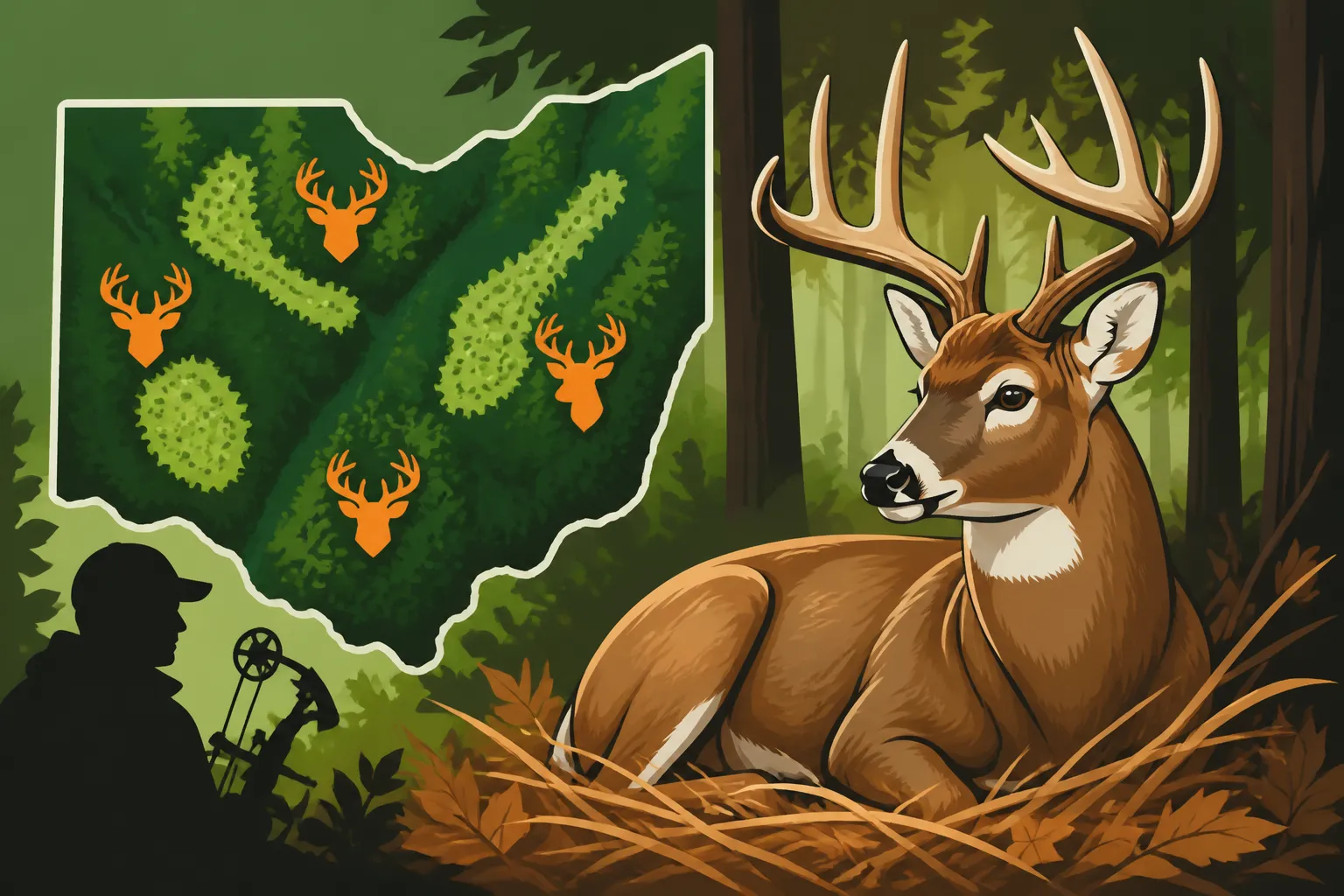
Hunting for mature bucks in Ohio's vast Shawnee State Forest can feel like searching for a needle in a colossal haystack, especially when you're trying to pinpoint where those elusive whitetails choose to bed down. The sheer scale of the unbroken timber, deep ravines, and endless ridges of southern Ohio's Appalachian foothills presents a unique challenge for even the most seasoned hunters. This guide aims to pull back the curtain on buck bedding strategies in Shawnee, helping you decode the landscape and dramatically increase your chances of finding those elusive spots.
Understanding Shawnee's Terrain and Its Influence on Deer
Shawnee State Forest, often called "Ohio's Little Smokies," is a sprawling expanse of rugged, unglaciated terrain that truly sets it apart from the flat farmlands common elsewhere in the state. This unique topography directly dictates how deer, particularly mature bucks, utilize the land for security and survival. If you want to understand where the deer are, you first need to understand the ground they live on.
Steep Slopes and Benches
The most defining feature of Shawnee State Forest is its relentless elevation changes. We're talking about incredibly steep hillsides that will test your lung capacity and leg muscles. Bucks, being smart and efficient creatures, rarely bed directly on the steepest, most exposed parts of these slopes. Instead, they favor benches—those subtle, relatively flat spots that break up an otherwise continuous incline. These benches, often just a few yards wide, provide a slight advantage in visibility and a natural barrier from predators approaching from below or above. They can also offer a bit of respite from the wind, especially if they are situated on the leeward side of a ridge.
These benches are often found at various elevations along the ridge systems that crisscross Shawnee. A buck might pick a bench that gives him a clear view of a major creek bottom or a logging road below, while simultaneously having the advantage of the wind blowing his scent towards potential threats coming from behind him on the ridge. Learning to identify these subtle breaks in topography on your maps, like through a detailed mapping app such as GoHunt, is paramount to e-scouting before you even set foot in the woods. When you're out there, look for signs of heavy deer traffic parallel to the contour lines, not just up and down the steepest parts.
Thick Cover and Regenerating Timber
Shawnee State Forest is predominantly mature hardwood timber, but within this vast canopy, you'll find pockets of dense cover that are absolute magnets for bedding bucks. These areas provide the physical security that whitetails crave. We're talking about thick stands of regenerating timber from old clear-cuts, dense multiflora rose thickets that seem impenetrable, or even small, isolated patches of conifers like pines or cedars that offer year-round thermal and visual screening.
These thickets might not be huge, sometimes only an acre or two, but they provide a sense of security unmatched by open woods. Bucks will often bed just inside the edge of these areas, allowing them to slip away undetected if a threat approaches. After a timber harvest, the resulting regrowth can create ideal bedding cover for years, but it's constantly changing. This is where scouting year-round, even in the off-season, becomes critical. The best bedding cover today might be too sparse next year, requiring you to adapt your strategy. Finding Timber Cuts and Where Deer Move After those operations can be a real game-changer for locating these hidden havens.
Identifying Key Bedding Areas: Beyond the Obvious
Finding a bed isn't just about looking for a flattened spot in the leaves; it's about understanding the combination of factors that make a location ideal for a buck. In Shawnee, these factors often revolve around security, thermal regulation, and strategic advantage.
Ridge Tops and Saddles
Mature bucks in Shawnee often favor bedding near the tops of ridges, or more specifically, in the saddles or subtle humps along those ridge lines. A saddle, being a low point between two higher points on a ridge, acts as a natural travel corridor, but it can also be a strategic bedding location. A buck bedding here can often see or smell danger approaching from multiple directions, especially if the wind is right. They might bed on the leeward side of a saddle, tucked just over the top, using the prevailing wind to scent check the downwind side, while visually monitoring the upwind approach.
These ridge-top beds are all about control and early detection. The elevation provides a visual advantage, and the thermals (which tend to rise in the morning and fall in the evening) can be used to their advantage, particularly when combined with steady winds. You'll often find older, more experienced bucks using these higher elevations. For a deeper dive, check out Reading a Ridge for Southeast Ohio Deer to really understand how to interpret these natural highways and bedding locations. Identifying these often requires thorough e-scouting with tools like GoHunt, paying close attention to contour lines and vegetation density.
Laurel Thickets and Conifer Patches
While much of Shawnee is deciduous forest, scattered throughout are pockets of evergreen cover. Rhododendron and mountain laurel, in particular, can form incredibly dense, almost impenetrable thickets, especially on north-facing slopes or in stream bottoms where moisture is abundant. These evergreen patches provide exceptional thermal cover in cold weather and invaluable visual security year-round. Bucks will crawl into these areas, often making a bed right in the heart of the thickest part, feeling completely invisible.
Similarly, small stands of planted pines or natural cedar groves, though less common, are prime bedding areas. These provide overhead cover from rain and snow, break up wind, and offer superior concealment compared to bare hardwoods. When Hunting a Ridge-Top Saddle for Rutting Bucks, don't overlook a small patch of pines nearby; it might be exactly where that buck feels safe enough to rest before moving again. In these specific environments, deer will often create a network of trails within the thicket, leading to and from their preferred beds. Look for these "spiderweb" patterns, as they indicate consistent use.
Creek Bottoms and South-Facing Slopes
Creek bottoms, especially those with dense undergrowth, can be surprisingly productive bedding areas, particularly during the early archery season or warmer periods. The cooler air and proximity to water sources make them attractive. Bucks will often bed on small rises or benches within these bottoms, especially if there's good cover to conceal them. They might use the dense brush along the creek banks as a natural screen, allowing them to slip in and out undetected.
South-facing slopes, on the other hand, are invaluable during the colder late season. These slopes receive more direct sunlight, warming up faster and providing a warmer bed for deer when temperatures plummet. When winter winds howl, a buck will often seek refuge on a south-facing slope just below the crest of a ridge, catching the sun's rays and being shielded from the bitter north wind. During the late season, when food sources become scarce, bucks will often bed close to where they feed, maximizing energy conservation. Understanding Late-Season Food Sources for Ohio Whitetails and combining that knowledge with south-facing bedding locations can be a powerful strategy.
Seasonal Bedding Shifts in Shawnee State Forest
Deer behavior, including bedding choices, isn't static. It changes dramatically with the seasons, influenced by factors like food availability, hunting pressure, and breeding cycles. Understanding these shifts is key to consistently finding bucks in Shawnee.
Early Season Bedding (September-October)
As the archery season kicks off in September, Shawnee bucks are often still on a relatively relaxed summer pattern, but that quickly changes with increasing hunting pressure. Early in the season, before the leaves drop, the entire forest floor can feel like a bedding paradise. Bucks will often bed closer to reliable food sources, like white oak ridges dropping acorns, or even agricultural fields if they can access them from the forest edge. They might favor areas with good visual cover, like thick sections of mature timber with a dense understory of greenbriar or grapevines.
However, as soon as hunting pressure mounts, bucks will quickly retreat to the thickest, most inaccessible parts of the forest. This might mean bedding deep in those laurel thickets, high on steep, nasty hillsides, or in dense patches of regenerating timber. The key during this time is finding those overlooked, hard-to-reach spots where few other hunters are willing to go. These are the places that offer the highest level of security. If you're willing to put in the effort, you can find Finding Ground Others Walk Past even on well-traveled public lands.
The Rut and Transition Periods (Late October-November)
The rut is a dynamic time, and buck bedding patterns can be less predictable as they become focused on finding does. While they still require security, their core bedding areas might shift to be closer to known doe groups or in staging areas between traditional doe bedding and feeding grounds. During the peak of the rut, a buck might bed wherever he pulls up with a hot doe, which could be almost anywhere. However, when not actively chasing, they'll still gravitate towards thick cover for security and recovery.
During this period, look for bedding sign along primary travel corridors, like ridge-top saddles, creek bottoms, or funnels between different habitat types. These spots offer both security and easy access to travel routes where they can intercept does. They might still use the dense thickets or steep slopes, but they'll be more willing to move in daylight. If you want to increase your odds during this crucial time, explore Hunting the Rut in Early November strategies to understand how bucks behave when love is in the air. Remember, even during the rut, a wise old buck will often choose a bed with a strategic advantage over sheer comfort.
Late Season Bedding (December-January)
Once the rut winds down and winter sets in, Shawnee bucks shift back into a survival mode, and their bedding choices become much more deliberate. Security and thermal regulation are paramount. With most of the leaves off the trees, thick cover becomes even more valuable. The laurel and conifer patches mentioned earlier become absolute magnets. South-facing slopes that soak up the sun's limited warmth are also prime locations.
Food sources also play a significant role. Bucks will often bed closer to the few remaining palatable food sources, such as persistent oak trees still holding acorns, briar patches, or even agricultural fields if they are available nearby. Minimizing energy expenditure is key, so reducing travel distance between bed and food is critical. These late-season bedding areas can be incredibly tight to cover, often just a few yards inside the densest thickets. If you're out Muzzleloader Season Tactics in the cold January, focusing your efforts on these secure, warm, and food-proximate bedding spots is your best bet for success.
Scouting Techniques for Locating Buck Beds
You can read all the articles in the world, but nothing beats putting boots on the ground. However, smart scouting starts long before you ever step into the timber.
Aerial Maps and Topographical Analysis
Before you lace up your boots, immerse yourself in e-scouting using high-quality aerial imagery and topographical maps. Tools like those found on the GoHunt platform can reveal so much about Shawnee's landscape. Look for:
- Color changes in vegetation: Denser, darker green spots might indicate conifers or thick laurel. Lighter green could be regenerating timber from a clear-cut.
- Contour lines: Pay close attention to how tight they are (steepness) and identify benches, saddles, and subtle humps. These topographical features are often invisible from the ground but are glaringly obvious on a good topo map.
- Water features: Creeks, drainages, and even small springs can influence deer movement and bedding.
- Access points and human impact: Identify roads, trails, and potential parking areas. Then, consciously look for areas far away from these spots, as mature bucks seek out remoteness. This is critical for Scouting Ohio Public Land Before Season.
Use these tools to identify potential bedding areas, then mark them. These marks become your starting points for on-the-ground investigation. Don't be afraid to spend hours studying these maps; it's an investment that pays off in saved steps and more focused scouting.
Boots-on-the-Ground and Sign Reading
Once you've identified potential areas on your map, it's time for some serious legwork. Early spring, after the snow melts but before the leaves fully emerge, is an ideal time to find beds because visibility is at its best. Walk those ridge tops, explore those benches, and penetrate those thickets.
What you're looking for:
- Actual beds: A flattened oval or round spot in the leaves or pine needles, often surrounded by droppings.
- Heavy trails: Not just faint lines, but well-worn paths indicating consistent use, especially leading into or out of thick cover.
- Rub lines and scrapes: While not directly a bed, fresh rubs and scrapes (especially a scrape line along a logging road) indicate where bucks are traveling and defining their territory, often leading you to their preferred security cover. Finding Sign in Big Appalachian Timber is a skill that takes time to develop but is invaluable.
- Droppings: Concentrated droppings near a bed can confirm recent use.
When you find a bed, analyze its location: What direction is the wind typically coming from? What kind of cover does it offer? What's the escape route? A buck rarely beds in a spot without a clear advantage. If you can answer these questions, you're starting to think like a Shawnee buck.
Trail Cameras and Thermal Imaging
Trail cameras are invaluable scouting tools, especially when you can't be in the woods every day. Place cameras on trails leading into or out of suspected bedding areas, or even just on travel corridors that bucks might use to access those areas. Don't place them directly on a bed, as that can disrupt its use, but strategically on approaches or adjacent signposts like rub lines. Using apps that integrate with your camera, often facilitated by features similar to what you'd find in a detailed platform like GoHunt, can help you monitor activity without constant disturbance.
While thermal imaging is often associated with night hunting (and its legality for hunting varies by state and game species, so always check Ohio's regulations carefully), it can be a powerful scouting tool during the day, particularly during cooler months. A quick scan of a thicket could reveal the heat signature of a bedded deer, confirming your suspicions about a particular piece of cover. This helps you understand how and where deer are truly using the landscape for security, especially in areas that appear impenetrable to the naked eye.
| Bedding Location Type | Typical Use Season | Key Characteristics & Advantages | Scouting Tips |
|---|---|---|---|
| Ridge Tops & Saddles | Early Season, Rut, Late Season | Strategic vantage points, thermals for scent control, natural travel corridors. Often found on benches just below the crest. | E-scout for subtle topography changes (GoHunt maps). Look for parallel trails, old rubs. Pay attention to Wind and Thermals on an Appalachian Ridge. |
| Laurel/Conifer Thickets | Year-Round, especially Late Season | Dense visual and thermal cover, protection from wind/snow, high security. | Identify dark green patches on aerial maps. Physically penetrate thickets (wear tough clothes!). Look for deer trails within. |
| Steep Benches | Year-Round | Break up steep terrain, offer slight elevation for visibility, less human traffic. | Look for subtle flat spots on steep hillsides. Follow contours on maps. Check for hidden trails that skirt the steepest parts. |
| Creek Bottoms | Early Season, Rut | Proximity to water, cooler temperatures, dense riparian cover. Often on small rises within the bottom. | Follow creek lines, look for dense brush. Check for areas where a buck can get to higher ground quickly. |
| South-Facing Slopes | Late Season | Maximize sun exposure for warmth, shielded from prevailing cold winds. Often paired with good cover near the crest. | Prioritize during cold snaps. Look for thick cover or clear-cuts on south-facing slopes. |
| Regenerating Timber | Early Season, Mid-Season, Late Season | Excellent visual cover due to dense saplings and brush, often from old logging operations. | Check aerial maps for recent Timber Cuts and Where Deer Move After. Walk through these areas, they can be tough but rewarding. |
Disclaimer
Hunting in Shawnee State Forest, like any wilderness area, carries inherent risks. Always prioritize safety, understand and follow all Ohio hunting regulations, and be prepared for rugged terrain and rapidly changing weather conditions. This guide provides general information and should not replace your own thorough scouting, safety precautions, and adherence to all local and state laws.