Bow Sights for Timber Shots
Navigating Ohio's dense woods with a bow can be one of the most exciting, yet frustrating, challenges for any archer. You spend hours scouting, hanging stands, and practicing, only for that mature buck to step out at 18 yards, silhouetted against a dark oak, and suddenly your sight pins feel like a cluttered mess, or worse, they're barely visible. This guide is all about choosing and setting up the perfect bow sight to conquer those real-world, close-range timber shots and ensure you're ready when opportunity knocks in Ohio's thickest cover.
Understanding the Demands of Timber Hunting in Ohio
Ohio isn't known for vast, open plains. Our hunting opportunities, especially for archers, are often found in relatively thick cover, whether that's dense Appalachian hardwoods, fencerows bordering sprawling farm fields, or the brushy edges of a reclaimed strip mine. This environment places unique demands on your bow sight that open-country setups simply don't address.
The Reality of Ohio's Woods Shots
When you're perched twenty feet up a gnarly oak in a Wayne National Forest hollow, or nestled into a ground blind along a Muskingum River bottomland, your shot opportunities are rarely going to be at sixty yards. More often than not, that bruiser buck is going to appear from seemingly nowhere at ten, fifteen, or twenty-five yards. These are often quick, reactionary shots where you don't have time to fiddle with adjustments or squint to pick out a tiny pin. The deer might be walking through saplings, pausing briefly behind a blowdown, or skirting the edge of thick briars. You need a sight that gives you a clear, unobstructed view of the target, with pins that are instantly visible and reliable at these closer distances. The margin for error is small, and every second counts. Treestand safety gear for steep ground is essential in this type of environment, as you might be hunting some precarious spots.
Light Conditions and Sight Brightness
Think about how much light actually penetrates the canopy of a mature Ohio woodlot, especially early in the morning or late in the evening. Add in an overcast sky, or a rainy November day, and you're hunting in what feels like perpetual dusk. Standard bow sights, with their tiny fiber optic pins, can become almost impossible to see in these low-light conditions. You need pins that gather ambient light efficiently and present a clear, bright aiming point without causing a distracting halo or glare. Too dim, and you can't aim accurately. Too bright, and it can wash out your target in the last minutes of shooting light. Finding that sweet spot is crucial. The ability to distinguish your sight pin from the dark background of a deer's hide in fading light can be the difference between a successful hunt and a missed opportunity. This is a common challenge for those Hunting a funnel between two woodlots, where daylight barely penetrates.
Key Features to Look for in a Timber Bow Sight
When you're trying to pick out a sight for Ohio's timber, it's not just about getting the cheapest one or the most expensive one. It's about finding the right balance of features that cater to the specific environment you'll be hunting in. Every feature plays a role in making that critical shot.
Pin Configuration and Size
This is often the first thing archers debate. Should you go with a single pin, or a multi-pin setup? For close-range timber shots, many hunters lean towards a simpler, less cluttered sight picture.
- Single Pin Sights: These offer an incredibly clean field of view, as there's only one aiming point. This can be fantastic for mental clarity and precise aiming, especially when you're under pressure. The downside is that you typically have to "dial" the sight for different distances. While some single-pin sights are incredibly fast to adjust, doing so quietly and quickly when a deer is at 18 yards, and your pin is set for 30, can be tricky. However, for a hunter who knows their typical shot distances are often under 25 yards and can pre-set their pin, it's a very viable option. They excel at uncluttering your view.
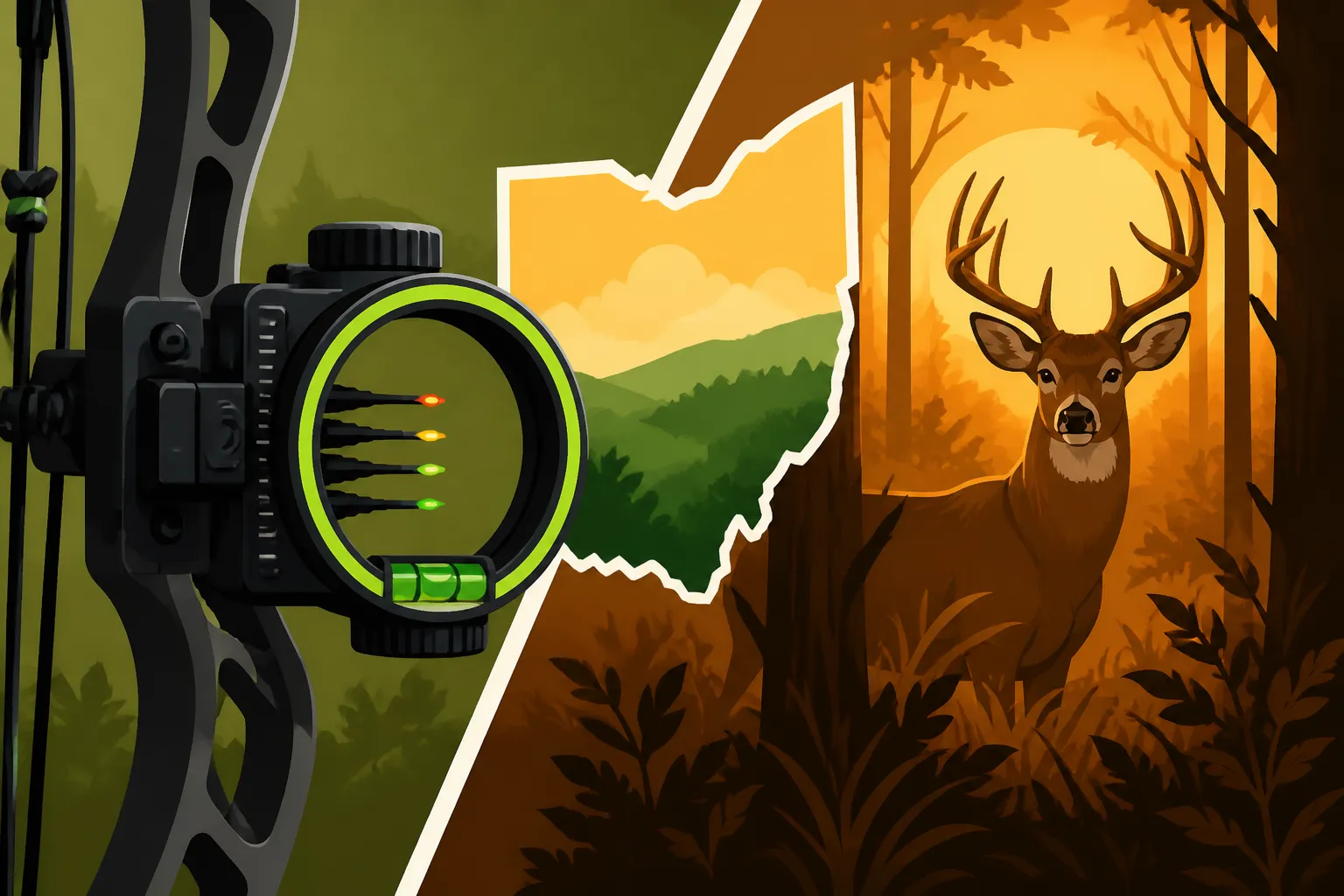
- Multi-Pin Sights: Most common in the hunting world, these sights typically feature three to five pins set at different distances (e.g., 20, 30, 40, 50 yards). For timber hunting, a three-pin setup (20, 30, 40) is often ideal. It gives you quick reference points without too much clutter. The key is finding a sight where the pins aren't excessively large or spaced too far apart, allowing you to quickly acquire the correct pin for your target distance.
Now, let's talk about pin size. This refers to the diameter of the fiber optic strand, usually measured in thousandths of an inch.
- 0.019" Pins: These are a popular middle-ground. They are bright and visible, even in lower light, and tend to be easy to pick up quickly. For timber hunting, where shots are often closer and faster, a 0.019" pin on your main 20-yard or 30-yard pin can be an excellent choice. It's robust enough to be seen but not so big that it completely obscures a small target at 30 yards.
- 0.010" Pins: These are much finer, offering a more precise aiming point, especially for longer shots. However, in the dim light of deep timber, these tiny pins can virtually disappear, making target acquisition difficult and frustrating. They might be great for open-field hunting, but for the dark woods of Ohio, they can be a hindrance for your close-range pins.
Here's a quick comparison:
| Pin Size (Diameter) | Visibility in Low Light | Precision at Range | Clutter Factor | Ideal for Ohio Timber (Close Pins) |
|---|---|---|---|---|
| 0.029" | Excellent | Moderate | High | Too large, obscures target |
| 0.019" | Good | Good | Moderate | Excellent choice |
| 0.010" | Poor | Excellent | Low | Often too dim for close range |
Fiber Optic Brightness and Durability
The quality and length of the fiber optic material are paramount. A sight with long, high-quality fiber optics will gather more ambient light, making your pins glow brightly even when the woods are dark. Some sights feature a rheostat light, which allows you to manually adjust the brightness of the pins. This can be a game-changer, letting you dial down the brightness on a sunny morning to avoid glare, and crank it up as dusk settles in.
Beyond brightness, durability is critical. Fiber optics are delicate, and they can break if exposed. Look for sights that offer robust protection for the fiber optic strands, often recessed into the sight housing or protected by a tough shroud. You'll be bumping your bow against trees, scrambling over logs, and carrying it through thick brush. A flimsy fiber optic setup simply won't last a full Ohio season. Working a creek bottom for late-season deer or Hunting the Ohio River backwaters can be especially tough on gear due to moisture and dense undergrowth. When you're researching gear, sites like GoHunt often have user reviews or product descriptions that highlight the durability of different sight models.
Field of View and Housing Design
An open, unobstructed field of view is a massive advantage in timber hunting. You need to be able to see the deer, your target, and nothing else through your sight.
- Housing Design: Some sights have a large, bulky housing that can feel like you're looking through a tunnel. Look for a sight with a relatively thin, unobtrusive housing that frames your target without blocking too much of your peripheral vision. Round sight housings are generally preferred over square ones as they feel more natural to the eye and reduce the perception of a confined viewing area.
- Level Placement: A built-in level is a must-have, especially for shots taken from an elevated treestand on uneven ground. Make sure the level is easy to see and isn't obscured by the pins or housing. An un-leveled bow at the shot can lead to left or right misses, even at close ranges.
Adjustability and Ease of Use
Nobody wants to be fumbling with tiny Allen wrenches in the field. Look for sights with tool-less micro-adjustments for windage and elevation. This allows you to make quick, precise adjustments at the range without needing a full toolbox. The ability to fine-tune your pins incrementally ensures you're perfectly sighted in. Some sights also feature second and third-axis adjustments, which are particularly useful for shooting from steep angles, like those often encountered in Hunting Southeast Ohio Appalachian Foothills. A sight that’s easy to set up and adjust will save you headaches and instill confidence, making your range time more efficient before you ever hit the woods.
Single Pin vs. Multi-Pin for Timber
The choice between a single pin and a multi-pin sight is a deeply personal one, and both have merits when it comes to hunting Ohio's timber. Your shooting style, typical shot distances, and comfort level under pressure will heavily influence which is right for you.
The Case for Single Pin Sights
The primary appeal of a single pin sight in dense timber is its simplicity. Imagine that buck ghosting through the underbrush at 18 yards. With a single pin, there's no confusion about which pin to use. You simply place that one glowing dot on your target. This uncluttered sight picture can lead to faster target acquisition and less mental fumbling during the moment of truth. Many single-pin sights are also designed with a larger field of view, further enhancing this benefit.
However, the "dialing" aspect is a factor. While many modern single-pin sights are incredibly smooth and quiet to adjust, performing this action on a deer that pops out unexpectedly at a different range than your current setting can be difficult. If you're disciplined and primarily hunt stands where you know your shot opportunities will be within a narrow, pre-set range (say, 15-25 yards), a single pin can be incredibly effective. It forces you to truly know your yardage and focus solely on that one aiming point. Paired with proper technique, and a Bow draw weight for Ohio whitetails that's comfortable for you, it can be a highly accurate system.
The Case for Multi-Pin Sights
Multi-pin sights are the bread and butter for many timber hunters, and for good reason. They offer instant aiming points for multiple pre-determined distances. If a deer steps out at 20 yards, you use your 20-yard pin. If it moves to 30, you immediately shift to that pin. This eliminates the need to adjust your sight in the presence of game, which is a huge advantage when things happen fast.
For Ohio's timber, a three or four-pin sight (e.g., 20, 30, 40, perhaps 50) is often perfect. It covers the vast majority of real-world shot opportunities without creating an overly busy sight picture. The key is to select a sight where the pins are spaced far enough apart to be distinct, but not so far that the sight housing is enormous. The ability to quickly range with your eyes and pick the right pin can be invaluable when you're Rattling volume in thick cover and a buck comes charging in from an unexpected angle. Many hunters find the versatility of multiple pins provides more confidence when dealing with the unpredictable nature of deer movement in thick cover.
Specific Considerations for Ohio's Diverse Terrain
Ohio's landscape is more varied than many realize, from the rolling hills and deep hollers of Appalachia to the flat, agricultural expanse of the northwest. Each region presents slightly different challenges and influences what might be the "best" bow sight for your hunt.
Appalachian Ohio vs. Farmland Edges
- Appalachian Ohio: In places like Shawnee State Forest or the Wayne National Forest, you're dealing with steep terrain, dense timber, and often limited visibility. Shots are typically closer, often under 30 yards, and can involve significant up or down angles. Here, a sight with a clear, uncluttered view and bright pins is paramount. Second and third-axis adjustments can also be beneficial to compensate for those extreme angles. You're likely to be Finding sign in big Appalachian timber, which often means finding dense bedding areas where deer feel secure, making shots close. Durability against bumps and scrapes from tight cover is also a must.
- Farmland Edges (Northwest Ohio): While this region might seem more open, many archers hunt the woodlots, fencerows, and creek bottoms that crisscross the agricultural fields. Shots here can still be close, but you might occasionally have a slightly longer shot across a small field edge or through a more open woodlot. The terrain is generally flatter, so extreme angle compensation isn't as critical. However, the contrast between bright field edges and dark timber can be stark, demanding pins that perform well in varying light. When you're Setting Up on a Northwest Ohio Field Edge, you might have a deer come out at 15 yards or skirt the field at 40, so versatility is key.
Durability and Weather Resistance
Ohio weather is notoriously unpredictable. You can start a November morning in crisp, clear air and end the day with a cold, driving rain or wet snow. Your bow sight needs to be built to withstand these conditions without failing.
- Robust Construction: Look for sights made from durable, aircraft-grade aluminum or high-quality composites. Avoid flimsy plastic components that can crack or break with a minor bump. The mounting bracket and adjustments should feel solid and secure.
- Weather Sealing: While a bow sight isn't fully submersible, its components should be resistant to moisture. Rain, sleet, and even heavy fog can seep into adjustment mechanisms or fog up pin covers. Look for sealed adjustment screws and sturdy pin protection. When you’re spending hours on stand in conditions that would make most people stay home, like when you're Keeping a muzzleloader dry in wet snow, your bow sight needs to hold up just as well. Researching brands known for their ruggedness, and checking reviews on platforms like GoHunt, can help you find sights that are built to last through Ohio's hunting seasons. After all, the last thing you need is a sight failure when that big buck finally offers a shot.
Conclusion
Choosing the right bow sight for timber shots in Ohio isn't just about throwing money at the problem; it's about understanding the unique challenges of our woods and selecting gear that empowers you to meet them. Whether you opt for the clean simplicity of a single pin or the quick versatility of a multi-pin setup, prioritize clear, bright, and durable pins that excel in low light and tight spaces. Focus on an open field of view and easy, precise adjustments. Take the time to practice with your chosen sight at various distances, especially those close timber shots, and in different lighting conditions. When that Ohio whitetail finally steps out from behind an oak at twenty yards, you'll be glad you invested in a sight that truly helps you make the shot count.
Disclaimer
This article is for general informational purposes only and does not constitute professional advice. Laws, prices and regulations vary by location and change over time. Consult a qualified professional for guidance on your specific situation.