Ohio Falconry License Requirements
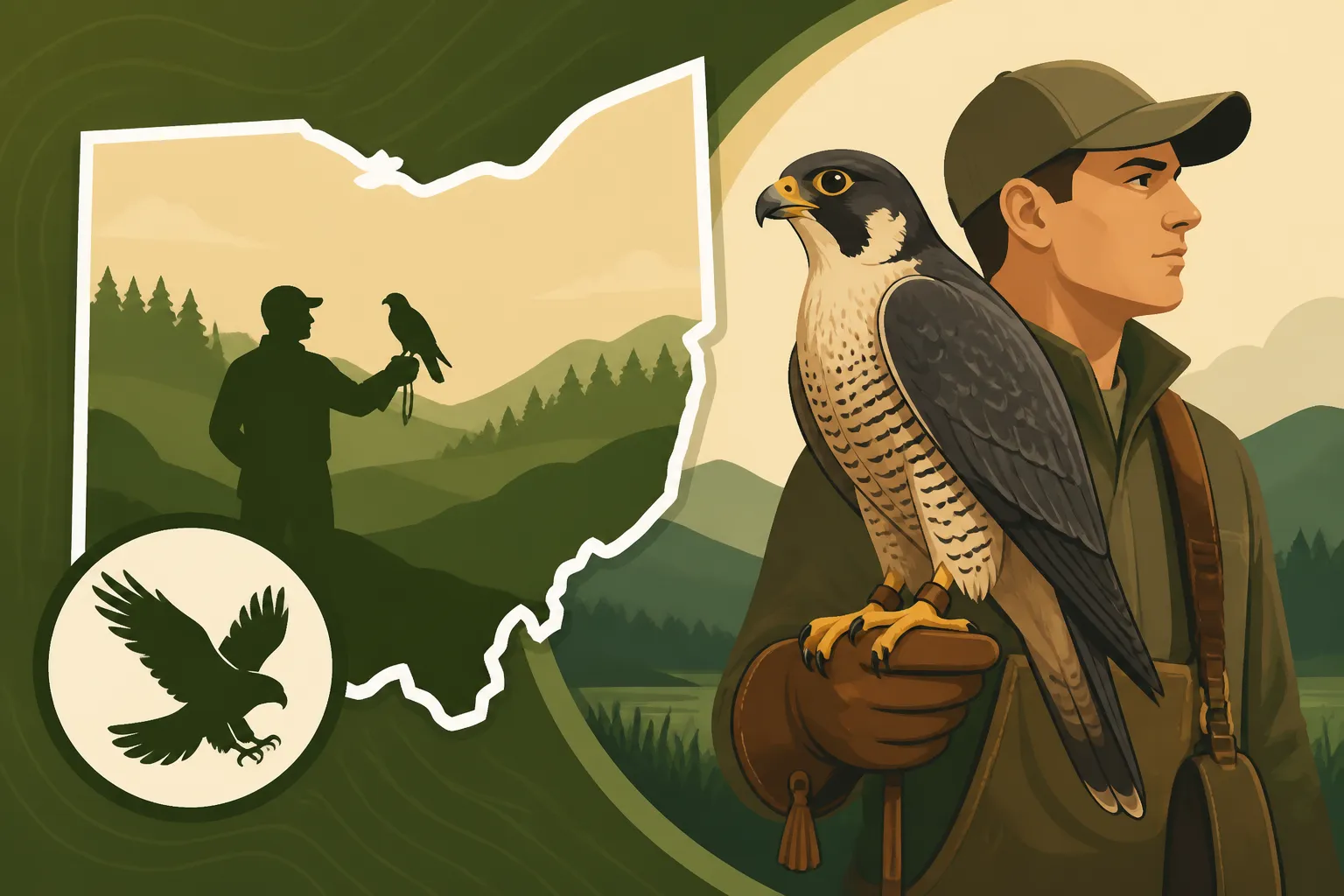
If you've ever watched a hawk dive from the sky or a falcon streak across an open field, striking its prey with incredible precision and speed, you've likely felt a spark of awe. For some, that spark ignites a deep desire to participate in this ancient hunting art, but the path to becoming a licensed falconer in Ohio is far from a walk in the park. It’s a rigorous journey, full of specific federal and state requirements that can feel overwhelming and opaque, often leaving aspiring falconers wondering where to even begin. This guide will meticulously break down everything you need to know about obtaining and maintaining an Ohio falconry license, from the initial apprentice steps to the advanced master level.
Understanding the Layers of Falconry Regulation in Ohio
Becoming a falconer isn't like getting a typical hunting license. It's a privilege, not a right, and it comes with a tremendous responsibility to the raptors you work with. Because of this, falconry is one of the most heavily regulated hunting pursuits out there. You’re not just dealing with the Ohio Department of Natural Resources (ODNR); you're also dealing with the U.S. Fish & Wildlife Service (USFWS) at a federal level. This dual layer of oversight means a lot of paperwork, specific standards, and a dedication to animal welfare and conservation that goes beyond what most hunters experience. It's designed to protect these magnificent birds and ensure only truly committed individuals enter their world.
Federal Framework for Falconry Permits
The federal government, through the USFWS, sets the overarching rules and standards for falconry across the entire United States. Think of these as the fundamental benchmarks that every state must meet, and often exceed. These federal regulations dictate the types of permits available – Apprentice, General, and Master – and outline the minimum requirements for each. They also cover things like allowed species of raptors, permit duration, reporting requirements, and the general welfare standards for keeping birds.
For instance, the federal rules mandate the apprenticeship period, which is a crucial part of learning the art of falconry under the guidance of an experienced General or Master Falconer. They ensure that all state programs adhere to a baseline level of instruction and ethical practice. The federal permit is effectively your ticket to legally possess and fly a raptor for hunting purposes. You apply through your state, but the state then certifies to the USFWS that you meet both federal and state criteria.
Ohio's Specific Falconry Requirements
While the federal government provides the framework, Ohio, like every state, has its own set of specific rules and regulations that might be more stringent or add additional layers. The Ohio Department of Natural Resources (ODNR) Division of Wildlife is the agency you'll primarily interact with for your state falconry permit. They handle the application process, conduct facility inspections, administer exams, and oversee the apprenticeship program within the state.
Ohio’s regulations will detail specific permit fees, the exact requirements for mews (raptor housing) and weathering yards, permitted species within Ohio, and often local nuances for hunting with a raptor. For example, Ohio might have specific dates for certain small game seasons that align with when you can legally hunt with your bird. These state-level rules often reflect the local wildlife populations and conservation priorities. It’s absolutely critical to be intimately familiar with both federal and Ohio regulations before you even think about starting your journey, as overlooking one detail can cause significant delays or even legal trouble.
The Path to Becoming an Ohio Falconer: Step by Step
Embarking on the falconry journey in Ohio is a marathon, not a sprint. It demands incredible patience, a significant investment of time, and a deep, unwavering commitment. It’s a multi-year process structured around a mentorship system, ensuring that new falconers gain the practical skills and ethical understanding necessary to properly care for and hunt with a raptor. This isn't a hobby you pick up on a whim; it's a lifestyle that intertwines with the natural world in a profound way.
The Apprentice Falconer Stage
This is where everyone starts, and it's easily the most demanding and crucial phase. The Apprentice permit is typically valid for three years, and during this time, you must be sponsored by an experienced General or Master Falconer. Finding a sponsor is often the first and most significant hurdle for many aspiring falconers in Ohio, as it requires establishing trust and demonstrating genuine dedication. Sponsors aren't just teachers; they're mentors who will guide you through every aspect of raptor care, training, and hunting.
To even apply for an Apprentice permit in Ohio, you first need to pass a comprehensive written examination administered by the ODNR. This exam covers raptor identification, biology, husbandry (care), relevant diseases, federal and state falconry laws, and even an understanding of basic trap construction. It’s not a test you can cram for overnight; it requires extensive self-study. There are many excellent books available, such as "A Hawk in the Hand" by Frank Beebe or "Falconry and Hawking" by Phillip Glasier, which are often recommended reading.
Once you pass the exam, the ODNR will need to inspect your proposed facilities. This is a critical step, as your mews (indoor housing) and weathering yard (outdoor enclosure) must meet strict federal and state standards for size, construction, security, and safety. They must protect the bird from predators, extreme weather, and injury, while also allowing for proper sanitation. It's not uncommon for facilities to require adjustments after the initial inspection.
With a passed exam and approved facilities, you then obtain your initial raptor. Apprentice falconers are typically limited to certain species, such as a Red-tailed Hawk or an American Kestrel, captured from the wild using specific, humane trapping methods. The capture itself is often done under the direct supervision of your sponsor. This ensures you learn ethical trapping techniques and understand the importance of minimal stress to the bird.
Throughout your apprenticeship, your sponsor will oversee your progress, providing hands-on instruction in everything from daily feeding and health checks to manning (taming), training, and actual hunting. This includes learning how to properly weight the bird, tie falconer's knots, make jesses and leashes, and understand the subtle behavioral cues of your raptor. The time commitment is immense, requiring daily interaction and observation, regardless of weather or personal plans.
Advancing to General Falconer
After successfully completing a minimum of two years as an Apprentice Falconer, and under the continued guidance of your sponsor, you can apply to upgrade to a General Falconer permit. This isn’t an automatic promotion; it requires demonstrating proficiency and responsibility. Your sponsor will submit a letter to the ODNR (and by extension, the USFWS) detailing your progress and recommending you for the upgrade.
The General Falconer permit offers more flexibility. You'll typically be allowed to possess up to three raptors at a time, and the species list expands to include larger and more challenging birds like Harris's Hawks or Peregrine Falcons, depending on state regulations and availability. This stage implies a deeper understanding of raptor management and hunting techniques, and you're often expected to be more self-sufficient in your daily routines.
While you don't typically re-take the written exam, the ODNR may conduct another facility inspection to ensure your setups can accommodate additional birds or more diverse species. At this stage, General Falconers can also become sponsors for new Apprentice Falconers, paying it forward and helping to perpetuate the tradition. This is a significant responsibility, requiring not only expertise but also the patience and dedication to guide a novice.
Many falconers remain at the General level for years, even decades, content with the challenges and rewards of working with a wider variety of raptors. It's a comfortable and highly knowledgeable stage, where the art of falconry truly begins to flourish for many.
Achieving Master Falconer Status
The Master Falconer permit is the pinnacle of falconry, signifying a lifetime of dedication, deep understanding, and exceptional skill. To qualify for a Master permit in Ohio, you must have held a General Falconer permit for a minimum of five years. This means you've committed at least seven years of your life, total, to licensed falconry.
At the Master level, the restrictions on species and number of birds are further relaxed. You can typically possess up to five raptors (or more with special permission) and are allowed to keep nearly any species authorized for falconry, including endangered or threatened species, provided you have the appropriate federal and state permits for those specific birds. You'll also have greater latitude in terms of trapping methods and exchanging birds.
Master Falconers are often seen as community leaders, serving as experienced mentors, educators, and conservationists. They play a vital role in the perpetuation of falconry, often taking on more complex challenges in raptor rehabilitation or breeding. The expectation at this level is that you possess an unparalleled understanding of raptor behavior, health, and advanced hunting strategies. It's a status earned through years of diligent practice, continuous learning, and an unwavering passion for the birds and the hunt.
| Permit Level | Minimum Age | Apprenticeship Length | Raptor Limit | Typical Species | Sponsor Requirement | Notes |
|---|---|---|---|---|---|---|
| Apprentice | 12 (Federal), 16 (Ohio) | N/A (minimum 2 years to advance) | 1 | Red-tailed Hawk, American Kestrel | Yes (General/Master) | Must pass written exam, have facilities inspected, find a sponsor. Most rigorous learning phase. |
| General | 16 (Federal), 18 (Ohio) | 2 years as Apprentice | 3 | Expanded list: Harris's Hawk, Peregrine Falcon | No (Can be a sponsor) | Must be recommended by sponsor, demonstrate proficiency. Offers more species and flexibility. |
| Master | N/A | 5 years as General | 5+ | Any legal species, including some endangered (w/permits) | No | Pinnacle of falconry. Requires extensive experience. Often involved in breeding, rehabilitation, or education. |
Note: Specific age requirements, bird limits, and species lists can vary slightly by state and federal regulations. Always consult current ODNR and USFWS guidelines.
Essential Requirements Beyond the Permit Levels
Beyond the structured permit progression, there are several fundamental elements you absolutely must fulfill to become and remain a licensed falconer in Ohio. These are the practical considerations that often trip up aspiring falconers who haven't fully grasped the commitment involved.
Housing and Facility Standards
This isn't just about having a cage; it's about providing a safe, secure, and appropriate living environment for a wild animal. The mews, your raptor's primary indoor enclosure, must be robustly constructed to prevent escape and protect from predators. Federal guidelines dictate minimum dimensions, but Ohio might have additional requirements. For instance, the walls often need to be solid, the ceiling netted or barred, and a suitable perch must be provided. Ventilation and natural light are crucial. The door must be secure, ideally double-locked.
The weathering yard is an outdoor enclosure, often larger than the mews, that allows your bird to get fresh air, sunlight, and stretch its wings safely. It also needs to be predator-proofed, with a secure roof, strong fencing, and a substrate that can be easily cleaned. Proper perches, a bath pan, and shade are all necessary elements. Imagine trying to build a secure, comfortable space for an animal that can fly, has powerful talons, and is a natural predator, while also being highly vulnerable to other predators. It’s a significant construction project, and one that the ODNR will thoroughly inspect. Many folks find themselves needing to make multiple adjustments to their proposed facilities before they get the green light.
Equipment and Gear
Falconry requires specialized equipment, much of which you'll learn to make or procure during your apprenticeship.
- Jesses: Leather straps fitted to the bird's legs, allowing you to hold it securely.
- Leash: Attaches to the jesses and secures the bird to a perch.
- Swivel: Connects the jesses and leash, preventing tangles.
- Glove/Gauntlet: Heavy leather glove to protect your hand from the bird's talons.
- Perches: Various types for the mews and weathering yard, designed to be comfortable and prevent foot problems.
- Bath Pan: Essential for hygiene and feather health.
- Scales: Extremely precise digital scales are vital for monitoring your bird's weight, which is critical for health and hunting motivation.
- Telemetry: A small transmitter attached to the bird and a receiver you carry. This is an absolute must-have, especially when flying in areas where a bird could easily disappear, like the dense woods of Wayne National Forest or the expansive fields of northwest Ohio. Losing a raptor is every falconer's worst nightmare, and telemetry is your best chance of recovery.
- Trapping Equipment: Bow nets, dho-gazza nets, or pigeon traps, depending on the method, used for safely capturing wild raptors. These must be humane and used under strict regulations.
Remember, much of this equipment is custom-made or specialized, and good quality gear is an investment. You'll quickly learn that cheaping out on equipment can have serious consequences for your bird's safety and well-being.
Time Commitment and Lifestyle Adjustments
This is perhaps the most understated requirement. Falconry is not a weekend hobby. It demands daily attention, 365 days a year, regardless of holidays, illness, or travel plans. Your raptor relies entirely on you for its food, housing, health, and exercise.
- Daily Care: Feeding, cleaning mews, health checks, and handling are daily tasks.
- Training: This can take months, even years, to train a wild bird to hunt cooperatively with a human. It's a continuous process of building trust and understanding.
- Hunting: Once trained, you'll need to dedicate significant time to actual hunting. This means scouting appropriate areas, checking for game, and spending hours afield. You'll often be targeting species like squirrels, rabbits, or pheasants, which means you'll need to understand the Ohio Small Game and Upland Bird Seasons and be proficient in reading the landscape. A tool like GoHunt can be invaluable for scouting potential hunting locations, understanding public land boundaries, and even analyzing habitat data that might point you towards good rabbit thickets or squirrel woods.
- Finding Game: This isn't always easy. Hunting with a raptor is a partnership, and you're often flushing game for your bird. This takes a lot of legwork, especially on Public Hunting Land in Ohio. Understanding how to navigate different terrains, from the dense cover of a fencerow to the open spaces of a field, is paramount.
- Paperwork and Reporting: Falconers must maintain meticulous records and submit annual reports to the ODNR and USFWS, documenting their birds, hunting success, and any transfers or losses.
If you travel frequently, have an unpredictable work schedule, or aren't prepared for the significant daily time investment, falconry might not be for you. It requires a profound adjustment to your lifestyle, placing the bird's needs often above your own.
Hunting License and Additional Certifications
Even though you’re using a raptor, you are still legally considered a hunter. Therefore, to participate in falconry in Ohio, you must possess a valid Ohio hunting license. This means you need to fulfill all the requirements for any other hunter, including completing an approved Ohio Hunter Education Requirements course, unless you're exempt. The ODNR provides information on various Ohio Resident Hunting License Options that would apply.
Furthermore, you'll need to be aware of the specific game species regulations. While a raptor might be hunting a rabbit, you, as the falconer, are subject to the same bag limits and season dates as a hunter with a gun or bow. Understanding Rabbit Hunting Ohio Fencerows or Squirrel Hunting Ohio Hickory Groves from the perspective of a falconer adds another layer of complexity.
Consider also where you will hunt. Ohio offers many Ohio Wildlife Areas that can provide excellent opportunities, but understanding their specific rules and being able to access them safely is key. Tools like GoHunt can also help identify suitable public land tracts, displaying boundaries and helping you plan your approach for optimal raptor flight conditions.
The Long-Term Commitment and Rewards of Falconry
For those who undertake the demanding journey of becoming an Ohio falconer, the rewards are often described as unparalleled. It's a deep connection to the natural world, an intimate partnership with a wild creature, and a link to a hunting tradition that spans thousands of years. But it is indeed a long-term commitment that truly becomes a way of life.
The Bond with a Wild Hunter
Unlike a dog, a raptor is not domesticated. The relationship you forge with a hawk or falcon is one of mutual respect and cooperation, not obedience. You train the bird, yes, but you also learn to understand its wild instincts, its flight patterns, its hunting strategies. There's an incredible satisfaction in watching a bird you've trained execute a perfect stoop or chase, bringing down game that it would hunt alone in the wild. This partnership teaches immense patience, observation skills, and a profound appreciation for the intricate dance between predator and prey.
This bond isn't instant; it develops over months and years of consistent daily interaction, shared hunts, and overcoming challenges together. It's a constant learning process, for both you and the bird. You learn to read the wind and thermals, to anticipate the flush of a rabbit, and to understand the subtle shifts in your bird's demeanor that indicate hunger, frustration, or readiness to hunt.
Conservation and Ethical Responsibility
Falconers are, by necessity, keen conservationists. They rely on healthy populations of both raptors and their prey species. Many falconers actively participate in raptor rehabilitation, breeding programs, and educational outreach. The ethical treatment of their birds is paramount, deeply ingrained in the culture of falconry. It's not just about compliance with the law, but a genuine reverence for these animals.
The commitment extends to ensuring responsible hunting practices. Falconers are highly aware of local game populations and habitat health. They understand the impact of Hunting Pressure on Ohio Public Land and often seek out less trafficked areas. Using resources like GoHunt can further aid in scouting and understanding game distribution, helping falconers make informed decisions about where and when to hunt, thereby contributing to sustainable wildlife management.
The requirements for a falconry license in Ohio are stringent for a reason: they ensure that only those truly dedicated to the art, the birds, and the ethical pursuit of hunting are granted the privilege. It's a journey filled with challenges, but for those who endure, it promises a connection to the wild that few ever experience.
Disclaimer
The information provided in this guide is for informational purposes only and is subject to change. Falconry regulations are complex and can be updated by both federal and state agencies. It is the responsibility of the individual to consult the most current regulations from the U.S. Fish & Wildlife Service and the Ohio Department of Natural Resources (ODNR) Division of Wildlife before pursuing a falconry license or engaging in falconry activities. This guide does not constitute legal advice.