Ohio Fall Turkey County List
It's incredibly frustrating when you're geared up for an Ohio fall turkey hunt, ready to hit the woods, only to realize you're not entirely sure which counties are even open. The rules for fall turkey can feel like a moving target compared to the more straightforward spring season. This comprehensive guide is here to clear up all that confusion, giving you the definitive Ohio fall turkey county list and all the essential information you need to plan a successful autumn hunt.
Understanding Ohio's Fall Turkey Season
Ohio's fall turkey season is a unique beast compared to the spring gobbler pursuit. While both offer incredible opportunities to chase our feathered friends, the strategies, regulations, and even the "why" behind them are quite different. It's crucial to understand these distinctions before you even think about which counties are open.
The Rationale Behind Fall Seasons
Think of the fall season as a population management tool, primarily. In the spring, the focus is almost exclusively on harvesting adult gobblers, which typically has minimal impact on the overall turkey population's long-term health since one tom can breed many hens. The fall season, however, allows for the harvest of "either-sex" birds—meaning you can take a hen or a jake. This is designed to manage flock numbers, particularly in areas where turkey populations are robust and healthy. By allowing a limited harvest of hens and young birds, the Ohio Department of Natural Resources (ODNR) helps ensure a balanced population, preventing overpopulation in some areas and promoting sustainable hunting opportunities across the state. It’s a delicate balance that relies on careful data collection and analysis to maintain healthy wild turkey numbers year after year, and it's a testament to the success of decades of turkey restoration efforts in Ohio.
Key Differences from Spring Turkey Hunting
The most significant difference, besides the obvious timing, is the approach to hunting. Spring hunting is often characterized by aggressive calling to draw in a strutting gobbler, often setting up in a fixed position to ambush him. Fall hunting, however, is much more about locating flocks, scattering them, and then calling individual birds back to your position. This "bust 'em up and call 'em back" strategy is incredibly effective for fall turkeys, which tend to be in larger, more cohesive family groups. Another major distinction lies in the weaponry: while spring allows for both archery and shotgun, the Ohio's Shotgun-Only Fall Turkey Season means you'll be limited to scatterguns for the autumn chase. This necessitates different gear choices and shot selection. Furthermore, the motivation of the birds is different; in fall, turkeys are primarily focused on feeding and regrouping, not breeding, which influences their responsiveness to calls.
General Season Dates and Bag Limits
Ohio's fall turkey season typically runs for a limited window, often from early October through late November, though specific dates can vary slightly each year. It's usually a pretty short season, so you have to be ready when that window opens. The statewide bag limit is generally one wild turkey of either sex per hunter for the entire fall season. This means if you tag a hen on opening day, your fall turkey season is over. This strict limit reinforces the population management aspect of the hunt, ensuring that harvests remain conservative. Always double-check the current year's ODNR hunting regulations for the precise dates, as they are subject to change. For a deeper dive into the specifics, you can always refer to the official Ohio Fall Turkey Bag Limit guidelines. Knowing these foundational rules is your first step to a legal and enjoyable hunt.
The Official Ohio Fall Turkey County List Explained
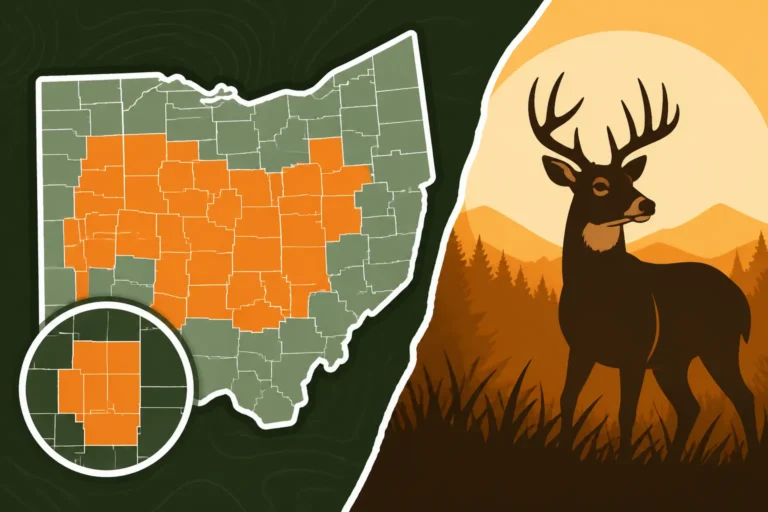
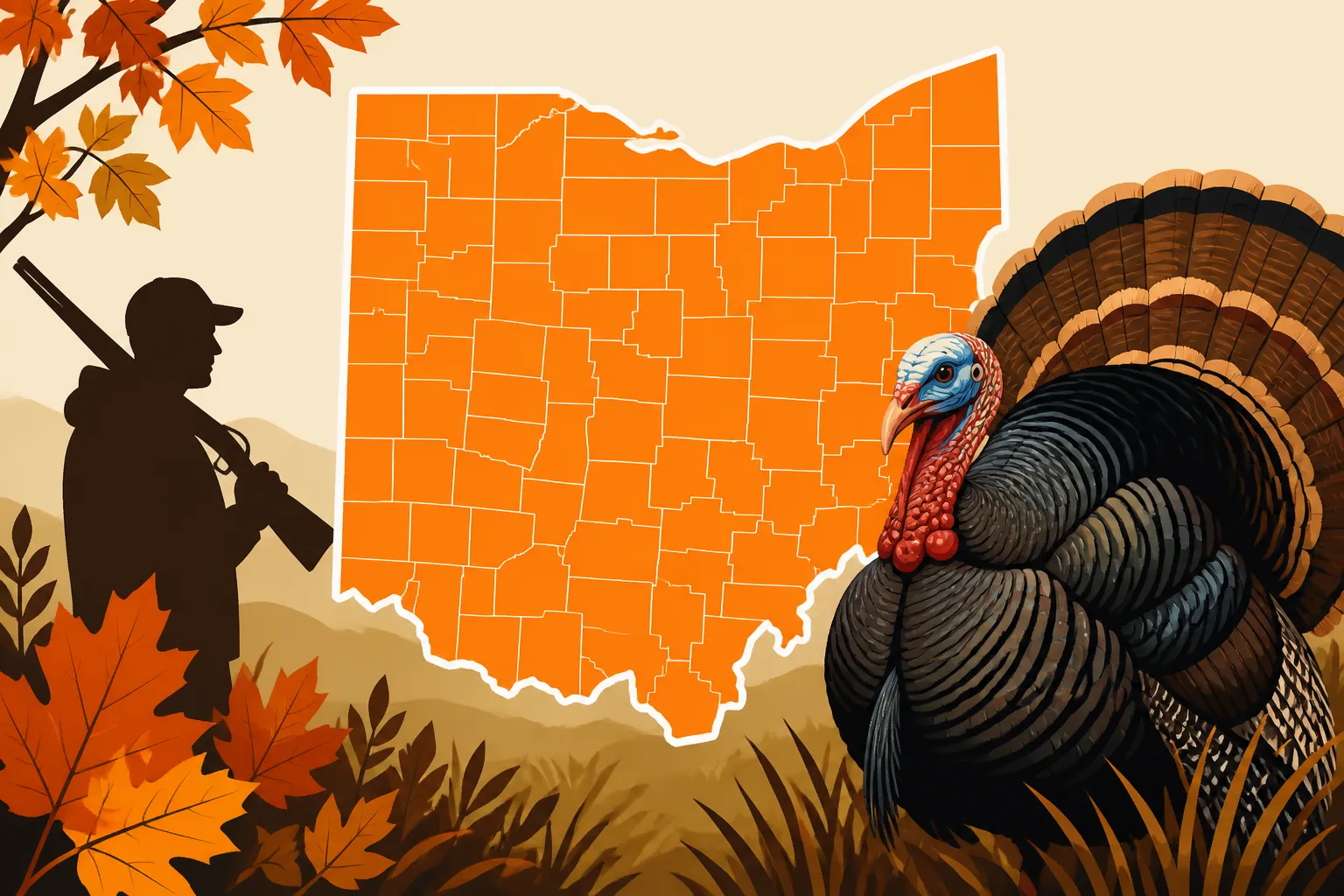
Understanding which counties are open for fall turkey hunting is paramount. Ohio doesn't have a statewide open season for fall turkeys; instead, it's a county-by-county decision, based on ongoing population assessments. This means you can't just assume your favorite spring gobbler spot is open in the fall.
How the ODNR Determines Open Counties
The Ohio Department of Natural Resources (ODNR) meticulously evaluates turkey populations in each county to decide where fall hunting is permissible. This isn't a random process; it's based on solid biological data. They look at several factors:
- Population Density: Are there enough turkeys in a given county to support a fall harvest without negatively impacting the breeding stock for next year? They use brood surveys to estimate poult production and overall flock health.
- Harvest Data: Spring harvest numbers provide insight into population trends. If a county had a very high spring harvest, or consistently lower numbers, it might be excluded from the fall season to allow populations to recover.
- Habitat Quality: Counties with robust, contiguous turkey habitat, including good mast crop production (like acorns and hickory nuts), tend to support healthier and more numerous flocks, making them better candidates for fall hunting.
- Trends Over Time: The ODNR monitors long-term trends in turkey numbers. If a county's population has been declining or stable but at a lower density, it might be closed for the fall. Conversely, areas showing strong growth might be opened.
This data-driven approach ensures that hunting opportunities are sustainable and that Ohio's wild turkey resource remains healthy for future generations. For a broader perspective on the health of the species, you can look into overall Ohio Wild Turkeys in Ohio population trends.
A Comprehensive List of Open Counties
For the 2024-2025 fall turkey season, the following counties are typically open. Please remember that regulations can change, so always consult the current year's official Ohio Hunting and Trapping Regulations before heading out.
| Region | Open Counties for Fall Turkey Hunting (2024-2025 Season – Always Confirm Annually) |
|---|---|
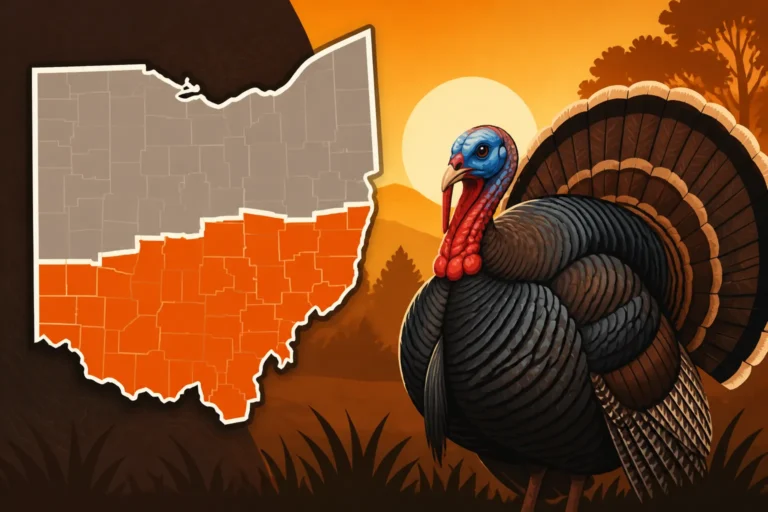
| Northeast Ohio | Ashtabula, Columbiana, Coshocton, Geauga, Jefferson, Mahoning, Trumbull, Tuscarawas, Wayne |
| Southeast Ohio | Adams, Athens, Belmont, Brown, Carroll, Clermont, Fairfield, Gallia, Guernsey, Harrison, Hocking, Holmes, Jackson, Knox, Lawrence, Licking, Meigs, Monroe, Morgan, Muskingum, Noble, Perry, Pike, Ross, Scioto, Vinton, Washington |
| Southwest Ohio | Butler, Clinton, Hamilton, Warren |
| Central Ohio | Delaware, Franklin (check specific zones), Marion, Morrow, Richland, Union |
| Northwest Ohio | Ashland, Crawford, Erie, Huron, Lorain, Medina, Ottawa (check specific zones), Sandusky, Seneca, Stark, Summit, Wyandot |
This list gives you a great starting point for planning your autumn adventures. It's interesting to note the heavy concentration of open counties in the eastern and southeastern parts of the state, areas traditionally known for their more rugged, forested terrain—prime turkey country.
Navigating County-Specific Regulations
While the table above provides the general list of open counties, it's critical to understand that even within these counties, there can sometimes be nuances or specific regulations. For instance, some urban-edge counties might have restricted zones or unique rules. The best way to navigate these potential complexities is to:
- Consult the ODNR Website: The official Ohio Department of Natural Resources website is your most reliable source for the absolute latest regulations, maps, and any last-minute changes. They publish the hunting and trapping regulations well in advance of the season.
- Use the Ohio HuntFish App: This fantastic digital tool is a must-have for any Ohio hunter. You can often pull up county-specific rules and see public land boundaries right on your phone, even without cell service if you download the maps beforehand. It’s an invaluable resource, much like using a specialized mapping platform like GoHunt to scout and understand specific property lines and terrain features from your armchair.
- Check Local Wildlife Area Rules: If you plan to hunt on an Ohio Wildlife Area within an open county, always check for any area-specific rules that might supersede general statewide regulations. Some areas have unique restrictions on access, hunting methods, or even hours.
By diligently checking these resources, you'll ensure your hunt is not only productive but also fully compliant with all state and local regulations. Getting caught unaware of a closed county or a specific rule can quickly turn a fun hunt into a costly headache.
Why Some Ohio Counties Are Closed to Fall Turkey Hunting
It can be disappointing to discover that a county you regularly hunt for deer, or even spring turkey, isn't open for the fall turkey season. This isn't arbitrary; there are sound biological and management reasons behind these closures, all aimed at fostering healthy and sustainable turkey populations across the state. Understanding these factors can help you appreciate the ODNR's efforts and guide your hunt planning.
Population Management and Restoration Efforts
The primary reason certain counties are closed to fall turkey hunting often boils down to population dynamics. While Ohio's wild turkey restoration has been a monumental success story, not all areas rebound at the same rate, or maintain the same high densities. In counties where turkey populations are lower, or where they are still actively being encouraged to expand, closing the fall season helps to protect the hen population. Hens are the reproductive engine of the flock, and allowing an "either-sex" harvest in areas with fewer birds could impede population growth. The ODNR is constantly monitoring these numbers, adjusting season structures to give struggling populations the best chance to thrive. This conservative approach in some counties directly supports the long-term health and spread of Ohio Wild Turkeys in Ohio across the state.
Habitat Factors and Turkey Densities
Habitat plays a colossal role in a county's ability to support a robust turkey population. Turkeys need a mix of mature timber for roosting, open woodlands for foraging, and dense cover for nesting and escape. They also rely heavily on mast crops like acorns, beech nuts, and hickory nuts for sustenance, especially heading into winter. Counties with fragmented habitat, fewer reliable food sources, or high levels of human development might not be able to sustain as many turkeys as their more rural, heavily wooded counterparts.
For example, a county in the rich agricultural belt of northwest Ohio might have abundant food in the form of waste grain, but lack the extensive forested tracts that provide critical nesting and roosting habitat. This can lead to lower overall turkey densities compared to, say, the Appalachian foothills of southeast Ohio, which are carpeted in prime turkey woods. The ODNR considers these habitat limitations when deciding on fall season openings, understanding that a strong habitat base is fundamental to healthy turkey numbers. Hunters looking for productive areas will often find mapping tools like GoHunt invaluable for identifying these prime habitat features, regardless of the season.
The Impact of Past Harvests
Past hunting pressure and harvest success also weigh heavily on the decision-making process for fall seasons. If a particular county experienced an exceptionally high spring harvest, or if consecutive years showed a downward trend in overall turkey numbers (potentially due to poor poult survival or other environmental factors), the ODNR might opt to close the fall season. This serves as a "rest" period, allowing the population to recover and rebuild without additional hunting pressure.
Conversely, counties with consistently strong turkey numbers, where spring harvests are robust and brood surveys indicate good reproduction, are more likely to be open for fall hunting. It's a testament to responsible wildlife management that decisions are made based on data, not just hunter demand. This adaptive management approach ensures that Ohio's turkey resource is managed sustainably, providing hunting opportunities where populations can support them, while protecting them where they need a break.
Tactics for Successfully Hunting Fall Turkeys in Ohio
Fall turkey hunting is a truly unique challenge and a deeply rewarding experience. Forget the frantic gobbler calling of spring; autumn pursuits demand a different set of skills and strategies. It's less about sweet-talking a lovesick tom and more about understanding flock dynamics and exploiting their natural tendency to regroup.
Locating Fall Flocks
The first step to a successful fall hunt is finding the turkeys. Unlike spring, where gobblers might announce their presence from the roost, fall turkeys can be much quieter. They are typically in large family groups, often consisting of a hen and her poults, sometimes joined by other hens or even jakes. These flocks are almost always on the move, constantly foraging for food.
Your best bet for locating them is to scout extensively before the Hunting Ohio's Fall Turkey Window opens. Look for prime food sources: acorns, beechnuts, and wild grapes in forested areas, or waste grain (corn, soybeans) in agricultural fields. Turkeys will often spend significant time in these areas. Look for visual signs like droppings, feather piles, dusting bowls (bare patches of dirt where turkeys roll to clean their feathers), and tracks. Listening for vocalizations like yelps and clucks, especially in the early morning or late afternoon, can also give away their location. Using mapping apps like GoHunt can help you identify potential food sources, roosting areas (tall, mature trees, often near water), and travel corridors, making your scouting more efficient. You might even discover areas that other hunters overlook by digging into topographical maps and satellite imagery.
Effective Calling Strategies
Once you've located a flock, the quintessential fall turkey tactic is to "bust 'em up." This means deliberately flushing the flock, scattering them in all directions. The goal is to separate the birds, especially the poults, from the dominant hen. Turkeys, being social creatures, have a strong instinct to regroup, and this is where your calling comes in.
After the flush, move quickly to a concealed position. Wait quietly for 15-30 minutes, letting the woods settle down. Then, begin calling with soft, pleading "lost" yelps or kee-kee runs. The kee-kee run is a high-pitched, whistled call made by young turkeys trying to find their flock. You're mimicking a lost poult or hen trying to re-establish contact. Be patient; it can take some time for the birds to respond, and they often approach cautiously. The key is to sound like a lonely bird, not an aggressive one. Sometimes, if you've done a good job scattering them, multiple birds might come in, offering a challenging but exciting shot opportunity. This is where truly understanding Breaking Up a Fall Turkey Flock comes into its own as a core tactic.
Gear Considerations for Fall Hunts
Fall turkey hunting gear shares some similarities with other types of hunting but has a few specific requirements. Since you're primarily using a shotgun, ensure it's patterned correctly for your preferred load at typical turkey ranges (20-40 yards). A good turkey choke can make all the difference.
Comfortable, quiet clothing is essential, as you'll likely be doing a fair amount of walking, sitting, and sometimes even crawling. Layering is key for Ohio's unpredictable fall weather, which can range from crisp mornings to warm afternoons. Blaze orange is generally not required for fall turkey hunting in Ohio, but it's always wise to wear some, especially if you're on public land during deer season, to enhance safety and visibility to other hunters.
A good pair of binoculars can help you spot subtle movements or identify birds from a distance without having to move too much. A comfortable turkey vest with a built-in seat cushion is a game-changer for those long waits after a flush. Don't forget a small first-aid kit, plenty of water, and a fully charged phone with a reliable mapping app (like GoHunt) to help navigate the woods and mark locations. While Decoy Placement for Pressured Birds is more often associated with spring hunts, a simple jake or hen decoy can occasionally be effective in fall if you're trying to draw a bird into an open area, but it's less critical than in spring.
Essential Preparation Before Your Ohio Fall Turkey Hunt
Successfully navigating the Ohio fall turkey season isn't just about knowing which counties are open and what calls to make. It requires thoughtful preparation, from understanding the legalities to effective scouting, all aimed at putting you in the right place at the right time.
Licensing and Permit Requirements
Before you even step foot in the woods, ensuring you have all the necessary legal documentation is paramount. Every Ohio hunter, regardless of residency or age (with some youth exceptions), needs a valid Ohio hunting license. This is your base ticket to hunt any game in the state. Beyond that, for fall turkey, you'll need a specific fall turkey permit or tag. This is separate from your general hunting license and allows you to legally harvest one bird of either sex during the fall season.
Costs for these licenses and permits can vary depending on whether you're an Ohio resident, a non-resident, or if you qualify for youth or senior discounts. It’s always best to check the current Ohio Hunting Licenses and What They Cost on the ODNR website, or stop by a licensed vendor like a local sporting goods store. You can often purchase licenses and permits online through the Wild Ohio customer portal, which is incredibly convenient. Just be sure to carry proof of your license and permit with you while hunting, whether it's a physical copy or a digital version on your phone. Missing a crucial permit can lead to fines and a ruined hunt, so double-check everything well in advance. For the specific cost of your fall turkey tag, see Ohio Fall Turkey Permit Cost.
Scouting and E-Scouting Tools
Effective scouting is the backbone of any successful fall turkey hunt. These birds are constantly on the move, so understanding their patterns and preferred areas is crucial.
- Pre-Season Ground Scouting: If possible, get out into the woods a few weeks before the season. Look for signs of turkey activity: tracks, droppings, dusting bowls, and most importantly, food sources. Focus on areas with good mast crops (acorns, hickory nuts, beech nuts) or agricultural fields with waste grain. Identify potential roosting areas (tall trees near water or on ridge tops).
- E-Scouting with Digital Tools: This is where modern technology shines. Platforms like GoHunt are incredibly valuable for e-scouting from the comfort of your home. You can use their mapping features to:
- Identify Public vs. Private Land: Crucial for staying legal.
- Analyze Topography: Look for ridge lines, creek bottoms, saddles, and benches where turkeys might travel or roost.
- Pinpoint Food Sources: Overlay satellite imagery to find oak ridges, agricultural fields, or even clear-cuts that might hold desired vegetation.
- Locate Water Sources: Turkeys need water daily.
- Mark Potential Roosting Areas: Identify stands of tall timber.
- Study Access Points: Plan your entry and exit routes to minimize disturbance.
- The ODNR's Using the Ohio HuntFish Map Tool is another excellent resource for public land boundaries and basic mapping. Combine these tools with your ground scouting, and you'll build a detailed understanding of where the turkeys are likely to be. Remember, the more you scout, the better your chances of encountering a flock, especially on public lands where Scouting Ohio Public Land Before Season can give you a significant advantage.
Safety Considerations in the Fall Woods
Hunting safety is always paramount, and fall turkey hunting is no exception. While blaze orange is not required for turkey hunting in Ohio (unlike deer gun seasons), it's highly recommended to wear it, especially if you're on public land where other hunters might be pursuing deer. It dramatically increases your visibility and can prevent accidents. Always refer to Ohio Blaze Orange Requirements for specific regulations if hunting multiple species concurrently.
Beyond visibility, consider:
- Firearm Safety: Always treat every firearm as if it's loaded. Be sure of your target and what's beyond it. Turkey hunting often involves movement and quick decisions, so maintaining muzzle control and knowing your safe zones of fire are critical.
- Tree Stand Safety: If you use a tree stand for any part of your fall hunt (less common for fall turkey, but still possible), always use a full-body harness and a safety rope.
- Navigation: Carry a reliable map and compass, or a GPS unit/smartphone app, and know how to use them. Let someone know where you're going and when you expect to return. The fall woods can look very different once the leaves are down, making it easy to get disoriented.
- Weather Preparedness: Ohio fall weather can change rapidly. Dress in layers, carry rain gear, and be prepared for colder temperatures than expected. Hypothermia can be a real risk if you're caught unprepared.
- Respect for Landowners: If you're hunting private land, ensure you have explicit permission. If you're on public land, respect boundaries and other users of the forest.
By adhering to these safety guidelines and preparing thoroughly, you ensure not only a more successful hunt but also a safe return home with memories (and hopefully some delicious turkey) to share.
Disclaimer
Please note: Hunting regulations, season dates, and open county lists are subject to change annually by the Ohio Department of Natural Resources (ODNR). Always consult the most current official Ohio Hunting and Trapping Regulations for the precise and up-to-date information before planning and executing your hunt. The information provided here is for general guidance and informational purposes only and should not be considered legal advice or a substitute for official state regulations.