Field Dressing a Deer in Cold Weather
There's nothing quite like the crisp air of an Ohio deer woods in late fall or early winter, but when you've got a downed deer on the ground and the mercury is plummeting, the task of field dressing can feel a lot more daunting. Fumbling with numb fingers, fighting against a stiff carcass, and racing against dwindling daylight are common frustrations many hunters face. This guide is here to walk you through the nuances of field dressing a deer specifically in cold weather, ensuring your hard-earned venison is handled properly and efficiently, no matter how chilly it gets.
Why Cold Weather Changes Things
Field dressing in the chill of late November or December is a different beast entirely than the sweltering heat of an early October archery hunt. While the core task remains the same – removing the internal organs to cool the carcass – the environment significantly impacts your approach, your tools, and even your comfort. Understanding these shifts is key to a successful and less stressful experience.
Advantages of Cold Weather for Meat Care
Let's start with the good news. Cold weather is your best friend when it comes to preserving meat quality. The moment an animal is harvested, bacteria begin to proliferate, and enzymes start to break down tissue. Heat accelerates this process dramatically. In warm conditions, you're in a race against time, desperately trying to get that deer gutted and cooled to prevent spoilage. Think about those early season hunts where you're sweating just dragging the deer, and the urgency to get it to a processor or cooler is paramount.
In contrast, when temperatures hover around freezing or dip below, nature becomes your refrigeration unit. This significantly slows bacterial growth, buying you precious time. You don't have to panic about getting the deer quartered and in an ice chest within an hour or two. This extended window means you can take a bit more time with your field dressing, be more meticulous, and less rushed, which often leads to a cleaner job and better meat quality in the long run. It also makes transportation less stressful; a carcass on a truck bed in 20-degree weather is far less concerning than one baking in 60-degree sun. You still want to get it processed, but the immediate pressure is greatly reduced.
Challenges Unique to Cold Weather Field Dressing
Now for the reality check. While cold aids preservation, it introduces its own set of challenges. One of the most immediate is simply the physical discomfort. Numb fingers make delicate knife work incredibly difficult and increase the risk of accidental cuts. Wearing thick gloves might keep your hands warm, but they reduce dexterity, turning a precise task into a clumsy struggle. Imagine trying to make an initial incision with fingers that feel like frozen sausages – it's not fun or safe.
The deer itself can present difficulties. A deer that's laid in freezing temperatures for even a short while can become quite stiff, making it harder to position for optimal field dressing. The muscles and tissues are less pliable, and the hide can be tougher to cut through. Furthermore, the ground might be frozen solid, uneven, or covered in snow, creating an unstable and uncomfortable workspace. Finding a clear, relatively dry spot can be a challenge. And, of course, daylight is often scarce during Ohio's late seasons. What might be a leisurely post-harvest task in October can become a race against the setting sun in December, forcing you to rely on headlamps, which complicate vision, especially when dealing with steam rising from the carcass. This is where a reliable mapping app like GoHunt can be invaluable, helping you pinpoint ideal, accessible spots for field dressing before you even pull the trigger.
Essential Gear for Cold-Weather Field Dressing
To tackle the unique challenges of field dressing in cold conditions, you need to be prepared with the right gear. It’s not just about having a sharp knife; it’s about ensuring your personal comfort and having tools that can withstand and perform in the elements.
Clothing and Personal Comfort
Your personal warmth and dexterity are paramount. Layering is king here. Start with a moisture-wicking base layer to draw sweat away from your skin, preventing that clammy, cold feeling. Over that, add insulating layers like fleece or wool. For your outermost layer, something waterproof and windproof is crucial, especially if you're kneeling in snow or it starts to rain. You don't want to get soaked and then have to deal with field dressing on top of being hypothermic.
Hands are often the biggest pain point. Consider a system where you have thin, tactile glove liners that you can wear for the precise knife work, paired with larger, insulated waterproof mittens or gloves that you can easily slip on and off. Keeping a few Hand Warmers That Last a Full Sit in your pockets to quickly warm up numb fingers can be a game-changer. Don't forget a warm hat – you lose a significant amount of body heat from your head. Finally, a bright, reliable headlamp is non-negotiable, even if you think you'll be done by dark. Short winter days mean light fades fast, and trying to gut a deer in dim light is a recipe for mistakes and frustration. Many modern headlamps offer multiple brightness settings and red-light options to preserve night vision.
Tools of the Trade
Beyond your personal warmth, specific tools will make the job much smoother. First and foremost, a sharp knife. Actually, make that two sharp knives. A fixed-blade knife with a sturdy handle and a blade length of 4-6 inches is ideal for general cutting. A gut hook knife can be incredibly useful for opening the body cavity without puncturing intestines, especially when the carcass is stiff or you're wearing gloves. Havalon-style knives with replaceable blades are also popular, ensuring you always have a razor-sharp edge.
A bone saw, particularly a small, hand-held one, is another invaluable tool. Trying to cut through the sternum or pelvis with a regular knife in freezing temperatures is exhausting and dangerous. A bone saw makes quick, clean work of these tough areas. Once the deer is field dressed, game bags are essential. They protect the meat from dirt, leaves, snow, and insects (yes, even in cold weather, some flies can persist or be attracted). Breathable game bags allow the carcass to cool while keeping it clean. For extraction, a sturdy rope or deer drag is vital. If there's snow on the ground, a deer sled can save you immense effort, turning a back-breaking drag into a relatively smooth glide. When planning your hunt, especially on public lands, mapping tools like GoHunt can help you scout potential drag routes or identify areas where a deer sled might be most effective.
Step-by-Step Cold Weather Field Dressing
While the basic steps of field dressing remain consistent, the cold demands particular attention to detail and slightly modified techniques to ensure both efficiency and the integrity of the meat.
Positioning and Initial Cuts
First, try to find the cleanest, flattest spot available. This might mean clearing away some snow or leaves. Position the deer on its back, ideally slightly downhill if possible, with its hindquarters elevated to encourage internal drainage. Spread the legs wide, perhaps using a piece of rope or a small stick to prop them open if the deer isn't too stiff. This gives you ample room to work.
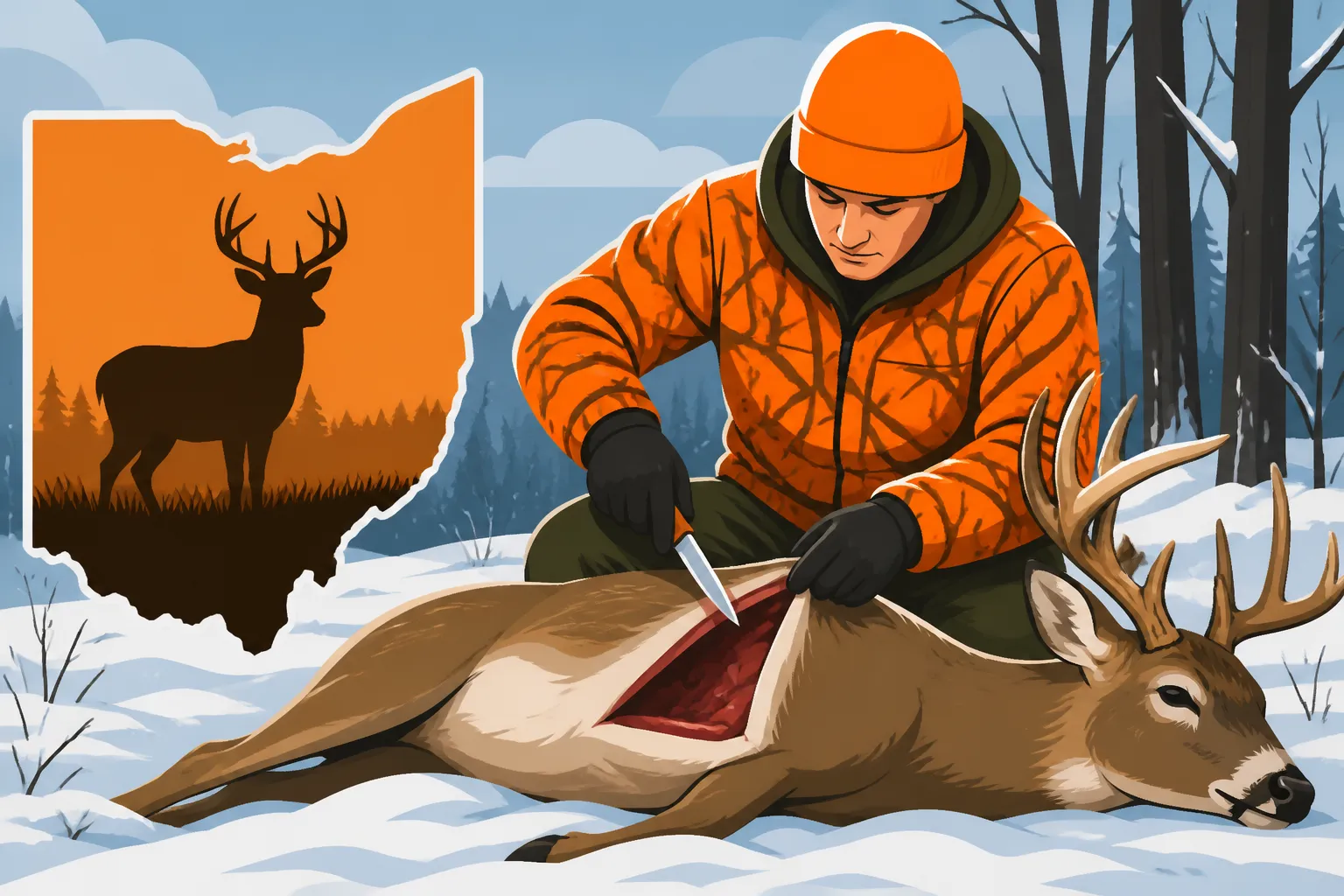
Your initial cut should be from the breastbone down to the pelvis. This is where a gut hook can really shine, allowing you to slice through the skin and abdominal wall without penetrating the stomach or intestines. If you don't have a gut hook, carefully pinch the skin and abdominal wall with your non-dominant hand, lifting it away from the organs, and make a small incision. Insert two fingers into the incision, pushing the organs down, and slide your knife (blade up) between your fingers and the abdominal wall, making a controlled cut. Go slow, especially if your hands are cold and less dexterous. Extend the cut all the way to the pelvis and carefully around the anus. For the sternum, if it's too tough for your knife, this is the perfect time to grab your bone saw and carefully cut through it to fully open the chest cavity. This is crucial for rapid cooling, particularly if the deer is larger.
Removing Organs and Opening the Pelvis
With the cavity fully opened, it’s time to remove the internal organs. Start by reaching deep into the chest cavity, locating the diaphragm (the muscular membrane separating the chest from the abdomen). Carefully cut around its perimeter, detaching it. Then, reach further up into the chest to cut the esophagus and trachea (windpipe) as far forward as you can, detaching them from the spine. Some hunters will pull these down and out first, working their way backward. Others prefer to detach the lower intestines first.
Whichever method you choose, the goal is to remove everything systematically. Gently roll the deer onto its side to help gravity assist the organs in spilling out. Make sure to free any remaining attachments along the backbone. You'll need to carefully cut around the anus and rectum to free the lower intestine, pulling it through the pelvic canal. If you struggle with the pelvis, especially if it's frozen or the deer is large, a bone saw is invaluable here. A quick, clean cut through the pelvis will open it up, allowing for much easier removal of the lower intestines and providing even more air circulation. Be diligent in scraping out any remaining bits of lung tissue or congealed blood. The cleaner the cavity, the better the meat will cool and the less chance of bacterial growth. This thoroughness is especially important in Ohio, where checking for CWD is a concern in certain counties. If you're hunting in areas like Wyandot County, quick and clean organ removal helps prepare the carcass for potential Mandatory CWD Testing Windows in the DSA.
Airing Out and Transport
Once the deer is fully field dressed, the immediate goal is to get as much cold air circulating inside the cavity as possible. Prop the cavity open with a stick or two. If there's snow on the ground, avoid letting snow get inside the cavity directly, as it can melt and create moisture, which isn't ideal for meat. However, a little clean snow on the exterior can help if the deer is still warm.
Before moving the deer, take a moment to tag it appropriately, as per Ohio Deer Checking and Reporting Rules. Now, think about transport. If you're hunting in rough terrain like the Appalachian foothills of Southeast Ohio, you might be facing a long, arduous drag. This is where a deer sled truly shines in cold, snowy conditions. It significantly reduces friction and effort compared to dragging directly on the ground. For those long pulls, having a partner can make all the difference, and a strong, wide drag rope prevents hand fatigue. You want to minimize the amount of dirt, leaves, or other debris that gets on the carcass during the drag. Game bags can help with this, or at least draping a tarp over the deer if you're not using bags. Once at your vehicle, ensure the deer is secured in a way that allows continued cooling. Don't throw a heavy tarp directly over a still-warm deer in the bed of your truck if you're going to drive for hours, as this can trap heat.
Post-Field Dressing Considerations
Your job isn't quite done once the deer is field dressed. The steps you take immediately after, especially in cold weather, are critical for maximizing the quality and safety of your venison.
Keeping the Carcass Clean and Cool
After field dressing, the priority remains cooling the meat. If temperatures are consistently below 40 degrees Fahrenheit, you have a natural refrigerator. Hang the deer, if possible, in a well-ventilated, shaded area. This allows air to circulate around the entire carcass, aiding in cooling and drying the exterior, which helps form a protective "rind." Game bags are highly recommended at this stage to protect the meat from dust, dirt, insects, and opportunistic scavengers like birds or small mammals. You can find excellent options for Coolers and Game Bags for Early Archery that will serve you well into the colder months.
When transporting your deer home, avoid placing it directly on a hot engine or in an enclosed space that will trap heat. A truck bed is usually ideal, but if you're concerned about dirt or road grime, place it on a clean tarp, but ensure there's still airflow. If you're going to a processor, make sure they are aware of the conditions the deer was harvested and handled in. If you plan to butcher it yourself at camp, having a dedicated space and clean tools, like those you used for field dressing, will make the process easier. The GoHunt app can sometimes help you identify game processors or butchers in unfamiliar areas if you're on a multi-day trip.
Common Mistakes to Avoid
Even seasoned hunters can make mistakes, especially when cold hands and fading light are factors. The number one mistake is rushing the job, which often leads to punctured organs, contaminating the meat with stomach contents or feces. This is why having multiple sharp knives and a bone saw is so important – don't force a dull knife or try to muscle through bone with improper tools. Another common error is not opening the cavity sufficiently. If you only make a small incision and pull out the guts, the inner muscles and backbone won't cool effectively, particularly on larger bucks. Take the time to fully open the chest and pelvis.
Forgetting to clean up is also a problem. While not directly affecting meat quality, leaving a mess can be disrespectful to the land and other hunters. Pack out what you pack in, and if possible, cover the gut pile to deter scavengers and keep the area tidy. Finally, don't underestimate the impact of cold on your own body. Trying to field dress a deer while shivering uncontrollably is dangerous and inefficient. Take breaks, warm your hands, and make sure you're wearing appropriate Blaze Orange Jackets Versus Vests for visibility, even after the shot, especially if you're working near roads or other hunters. Your safety and comfort are just as important as the deer's care.
Cold vs. Warm Weather Field Dressing: A Quick Comparison
| Feature | Cold Weather Field Dressing | Warm Weather Field Dressing |
|---|---|---|
| Urgency to Cool | Lower, nature acts as a refrigerator. | High, rapid cooling is critical to prevent spoilage. |
| Bacterial Growth | Significantly slower. | Faster, requires immediate action. |
| Meat Preservation | Easier to maintain quality due to ambient temperature. | Challenging, requires ice, game bags, and quick transport. |
| Physical Comfort | Risk of numb fingers, stiff carcass, limited dexterity. | Risk of sweating, dehydration, and exhaustion. |
| Tool Effectiveness | Bone saw more critical for stiff joints. Dexterity gloves needed. | Any sharp knife works, less need for specialized bone tools. |
| Daylight Concerns | Shorter days mean headlamps are almost always necessary. | Longer days, more light available. |
| Transportation | Less concern about immediate refrigeration during transport. | Urgent need for cooler or cold transport vehicle. |
| Game Bags | Useful for cleanliness and protection from snow/dirt. | Essential for cleanliness and airflow, sometimes for insulation. |
Disclaimer: This guide provides general information for field dressing deer in cold weather in Ohio. Always consult the most current Ohio Department of Natural Resources (ODNR) hunting regulations for specific rules, licensing requirements, and any changes to deer checking or CWD surveillance protocols before heading into the field. Hunter safety should always be the top priority.