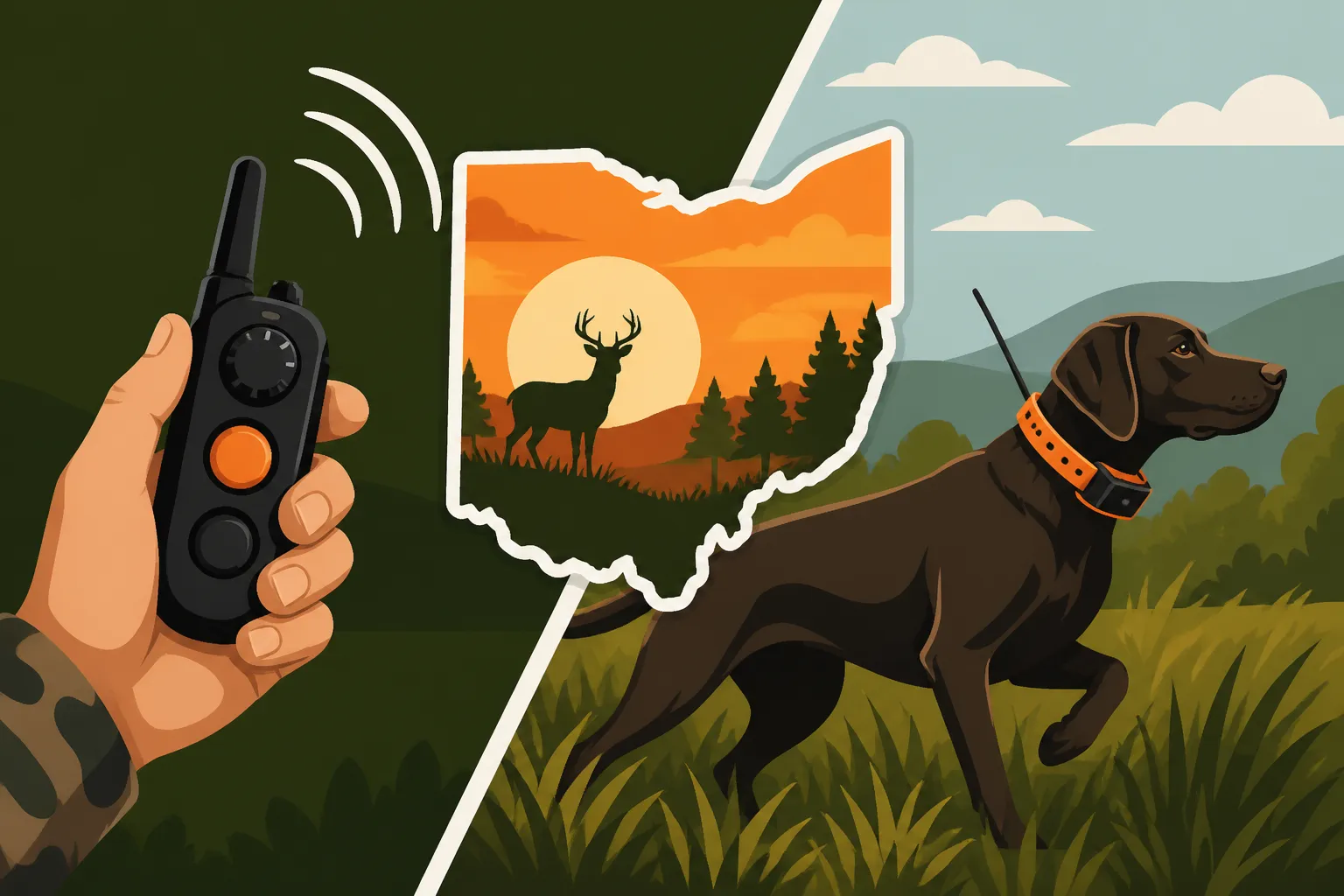
E-Collar Use on Public Ground
It can be incredibly confusing to figure out the dos and don'ts when it comes to using electronic collars, often called e-collars or shock collars, for dog training on Ohio's public lands. You want to train your hunting dog effectively, ensure its safety, and maintain control, but you're constantly worried about stepping on someone's toes, or worse, breaking a regulation you didn't even know existed. This guide will walk you through the specifics of e-collar use in Ohio's diverse public hunting areas, so you can train with confidence and respect for both the law and your fellow outdoors enthusiasts.
Understanding Ohio's E-Collar Regulations on Public Land
Navigating the rules for dog training, especially with e-collars, on public land in Ohio isn't always straightforward. It's not like there's one giant sign at every entrance outlining every permissible piece of equipment. Instead, the regulations are often piecemeal, depending heavily on the specific agency managing the land and the general conduct rules for visitors. Most hunters want to do the right thing, but finding definitive answers can feel like hunting for a needle in a haystack.
The Legal Framework for Dog Training
In Ohio, the use of e-collars for dog training is generally legal. There isn't a statewide ban on their use, which is a relief for many of us who rely on them as an invaluable tool for reinforcing commands, especially at a distance. Think about a bird dog ranging out in a big field or a coonhound working a treeline—a verbal command might not cut through the wind or the excitement of the hunt. E-collars provide that crucial communication link. However, this general legality comes with a big caveat: context matters. While you can typically use an e-collar, how and where you use it on public land might be subject to additional layers of rules. These rules aren't always about the collar itself, but about the behavior of the dog or the nature of the training being conducted.
The Ohio Administrative Code and Revised Code cover various aspects of hunting and dog handling, but rarely do they specifically mention "e-collars." Instead, they focus on control. For instance, dogs running at large, harassing wildlife outside of established hunting seasons, or creating a public nuisance are generally prohibited, regardless of whether they are wearing an e-collar. The e-collar is seen as a tool to achieve control, not an exemption from the need for it. So, while it's permitted, the onus is on the handler to ensure their dog is always under control, and the e-collar is just one method to help accomplish that. Many hunters find platforms like GoHunt helpful for researching specific county regulations or wildlife area rules that might impact their training plans, helping them anticipate potential restrictions before they even leave home.
Specific Restrictions for Public Hunting Areas
When you step onto different types of public land, the general legality of e-collars can get a bit more nuanced. For example, some wildlife areas or state parks might have specific regulations regarding dogs that indirectly affect e-collar use. You might find "leash-only" rules in certain high-traffic zones, or prohibitions on allowing dogs to chase certain species during sensitive times, like nesting seasons. Even if the e-collar itself isn't banned, using it to allow your dog to free-range in a leash-only area would certainly be a violation. It's about respecting the purpose of that particular piece of public land and the experience of other users.
Consider a situation where you're training a retriever near a popular hiking trail. Even if e-collars are technically permitted in that general wildlife area, allowing your dog to repeatedly bark or chase other animals, even without making contact, could lead to complaints and fall under a general "disturbing the peace" or "dog at large" infraction. This means understanding not just what the collar can do, but also what the dog's actions are permitted to be while wearing it. Always check the specific rules posted at trailheads, on property maps, or on the Ohio Department of Natural Resources (ODNR) website for the area you plan to visit. Ignoring these can lead to fines or being asked to leave, which none of us want.
General Dog-Related Rules on Public Land
Beyond e-collars specifically, Ohio has broader rules about having dogs on public lands that apply whether you're using a fancy training collar or just a regular leash. For instance, during the spring turkey season, it's generally prohibited to allow dogs to pursue wild turkeys, even if you're out scouting. Similarly, outside of small game or furbearer seasons, you can't typically allow your dog to "run deer." This is critical because an e-collar, while a control device, doesn't override these prohibitions. If your dog, wearing an e-collar, is chasing a deer outside of a legal hunting season or designated training area, you're still in violation. The e-collar is a tool, but it's not a magic shield against legal consequences for your dog's behavior.
Another important aspect is cleanliness. Regardless of the land type, you're expected to clean up after your dog. Nobody wants to step in dog waste on a public trail or in a hunting field. This is a matter of common courtesy and responsible dog ownership that extends to all dog users, e-collar or not. Being a responsible dog owner on public land goes a long way in ensuring that these areas remain accessible for all of us and our canine companions. Familiarize yourself with all the Ohio Hunter Education Requirements before you head out, as they often touch upon responsible conduct on public land, which includes dog handling.
Types of Public Land and Their E-Collar Implications
Ohio offers a fantastic variety of public hunting grounds, from sprawling forests to managed wildlife areas and even specific sections of state parks. Each type of land often comes with its own set of rules and nuances that can affect how you train with an e-collar. Understanding these differences is key to staying legal and respectful.
Ohio Wildlife Areas (OWAs) and E-Collars
Ohio Wildlife Areas are specifically managed by the ODNR Division of Wildlife, often with a primary focus on wildlife habitat and public hunting, fishing, and trapping. For many dog trainers, OWAs are prime locations because they are designed for these activities. Generally, e-collars are perfectly acceptable here for training hunting dogs, provided you adhere to specific seasonal rules. For instance, there might be designated dog training areas or times where certain activities are permitted. You can usually find a detailed map and specific regulations for each OWA on the ODNR website, which is crucial before you go.
For example, on an OWA like Killdeer Plains or Big Island, which are popular for pheasant and waterfowl hunting, you'll often see trainers working their pointing dogs or retrievers. During designated training seasons or specific hours, this activity is encouraged. However, outside of these windows, or if you're in an area marked for a specific purpose (like a refuge or nesting area), restrictions might apply. It's about being aware of the calendar and the specific purpose of the parcel of land you're on. Always check the general rules for Ohio Wildlife Areas to ensure your training aligns with their mission and current regulations.
State Forests and Their Unique Rules
Ohio's State Forests, like Shawnee State Forest or Zaleski State Forest, are managed by the Ohio Department of Natural Resources (ODNR) Division of Forestry. These areas are typically much larger and often have a more relaxed feel compared to some intensively managed wildlife areas. They offer vast stretches of timber, ideal for training tracking dogs, squirrel dogs, or general obedience in a wilderness setting. In state forests, dogs are generally permitted, and e-collar use is typically not prohibited. The key here is often leash laws within specific recreational zones (like picnic areas or campgrounds) and ensuring your dog isn't harassing other wildlife or forest users.
The sheer size of state forests can be a huge advantage for training. You can get away from crowds and give your dog more room to run. However, with that freedom comes the responsibility of keeping your dog under control. An e-collar can be invaluable in these expansive environments, especially if your dog tends to get distracted by scent trails or wildlife. Just remember, even in remote areas, you're still sharing the space with hikers, mountain bikers, and other hunters. A well-trained dog that responds to commands, even at a distance, is a sign of a responsible owner and helps everyone enjoy the forest. Platforms like GoHunt can help you overlay public land maps with your chosen state forest, allowing you to identify remote sections ideal for training away from high-traffic zones.
National Forests (Wayne National Forest) Considerations
Wayne National Forest is Ohio's only national forest, a vast expanse primarily located in the southeastern part of the state. Managed by the U.S. Forest Service, it operates under federal regulations, though often in cooperation with state laws. For dog training and hunting, Wayne National Forest is a fantastic resource, offering diverse terrain perfect for a variety of hunting dog breeds. E-collar use is generally permitted here, much like in Ohio's state forests. The primary concerns revolve around dog control, respecting other users, and following any specific area restrictions.
Like state forests, Wayne National Forest usually has leash requirements in developed recreation sites, such as campgrounds and picnic areas. However, in the vast backcountry, dogs are often allowed off-leash, provided they remain under the owner's immediate control. This is where an e-collar shines, allowing you to maintain control even when your dog is out of arm's reach. Hunters frequently train their squirrel dogs or coonhounds in the Appalachian foothills of Wayne, and e-collars are standard equipment for communication and safety. Just make sure you understand the general rules for Wayne National Forest Hunting before venturing deep into its hollows and ridges. It’s also wise to be aware of any temporary closures or special orders that might affect dog access in certain sections.
Here’s a quick overview of public land types and general dog rules in Ohio:
| Public Land Type | Primary Managing Agency | E-Collar Use (General) | Key Restrictions/Considerations |
|---|---|---|---|
| Ohio Wildlife Areas (OWAs) | ODNR Div. of Wildlife | Generally Permitted | Specific dog training seasons/areas, wildlife disturbance rules |
| Ohio State Forests | ODNR Div. of Forestry | Generally Permitted | Leash laws in developed areas, general control required |
| Wayne National Forest | U.S. Forest Service | Generally Permitted | Leash laws in developed areas, immediate control in backcountry |
| Ohio State Parks | ODNR Div. of Parks | Varies by Park/Zone | Often leash-only, limited hunting/training zones; check park rules |
| Army Corps of Eng. Land | U.S. Army Corps | Varies | Often similar to federal lands, check local office for specifics |
Note: Always verify current regulations for the specific area you plan to visit, as rules can change.
Best Practices and Ethical Use of E-Collars in Public Settings
Using an e-collar is more than just clipping it on your dog and pressing buttons. It's a responsible training tool, and especially on public land, its use comes with an ethical obligation to both your dog and other people enjoying the outdoors. Thoughtful, effective, and considerate use is always the goal.
Prioritizing Public Land Etiquette
When you bring your dog, and particularly an e-collar, onto public land, you're representing all dog handlers and hunters. First and foremost, ensure your dog is well-trained enough that the e-collar is a fine-tuning tool, not a crutch for a lack of basic obedience. Your dog should have a solid recall and basic commands before you start introducing an e-collar in a high-distraction environment. If your dog is constantly pulling, barking, or running rampant, the e-collar might be misinterpreted by observers as a punishment device rather than a communication tool, which can unfortunately fuel negative stereotypes about hunters and dog trainers.
Always be mindful of other users. If you see hikers, bird watchers, or families approaching, consider reining your dog in or putting it on a leash, even if not strictly required. A quick, polite gesture of control shows respect and helps prevent potential conflicts. An e-collar can be invaluable for that instant recall, pulling your dog away from a trail where children might be playing, or bringing them back from an encounter with another dog that might not be friendly. It's about proactive management and ensuring your dog doesn't inadvertently spoil someone else's outdoor experience. This kind of courtesy helps maintain positive public perception for all of us who enjoy Public Hunting Land in Ohio.
Ensuring Safe and Effective Training
The e-collar should be used as a communication tool, not a punishment device. Modern e-collars offer a range of stimulation levels, from mild vibration to gentle static correction. Always start with the lowest effective setting for your dog, aiming for a response rather than a yelp. The goal is to get your dog to think about the command, not to scare them into submission. Before ever using it on public land, ensure your dog is fully conditioned to the e-collar in a controlled environment, understanding what each level of stimulation means in relation to a command. This prevents confusion and creates a positive association with the collar as a clear command.
Using the e-collar correctly also means ensuring proper fit and function. The contact points must be making good contact with your dog's skin, but not so tight as to cause discomfort or irritation. Regularly check your dog's neck for any signs of rubbing or sores. Also, be familiar with the various modes your specific collar offers. Many have tone, vibration, and static options, each useful in different situations. For example, a tone can be a great pre-cursor to a static correction, giving your dog a warning before the correction is applied, reinforcing their understanding of the command. Effective use is safe use for both you and your canine partner.
Respecting Other Users and Wildlife
Beyond legal compliance, responsible e-collar use on public land is about respect. Respect for other outdoor enthusiasts means avoiding situations where your dog's training might interfere with their enjoyment. If you're working on a retrieve in a popular fishing spot, for instance, you might reconsider your location. Likewise, be deeply respectful of wildlife. Using an e-collar to keep your dog from harassing non-game animals, especially during sensitive breeding or nesting seasons, is paramount. Allowing your dog to chase deer, even if you collar them back, can be stressful for the deer and is illegal outside of specific, legal Deer Drives on Ohio Public Land.
Think about the sound of your collar's remote, or even the dog's excited barks. While you might be focused on training, these can carry and be disruptive. Maintaining situational awareness—knowing who is around you, what wildlife might be present, and the general atmosphere of the area—is a crucial part of ethical e-collar use. This proactive approach ensures that your pursuit of a well-trained dog doesn't negatively impact the environment or others' experiences. Remember, we all share these precious public resources.
Choosing and Using an E-Collar for Ohio Public Land Hunting
Selecting the right e-collar and knowing how to apply its training principles effectively, especially when hunting or training on Ohio's diverse public lands, can make all the difference. It's not just about getting a strong enough signal; it's about finding features that support reliable communication in varied terrain and conditions.
Features Important for Public Land Use
When you're out on public land, whether it's the sprawling Wayne National Forest Hunting grounds or a busy Ohio Wildlife Areas, your e-collar needs to perform. Look for a collar with a good range—at least a half-mile, preferably a full mile—especially if you're training a dog that works a big field or dives into dense cover. You don't want to lose communication just when your dog is out of sight. Durability is also key. Ohio weather can be unpredictable, from muddy springs to freezing winters, so a waterproof and robust unit that can handle brush and wet conditions is essential.
Consider collars that offer multiple stimulation levels, often ranging from 0 to 100 or more, with an instant adjustment dial. This allows you to quickly dial up or down based on your dog's distraction level or the situation at hand. Features like a "booster" or "jump" button can be useful for those critical moments when you need an immediate, higher level of correction without fumbling through settings. Also, a remote that's easy to operate one-handed, perhaps with clearly differentiated buttons for tone, vibration, and static, is a huge plus when you're navigating rough terrain or handling your shotgun. Some collars even include GPS tracking, which can be a lifesaver if your dog gets out of range or lost, blending training and safety into one device.
Training Principles for Distraction-Rich Environments
Training with an e-collar on public land means dealing with a lot more distractions than in your backyard. This is where those solid training principles really come into play. Always introduce the e-collar in low-distraction environments first, so your dog understands what the stimulation means. Once that foundation is solid, gradually introduce more distractions, always reinforcing commands with praise and positive reinforcement. When your dog responds correctly to a command, even with the e-collar, make sure to reward them. The e-collar is there to help them learn, not to replace your relationship.
When you transition to public land, begin in less crowded areas or during off-peak hours. For example, if you're working a bird dog on a wildlife area, start in a less-pressured field before moving to areas where other hunters might be. Use the e-collar judiciously; it's a tool for communication, not constant correction. Apply stimulation precisely and immediately after your dog makes a mistake or ignores a known command. Consistency is paramount. If you give a command, follow through with the e-collar if the dog doesn't respond. This teaches the dog that your commands are non-negotiable, even when distractions are high.
Integrating E-Collars with Scouting and Hunting Strategies
An e-collar can be an incredibly useful tool not just for training, but also for actual hunting scenarios on public land. When you're Scouting Ohio Public Land Before Season, an e-collar can keep your dog quietly by your side, preventing them from flushing game or disturbing other hunters. If you're running a coonhound at night, a long-range e-collar with a tracking feature can help you locate your dog in the dark timber and bring them back safely, especially in areas like the vast expanse of Wayne National Forest.
For bird hunters, the e-collar becomes an extension of your voice, helping you manage your dog's range and retrieve ethics in thick cover. If your retriever takes off after a cripple, the e-collar can help guide them back if they get disoriented. When it comes to Raccoon Hunting at Night in Ohio or Coyote and Predator Hunting in Ohio, an e-collar can be crucial for controlling your dog around other hunters, non-target animals, or even roads. It’s all about enhancing control and safety in dynamic, sometimes unpredictable, environments. A well-integrated e-collar allows you to hunt more effectively, safely, and ethically, maximizing your time in Ohio's wild places.
Disclaimer
This article is for general informational purposes only and does not constitute professional advice. Laws, prices and regulations vary by location and change over time. Consult a qualified professional for guidance on your specific situation.